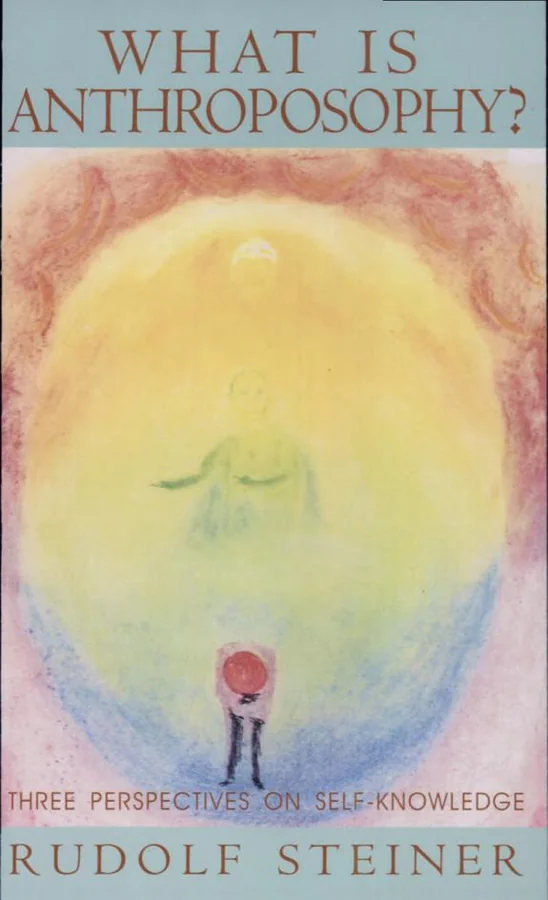
What Is Anthroposophy?
 78
78

What Is Anthroposophy?
Rudolf Steiner's "What Is Anthroposophy?" functions less as a gentle invitation and more as a declaration of a complete, albeit challenging, worldview. The text directly confronts the reader with the premise that spiritual perception is an attainable faculty, a claim that immediately sets it apart from conventional philosophy. Steiner's rigorous, almost scientific, approach to detailing these non-physical realities is a notable strength; he meticulously builds his case for a spiritual science. However, the sheer density of concepts and the unique terminology can present a significant barrier for newcomers. The section discussing the evolution of consciousness, particularly the development of 'imagination' as a cognitive faculty, exemplifies this challenge – it demands a profound shift in how one understands knowing itself. For those willing to grapple with its demands, it offers a unique perspective on human potential.
📝 Description
78
Rudolf Steiner's 1922 work, "What Is Anthroposophy?", introduces his spiritual science.
Rudolf Steiner penned "What Is Anthroposophy?" to introduce his spiritual scientific worldview. He proposed that human consciousness can be trained to perceive spiritual realities, much like ordinary senses perceive the physical world. This method, he argued, is necessary for modern humanity's development. The book is for readers who question purely materialistic views and desire a broader understanding of existence. It addresses the evolution of consciousness, the nature of the soul, and the spiritual basis of life. Those interested in practical applications in fields like education, agriculture, and medicine, which Steiner's ideas influenced, will find this text lays important philosophical groundwork.
Anthroposophy emerged in the early 20th century from Theosophy, though Steiner developed it as a distinct path focused on individual spiritual development rather than dogma. Steiner, an Austrian philosopher, presented his concepts through lectures and writings, establishing the Anthroposophical Society in 1912. "What Is Anthroposophy?" clarifies his aim to offer a verifiable path to spiritual knowledge. The core of Anthroposophy concerns the connection between humans, the cosmos, and spiritual evolution. It suggests that the physical world is only one part of reality, with soul and spirit dimensions accessible through specific inner development practices.
Anthroposophy, as articulated by Rudolf Steiner, is a spiritual philosophy that seeks to understand the spiritual dimensions of existence through disciplined inner perception. Emerging from a critique of materialism and a reinterpretation of Theosophical ideas, Steiner established it as a distinct path in the early 20th century. The Anthroposophical Society, founded in 1912, became the organizational base for disseminating these ideas. Steiner's approach emphasizes that spiritual knowledge is accessible through rigorous training of consciousness, akin to scientific methods, thereby bridging the empirical and the spiritual.
💡 Why Read This Book?
• Understand the core principles of Anthroposophy, including Steiner's concept of "spiritual science," which posits a disciplined, verifiable path to perceiving spiritual realities beyond the physical senses. • Grasp the historical and philosophical context of Anthroposophy's emergence in the early 20th century, differentiating it from earlier esoteric movements like Theosophy. • Explore Steiner's view on human evolution and consciousness, specifically the idea that humanity is evolving towards greater self-awareness through a conscious engagement with spiritual realms.
⭐ Reader Reviews
Honest opinions from readers who have explored this book.
❓ Frequently Asked Questions
What is the primary goal of Anthroposophy as outlined by Rudolf Steiner?
The primary goal is to develop a "spiritual science" that complements natural science, enabling individuals to perceive and understand higher spiritual realities and their connection to the physical world through disciplined inner development.
How does Anthroposophy differ from traditional religion or philosophy?
Anthroposophy emphasizes individual spiritual experience and development, offering a path to knowledge that is not dependent on dogma or faith alone. It seeks to provide experiential verification for spiritual truths.
What role do concepts like karma and reincarnation play in Anthroposophy?
Karma and reincarnation are central to understanding human development and the unfolding of consciousness across multiple lifetimes, providing a framework for the soul's journey and evolution.
Can Anthroposophy be applied to practical fields?
Yes, Steiner's work has inspired practical applications in areas such as Waldorf education, biodynamic agriculture, anthroposophical medicine, and various forms of art and social development.
Is "What Is Anthroposophy?" suitable for beginners?
While it is a foundational text, its dense philosophical and spiritual concepts can be challenging for absolute beginners. It is best approached by those with an existing interest in esoteric philosophy or spiritual inquiry.
When did Rudolf Steiner first present these ideas?
Rudolf Steiner began presenting the core concepts of Anthroposophy in the early 1900s, with the Anthroposophical Society being founded in 1912 and this specific compilation likely appearing in its current form much later.
🔮 Key Themes & Symbolism
Spiritual Science as a Discipline
Steiner presents Anthroposophy not as mere belief but as a 'spiritual science' requiring rigorous training of perception and thinking. This discipline aims to develop faculties for observing the spiritual world, akin to how natural sciences observe the physical. The work details the necessity of this approach for modern humanity, proposing that spiritual knowledge is not divinely revealed but attainable through conscious effort and specific meditative practices.
Consciousness and Human Evolution
A central theme is the evolution of human consciousness. Steiner posits that humanity is progressing through stages, moving from instinctual awareness to self-consciousness. He outlines future stages of development, emphasizing the potential for conscious participation in spiritual processes. This involves understanding the soul's journey through reincarnation and the influence of karma, framing human life within a larger cosmic and spiritual context.
The Nature of the Human Being
The book explores the multi-faceted nature of the human being, extending beyond the physical body to include soul and spirit. Steiner introduces concepts like the 'etheric body' and the 'astral body' as distinct but interconnected components of human existence. Understanding these elements is crucial for comprehending the processes of life, death, and rebirth as presented within the Anthroposophical framework.
Christ as a Cosmic Being
Steiner's interpretation of Christ is not solely as a historical figure but as a central spiritual being whose incarnation on Earth profoundly impacted cosmic and human evolution. This perspective integrates spiritual science with a unique understanding of Christian cosmology, viewing the Christ event as a key moment for the development of consciousness and freedom in the world.
💬 Memorable Quotes
Direct passages from the work, attributed to the author.
“The need for a spiritual science arises from the fact that the modern worldview has become one-sidedly materialistic.”
— This statement captures the driving motivation behind Anthroposophy: to counteract the perceived spiritual poverty and limitations of a purely materialistic understanding of reality by offering a complementary path of spiritual inquiry.
“Humanity's future evolution depends on consciously engaging with the spiritual world.”
— This interpretation points to the teleological aspect of Anthroposophy, suggesting that human destiny is not passive but requires active, conscious participation in the spiritual unfolding of existence.
“The soul passes through repeated earthly lives, guided by karma.”
— This conveys the core Anthroposophical doctrines of reincarnation and karma, presented not as abstract beliefs but as integral mechanisms governing the soul's development and journey through existence.
“The spiritual world is as real and knowable as the physical world.”
— This bold assertion frames the fundamental premise of Anthroposophy, positioning the spiritual realm as an accessible domain for investigation, thereby challenging the exclusive validity of empirical, materialist knowledge.
💡 Key Ideas
Editorial paraphrase of the work's core concepts — not direct quotes.
Through specific meditative exercises, one can cultivate the capacity to perceive spiritual realities.
This paraphrased concept highlights Steiner's emphasis on method and training. It suggests that spiritual perception is not a matter of chance or divine grace alone, but an achievable faculty developed through disciplined inner work.
🌙 Esoteric Significance
Tradition
Anthroposophy, as presented by Steiner, draws heavily from Western esoteric traditions, particularly Hermeticism, Gnosticism, and Kabbalah, but reframes them through a modern spiritual-scientific lens. It departs from Theosophy by emphasizing a rigorous, self-developed inner path rather than reliance on ancient texts or Eastern philosophies alone. Steiner aimed to create a 'science of the spirit' accessible to the modern intellect, integrating spiritual insights with a developmental understanding of consciousness.
Symbolism
Key symbols in Anthroposophy include the 'rose cross,' representing the union of the spiritual (rose) and the material/physical (cross), symbolizing the integration of higher consciousness into earthly life. The concept of 'karma' functions symbolically as the law of cause and effect governing spiritual and material realms, guiding soul evolution. The 'seven liberal arts' are often reinterpreted as stages of human development, reflecting a cosmic-spiritual order.
Modern Relevance
Anthroposophy continues to influence contemporary thinkers and practitioners in fields like alternative education (Waldorf schools), biodynamic agriculture, anthroposophical medicine, eurythmy (a movement art), and certain streams of ecological and social renewal movements. Modern interpreters often focus on Steiner's insights into consciousness, psychology, and his critique of materialism, adapting his ideas to contemporary challenges in art, science, and societal organization.
👥 Who Should Read This Book
• Students of esoteric philosophy and comparative religion seeking to understand a distinct 20th-century spiritual movement that bridges science and spirituality. • Educators, therapists, and healers interested in the practical applications of Anthroposophy, such as Waldorf pedagogy and anthroposophical medicine. • Individuals questioning materialistic worldviews and searching for a comprehensive framework that addresses the spiritual dimensions of human existence and cosmic evolution.
📜 Historical Context
Anthroposophy emerged in the early 20th century, a period of intense intellectual and spiritual ferment, marked by the rise of various esoteric movements and a growing dissatisfaction with purely materialistic scientific paradigms. Rudolf Steiner, initially a prominent figure within Theosophy, broke away to form his own distinct path, the Anthroposophical Society, in 1912. This departure was fueled by his unique formulations concerning Christology, human evolution, and the nature of spiritual perception. "What Is Anthroposophy?" articulates this new direction, positioning itself against the perceived limitations of both established religion and contemporary science. While figures like Helena Blavatsky and Theosophy represented a significant contemporary esoteric current, Steiner sought to establish a more individualized, scientifically-grounded approach. The work's reception was met with both fervent adherents and considerable skepticism, often criticized for its complex metaphysical system and departure from conventional thought.
📔 Journal Prompts
The necessity of spiritual science in a materialistic age.
Cultivating faculties for spiritual perception.
The role of karma and reincarnation in human development.
Understanding the multi-layered nature of the human being.
The evolutionary path of human consciousness.
🗂️ Glossary
Spiritual Science
Steiner's term for a disciplined, observational approach to understanding the spiritual dimensions of reality, analogous to natural science but employing higher faculties of perception.
Etheric Body
In Anthroposophy, the life force or formative forces that sustain the physical body and are responsible for growth and reproduction; considered a subtle body.
Astral Body
The vehicle of consciousness, feeling, and sensation in Anthroposophy; associated with the 'soul' and subjective experience.
Karma
The spiritual law of cause and effect that governs the consequences of actions across lifetimes, influencing the soul's journey and evolution.
Reincarnation
The Anthroposophical belief that the soul undergoes repeated earthly lives, learning and evolving through successive incarnations.
Consciousness Soul
A stage of human development in Anthroposophy characterized by clear thinking, self-awareness, and moral judgment, distinguishing modern humanity.
Anthroposophical Society
The international organization founded by Rudolf Steiner in 1912 to foster the study and practice of Anthroposophy.
This book appears in 1 collection
🔮 Readers Also Liked
Browse all →







From the “Anthroposophy” Collection
View all →






More Free Theosophy & Anthroposophy Books
View all →