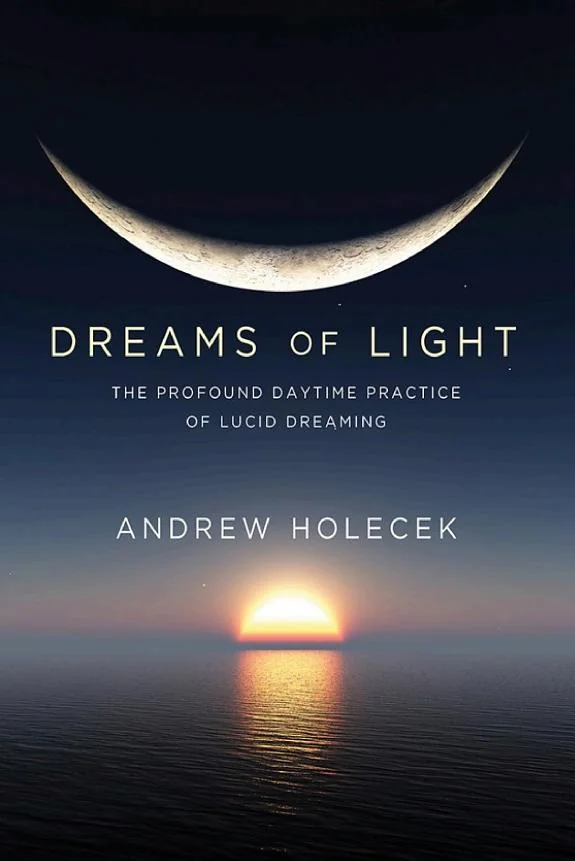
Dreams of Light
 71
71

Dreams of Light
Andrew Holecek’s Dreams of Light offers a compelling argument for the integration of dream yoga’s insights into our waking hours. He asserts that our everyday reality, much like a dream, is a construct, a point that, while familiar in esoteric circles, is presented here with refreshing clarity. The strength of the book lies in its practical approach to applying these potentially abstract concepts to daily life, moving beyond the purely nocturnal focus of his prior work, Dream Yoga. A limitation, however, is that readers new to Holecek's extensive work might find the foundational ideas presented somewhat concisely, requiring a prior understanding or additional research into Tibetan dream yoga traditions. The section discussing the "Glimpse" as a moment of pure awareness, accessible in both waking and dreaming states, is particularly potent, serving as a concrete example of the book’s aim to dissolve the perceived boundaries between different states of consciousness. Dreams of Light provides a valuable framework for cultivating deeper awareness beyond the sleep state.
📝 Description
71
Andrew Holecek's 2020 book, Dreams of Light, argues waking reality can be as illusory as dreams.
Dreams of Light, published in 2020, extends Tibetan dream yoga beyond sleep. Andrew Holecek guides readers to integrate dream yoga techniques into their daytime awareness. The book challenges the common view of waking reality, suggesting it shares illusory qualities with dreams. It aims to help practitioners cultivate continuous lucidity and awareness throughout their waking hours.
This work is for those interested in lucid dreaming, meditation, and esoteric traditions, especially readers of Holecek's prior book, Dream Yoga. It suits practitioners wanting to apply dream yoga principles to their daily lives for deeper contemplation and sustained mindfulness. Students of Tibetan Buddhism, consciousness studies, and the intersection of psychology and spirituality will find it relevant.
Holecek builds on the ancient lineage of Tibetan Buddhism, a tradition with centuries of consciousness exploration methods. His focus on both night and day practices reflects comprehensive contemplative systems. By presenting these methods accessibly, he connects with current interest in mindfulness, altered states, and reality's philosophical foundations.
Andrew Holecek's work draws from Tibetan Buddhism's long history of exploring consciousness through practices like dream yoga. This tradition developed sophisticated methods over centuries for understanding the mind and reality. Dreams of Light aligns with this lineage by emphasizing both nocturnal and diurnal practices for cultivating awareness. It engages with contemporary interest in mindfulness and altered states, placing these ancient techniques within a modern discourse on consciousness.
💡 Why Read This Book?
• Learn to distinguish between the conventional, illusory nature of waking reality and deeper awareness, a core principle explored through the concept of "daytime lucidity" as detailed in the book's teachings. • Discover practical techniques derived from Tibetan dream yoga, as presented in the book's guidance on integrating these practices into daily activities, not just during sleep. • Gain a deeper understanding of consciousness beyond binary states of awake/asleep, by exploring the "Glimpse" concept, which Holecek uses to illustrate moments of pure awareness accessible in all states.
⭐ Reader Reviews
Honest opinions from readers who have explored this book.
❓ Frequently Asked Questions
What is the primary difference between the practices in Dreams of Light and Dream Yoga?
Dreams of Light focuses on applying dream yoga principles to waking consciousness and daytime practices, whereas Dream Yoga, Holecek's previous book, centers on nocturnal practices and lucid dreaming during sleep.
Who is Andrew Holecek and what is his expertise?
Andrew Holecek is a recognized expert in lucid dreaming and Tibetan dream yoga, with decades of experience in meditation and consciousness studies, authoring several influential books on the subject.
Can someone unfamiliar with Tibetan Buddhism benefit from Dreams of Light?
Yes, while rooted in Tibetan dream yoga, the book's core concepts of mindfulness, awareness, and questioning reality are presented accessibly, offering value to a broader audience interested in consciousness.
What is the concept of 'daytime lucidity' explored in the book?
Daytime lucidity refers to the practice of maintaining awareness and recognizing the potentially illusory nature of waking experience, mirroring the lucidity achieved in lucid dreams, as taught in the book.
When was Dreams of Light first published?
Dreams of Light was first published on August 18, 2020.
Does the book offer practical exercises for waking life?
Yes, the book provides guidance and techniques for integrating dream yoga principles into daily activities, fostering continuous mindfulness and a deeper perception of waking reality.
🔮 Key Themes & Symbolism
Daytime Lucidity
This theme centers on extending the awareness and clarity achieved in lucid dreams into one's waking life. Holecek argues that conventional waking reality is not as solid as it appears and can be understood through the lens of dream yoga. The goal is to cultivate a constant state of mindfulness, recognizing the constructed nature of our perceived reality, thereby transforming everyday experiences into opportunities for spiritual insight and a deeper connection to consciousness.
Illusion of Waking Reality
Drawing from Tibetan Buddhist philosophy, the book challenges the absolute certainty most people have about the reality of their waking state. It suggests that just as dreams are illusory, so too is our ordinary perception of the world. By deconstructing this perceived solidity, practitioners can begin to access subtler levels of awareness and understand the mind's role in constructing experience, a key step in the path of liberation.
Integration of Practices
Dreams of Light emphasizes the importance of bridging the gap between night and day practices. Unlike approaches that compartmentalize spiritual work to specific times, this book advocates for a holistic integration of dream yoga techniques into all aspects of life. This continuous practice aims to dissolve the boundaries between states of consciousness, leading to a more unified and awakened existence throughout the entire 24-hour cycle.
The 'Glimpse'
A central concept is the 'Glimpse,' representing moments of pure awareness that transcend ordinary dualistic perception. These glimpses are accessible in both dream and waking states. The book guides readers to recognize and cultivate these moments, which offer a direct experience of fundamental reality. Recognizing the 'Glimpse' is crucial for moving beyond conceptual understanding to direct realization.
💬 Memorable Quotes
Direct passages from the work, attributed to the author.
“Ordinary waking life is no more real than the illusions of our nightly dreams.”
— This core assertion challenges the reader's fundamental assumptions about reality. It suggests that our everyday perception, often taken for granted as solid and absolute, shares a similar ephemeral and constructed quality with the experiences we have while dreaming.
“The tradition's daytime practices, a complement to the nighttime practices.”
— This highlights the book's unique contribution: moving beyond solely focusing on lucid dreaming during sleep. It emphasizes the integration of dream yoga principles into the conscious hours of the day, creating a continuous path of awareness.
“Most of us are absolutely certain that we're awake here and now—it's a given, right?”
— This rhetorical question directly addresses the reader's common experience and the unquestioned certainty of being awake. It serves as an entry point to questioning this certainty and exploring alternative perspectives on consciousness and reality.
“A world-renowned expert in lucid dreaming and Tibetan dream yoga guides us...”
— This points to Andrew Holecek's established authority and extensive background in the specific esoteric traditions discussed, assuring readers they are receiving guidance from a knowledgeable and experienced source.
“The book guides us into the tradition's daytime practices.”
— This clearly states the book's practical focus and its intention to provide actionable methods for readers to implement dream yoga principles beyond the field of sleep.
🌙 Esoteric Significance
Tradition
This work is firmly rooted in the Nyingma school of Tibetan Buddhism, specifically within the Dzogchen and Mahamudra traditions, which encompass the practice of dream yoga (Milam). It presents these ancient teachings in a manner accessible to a contemporary, often Western, audience, focusing on the practical application of these advanced contemplative methods beyond their original monastic context.
Symbolism
The book frequently engages with the symbolism of light, often representing pure consciousness or the luminous nature of mind, contrasting with the 'darkness' of ignorance or ordinary delusion. Another motif is the 'dreamscape' itself, symbolizing the illusory and constructed nature of perceived reality, whether in dreams or waking life, prompting practitioners to see through the conventional appearance of phenomena.
Modern Relevance
Contemporary thinkers and practitioners in consciousness studies, lucid dreaming research, and integral spirituality draw upon Holecek's work. His ability to articulate complex Tibetan concepts in accessible language makes *Dreams of Light* a valuable resource for those exploring non-dual awareness, advanced meditation techniques, and the potential for transforming everyday experience into a spiritual path.
👥 Who Should Read This Book
• Meditators and practitioners of Tibetan Buddhism seeking to deepen their understanding and application of dream yoga beyond nocturnal practices, moving towards continuous awareness. • Students of consciousness and psychology interested in exploring the nature of reality, altered states, and the intersection of mind and perception from an esoteric perspective. • Individuals interested in lucid dreaming who wish to transcend the mere 'hobby' aspect and engage with its profound philosophical and spiritual implications for waking life.
📜 Historical Context
Andrew Holecek's *Dreams of Light*, published in 2020, emerges within a contemporary spiritual landscape marked by a renewed global interest in contemplative practices, mindfulness, and consciousness studies. While Tibetan dream yoga itself has ancient roots, dating back over a thousand years within Tibetan Buddhism, Holecek's work addresses a modern audience often disconnected from traditional monastic settings. The book's emphasis on integrating dream yoga into waking life aligns with broader trends in secular mindfulness and non-dual traditions that seek to distill esoteric wisdom for contemporary application. It stands in dialogue with, and offers a distinct perspective from, popular Western interpretations of Buddhism and meditation, such as those popularized by figures like Jon Kabat-Zinn or the various Zen and Advaita Vedanta teachers. The 2020 publication date places it in an era where psychological research into sleep, dreams, and altered states of consciousness is increasingly intersecting with spiritual inquiry, making Holecek's bridge between ancient yogic methods and modern scientific curiosity particularly relevant.
📔 Journal Prompts
The nature of the 'Glimpse' as experienced in waking moments.
Contrasting the perceived solidity of waking reality with dream states.
Practicing "daytime lucidity" during mundane activities.
Recognizing the mind's role in constructing the 'dreamscape' of daily life.
Integrating nocturnal dream yoga insights into daytime awareness.
🗂️ Glossary
Dream Yoga (Milam)
A set of advanced contemplative practices within Tibetan Buddhism aimed at achieving lucidity and insight during the dream state, and extending this awareness into waking life.
Daytime Lucidity
The practice of maintaining awareness and recognizing the potentially illusory nature of waking experience, analogous to the clarity achieved in lucid dreams.
Glimpse
Moments of pure, non-dual awareness that transcend ordinary perception and conceptual thought, accessible in both dream and waking states.
Illusory Nature of Reality
The concept, central to many Eastern philosophies, that perceived reality (both dream and waking) is not fundamentally solid or independent, but rather a construct of the mind.
Luminous Mind
Refers to the inherent clarity, awareness, and potential for enlightenment that is the fundamental nature of consciousness, often obscured by ordinary conceptual thinking.
Contemplative Practice
Mental exercises, often involving focused attention or open awareness, designed to cultivate insight, mindfulness, and spiritual realization.
Tibetan Buddhism
A form of Buddhism originating in Tibet, characterized by a rich array of philosophical schools, meditation techniques, and tantric practices, including dream yoga.
This book appears in 1 collection
🔮 Readers Also Liked
Browse all →![The Byrhtferth's Manuscript (MS 17) † Saint John’s College † Oxford † [1111]](/img/thumb/the-byrhtferth-s-manuscript-ms-17-saint-john-s-college-oxford-1111-the-monk-byrhtferth.webp)








From the “Lucid Dreaming” Collection
View all →








More Free Sacred Texts & Gnosticism Books
View all →