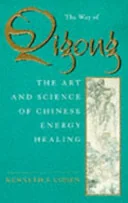
The Way of Qigong
 81
81

The Way of Qigong
Ken Cohen’s *The Way of Qigong* offers a grounded introduction to a practice often shrouded in mystique. Cohen avoids sensationalism, presenting Qigong as a systematic approach to health cultivation with deep historical roots. He effectively bridges the gap between ancient Chinese philosophy and contemporary wellness concerns, particularly noting its application in managing serious illness, as seen in its use alongside modern medicine for conditions like cancer. A significant strength lies in Cohen’s ability to distill complex concepts into understandable principles, making the text accessible to newcomers. However, the sheer breadth of Qigong’s forms and applications, while comprehensive, can occasionally feel overwhelming, leaving the reader wishing for even more detailed guidance on specific therapeutic routines. The discussion around the scientific validation of Qigong, while present, could benefit from further elaboration on specific studies and methodologies. Ultimately, Cohen provides a valuable resource for understanding the foundational principles and diverse applications of this potent energy practice.
📝 Description
81
Ken Cohen's 1997 book, The Way of Qigong, offers a guide to the ancient Chinese energy cultivation practice.
The Way of Qigong, by Ken Cohen, describes the Chinese practice of qigong, which translates to 'energy work.' This discipline uses synchronized movement, breathing, and focused intention to build and balance the body's vital energy, known as Qi. The book details various qigong forms and applications, showing how it can improve physical health, mental clarity, and spiritual well-being. Cohen illustrates qigong's potential as a healing method.
The work is suitable for anyone interested in holistic health, alternative medicine, or traditional Chinese practices. It provides accessible explanations for beginners curious about qigong. Experienced practitioners may find deeper theoretical information and new perspectives on their own practice. The book also speaks to those interested in how ancient traditions relate to modern scientific study.
Qigong originates from ancient Chinese traditions, including shamanistic and Taoist practices, evolving over millennia. It is deeply integrated with Traditional Chinese Medicine (TCM) as a method for health cultivation. Historically, qigong was used in martial arts, monastic life, and as folk healing. Its study in medical contexts, especially since the late 20th century, highlights its ongoing significance as a spiritual and physical discipline aimed at harmonizing internal energy.
💡 Why Read This Book?
• Gain a practical understanding of Qi, the vital energy central to Qigong, and how to begin cultivating it through simple exercises detailed in the book, offering a tangible path to increased vitality. • Learn about the historical lineage of Qigong, tracing its development from ancient Taoist practices to its modern medical applications, providing context beyond mere physical movement. • Discover the specific therapeutic applications of Qigong for various health conditions, including its documented use in conjunction with modern medicine, offering evidence-based hope for holistic healing.
⭐ Reader Reviews
Honest opinions from readers who have explored this book.
❓ Frequently Asked Questions
What is Qigong and how does it differ from Tai Chi?
Qigong, meaning 'energy work,' is a broad term for ancient Chinese practices involving coordinated movement, breath, and meditation to cultivate life energy (Qi). Tai Chi is a specific, more complex style of Qigong characterized by slow, flowing martial-art-like movements.
Can Qigong really help with serious illnesses like cancer?
The book discusses Qigong's use as a complementary therapy alongside conventional medicine for conditions such as cancer. While not a cure, it's explored for its potential to improve quality of life, reduce side effects, and support the body's healing processes.
How old is the practice of Qigong?
Qigong practices have roots stretching back thousands of years in China, evolving from early shamanistic and Taoist traditions. Its development spans various dynasties and philosophical movements.
Is Qigong difficult to learn?
The Way of Qigong aims to make the practice accessible. While mastering advanced forms takes dedication, the fundamental principles and many basic exercises are designed to be learned relatively easily by beginners.
What is 'Qi' in the context of Qigong?
Qi (pronounced 'chee') is a fundamental concept in Traditional Chinese Medicine and Qigong, referring to the vital life force or energy that animates all living things and flows through the body.
Where did Qigong originate?
Qigong originated in ancient China, drawing from Taoist, Buddhist, and Confucian philosophies, as well as traditional Chinese medicine and martial arts.
🔮 Key Themes & Symbolism
Cultivating Vital Energy (Qi)
The core of Qigong lies in understanding and actively nurturing Qi, the vital life force. Cohen explains how specific movements, breathwork, and mental focus can direct this energy, clearing blockages and strengthening the body's natural energetic systems. This theme emphasizes Qigong not just as exercise, but as a method for internal energetic alchemy, leading to enhanced vitality and resilience against illness. The book details practical ways to sense and manipulate Qi for health benefits.
Mind-Body Integration
This work highlights the inseparable link between mental states and physical well-being. Qigong techniques require focused intention, demonstrating how conscious awareness can influence physiological processes. By harmonizing breath, movement, and mind, practitioners achieve a state of integrated balance. This theme explores how cultivating mental stillness and focused presence through Qigong can alleviate stress, improve emotional regulation, and promote overall homeostasis within the body.
Ancient Wisdom for Modern Health
Cohen positions Qigong as a bridge between ancient Chinese traditions and contemporary health challenges. The book details how millennia-old practices are finding relevance in modern medicine, particularly in areas like chronic disease management and preventative care. It showcases Qigong's application in clinical settings, suggesting its potential to complement Western medical approaches and offer holistic solutions for 21st-century ailments, emphasizing its enduring efficacy.
The Five Elements and Organ Health
A significant aspect of Qigong theory involves the Five Elements (Wood, Fire, Earth, Metal, Water), which correspond to specific organs, emotions, and seasons. Cohen explains how Qigong exercises are designed to balance these elements within the body, promoting the health of associated organs like the liver, heart, spleen, lungs, and kidneys. This theme offers a framework for understanding the systemic effects of Qigong practice on internal health.
💬 Memorable Quotes
Direct passages from the work, attributed to the author.
“Qigong is a powerful mind-body healing method practiced for thousands of years in China.”
— This statement establishes Qigong's dual nature: it addresses both the mental and physical aspects of health. Its longevity underscores its efficacy and deep cultural roots, presenting it as a time-tested system for well-being.
“The practice involves synchronized movement, breathing, and focused intention.”
— This highlights the core components of Qigong. It's not merely physical exercise; the conscious direction of breath and mind is crucial for cultivating and directing the body's vital energy (Qi).
“Qigong has been used in conjunction with modern medicine to cure cancer and immune system disorders.”
— This points to Qigong's modern relevance and its potential as a complementary therapy. It suggests that ancient practices can offer tangible benefits in treating complex contemporary health issues, often improving patient outcomes and quality of life.
“The practice aims to cultivate and balance the body's vital energy, known as Qi.”
— This defines the fundamental goal of Qigong. It frames the practice as an energetic discipline focused on maintaining optimal flow and balance of life force, essential for health and preventing disease.
💡 Key Ideas
Editorial paraphrase of the work's core concepts — not direct quotes.
It enhances physical health, mental clarity, and spiritual well-being.
This summarizes the holistic benefits of Qigong. The practice is presented as capable of positively impacting multiple dimensions of a person's existence, from physical vitality to mental acuity and deeper spiritual connection.
🌙 Esoteric Significance
Tradition
Qigong is deeply embedded within the Taoist tradition, drawing heavily on concepts like Qi (vital energy), Yin and Yang balance, and the Five Elements. It also intersects with Traditional Chinese Medicine (TCM) and has been practiced within Buddhist monastic settings and Chinese martial arts lineages. While not strictly fitting into Western esoteric categories like Hermeticism or Kabbalah, its focus on internal energy cultivation, energetic anatomy (meridians), and harmonization with natural forces aligns with broader esoteric principles of vitalism and subtle energy manipulation found across various mystical traditions.
Symbolism
Central symbols in Qigong include the concept of Qi itself, often visualized as a flowing or circulating energy within the body along specific pathways (meridians). The Yin and Yang symbol, representing complementary opposites, is fundamental to understanding energetic balance. The Five Elements (Wood, Fire, Earth, Metal, Water) are also crucial motifs, used to categorize physiological functions, emotional states, and seasonal influences, providing a framework for diagnosis and treatment within Qigong practice.
Modern Relevance
Contemporary thinkers and practitioners in fields like integrative medicine, somatic psychology, and embodied cognition draw heavily on Qigong principles. Schools and lineages of Qigong continue to evolve, with many focusing on specific therapeutic applications or adapting practices for modern lifestyles. The work's emphasis on mind-body connection and energy cultivation appeals to current trends in wellness, mindfulness, and stress reduction, influencing practices from yoga to Tai Chi and beyond.
👥 Who Should Read This Book
• Individuals seeking practical methods for stress reduction and improved physical vitality, who are interested in learning accessible energy cultivation techniques rooted in ancient Chinese wisdom. • Practitioners of complementary and alternative medicine (CAM), including acupuncturists, herbalists, and holistic health coaches, looking to deepen their understanding of foundational energy work and its therapeutic applications. • Researchers and students of comparative religion, traditional medicine, and esoteric studies interested in the historical development and cross-cultural significance of mind-body practices.
📜 Historical Context
First published in 1997, Ken Cohen's *The Way of Qigong* emerged during a period of burgeoning Western interest in traditional Chinese medicine and holistic health practices. The late 20th century saw increased academic and public exploration of disciplines like acupuncture, herbalism, and mind-body techniques, partly fueled by a growing dissatisfaction with purely reductionist medical models. Qigong, with its deep roots in Taoism and Traditional Chinese Medicine (TCM), offered a comprehensive system for health cultivation that appealed to those seeking preventative and restorative approaches. At this time, figures like Dr. Andrew Weil were popularizing integrative medicine, creating fertile ground for works like Cohen's. While Qigong faced some skepticism, its documented use in China, particularly its integration into medical programs for conditions ranging from chronic pain to cancer recovery, lent it credibility. This book arrived as a significant contribution, providing accessible explanations of Qigong's theory and practice to a Western audience, helping to explain its energetic principles and therapeutic applications.
📔 Journal Prompts
The concept of Qi as vital life force: how does this differ from Western notions of health?
Exploring the Five Elements: which element currently feels most dominant in your life, and why?
The role of intention in Qigong: reflect on the power of focused thought in physical practice.
Bridging ancient practices with modern life: identify one Qigong principle applicable to daily challenges.
The balance of Yin and Yang: how can this concept inform your approach to energy management?
🗂️ Glossary
Qi (Chi)
The fundamental concept of vital life force or energy that animates all living things and flows through the body. Qigong aims to cultivate, balance, and direct Qi.
Meridians
Specific pathways or channels within the body through which Qi is believed to flow. Acupuncture and Qigong often focus on these energetic lines.
Yin and Yang
The Taoist concept of complementary, interconnected opposites (e.g., dark/light, passive/active). Health in Qigong involves maintaining a dynamic balance between Yin and Yang energies.
Five Elements
A traditional Chinese framework categorizing phenomena into Wood, Fire, Earth, Metal, and Water. In Qigong, they relate to organs, emotions, seasons, and energetic qualities.
Dantian
Energy centers within the body, often considered reservoirs for Qi. The lower Dantian, located below the navel, is particularly important in Qigong practice.
Wu Wei
A Taoist concept meaning 'non-action' or 'effortless action.' In Qigong, it relates to moving in harmony with natural energy flow, without forcing or resistance.
Eight Brocades (Ba Duan Jin)
A well-known set of Qigong exercises consisting of eight distinct movements, designed to improve health and circulation.
This book appears in 1 collection
🔮 Readers Also Liked
Browse all →








From the “Qi Gong” Collection
View all →



More Free Occult Philosophy Books
View all →