The Texts of the White Yajurveda
 75
75

The Texts of the White Yajurveda



Marcus Thorne (Esoteric Sciences Reviewer) — Griffith's translation of the White Yajurveda stands as a monumental achievement for Western esoteric scholarship. This work provides unparalleled access to the structural and ritualistic brilliance of the Shukla Yajurveda, often overlooked in favor of more popular Vedic texts. Griffith masterfully navigates the complex Sanskrit, rendering its profound sacrificial knowledge and cosmological blueprints with clarity. Its strength lies in its faithful, yet accessible, presentation of hymns and mantras, offering a direct conduit to the mind of ancient Vedic seers. Essential for anyone serious about the roots of Indian spiritual traditions and their esoteric implications.
📝 Description
75
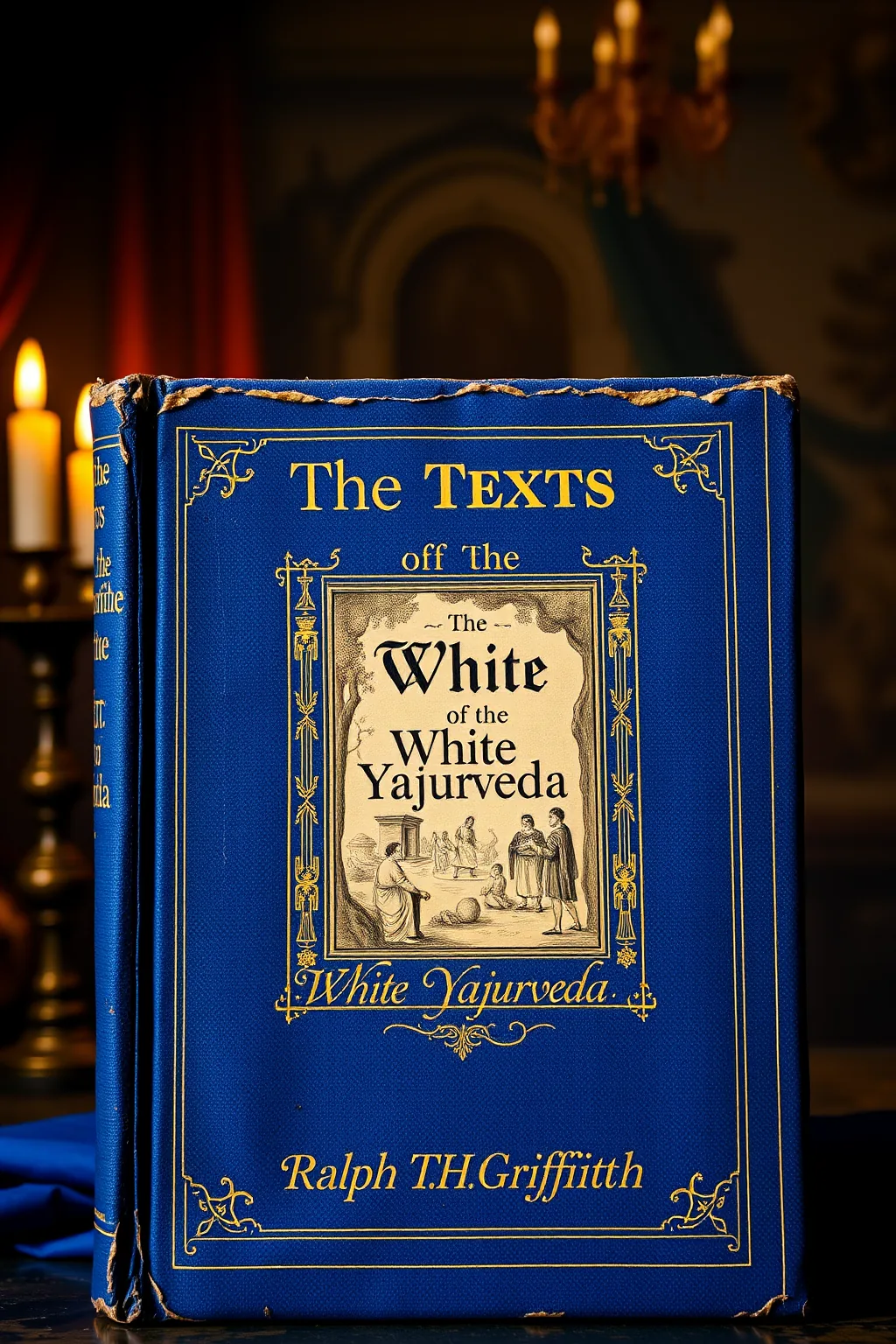
Ralph T. H. Griffith published his English translation of The Texts of the White Yajurveda in 1899.
This volume presents Griffith's 1899 translation of the Shukla Yajurveda, a major branch of Vedic scripture. It contains the verses and sacrificial formulas used in ancient Hindu rituals. Griffith's work aims to make these complex texts accessible.
The translation covers hymns and invocations central to understanding early Indian cosmology and spiritual practices. It details metaphysical concepts and methods for spiritual connection. The book is intended for those interested in the philosophical and ritualistic dimensions of the Vedas.
The White Yajurveda belongs to a tradition of Vedic literature focused on ritual (karma-kanda) and philosophical inquiry (jnana-kanda). Its hymns and prose sections detail the structure of sacrifices and their connection to cosmic principles. Griffith's translation makes these elements available to a wider audience interested in early Hindu esoteric thought and practice, placing it within the broader study of Vedic religion and philosophy.
✍️ Author
Ralph T H Griffith
Ralph T. H. Griffith was an English orientalist and translator of Sanskrit texts.
💡 Why Read This Book?
Uncover the foundational principles of Vedic cosmology and ritual. This translation offers direct access to hymns and sacrificial formulas that reveal ancient understandings of creation, consciousness, and the divine. It is ideal for students of comparative religion, esoteric philosophy, and those seeking to deepen their practice through ancient sacred texts.
⭐ Reader Reviews
Honest opinions from readers who have explored this book.
❓ Frequently Asked Questions
What is the significance of the 'White' Yajurveda?
The 'White' Yajurveda (Shukla) is distinguished by its organized arrangement of mantras and its focus on sacrificial formulas, making it a more structured and ritualistically oriented Veda compared to its 'Black' counterpart.
Who was Ralph T. H. Griffith?
Ralph T. H. Griffith was a prolific English scholar and translator renowned for his extensive work on Vedic literature, including translations of the Rigveda, the Atharvaveda, and the Yajurveda.
Is this translation suitable for beginners?
While the text is profound, Griffith's clear translation and the structured nature of the Shukla Yajurveda make it accessible to dedicated beginners willing to engage with its complex philosophical and ritualistic content.
What is the role of sacrifice in the White Yajurveda?
Sacrifice (Yajna) is central, viewed not just as ritualistic offering but as a cosmic act of maintaining universal order, facilitating communion with deities, and transforming consciousness.
Can this text be used for modern spiritual practice?
Yes, its hymns and philosophical insights can inspire meditation, contemplation, and a deeper understanding of universal principles, serving as a rich resource for modern spiritual seekers.
🔮 Key Themes & Symbolism
Cosmic Order and Sacrifice (Yajna)
The White Yajurveda deeply explores the concept of Yajna, the sacred sacrifice, not merely as a ritualistic act but as the fundamental principle by which the cosmos is sustained and order is maintained. It details the intricate connection between human actions, divine forces, and the cyclical nature of existence. Understanding Yajna reveals an ancient worldview where every offering, every mantra, contributes to the harmonious functioning of the universe and the individual's alignment with it.
The Nature of Brahman and the Divine
This translation offers clear insights into the Vedic understanding of Brahman, the ultimate reality, and the myriad deities that manifest its power and attributes. It looks at the philosophical underpinnings of creation, the relationship between the immanent and transcendent, and the quest for spiritual liberation. The hymns reveal a sophisticated cosmology, portraying the divine as both personal and impersonal, accessible through devotion and profound contemplation.
Mantra and Sonic Power
Central to the White Yajurveda is the power of the mantra – sacred utterances imbued with vibrational energy. The text elucidates how specific chants and formulas are used in ritual to invoke deities, shape reality, and achieve specific spiritual or material outcomes. This highlights an ancient understanding of the universe as a sonic range, where carefully crafted sounds can unlock hidden potentials and facilitate profound transformation, a key aspect of esoteric Vedic practice.
💬 Memorable Quotes
Direct passages from the work, attributed to the author.
“May our minds be directed towards goodness.”
— A fundamental aspiration for ethical conduct and spiritual purity, reflecting the Vedic emphasis on righteous thought as the precursor to virtuous action.
“Agni, the messenger, the priest of the sacrifice.”
— Highlights Agni, the fire god, as the vital intermediary between humanity and the divine, embodying transformation and the power of sacred offerings.
“He who knows the Veda, knows the Supreme.”
— Underscores the Vedic belief in the sacred texts as a direct pathway to ultimate knowledge and spiritual realization.
“Let us be united in spirit and purpose.”
— An invocation for harmony and collective consciousness, reflecting the social and spiritual interconnectedness emphasized in Vedic society.
“The sun illumines all beings.”
— A profound statement on the sun as a symbol of divine consciousness, universal life-force, and the source of all illumination and knowledge.
🌙 Esoteric Significance
Tradition
This text is a core part of the Vedic tradition, a foundational pillar of Hinduism, and a rich source for esoteric interpretations within yogic, tantric, and broader Indic spiritual philosophies. Its intricate rituals and philosophical underpinnings offer clear insights into an ancient system of cosmic understanding and spiritual discipline.
Symbolism
The White Yajurveda is replete with potent symbolism. Fire (Agni) represents purification and divine connection; the Sun (Surya) symbolizes consciousness and knowledge; the sacrifice (Yajna) embodies transformation and cosmic order. The structured arrangement of mantras itself signifies the power of divine order and the meticulous application of sacred science.
Modern Relevance
In an age seeking deeper meaning and spiritual grounding, the White Yajurveda offers timeless wisdom. Its emphasis on cosmic harmony, intentional action, and the power of focused intention through mantra resonates powerfully with modern seekers exploring consciousness, mindfulness, and the interconnectedness of all things.
👥 Who Should Read This Book
This translation is useful for scholars of religion and ancient texts, offering a primary source for Vedic studies. Spiritual seekers will find profound philosophical insights and practical guidance for contemplation and ethical living. Practitioners of yoga and meditation can draw inspiration from its focus on consciousness and ritual. Anyone interested in the historical and esoteric roots of major world religions will find this a foundational text for understanding ancient Indian cosmology and spiritual thought.
📜 Historical Context
Published in 1899, Ralph T. H. Griffith's translation emerged during a key era of Orientalist scholarship and burgeoning Western interest in Eastern philosophies. The late Victorian period saw a significant increase in the translation and study of ancient Sanskrit texts, driven by scholars seeking to understand the roots of human civilization and spirituality. Griffith's work contributed to this intellectual current, making the complex liturgical and philosophical content of the White Yajurveda accessible to a wider, English-speaking audience. This period laid crucial groundwork for the later influx of Vedic concepts into Western esoteric traditions and the New Age movement, influencing fields from comparative religion to modern spiritual practices.
📔 Journal Prompts
Reflect on the concept of Yajna in your daily life. How can you approach your actions as sacred offerings?
Meditate on the symbolism of Agni. What aspects of your life need purification or transformation?
Consider the Vedic understanding of Brahman. How does this concept of ultimate reality influence your perception of the world?
Explore the power of intention. How can focused thought and speech (mantra) shape your reality?
How can the pursuit of cosmic order be integrated into your personal life and community?
🗂️ Glossary
Veda
Ancient Sanskrit scriptures considered the foundational texts of Hinduism, revealing profound spiritual and philosophical knowledge.
Yajurveda
One of the four principal Vedas, primarily containing hymns and sacrificial formulas (mantras) essential for Vedic rituals.
Shukla Yajurveda
The 'White' branch of the Yajurveda, known for its systematic arrangement of mantras and focus on sacrificial rites.
Yajna
A Vedic ritual of sacrifice or offering, understood as a cosmic act of maintaining order and facilitating divine connection.
Mantra
Sacred hymns or words, often in Sanskrit, believed to possess spiritual power and transformative resonance when chanted.
This book appears in 1 collection
🔮 Readers Also Liked
Browse all →








More by Ralph T H Griffith
All books →


From the “Transcendental Meditation” Collection
View all →


![CIA Reading Room cia-rdp78t05439a000400230090-7: MENSURATION OF THE [ ]-BUKHARA CANAL, USSR](/img/thumb/cia-reading-room-cia-rdp78t05439a000400230090-7-mensuration-of-the-bukhara-canal-ussr-cia-reading-room.webp)






More Free Spiritual Development Books
View all →