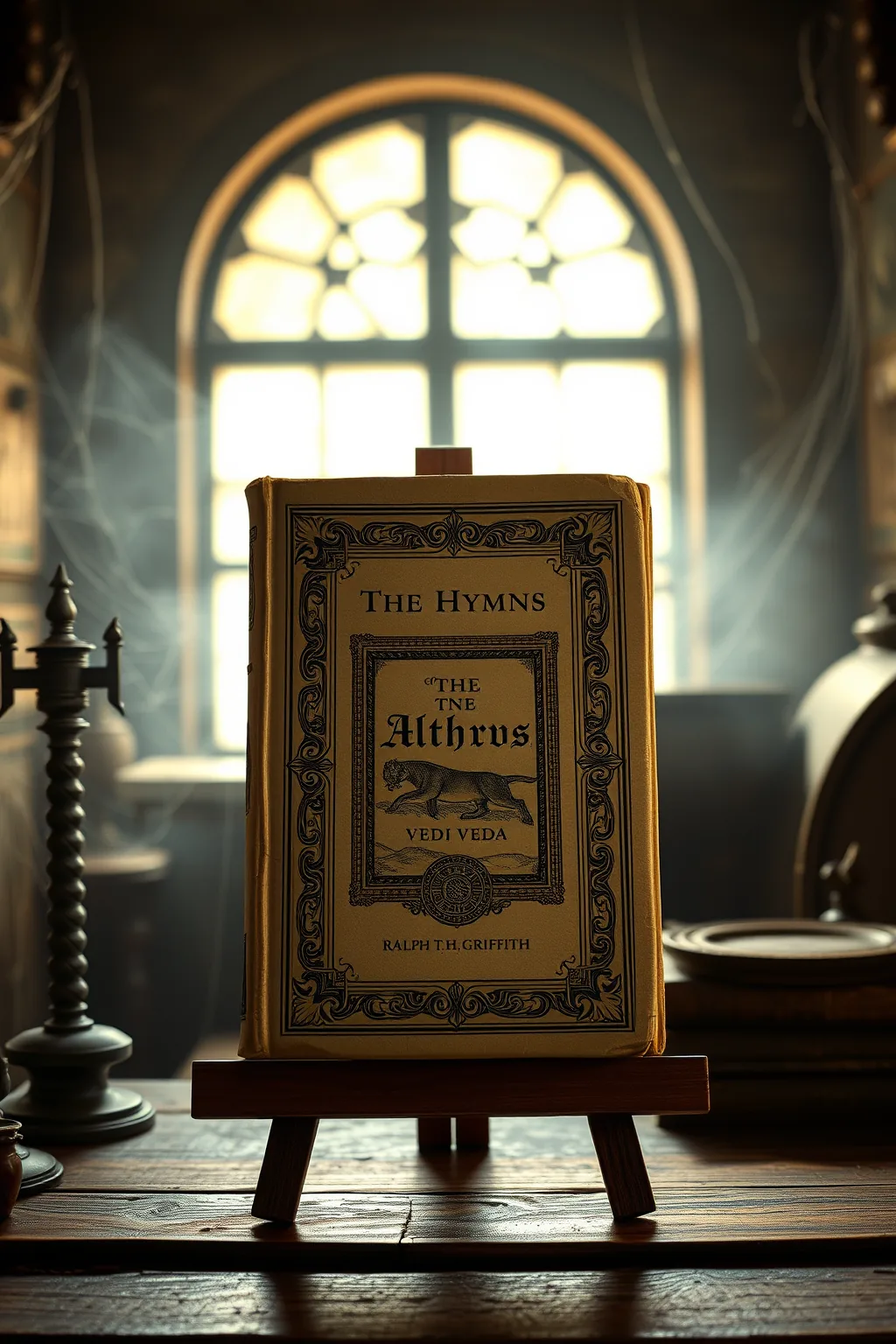
The Hymns of the Atharva Veda
 71
71

The Hymns of the Atharva Veda



Ralph T. H. Griffith's rendition of the Atharva Veda stands as a cornerstone for any serious student of esoteric Indian traditions. Unlike the more ritualistic Vedas, the Atharva Veda offers a potent glimpse into practical magic, healing arts, and the philosophical underpinnings of daily life in antiquity. Griffith's translation, while of its era, remains remarkably lucid, revealing the intricate network of spells and blessings designed to influence the material and spiritual realms. Its strength lies in its comprehensive scope, presenting the full spectrum of this unique Veda. This is an essential read for practitioners of Vedic magic, comparative mythologists, and anyone drawn to the hidden currents of ancient wisdom.
📝 Description
71
Ralph T. H. Griffith's 1895 translation makes the Atharva Veda's practical magic accessible.
Ralph T. H. Griffith's 1895 translation presents the Atharva Veda, the fourth and least understood of the Vedic scriptures. Unlike the Rigveda's focus on deities and sacrifice, the Atharva Veda contains hymns and spells for everyday life. It addresses concerns like healing, protection from illness, and warding off negative influences.
Griffith's translation makes this ancient lore understandable to contemporary readers. It reveals a worldview where the everyday and the supernatural are connected. This book is a guide to understanding fundamental forces and using them for personal development and practical aims. It is for those interested in the operative magic and psychological insights within ancient traditions, showing a spiritual system with real-world applications.
The Atharva Veda stands apart from the other Vedic Samhitas by focusing on empirical concerns and practical magic rather than solely on cosmic deities and elaborate rituals. It contains charms, spells, and incantations aimed at healing, longevity, protection, and influencing daily life. This focus on immanent power and the manipulation of unseen forces aligns it with shamanic and folk magical traditions found across cultures, offering a glimpse into a more grounded, operative spirituality within the broader Vedic framework.
✍️ Author
Ralph T H Griffith
Ralph T. H. Griffith was an English orientalist and translator of Sanskrit texts.
💡 Why Read This Book?
Uncover the practical magic and esoteric wisdom of ancient India. This translation of the Atharva Veda offers potent spells for healing, protection, and influencing life's challenges. Ideal for spiritual seekers, occult practitioners, and scholars interested in the practical application of Vedic lore. Explore a unique perspective on the intersection of the mundane and the mystical.
⭐ Reader Reviews
Honest opinions from readers who have explored this book.
❓ Frequently Asked Questions
What distinguishes the Atharva Veda from the other Vedas?
The Atharva Veda uniquely focuses on practical aspects of life, including spells, incantations, healing rituals, and charms for protection and prosperity, distinguishing it from the liturgical and sacrificial focus of the Rig, Sama, and Yajur Vedas.
Is this translation accessible for modern readers?
Ralph T. H. Griffith's translation, though from the 19th century, is renowned for its clarity and comprehensiveness, making the profound wisdom of the Atharva Veda accessible to contemporary students of esoteric traditions.
What kind of spells and incantations are included?
The collection features a wide array of incantations, from those aimed at curing diseases and ensuring good health to spells for protection against enemies, success in endeavors, and even those concerning domestic harmony and fertility.
Who is the intended audience for this book?
This book is ideal for scholars of Vedic studies, practitioners of ancient Indian spiritual or magical traditions, and anyone interested in the esoteric and practical dimensions of spirituality and the human condition.
Does this book offer insights into ancient Indian cosmology?
While primarily focused on practical applications, the hymns within the Atharva Veda implicitly reveal a worldview where divine forces and human intention are intimately connected, offering indirect insights into ancient Indian cosmological beliefs and their influence on daily life.
🔮 Key Themes & Symbolism
The Esoteric Power of Everyday Ritual
This theme explores how the Atharva Veda transforms mundane activities into potent spiritual practices. It explores the belief that the very fabric of daily life is imbued with divine energy, accessible through specific incantations and rituals. The hymns reveal a sophisticated understanding of sympathetic magic, where intent and action are harmonized to influence outcomes, offering a unique perspective on the interconnectedness of the material and spiritual realms. It highlights the Veda's role in empowering individuals to navigate life's challenges with ancient wisdom and focused intention.
Healing and Protection: Ancient Energetic Arts
A central focus is the Atharva Veda's profound engagement with the arts of healing and protection. This theme examines the detailed spells and remedies prescribed for physical and mental ailments, understood not just as biological issues but as imbalances within energetic fields. It explores the use of mantras, herbs, and symbolic actions to ward off negative influences, promote well-being, and create protective barriers. The hymns offer a glimpse into an ancient system of holistic health and spiritual defense, emphasizing the power of focused consciousness and sacred utterance to restore harmony and safety.
The Unseen Forces and Cosmic Harmony
This theme explores the Atharva Veda's acknowledgment and interaction with the unseen forces that govern existence. It discusses the hymns that address spirits, atmospheric phenomena, and cosmic energies, treating them not as distant deities but as active participants in the human drama. The collection reveals a worldview where maintaining cosmic harmony is intrinsically linked to individual and communal well-being. It highlights the Veda's function as a guide to understanding and respectfully engaging with these subtle powers, fostering a balance that supports life and spiritual evolution.
💬 Memorable Quotes
Direct passages from the work, attributed to the author.
“For the cure of disease, the warding off of evil.”
— This concise phrase captures the practical essence of the Atharva Veda, highlighting its focus on tangible well-being and the active mitigation of negative forces through sacred means.
“May the life-breath be long, may the body be strong.”
— A fundamental aspiration found within the hymns, revealing an ancient reverence for vitality and physical resilience, sought through spiritual means and divine favor.
“To drive away the darkness and bring forth the light.”
— Symbolic of the Veda's purpose: to dispel ignorance, suffering, and misfortune, ushering in clarity, prosperity, and spiritual illumination.
“The might of the spell, the power of the charm.”
— Directly references the operative nature of the Atharva Veda, emphasizing the efficacy of carefully crafted words and intentions to manifest desired outcomes.
“For protection from every foe, seen and unseen.”
— Illustrates the comprehensive scope of the Veda's protective spells, acknowledging the many-sided nature of threats and the need for holistic spiritual defense.
🌙 Esoteric Significance
Tradition
The Atharva Veda is a foundational text within the Vedic tradition of Hinduism, specifically representing its more practical, operative, and folk-magic dimensions. It is crucial to the study of Tantra, Ayurveda, and various indigenous healing and protective practices that evolved from its core principles, offering a bridge between the cosmological and the immanental.
Symbolism
Key symbols include potent herbs, fire (Agni) as a purifier and messenger, specific deities associated with healing and protection (like Indra and Soma), and the use of sacred threads, amulets, and ritualistic actions. These symbols represent the harnessing of natural and supernatural energies for specific purposes, embodying concepts of purification, warding, and life-force enhancement.
Modern Relevance
In contemporary times, the Atharva Veda's emphasis on holistic well-being, energetic healing, and the power of intention resonates deeply. Its spells and rituals offer practitioners modern tools for stress reduction, mental fortitude, and spiritual grounding, connecting them to an ancient lineage of wisdom for working through the complexities of the 21st century.
👥 Who Should Read This Book
This profound translation is essential for scholars of Vedic studies and comparative religion seeking a comprehensive understanding of ancient Indian spiritual practices. It is important for practitioners of esoteric traditions, particularly those interested in Vedic magic, healing arts, and spiritual protection. For the modern seeker, the Atharva Veda offers a unique perspective on the interplay between the mundane and the mystical, providing ancient wisdom for personal growth, well-being, and a deeper connection to life's subtle forces. Beginners will find it an accessible entry point into the practical magic of the ancient world.
📜 Historical Context
The Atharva Veda emerged in ancient India, likely between 1500 and 1000 BCE, a period of significant intellectual and spiritual development following the composition of the earlier Vedas. While the Rig, Sama, and Yajur Vedas focused on the priestly class and grand sacrificial rituals, the Atharva Veda reflects the more immediate concerns and folk traditions of the populace. It was initially considered by some to be of lesser importance, but its inclusion as the fourth Veda cemented its status as a vital repository of ancient Indian thought. Ralph T. H. Griffith's translation in 1895 occurred during the Victorian era's burgeoning interest in Eastern philosophies and religions, a time when scholars and mystics alike sought to decipher and integrate these ancient wisdom traditions into Western understanding.
📔 Journal Prompts
Reflect on a personal challenge and identify which Atharva Veda hymn or concept might offer guidance or a protective strategy.
Consider the concept of 'unseen forces' in your life. How do you perceive them, and how might ancient incantations offer a new perspective?
Explore the connection between physical health and spiritual well-being as presented in the Atharva Veda. How does this differ from modern perspectives?
Journal about the power of intention and spoken word. How can you consciously apply this in your daily life, inspired by the Veda's hymns?
Imagine you are an ancient Vedic practitioner. What would be your primary concerns for which you would seek the Atharva Veda's aid?
🗂️ Glossary
Veda
One of the four canonical scriptures of Hinduism, considered to be divinely revealed. The Atharva Veda is the fourth of these sacred texts, focusing on practical magic, healing, and worldly concerns.
Hymn
A sacred song or poem, typically used in religious worship or praise. In the Atharva Veda, hymns often contain specific incantations or blessings intended to achieve particular effects.
Incantation
A series of words said in a magical spell or charm. These are often rhythmic and imbued with spiritual or energetic power to influence events or beings.
Brahman
In Vedic philosophy, the ultimate reality or universal consciousness. While not the primary focus of the Atharva Veda's practical spells, it underlies the spiritual power behind them.
Agni
The Vedic god of fire, often seen as a messenger between humans and deities, and a purifier. Fire plays a significant role in many Atharva Veda rituals.
This book appears in 1 collection
🔮 Readers Also Liked
Browse all →









More by Ralph T H Griffith
All books →


From the “Transcendental Meditation” Collection
View all →








More Free Spiritual Development Books
View all →