The tarot
 63
63

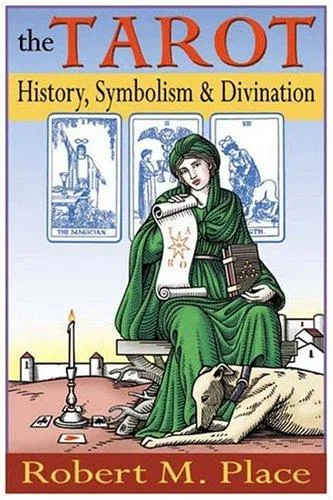
The tarot



Silas Hawthorne, Hermetic Studies Editor — Robert Michael Place's 'The Tarot' is a cornerstone for any serious student of esoteric symbolism. Eschewing popular mythology, Place offers a rigorously researched exploration of the Tarot's historical and philosophical roots, connecting it directly to Hermeticism and Renaissance occultism. His analysis of the Major Arcana's evolution is particularly illuminating, revealing a complex interplay of philosophical ideas and alchemical principles. This book is indispensable for practitioners seeking a deeper understanding of the deck's archetypal power and for scholars interested in the history of Western esotericism. It's a scholarly yet accessible testament to the Tarot's enduring mystical significance.
📝 Description
63
Robert Michael Place's 2005 book argues the Tarot originated in Renaissance Europe, not Egypt.
In this 2005 study, Robert Michael Place examines the Tarot's origins, proposing it emerged from 15th-century Europe rather than ancient Egypt. He tracks its development through Hermetic, alchemical, and Neoplatonic thought, aiming to correct widespread misconceptions. Place argues that the Tarot is a product of Western esoteric traditions. He analyzes its symbolism and philosophical structure, showing how these elements connect to historical occult practices.
The book aims to reveal the Tarot as a system of knowledge rooted in Western esotericism. It discusses the archetypal imagery and its connection to broader spiritual and philosophical currents. This work is for readers interested in understanding the historical and intellectual background of Tarot beyond its use as a divinatory tool.
This book situates the Tarot within the framework of Western esotericism, specifically connecting it to Hermeticism, alchemy, and Neoplatonism. It counters the popular notion of an ancient Egyptian origin, instead proposing a European genesis rooted in Renaissance intellectual currents. Place traces how these philosophical and mystical traditions shaped the Tarot's structure and symbolism, presenting it as a complex system of occult knowledge and spiritual philosophy. The work engages with the historical development of esoteric thought to explain the Tarot's visual language and its underlying meanings.
💡 Why Read This Book?
Uncover the true historical origins of the Tarot, moving beyond popular myths to its Renaissance European roots. Gain profound insights into the Hermetic, alchemical, and Neoplatonic influences that shaped its symbolism. Ideal for tarot practitioners seeking a deeper understanding, scholars of Western esotericism, and curious minds drawn to the intersection of history and mysticism.
⭐ Reader Reviews
Honest opinions from readers who have explored this book.
❓ Frequently Asked Questions
Did the Tarot originate in ancient Egypt?
No, Robert Michael Place meticulously demonstrates that the Tarot deck, as we know it, developed during the Middle Ages and Renaissance in Europe, not in ancient Egypt. The book debunks this common misconception.
What esoteric traditions influenced the Tarot's creation?
The book highlights significant influences from Hermeticism, alchemy, and Neoplatonism, revealing how these philosophical and mystical systems are woven into the fabric of the Tarot's imagery and structure.
Is this book suitable for beginners?
While rich in historical detail, the book's clarity and logical progression make it accessible to dedicated beginners interested in a foundational understanding of the Tarot's true origins and esoteric connections.
What distinguishes this book from other Tarot guides?
Unlike many guides focused solely on interpretation, this book offers a deeply historical and philosophical exploration of the Tarot's evolution, providing context and unveiling its original esoteric intent.
Can this book enhance my Tarot practice?
Absolutely. Understanding the historical and philosophical underpinnings of the Tarot can profoundly deepen your intuitive readings, revealing layers of meaning and empowering your connection to the archetypes.
🔮 Key Themes & Symbolism
The Hermetic Roots of the Tarot
This theme explores the profound influence of Hermetic philosophy on the development of the Tarot. It explores how the principles of Hermes Trismegistus, including the concept of 'as above, so below,' and the pursuit of gnosis, are embedded within the Tarot's archetypal imagery. The book illuminates how the Tarot served as a visual representation of complex Hermetic doctrines, offering a symbolic map for spiritual ascent and understanding the interconnectedness of the cosmos and the human soul. Readers will discover how these ancient wisdom traditions provided the foundational language for the Tarot's symbolic lexicon.
Alchemical Symbolism and Transformation
Robert Michael Place masterfully unpacks the intricate alchemical symbolism woven into the Tarot deck. This theme explores how the stages and processes of alchemical transformation – from nigredo (blackening) to albedo (whitening) and rubedo (reddening) – are mirrored in the journey of the Major Arcana. The book reveals how alchemical metaphors for spiritual purification, the integration of opposites, and the quest for the Philosopher's Stone are encoded within the cards. Understanding these alchemical underpinnings provides a powerful framework for interpreting the Tarot's transformative potential for personal growth and spiritual evolution.
Neoplatonic Visions and Archetypal Forms
The Neoplatonic influence on the Tarot is explored as a key to understanding its metaphysical dimensions. This theme examines how the Tarot reflects Neoplatonic concepts of emanation from the One, the hierarchy of being, and the journey of the soul back to its divine source. Place demonstrates how the archetypal figures and narratives within the Tarot serve as symbolic representations of these philosophical ideals, providing a visual language for contemplating universal truths. Readers will gain a deeper appreciation for the Tarot as a system that bridges the material and the spiritual, reflecting the Neoplatonic pursuit of ultimate reality.
💬 Memorable Quotes
Direct passages from the work, attributed to the author.
“Its true lineage lies not in distant lands, but in the fertile ground of European thought.”
— Highlights the book's central thesis debunking Egyptian origins and focusing on the European Renaissance as the Tarot's true birthplace.
“Within each card lies an echo of ancient wisdom, waiting to be heard.”
— Suggests that the Tarot contains profound, timeless knowledge accessible through careful study and intuitive understanding.
“The journey through the Major Arcana is an alchemical unfolding of the soul.”
— Connects the Tarot's progression to the transformative processes of alchemy, framing personal growth as a spiritual quest.
“To understand the Tarot is to glimpse the archetypal language of the universe.”
— Positions the Tarot as a fundamental symbolic system that allows us to comprehend universal principles and human experience.
💡 Key Ideas
Editorial paraphrase of the work's core concepts — not direct quotes.
The Tarot is a mirror reflecting the hidden architecture of the cosmos.
This quote emphasizes the Tarot's role as a symbolic system that reveals universal patterns and connections, mirroring the structure of reality.
🌙 Esoteric Significance
Tradition
The Tarot's esoteric significance is deeply rooted in the Western Esoteric Tradition, particularly drawing from Hermeticism, Neoplatonism, and Renaissance occultism. It is viewed as a symbolic language that encodes profound metaphysical truths, a 'key' to understanding the structure of the universe and the journey of the soul. Place's work emphasizes its role as a tool for gnosis, offering insights into divine principles and the interconnectedness of all things, aligning with the Hermetic pursuit of wisdom and spiritual enlightenment.
Symbolism
The symbolism of the Tarot is rich and multilayered, serving as a visual representation of archetypal forces and cosmic principles. The Major Arcana, in particular, are seen as stages in a spiritual journey or embodiments of universal concepts like justice, temperance, and wisdom. Place highlights how these images draw from a deep well of Hermetic and alchemical imagery, acting as mnemonic devices and catalysts for introspection, allowing practitioners to engage with the symbolic language of the unconscious and the divine.
Modern Relevance
In the modern era, 'The Tarot' by Robert Michael Place offers a vital corrective to superficial interpretations, grounding the practice in its rich historical and philosophical context. Its relevance lies in providing a robust framework for understanding the Tarot not merely as a fortune-telling device, but as a profound tool for self-discovery, spiritual growth, and psychological exploration. By understanding its esoteric underpinnings, contemporary seekers can engage with the Tarot's archetypal wisdom to navigate life's challenges and cultivate a deeper connection to their inner selves and the universal currents of existence.
👥 Who Should Read This Book
This key work is essential for dedicated Tarot practitioners seeking to move beyond superficial interpretations and connect with the deck's profound historical and philosophical roots. Scholars of Western esotericism and Renaissance history will find it an invaluable, rigorously researched resource. New Age seekers interested in the intersection of mysticism, symbolism, and ancient wisdom will be captivated. Even those new to the Tarot but drawn to its archetypal power will find this book an enlightening and foundational introduction to its true esoteric nature.
📜 Historical Context
Robert Michael Place situates the Tarot's emergence within the vibrant intellectual and spiritual field of 15th and 16th century Europe. This era was a crucible of change, marked by the Renaissance's rediscovery of classical philosophies, the burgeoning interest in Hermeticism and Neoplatonism, and the secretive yet influential practices of alchemy. The creation of early Tarot decks, often for aristocratic entertainment, coincided with a period when esoteric ideas were not confined to cloistered scholars but permeated art, literature, and even courtly life. This fertile ground allowed for the synthesis of existing symbolic systems into a novel form, the Tarot, which acted as a visual compendium of the era's deepest philosophical and mystical inquiries, offering a unique lens through which to view the world and the human condition.
📔 Journal Prompts
Reflect on the concept of 'as above, so below' as it relates to a card in the Tarot that speaks to you.
How do the alchemical stages of transformation (nigredo, albedo, rubedo) manifest in your personal journey, and which Tarot card might represent this process?
Consider a card that you find particularly challenging to interpret. How might its Neoplatonic influences offer a new perspective?
If the Tarot is a mirror to the cosmos, what aspect of the universe does your favorite Tarot card reflect most clearly?
How can understanding the Tarot's historical context enhance your intuitive readings today?
🗂️ Glossary
Hermeticism
A philosophical and religious tradition based on the writings attributed to Hermes Trismegistus, emphasizing esoteric wisdom, the unity of all things, and the pursuit of spiritual enlightenment through knowledge.
Alchemy
An ancient proto-scientific and philosophical practice focused on transforming base metals into gold, but more importantly, on spiritual purification and the transmutation of the self towards enlightenment.
Neoplatonism
A philosophical school of thought originating in the Roman Empire, based on the teachings of Plato, emphasizing the existence of a supreme, transcendent 'One' from which all reality emanates.
Archetype
A universal, archaic pattern or image that derives from the collective unconscious and is believed to influence human behavior and understanding, often represented in mythology and symbolism.
Gnosis
Knowledge, especially spiritual knowledge, that is understood as a direct, intuitive insight into divine truths, often achieved through mystical experiences or esoteric teachings.
This book appears in 3 collections
🔮 Readers Also Liked
Browse all →
More by Robert Michael Place
All books →
From the “Tarot” Collection
View all →
More Free Divination & Tarot Books
View all →