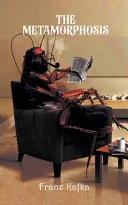
The Metamorphosis
 79
79

The Metamorphosis
Kafka's "The Metamorphosis" plunges the reader into an immediate, disorienting reality. The strength of the work lies in its unflinching depiction of Gregor Samsa's physical and psychological disintegration, presented with a stark, almost bureaucratic detachment that amplifies the horror. The novella excels at portraying the erosion of empathy; Gregor’s family’s evolving reactions—from initial horror to pragmatic disgust and eventual relief at his demise—are chillingly rendered. A notable limitation, however, is the lack of explicit explanation for Gregor's transformation, which, while contributing to the absurd, can leave some readers yearning for a more grounded, albeit symbolic, anchor. The scene where Gregor’s father pelts him with apples, an act of profound familial violence, remains particularly potent and disturbing. "The Metamorphosis" endures as a stark examination of alienation and the fragile nature of human connection.
📝 Description
79
Franz Kafka published "The Metamorphosis" in 1915, detailing Gregor Samsa's transformation into an insect.
Gregor Samsa wakes one morning to find himself transformed into a monstrous vermin. The novella explores his struggle to adapt to this new physical form and the profound alienation it brings. His family’s initial shock quickly turns to revulsion and neglect, revealing the fragility of familial bonds when faced with extreme circumstances. The narrative is told from Gregor’s limited perspective, emphasizing his isolation and the loss of his humanity.
Kafka’s work critiques the dehumanizing effects of modern life, particularly the capitalist system that values individuals based on their economic output. Gregor’s transformation strips away his identity and agency, forcing him and his family to confront the arbitrary nature of existence. The story examines how societal pressures and the breakdown of communication can lead to profound isolation and the disintegration of domestic relationships.
While not explicitly esoteric, "The Metamorphosis" taps into anxieties surrounding identity and the unknown. Kafka’s depiction of an inexplicable, grotesque transformation resonates with themes found in certain Gnostic traditions that question the material world's inherent flaws and the alienation of the spirit. The novella’s focus on the breakdown of the self and the emergence of a monstrous other can be seen as a literary exploration of internal fragmentation and the struggle against forces that defy rational understanding, mirroring a sense of cosmic dread.
💡 Why Read This Book?
• Understand the visceral impact of alienation as depicted through Gregor Samsa's transformation into an insect, a core element of the novella’s existential exploration. • Grasp the critique of modern economic systems, where Gregor’s value shifts from employee to burden, revealing the dehumanizing aspects of labor as shown in his family’s reaction. • Witness the stark portrayal of familial breakdown, particularly through the father’s violent rejection of Gregor, illustrating the fragility of bonds when confronted with the grotesque.
⭐ Reader Reviews
Honest opinions from readers who have explored this book.
❓ Frequently Asked Questions
When was Franz Kafka's "The Metamorphosis" first published?
Franz Kafka's "The Metamorphosis" was first published on July 14, 2022, as part of a collection of his works.
What is the central theme of "The Metamorphosis"?
The central themes revolve around alienation, the absurdity of existence, and the dehumanizing effects of modern life, all explored through Gregor Samsa's transformation.
How does Gregor Samsa's family react to his transformation?
Initially shocked, Gregor's family gradually shifts to disgust and neglect. Their reactions evolve from care to resentment and ultimately to relief after his death, highlighting their conditional affection.
What does Gregor Samsa transform into?
Gregor Samsa transforms into a monstrous vermin or giant insect, a transformation that isolates him physically and emotionally from his family and the world.
Is "The Metamorphosis" considered an existentialist work?
Yes, "The Metamorphosis" is widely considered a foundational text of existentialism due to its exploration of themes like alienation, freedom, and the search for meaning in an absurd world.
What is the significance of the apple thrown by Gregor's father?
The apple thrown by Gregor's father symbolizes familial rejection and violence. It inflicts a grievous wound that contributes to Gregor's decline and represents the ultimate breakdown of their relationship.
🔮 Key Themes & Symbolism
Alienation and Isolation
Gregor Samsa's transformation into an insect is a powerful metaphor for profound alienation. Cut off from human society and even his own family by his grotesque new form, he experiences an absolute isolation. This theme resonates within esoteric traditions that explore the soul's separation from the material world or the individual's struggle against cosmic indifference. His inability to communicate and his family's revulsion underscore the terrifying chasm that can form between beings, a chasm often contemplated in Gnostic thought regarding the soul's estrangement from its divine origin.
The Absurdity of Existence
The novella confronts the reader with the inherent absurdity of life, where a man can inexplicably transform into a giant bug without reason. This aligns with existentialist and absurdist philosophies that question inherent meaning. Esoterically, this can be viewed as a confrontation with the chaotic, unpredictable nature of the cosmos, where divine order may be absent or incomprehensible. Gregor's attempts to maintain normalcy in the face of his bizarre reality mirror the esoteric seeker's quest for understanding in a universe that often defies logical explanation.
Dehumanization and Societal Critique
Gregor's value to his family and employer is intrinsically linked to his function as a traveling salesman. Once he can no longer work, he becomes a burden, his humanity stripped away by his economic uselessness. This reflects a critique of capitalist systems and the objectification of individuals. Esoterically, this speaks to the dangers of identifying oneself solely with external roles or material achievements, a common warning in spiritual paths that emphasize inner essence over outer form. The novella illustrates how societal structures can foster a profound lack of empathy.
Familial Duty vs. Self-Preservation
The story explores the fraught dynamics of familial obligation. Gregor initially feels bound to support his family, but his transformation forces a re-evaluation of these bonds. His family, in turn, grapples with their duty to care for him versus their own desires for a normal life, ultimately prioritizing their own comfort. This tension mirrors spiritual dilemmas where the demands of the material world and personal relationships conflict with the path of spiritual liberation or self-discovery.
💬 Memorable Quotes
Direct passages from the work, attributed to the author.
“He was lying on his armour-hard back and saw, as he lifted his head a little, his brown, segmented belly, down over which the duvet, barely keeping its shape, was about to slide off completely.”
— This is a visceral description of Gregor's new physical state, emphasizing the alien and grotesque nature of his insect form. It grounds the surreal transformation in stark, uncomfortable physical detail.
“What if they decided that he had to go, and then packed everything away, his whole past life, and that he had to vanish into the grave?”
— Here, Gregor contemplates his potential demise and erasure, reflecting his profound sense of worthlessness and fear of abandonment. It speaks to the existential dread of non-being and the loss of identity.
“He understood that he must now try to show them that, despite his condition, he was still capable of thought and feeling, and that he did not want to be driven out.”
— This reveals Gregor's internal struggle to assert his humanity and retain agency in the face of his family's growing rejection. It underscores the persistent human desire for recognition and belonging.
“As Gregor was thrust out of the door, the chief clerk, holding his umbrella stiffly, looked at him over his spectacles with his head thrust forward and his eyebrows drawn up.”
— This image signifies Gregor's complete expulsion from his social and professional world. The chief clerk's disdainful gaze, coupled with the stiff umbrella, represents the cold, judgmental society from which Gregor is now irrevocably separated.
💡 Key Ideas
Editorial paraphrase of the work's core concepts — not direct quotes.
He felt a strong urge to be at his desk, to get on the train, to greet the boss, and to get up early for the journey.
This quote captures Gregor's initial, desperate clinging to his former life and responsibilities, even as his physical reality has fundamentally changed. It highlights the inertia of habit and the human tendency to resist profound existential shifts.
🌙 Esoteric Significance
Tradition
While not explicitly belonging to a single esoteric tradition, "The Metamorphosis" strongly appeals to Gnostic and existentialist themes of alienation and the soul's estrangement from a flawed material world. The Gnostic idea of the material world as a prison and humanity as sparks of divinity trapped within it finds a parallel in Gregor's grotesque physical form that isolates him. The work's focus on the individual's subjective experience and the search for meaning in an apparently indifferent or hostile universe aligns with existentialist interpretations, which often draw on the hermeneutics of suffering and transformation.
Symbolism
Gregor's transformation into a 'monstrous vermin' is a potent symbol of the ego's complete subjugation or corruption by the material or primal self. His room, initially a space of human comfort, becomes a cage, symbolizing the entrapment of the spirit within a diseased physical or psychological state. The apple lodged in Gregor's back by his father represents a deep, wounding betrayal by the familial or societal structure, symbolizing the 'fall' from grace and the internalization of rejection, which ultimately leads to disintegration.
Modern Relevance
Contemporary thinkers in fields ranging from philosophy to psychology continue to draw on "The Metamorphosis" for its enduring exploration of alienation and identity. Its themes are particularly relevant in discussions of transhumanism, disability studies, and the psychological impact of isolation, especially in the digital age. Existential psychotherapists often reference Kafka's work to illustrate the subjective experience of dread and the human condition. The novella remains a touchstone for understanding societal attitudes towards those who deviate from perceived norms.
👥 Who Should Read This Book
• Students of existentialist literature and philosophy seeking primary texts that exemplify themes of absurdity and alienation. • Comparative literature scholars interested in early 20th-century European modernism and its critique of societal structures. • Readers exploring the psychological impact of isolation and familial breakdown, particularly those interested in how external circumstances can redefine personal identity.
📜 Historical Context
Published in 1915, "The Metamorphosis" emerged during the height of European modernism and amidst the escalating tensions leading to World War I. Franz Kafka wrote this novella in a period marked by intellectual ferment, including the rise of psychoanalysis and existentialist thought, which questioned traditional notions of selfhood and reality. Kafka's work stood apart from more overtly political or social realist narratives of the time. Its reception was not immediately widespread; for instance, it was not until later decades that its profound influence on existentialist literature, championed by figures like Jean-Paul Sartre, became widely recognized. The novella's unsettling blend of the mundane and the grotesque defied easy categorization and challenged contemporary literary conventions, making it a peculiar but significant text of its era.
📔 Journal Prompts
Gregor Samsa's physical transformation and its effect on his familial relationships.
The chief clerk's reaction to Gregor's absence and subsequent appearance.
The symbolism of the apple lodged in Gregor's back.
The family's evolving perception of Gregor from provider to burden.
The significance of Gregor's inability to communicate his inner state.
🗂️ Glossary
Novella
A short novel, typically longer than a short story but shorter than a full-length novel. "The Metamorphosis" is a prime example, focusing intensely on a single, transformative event.
Absurdism
A philosophical stance that highlights the conflict between humanity's search for meaning and the universe's apparent lack of it. Kafka's work is often cited as a literary manifestation of absurdist thought.
Alienation
A state of estrangement or isolation from oneself, others, work, or society. Gregor Samsa's transformation is a literal and metaphorical embodiment of alienation.
Existentialism
A philosophical movement emphasizing individual existence, freedom, and choice. Key themes include dread, absurdity, and the search for meaning in a meaningless world, all present in "The Metamorphosis".
Monstrous Vermin
The term used to describe Gregor Samsa's transformed state. It emphasizes his grotesque and dehumanized condition, stripping him of his former identity and societal place.
Grotesque
A style of art or literature that distorts or exaggerates the natural, often to create a sense of the bizarre, unnatural, or repellent. Gregor's insect form is a classic example.
Modernism
A broad movement in early 20th-century art and literature characterized by a deliberate break with traditional styles and a focus on experimentation, subjectivity, and the fragmentation of experience.