The Complete Encyclopedia of Practical Palmistry
 79
79

The Complete Encyclopedia of Practical Palmistry
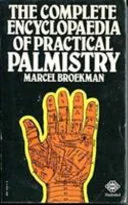
Marcel Broekman's 1972 volume, The Complete Encyclopedia of Practical Palmistry, attempts a monumental task: to distill the sprawling art of palmistry into an exhaustive reference. Its strength lies in its sheer comprehensiveness; Broekman catalogues an impressive array of palm features, from the minutiae of minor lines to the interpretation of finger lengths and nail shapes. The section on hand shapes, categorizing them into elemental types like 'Earth' and 'Air,' offers a solid foundation for beginners. However, the work occasionally falters under its own weight. The prose, while informative, can become dense, and the rigid classification system, while providing structure, sometimes struggles to accommodate the inherent fluidity and nuance of individual palms. A notable passage details the 'Apollo line' and its connection to artistic or creative success, offering a clear example of the book's detailed approach. Despite its occasional academic dryness, the encyclopedia remains a valuable resource for serious students of chiromancy.
📝 Description
79
Marcel Broekman's 1972 encyclopedia presents a systematic approach to reading the hand.
This manual details the art and science of chiromancy, moving beyond simple fortune-telling. Broekman analyzes the lines, mounts, and shapes of the hand as a map of character, potential, and life pathways. The text meticulously outlines the significance of various hand lines, including the Life Line, Head Line, Heart Line, and Fate Line, along with their variations and interpretations. It also addresses the influence of the mounts, such as Venus, Jupiter, and Saturn, and classifies overall hand shapes into distinct types associated with elemental energies and personality traits. The book emphasizes the dynamic nature of the palm, suggesting that readings can evolve over time. It is suited for students of esoteric arts interested in physiognomy and divination, offering a structured method to understand human nature through palm analysis. Those engaged in comparative occult studies or historical perspectives on divination will find value within its pages. Broekman's work sought to codify existing knowledge, drawing from older traditions while presenting them in an accessible format. It arrived during a period of renewed interest in occultism, offering a more detailed approach than many contemporary guides.
Published in 1972, this encyclopedia emerged during a period of increasing interest in occultism and esoteric traditions, often seen as a precursor to the New Age movement. Broekman's work distinguished itself from simpler, popular palmistry guides of the mid-20th century by adopting a more academic and detailed approach. It aimed to organize and codify existing palmistry knowledge, drawing upon historical traditions but making them available to a wider audience. The book addresses concepts like the dynamic nature of palm readings, suggesting an evolving interpretation rather than a fixed destiny.
💡 Why Read This Book?
• Gain a structured understanding of hand analysis, moving beyond superficial predictions by learning to interpret the specific 'Mounts of Venus' and their influence on character, as detailed by Broekman. • Explore the historical context of palmistry in the early 1970s, understanding how this work codified existing knowledge and differentiated itself from simpler fortune-telling pamphlets of the era. • Acquire a practical framework for interpreting the 'Head Line' and its variations, enabling you to analyze cognitive styles and mental aptitudes with greater precision than generic personality tests.
⭐ Reader Reviews
Honest opinions from readers who have explored this book.
❓ Frequently Asked Questions
What is the primary focus of The Complete Encyclopedia of Practical Palmistry?
The book focuses on chiromancy, offering a detailed system for reading the palm. It examines hand shapes, finger formations, mounts, and the major and minor lines to interpret character, potential, and life events, presented systematically for serious study.
When was The Complete Encyclopedia of Practical Palmistry first published?
The book was first published in 1972, positioning it within a period of renewed interest in esoteric subjects and occult studies.
Is this book suitable for absolute beginners in palmistry?
Yes, while comprehensive, the book's systematic approach and clear explanations make it accessible for beginners serious about learning the art of palmistry.
Does the book only focus on predicting the future?
No, while it addresses predictive aspects, the primary emphasis is on understanding character, innate talents, and psychological tendencies through palm analysis, as suggested by the detailed charting of lines and mounts.
What makes Marcel Broekman's approach different?
Broekman's approach is distinguished by its encyclopedic detail and systematic organization, aiming to present palmistry as a coherent system of knowledge rather than just simple fortune-telling.
Can the information in this book be used for self-understanding?
Absolutely. The book's detailed analysis of hand features, such as the 'Mount of Apollo,' provides insights into personal strengths, weaknesses, and potential life paths, facilitating self-reflection and personal growth.
🔮 Key Themes & Symbolism
The Hand as a Cartographic Tool
This work posits the palm not as a static image, but as a dynamic map reflecting an individual's inherent nature and evolving destiny. Broekman meticulously details how specific lines, like the Fate Line, and subtle markings can chart significant life events and personality traits. The approach treats the hand as a living document, offering insights into psychological makeup and potential trajectories, moving beyond simple prognostication to a form of embodied cartography.
Elemental Hand Typology
A core concept presented is the classification of hands based on elemental associations (Earth, Air, Fire, Water). Broekman elaborates on how distinct hand shapes and finger proportions correspond to these archetypal energies. Understanding these elemental typologies, such as the broad, square hand associated with Earth, is presented as fundamental to grasping an individual's core disposition and approach to life's challenges.
Micro-Analysis of Palm Features
The encyclopedia studies an exhaustive catalog of palm features, from the prominent 'Mounts' like Jupiter and Saturn to minor lines and even the shape of the fingernails. Broekman provides detailed interpretations for each, emphasizing that even the smallest detail can offer significant clues about character, health, and fortune. This granular focus encourages a precise and nuanced reading of the hand.
The Dynamic Nature of the Palm
Contrary to static interpretations, Broekman stresses that the palm is not fixed. The book explores how lines can change, deepen, fade, or even break over time, reflecting shifts in an individual's life, choices, and personal development. This perspective encourages ongoing engagement with palmistry as a tool for self-awareness that evolves alongside the individual.
💬 Memorable Quotes
Direct passages from the work, attributed to the author.
“Each line, mount, and finger tells a story of character, circumstance, and destiny.”
— This conceptual summary underscores the book's comprehensive approach, suggesting that every feature of the hand contributes to a narrative of the individual's life, from innate qualities to external influences.
“The classification of hands into elemental types provides a foundational key to interpretation.”
— This highlights the importance of Broekman's system of categorizing hands (e.g., Earth, Air) as a primary step in understanding an individual's core personality and life approach.
“The Life Line indicates vitality and major events, not necessarily the length of one's days.”
— This clarification addresses a common misconception, emphasizing that the Life Line relates more to the quality and significant experiences of life rather than mere duration.
“The evolution of palm lines mirrors the evolution of the individual.”
— This statement emphasizes the dynamic aspect of palmistry as presented in the book, suggesting that changes in the hand reflect personal growth and shifts in life circumstances.
💡 Key Ideas
Editorial paraphrase of the work's core concepts — not direct quotes.
The hand is a mirror of the soul, reflecting its deepest truths and latent potentials.
This paraphrase highlights the book's central tenet: that the palm offers useful insights into an individual's inner landscape and undeveloped capacities, serving as a key to self-understanding.
🌙 Esoteric Significance
Tradition
This work firmly resides within the Western esoteric tradition of chiromancy, which has roots stretching back to ancient Greece and has been continuously developed through various philosophical and mystical lenses. Broekman's encyclopedia can be seen as an attempt to synthesize and systematize the diverse streams of palmistry knowledge that had accumulated over centuries, presenting it in a format suitable for the late 20th-century seeker interested in divination and physiognomy.
Symbolism
Key symbols include the 'Mounts' of the hand, such as the Mount of Jupiter (representing ambition and leadership) and the Mount of Saturn (associated with wisdom and responsibility). The major lines – the Life Line, Head Line, and Heart Line – are central motifs, each symbolizing different facets of existence: vitality and physical well-being, intellect and thought processes, and emotions and relationships, respectively.
Modern Relevance
Contemporary practitioners of Western esotericism, particularly those focused on divination, psychological astrology, and somatic divination, often reference foundational texts like Broekman's. Its systematic approach continues to inform modern palmistry practices, offering a detailed lexicon for analyzing hand features that can be integrated with other divinatory systems or used for psychological self-exploration.
👥 Who Should Read This Book
• Aspiring palmists seeking a comprehensive, structured guide to the art of chiromancy, from basic line interpretations to advanced mount analysis. • Students of esoteric history interested in understanding the development of divination practices in the mid-20th century and how this book codified existing knowledge. • Individuals focused on psychological self-discovery who wish to explore character traits, aptitudes, and potential life patterns through the lens of hand analysis.
📜 Historical Context
Published in 1972, Marcel Broekman's *The Complete Encyclopedia of Practical Palmistry* emerged during a period of burgeoning interest in esoteric studies, often associated with the counterculture and early New Age movements. This era saw a resurgence of interest in various occult traditions, moving beyond the more rigid, Victorian-era spiritualism. Broekman's work distinguished itself by offering a systematic, almost academic, codification of chiromancy, presenting a detailed framework that contrasted with the more casual fortune-telling guides prevalent at the time. While figures like Dane Rudhyar were exploring psychological interpretations of astrology, Broekman focused on a comprehensive, almost encyclopedic, cataloging of palmistry's elements. The book's detailed approach aimed to legitimize palmistry as a serious art of character analysis and self-discovery, catering to a readership seeking structured knowledge in metaphysical disciplines.
📔 Journal Prompts
Reflect on the specific characteristics of your own 'Mount of Venus' and its described influence on your temperament.
Compare the interpretation of your 'Head Line' in this text with your perceived cognitive style.
Consider how the elemental classification of your hand shape aligns with your general approach to life.
Analyze the presence and clarity of the 'Apollo line' on your dominant hand and its potential connection to creative expression.
Map the major lines on your non-dominant hand and consider how they might represent innate potential versus acquired characteristics.
🗂️ Glossary
Chiromancy
The practice of divination and character analysis through the study of the palm, including lines, mounts, and hand shapes. It is often referred to as palmistry.
Mounts
The fleshy, raised areas on the palm, named after planets (e.g., Mount of Jupiter, Mount of Venus), believed to correspond to specific character traits and potentials.
Life Line
The semi-circular line that typically curves around the base of the thumb. It is interpreted as relating to vitality, physical well-being, and significant life experiences.
Head Line
The horizontal line running across the palm below the heart line. It is primarily associated with intellect, mental abilities, and communication styles.
Heart Line
The uppermost horizontal line on the palm, running across the hand below the fingers. It is traditionally linked to emotional life, relationships, and romantic inclinations.
Fate Line
A vertical line, often starting near the wrist and extending upwards towards the fingers. It is interpreted as relating to career, life path, and external influences.
Elemental Hand Types
A classification system categorizing hands (and their associated personalities) into four types based on elements: Earth (square palms, short fingers), Air (square palms, long fingers), Fire (oblong palms, short fingers), and Water (oblong palms, long fingers).
This book appears in 1 collection
🔮 Readers Also Liked
Browse all →






From the “Palmistry” Collection
View all →








More Free Occult Philosophy Books
View all →