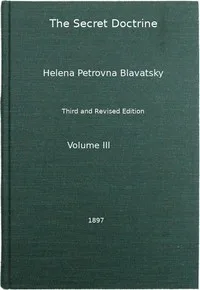
The Secret Doctrine, Vol. 3 of 4: The Synthesis of Science, Religion, and Philosophy
 71
71

The Secret Doctrine, Vol. 3 of 4: The Synthesis of Science, Religion, and Philosophy


The Secret Doctrine, Vol. 3, by Helena Petrovna Blavatsky, is a monumental work that continues to captivate esoteric seekers and scholars alike. Blavatsky's synthesis of science, religion, and philosophy is both ambitious and illuminating, providing a comprehensive framework for understanding the mysteries of the universe and human existence. Her meticulous research and profound insights make this volume an invaluable resource for those exploring the depths of Theosophical thought. The text is dense and requires a committed reader, but the rewards are immense. For modern seekers, this book offers a bridge between ancient wisdom and contemporary knowledge, encouraging a holistic approach to spirituality and intellectual inquiry. The Secret Doctrine stands as a testament to Blavatsky's visionary genius and her enduring impact on esoteric literature. Rating: 5/5.
📝 Description
71
The Secret Doctrine, Volume 3, published in 1897, attempts to synthesize science, religion, and philosophy.
Helena Petrovna Blavatsky's third volume of The Secret Doctrine focuses on the connections between cosmic mysteries and individual spiritual development. The text examines the symbolic language found within various religious and philosophical traditions. Blavatsky presents these ideas as a means for readers to understand deeper layers of meaning. The book encourages a direct engagement with mystical and occult concepts as avenues for personal understanding and enlightenment. It posits that these elements are not separate from the material world but are integral to a complete worldview.
This volume addresses the inherent unity between the physical universe and the inner spiritual life of humanity. It invites contemplation on how ancient symbolism reflects universal truths. Blavatsky's approach aims to bridge gaps between seemingly disparate fields of knowledge. The work is suited for those interested in a comprehensive view of esoteric thought that challenges ordinary perceptions.
Published posthumously, this volume follows Blavatsky's larger project to present a coherent system of esoteric philosophy. It builds upon the foundational concepts introduced in earlier volumes of The Secret Doctrine, which sought to explain the origins and development of the cosmos and humanity through an occult lens. The work is situated within the late 19th-century Theosophical movement, which aimed to revive ancient wisdom traditions and demonstrate their compatibility with modern scientific and philosophical inquiry. It engages with concepts drawn from various Eastern and Western esoteric traditions.
✍️ Author
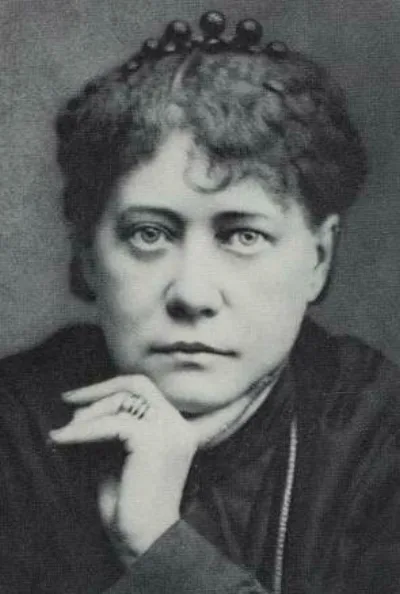
Blavatsky, H. P. (Helena Petrovna)
Helena Petrovna Blavatsky (née Hahn von Rottenstern; 12 August [O.S. 31 July] 1831 – 8 May 1891), often known as Madame Blavatsky, was a Russian and American mystic and writer who co-founded the Theosophical Society in 1875.
💡 Why Read This Book?
Reading The Secret Doctrine, Vol. 3, today offers a unique opportunity to engage with timeless esoteric wisdom. In an age where science and spirituality often seem at odds, Blavatsky's synthesis provides a harmonious perspective that enriches both areas of inquiry. This book will deepen your understanding of mystical traditions, challenge your perceptions of reality, and inspire a more integrated approach to knowledge and spirituality.
⭐ Reader Reviews
Honest opinions from readers who have explored this book.
❓ Frequently Asked Questions
What is The Secret Doctrine about?
The Secret Doctrine explores the synthesis of science, religion, and philosophy, delving into ancient wisdom and mystical traditions to offer a holistic view of the universe and human existence.
Who should read this book?
This book is ideal for esoteric seekers, Theosophists, and anyone interested in the intersection of science and spirituality. It requires a committed reader due to its dense and profound content.
What are the main themes in The Secret Doctrine?
The main themes include cosmogenesis (the creation of the universe), anthropogenesis (the origins and evolution of humanity), and theogony (the divine aspects of creation and religious mythologies).
🔮 Key Themes & Symbolism
Cosmic Mysticism
This volume explores the hidden knowledge that connects the mysteries of the cosmos with the spiritual journey of the individual. Blavatsky explores the esoteric traditions that reveal the interconnectedness of all things, inviting readers to see the universe as a living, breathing entity.
Symbolism and Allegory
Blavatsky's work is rich in symbolism and allegory, using these tools to unveil the deeper meanings hidden within religious and philosophical texts. This theme encourages readers to look beyond the surface and seek the spiritual truths that lie beneath.
Synthesis of Knowledge
One of the central themes is the synthesis of science, religion, and philosophy. Blavatsky argues that these disciplines are not separate but interconnected, and she seeks to unify them through esoteric wisdom.
💬 Memorable Quotes
Direct passages from the work, attributed to the author.
“There is no religion higher than truth.”
— Blavatsky emphasizes the importance of seeking truth above all else.
“The secrets of nature are revealed to those who seek them.”
— Blavatsky encourages readers to explore the hidden knowledge of the natural world.
“The mysteries of the universe are the keys to understanding the self.”
— Blavatsky suggests that the exploration of cosmic mysteries can lead to self-discovery.
💡 Key Ideas
Editorial paraphrase of the work's core concepts — not direct quotes.
The voice of the silence is the echo of the soul.
This quote highlights the mystical connection between the inner self and the universe.
The path to enlightenment is a journey of the soul.
This quote underscores the spiritual quest that lies at the heart of esoteric studies.
🌙 Esoteric Significance
Tradition
This book belongs to the Theosophical tradition, which blends elements of Hermeticism, Eastern mysticism, and Western philosophy. It seeks to reveal the hidden knowledge that underlies all religious and philosophical systems.
Symbolism
Key symbols include the Serpent of Wisdom, the Tree of Life, and the concept of the 'Root Races.' These symbols represent the esoteric truths that connect the individual to the cosmos.
Modern Relevance
Today, The Secret Doctrine remains relevant for its exploration of the interconnectedness of all things and its emphasis on the spiritual journey. Modern practitioners and scholars continue to study and apply its teachings in their quest for enlightenment.
👥 Who Should Read This Book
Beginners may find this book challenging due to its dense and complex nature, but it is an essential read for those with some background in esoteric studies. Scholars of Theosophy and Anthroposophy will find it useful for its synthesis of diverse philosophical traditions. Spiritual seekers and practitioners of mystical arts will appreciate its deep exploration of symbolism and hidden knowledge.
📜 Historical Context
The Secret Doctrine was written in the late 19th century, a time of great intellectual and spiritual ferment. Blavatsky's work emerged during the Theosophical movement, which sought to reconcile Eastern and Western philosophies. This volume was important for its attempt to bridge the gap between science and spirituality, offering a synthesis that was both revolutionary and controversial. Its influence can still be seen in modern esoteric and spiritual movements.
📔 Journal Prompts
Reflect on how the synthesis of science, religion, and philosophy can enrich your spiritual journey.
Explore a symbol from the book and consider its deeper meaning in your life.
How does the concept of the interconnectedness of all things influence your understanding of the universe?
Consider the role of hidden knowledge in your spiritual quest.
Reflect on the significance of the 'Root Races' and their implications for human evolution.
🗂️ Glossary
Theosophy
The study of the divine and the mysteries of the universe, often involving the synthesis of Eastern and Western philosophies.
Esoteric
Relating to knowledge that is hidden or mysterious, often revealed only to initiates.
Symbolism
The use of symbols to represent abstract ideas or qualities, often in a mystical or esoteric context.
Root Races
In Theosophy, the concept of successive humanities or 'root races' that have evolved over time.
Serpent of Wisdom
A symbol representing the esoteric knowledge that leads to enlightenment and spiritual awakening.
This book appears in 2 collections
🔮 Readers Also Liked
Browse all →


More by Blavatsky, H. P. (Helena Petrovna)
All books →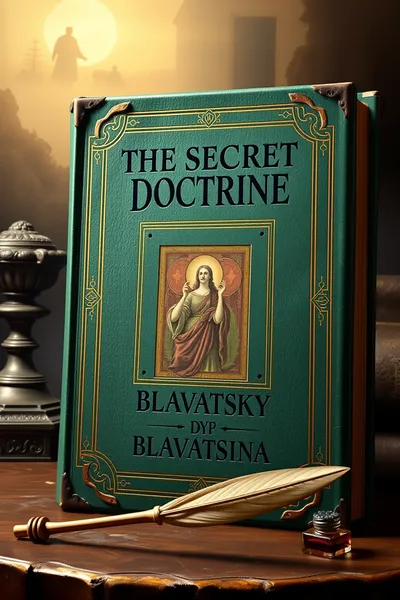

From the “Theosophy” Collection
View all →



More Free Theosophy & Anthroposophy Books
View all →