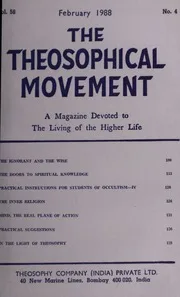
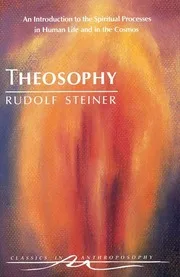
R. Steiner, Theosophy!
 76
76

R. Steiner, Theosophy!



Rudolf Steiner's 'Theosophy' stands as a timeless classic in the world of esoteric literature. For modern seekers, this book offers a profound exploration of spiritual truths that remain relevant in today's fast-paced world. Steiner's ability to synthesize Eastern and Western spiritual traditions provides a unique perspective that enriches the reader's understanding of the human experience. The book's clarity and depth make it an invaluable resource for those seeking to deepen their spiritual practice. Steiner's insights into reincarnation, karma, and the nature of the human spirit are particularly enlightening, offering practical applications for personal growth and spiritual development. 'Theosophy' is a must-read for anyone interested in the occult and esoteric traditions, providing a solid foundation for further exploration into Anthroposophy and other spiritual paths.
📝 Description
76
Rudolf Steiner's 'Theosophy!' was published in 1904, presenting his initial public exposition of spiritual science.
This book is Rudolf Steiner's first major public work on spiritual science, written in 1904. It lays out his understanding of the cosmos and human development, drawing from the Theosophical Society's teachings but diverging significantly into his own philosophical system. Steiner discusses the nature of thought, the evolution of consciousness, and the possibility of clairvoyant perception.
The text addresses the structure of the universe, including concepts like the etheric and astral bodies, and the process of reincarnation. Steiner explains how humanity and the Earth have evolved through different stages and outlines a path for future spiritual growth. He presents these ideas as verifiable through spiritual research, distinct from religious dogma or purely material science.
The book is intended for those interested in understanding the spiritual dimensions of existence and the potential for human evolution. It offers a framework for interpreting life's mysteries and a guide to developing inner faculties. Steiner's work here is a foundational text for his later, more extensive writings on Anthroposophy.
Published in 1904, 'Theosophy!' emerged from the Theosophical Society movement, then led by Annie Besant and Helena Blavatsky. Steiner's work adopted Theosophical terminology and concepts, such as the seven planes of existence, root races, and the development of higher senses. However, he quickly began to shape these ideas into his unique philosophical system, Anthroposophy, emphasizing the individual's capacity for direct spiritual cognition through disciplined thinking and inner development, rather than solely relying on received esoteric doctrines.
💡 Why Read This Book?
Reading 'Theosophy' by Rudolf Steiner today offers a profound journey into the depths of spiritual wisdom. This book provides a comprehensive introduction to theosophical principles, making it an essential read for anyone interested in esoteric and occult studies. By exploring the relationships between the physical, astral, and spiritual worlds, readers gain a deeper understanding of their own spiritual nature and the interconnectedness of all things. Steiner's insights into reincarnation, karma, and the human spirit offer practical tools for personal growth and spiritual enlightenment. This ebook version makes Steiner's timeless wisdom accessible to modern readers, ensuring that his teachings continue to inspire and guide spiritual seekers.
⭐ Reader Reviews
Honest opinions from readers who have explored this book.
❓ Frequently Asked Questions
What is the main focus of 'Theosophy' by Rudolf Steiner?
'Theosophy' focuses on the fundamental principles of theosophy, including reincarnation, karma, and the nature of the human spirit. It also explores the relationships between the physical, astral, and spiritual worlds.
Is this book suitable for beginners in esoteric studies?
Yes, 'Theosophy' is written in an accessible style that makes complex spiritual ideas approachable for beginners. It serves as an excellent introduction to theosophical principles and Anthroposophy.
How does 'Theosophy' differ from other esoteric texts?
'Theosophy' stands out for its synthesis of Eastern and Western spiritual traditions, providing a unique perspective that enriches the reader's understanding of the human experience.
🔮 Key Themes & Symbolism
Spiritual Enlightenment
Steiner's work looks at the profound journey of spiritual awakening, guiding readers through the mystical realms to achieve higher consciousness and enlightenment. This theme is central to understanding the hidden knowledge that underlies our existence.
Hidden Knowledge
Theosophy! uncovers the esoteric truths and hidden wisdom that have been passed down through the ages. Steiner's explorations into this hidden knowledge provide readers with a deeper understanding of the universe and their place within it.
Symbolism and Philosophy
Steiner's rich use of symbolism and philosophical insights creates a set of meaning that illuminates the path to spiritual enlightenment. This theme is essential for those seeking to understand the deeper significance of esoteric traditions.
💬 Memorable Quotes
Direct passages from the work, attributed to the author.
“Symbolism is the language of the soul, revealing the mysteries of the universe.”
— Steiner's use of symbolism highlights the deep connection between the spiritual and the tangible, making it a key aspect of his teachings.
“Theosophy offers a bridge between the esoteric and the tangible, providing a path to higher consciousness.”
— Steiner's work bridges the gap between hidden knowledge and practical wisdom, making it accessible to all seekers.
💡 Key Ideas
Editorial paraphrase of the work's core concepts — not direct quotes.
The path to spiritual enlightenment begins with the recognition of the hidden knowledge within.
This quote emphasizes the importance of acknowledging the esoteric truths that guide our spiritual journey.
The seeker of truth must examine the depths of the mystical to find enlightenment.
This quote underscores the necessity of exploring the esoteric dimensions of life to achieve true spiritual understanding.
The journey of spiritual awakening is one of self-discovery and enlightenment.
This quote expresses the essence of Steiner's teachings, emphasizing the personal and transformative nature of the spiritual journey.
🌙 Esoteric Significance
Tradition
Theosophy! belongs to the esoteric tradition of Theosophy and Anthroposophy, which seeks to uncover the hidden knowledge of the universe and the human spirit. Steiner's work is rooted in the Hermetic and Gnostic traditions, drawing on ancient wisdom to illuminate the path to spiritual enlightenment.
Symbolism
Key symbols in 'Theosophy!' include the use of spiritual archetypes and esoteric imagery, which serve to reveal the deeper meanings of existence. Steiner's exploration of symbolism provides readers with a wide range of meaning, guiding them through the mystical realms to achieve higher consciousness.
Modern Relevance
Today, 'Theosophy!' remains relevant for its timeless insights into spiritual symbolism and philosophical significance. Modern practitioners continue to draw on Steiner's teachings to deepen their understanding of the esoteric traditions, making it an essential resource for spiritual seekers and scholars alike.
👥 Who Should Read This Book
Beginners in the field of Theosophy will find 'Theosophy!' to be an invaluable introduction to the mystical dimensions of life, offering a comprehensive guide to spiritual enlightenment. Scholars of esoteric traditions will appreciate Steiner's clear insights and philosophical significance, making it a must-read for academic study. Spiritual seekers will benefit from the book's exploration of hidden knowledge and symbolism, providing a rich foundation for personal growth and transformation. Practitioners of Theosophy and Anthroposophy will find 'Theosophy!' to be an essential resource for deepening their understanding of the spiritual path.
📜 Historical Context
R. Steiner's 'Theosophy!' was written during a time of great spiritual and intellectual ferment, when esoteric traditions were gaining renewed interest. The early 20th century saw a resurgence of interest in Theosophy and Anthroposophy, with Steiner's work playing an important role in shaping these movements. His insights into hidden knowledge and spiritual symbolism provided a foundation for modern esoteric thought, influencing countless practitioners and scholars. The book's enduring relevance lies in its ability to transcend time, offering timeless wisdom to seekers of spiritual truth.
📔 Journal Prompts
Reflect on the hidden knowledge that Steiner explores in 'Theosophy!'. How does this knowledge influence your understanding of the universe?
Consider the symbolism used in the book. How does it reveal deeper meanings of existence?
How does Steiner's exploration of spiritual enlightenment resonate with your own spiritual journey?
In what ways does 'Theosophy!' bridge the gap between the esoteric and the tangible for you?
What insights from 'Theosophy!' have you found most transformative in your quest for spiritual truth?
🗂️ Glossary
Theosophy
Theosophy is a philosophical and religious movement that seeks to uncover the hidden knowledge of the universe and the human spirit, often drawing on esoteric traditions and symbolism.
Anthroposophy
Anthroposophy is a spiritual movement founded by Rudolf Steiner, focusing on the development of the human being and the exploration of spiritual realms through esoteric teachings.
Spiritual Enlightenment
Spiritual enlightenment refers to the process of achieving higher consciousness and a deeper understanding of the mystical dimensions of life, often through the exploration of hidden knowledge and symbolism.
Esoteric Traditions
Esoteric traditions are spiritual and philosophical movements that emphasize hidden knowledge and mystical practices, often drawing on ancient wisdom and symbolism.
Symbolism
Symbolism in esoteric literature refers to the use of archetypes and imagery to reveal deeper meanings of existence and guide the spiritual journey.
This book appears in 2 collections
🔮 Readers Also Liked
Browse all →





From the “Theosophy” Collection
View all →





More Free Theosophy & Anthroposophy Books
View all →