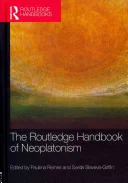
The Routledge Handbook of Neoplatonism
 72
72

The Routledge Handbook of Neoplatonism
The Routledge Handbook of Neoplatonism succeeds in its ambitious goal of surveying a vast and complex philosophical landscape. Its strength lies in the breadth of its coverage, with over thirty chapters by leading scholars addressing everything from the sources of Neoplatonic thought to its influence on later esoteric traditions. The section on Iamblichus, for instance, provides a nuanced look at his integration of theurgy into the Platonic framework, a crucial development often simplified. However, the sheer volume and academic rigor can occasionally feel overwhelming for the uninitiated, and some chapters assume a prior familiarity with specific Greek philosophical terms that might have benefited from more explicit definition within the text itself. Despite this, the handbook offers an indispensable resource for anyone serious about understanding this foundational school of ancient thought. It is an essential reference for dedicated scholars of philosophy and esoteric studies.
📝 Description
72
Published in 2014, this handbook surveys the philosophical system of Plotinus and his successors.
This collection provides a thorough overview of Neoplatonism, the philosophical system originating with Plotinus and continued by thinkers like Porphyry, Iamblichus, and Proclus. It examines the intellectual history, central ideas, and varied interpretations of this tradition across different times and places. The handbook is intended for advanced students, academics, and researchers specializing in ancient philosophy, classical studies, and religious history who want a deep dive into primary texts and scholarly works.
Its 2014 publication coincided with a renewed academic focus on Neoplatonism, employing new philosophical and historical methods beyond traditional textual analysis. The work positions Neoplatonism not just as a product of late antiquity but as a significant force shaping later philosophical and religious thought, including early Christianity and Islamic philosophy. It covers core Neoplatonic concepts such as the One, Intellect (Nous), the Soul, emanation, theurgy, and the soul's ascent. The contributors discuss how these concepts were formulated and debated by key figures and schools, illustrating the system's internal logic and adaptability.
Neoplatonism represents a significant branch of esoteric philosophy, originating in late antiquity with Plotinus. It posits a hierarchical structure of reality emanating from an ultimate, ineffable principle, the One. The system emphasizes mystical ascent and the purification of the soul to achieve union with the divine. Early Christian, Jewish, and Islamic thinkers, as well as Renaissance occultists, drew heavily on Neoplatonic metaphysics and cosmology, integrating its ideas into their own mystical and philosophical frameworks. This handbook examines that foundational role and the philosophical underpinnings of these esoteric traditions.
💡 Why Read This Book?
• Gain a structured understanding of the core Neoplatonic hierarchy, from The One to the material world, as detailed in sections discussing Plotinus's concept of emanation, allowing for a clearer grasp of its metaphysical architecture. • Explore the intricate relationship between philosophy and religious practice through an examination of theurgy, as presented in chapters dedicated to Iamblichus, revealing how ancient thinkers sought divine union. • Trace the extensive influence of Neoplatonism beyond its immediate era, with specific discussions on its impact on early Christian thinkers and later Islamic philosophy, demonstrating its enduring intellectual legacy.
⭐ Reader Reviews
Honest opinions from readers who have explored this book.
❓ Frequently Asked Questions
When was The Routledge Handbook of Neoplatonism first published?
The Routledge Handbook of Neoplatonism was first published in April 2014, reflecting a significant period of scholarly engagement with ancient philosophy and its enduring impact.
Who are the primary editors of this handbook?
The handbook is edited by Pauliina Remes and Svetla Slaveva-Griffin, both respected scholars in the field of ancient philosophy, who curated contributions from an international team of experts.
What are the main sections covered in the book?
The book is divided into seven clear parts, covering (Re)sources, instruction and interaction, metaphysics, ethics, epistemology, and the influence of Neoplatonism on later thought and religion.
Does the handbook discuss Neoplatonism's influence on later esoteric traditions?
Yes, a significant portion of the handbook is dedicated to exploring Neoplatonism's profound and widespread influence on various philosophical and religious schools worldwide, including esoteric movements.
Is this handbook suitable for beginners in Neoplatonism?
While comprehensive, the handbook is aimed at scholars and advanced students. Beginners might find its academic depth challenging and could benefit from introductory texts before engaging with this detailed survey.
What key figures of Neoplatonism are discussed?
The handbook extensively covers the major figures of Neoplatonism, including Plotinus, Porphyry, Iamblichus, and Proclus, examining their individual contributions and the evolution of the school.
🔮 Key Themes & Symbolism
Theurgy and Divine Union
This handbook meticulously examines the concept of theurgy, particularly as developed by Iamblichus, distinguishing it from earlier Platonic traditions. It explores how rituals and invocations were seen not as mere superstition, but as vital tools for the soul's ascent towards the divine. The discussions highlight the practical dimension of Neoplatonic philosophy, revealing it as a path to spiritual purification and ultimate union with the One, moving beyond purely intellectual contemplation.
Emanation and Metaphysical Hierarchy
Central to Neoplatonic thought is the doctrine of emanation, the process by which all reality flows from an ultimate, transcendent principle, the One. This handbook details how Plotinus and his followers conceptualized this hierarchy, moving from the One to Intellect (Nous), then to Soul, and finally to the material world. Understanding this emanation is key to grasping the Neoplatonic worldview, which posits an ordered cosmos with each level participating in the perfection of the source.
Neoplatonism's Enduring Legacy
Beyond its ancient context, the handbook traces the remarkable influence of Neoplatonism across centuries and cultures. It details how its ideas permeated early Christian theology, Gnosticism, and Islamic philosophy, shaping mystical traditions and metaphysical discourse. This section underscores Neoplatonism's role not just as a historical philosophical system but as a living current that continues to inform esoteric thought and practice today.
The Ascent of the Soul
A core theme explored is the Neoplatonic understanding of the soul's journey. The handbook elucidates the various stages and challenges involved in the soul's return to its divine source, often depicted as an ascent through different levels of reality. This involves intellectual purification, ethical discipline, and, in some schools like Iamblichus', the practice of theurgy to facilitate this homecoming.
💬 Memorable Quotes
Direct passages from the work, attributed to the author.
“The work explores the intricate relationship between the intelligible realm and the sensible world.”
— This captures the Neoplatonic view that the physical universe is a reflection or emanation of a higher, more perfect reality, and that understanding this connection is crucial for philosophical insight.
“Scholars re-evaluate Neoplatonism's position within the history of ancient philosophy.”
— This signifies a scholarly effort to move beyond viewing Neoplatonism as merely a late or derivative philosophy, instead recognizing its foundational role and unique contributions to Western thought.
“The handbook examines Neoplatonism's influence on philosophical and religious schools worldwide.”
— This highlights the expansive reach of Neoplatonic ideas, showing how they were adapted and integrated into diverse traditions, from early Christianity to Islamic mysticism and beyond.
“Theurgy is presented as a means of divine communion.”
— This interpretation points to the practical, ritualistic aspect of Neoplatonism, particularly in the school of Iamblichus, where sacred rites were considered essential for spiritual progress and union with the divine.
“The nature of the One as an ineffable source is a recurring topic.”
— This emphasizes the fundamental Neoplatonic concept of the ultimate reality, the One, which transcends all categories of being and thought, serving as the ultimate origin of all existence.
🌙 Esoteric Significance
Tradition
This handbook is central to understanding the Western Esoteric Tradition, particularly its Platonic and Hermetic currents. While Neoplatonism itself is a philosophical system, its emphasis on theurgy, mystical ascent, and the hierarchical structure of reality directly informed later Hermetic revivalists, Rosicrucians, and Freemasons. It provides the philosophical bedrock for many esoteric practices aimed at spiritual transformation and communion with divine principles, distinguishing it from purely theoretical philosophical inquiry.
Symbolism
Key symbols explored include the 'One' as the ultimate, ineffable source, transcending all description, and 'Nous' (Intellect) as the area of divine Ideas or Forms. The concept of 'emanation' is itself symbolic, representing the benevolent outpouring of being from the One. The 'ascent of the soul' is also a potent motif, symbolizing the arduous but achievable journey of spiritual purification and return to the divine origin, often depicted through allegorical narratives.
Modern Relevance
Contemporary esoteric practitioners and thinkers, particularly those within the Western Esoteric Tradition, frequently draw upon Neoplatonic concepts. Modern Hermeticists, ceremonial magicians, and philosophical occultists often reference Plotinus, Iamblichus, and Proclus for their understanding of metaphysics, cosmology, and the soul's journey. The handbook provides scholars and practitioners with the rigorous philosophical framework necessary to engage with these ancient ideas as they manifest in contemporary spiritual and philosophical movements.
👥 Who Should Read This Book
• Advanced students of philosophy and classics seeking a deep dive into the origins and development of Neoplatonism, offering detailed analyses of primary texts and scholarly debates. • Researchers in comparative religion interested in Neoplatonism's extensive influence on early Christianity, Gnosticism, and Islamic mysticism, providing crucial context for these traditions. • Aspiring practitioners of Western Esotericism looking to understand the philosophical underpinnings of traditions like Hermeticism, requiring a solid grasp of concepts like theurgy and the soul's ascent.
📜 Historical Context
The Routledge Handbook of Neoplatonism, published in 2014, arrived at a time when Neoplatonism was enjoying a significant resurgence in academic study, moving beyond traditional philological analysis to embrace philosophical and comparative approaches. This period saw scholars like Pierre Hadot re-examining ancient philosophy as a way of life, a perspective that informed many contemporary readings of Neoplatonism's practical and spiritual dimensions. The handbook situates Neoplatonism not as an isolated late antique curiosity but as a central force that profoundly shaped subsequent intellectual history. Its contributors engage with the ongoing debate about Neoplatonism's relationship with early Christian thought, a dialogue that intensified following the works of scholars like Werner Jaeger and Henri-Charles Puech. The book addresses how Neoplatonic ideas were absorbed, adapted, or reacted against by various traditions, including Manichaeism and early Islamic philosophy, demonstrating its pervasive influence across the Mediterranean and beyond during the Roman and early Byzantine periods.
📔 Journal Prompts
The Neoplatonic hierarchy of the One, Intellect, and Soul: how does this structure offer a framework for understanding existence?
Reflect on the Neoplatonic concept of theurgy as a path to the divine, considering its implications for spiritual practice.
Analyze Plotinus's notion of the soul's 'flight from the body' and its relation to philosophical contemplation.
Consider the impact of Neoplatonism on later philosophical and religious traditions discussed in the handbook.
Examine the role of Porphyry's commentaries and editorial work in preserving and transmitting Neoplatonic texts.
🗂️ Glossary
The One
The ultimate, transcendent principle in Neoplatonism, beyond being and all categories. It is the source from which all reality emanates, described as absolute unity and goodness.
Nous (Intellect)
The second hypostasis in Neoplatonism, emanating from the One. It is the area of the Forms or Ideas, where divine thought resides and perfect intelligibility exists.
Soul (Psyche)
The third hypostasis, emanating from Nous. It bridges the intelligible and sensible worlds, possessing both rational and lower faculties, and is the seat of individual consciousness and life.
Emanation
The process by which reality flows or proceeds from the One in a necessary, non-destructive manner, akin to light from the sun. It describes the hierarchical unfolding of existence.
Theurgy
A set of religious rites and practices, particularly associated with Iamblichus, intended to facilitate the soul's ascent and communion with the divine through ritual action and invocation.
Hypostasis
A fundamental reality or principle, particularly referring to the distinct levels of being (The One, Nous, Soul) in Neoplatonic metaphysics.
Ascent of the Soul
The Neoplatonic doctrine describing the soul's journey of purification and return to its divine origin, involving intellectual, ethical, and sometimes spiritual practices.
This book appears in 1 collection
🔮 Readers Also Liked
Browse all →


![Tales of Mystery and Imagination [29 stories]](/img/thumb/tales-of-mystery-and-imagination-29-stories-edgar-allan-poe-397462.webp)






From the “Neoplatonism” Collection
View all →







More Free Occult Philosophy Books
View all →