The training of the Zen Buddhist monk

 82
82

The training of the Zen Buddhist monk
Daisetsu Teitaro Suzuki's "The Training of the Zen Buddhist Monk," first published in 1959, offers a granular examination of monastic life that often eludes popular accounts. Suzuki avoids romanticizing the path, instead presenting the stark reality of disciplined practice. A particular strength lies in his detailed descriptions of daily routines, illustrating how mundane tasks become vehicles for spiritual awareness. For instance, the section detailing the meticulous way monks approach chores like sweeping or preparing meals reveals the integration of mindfulness into every action, a concept Suzuki presents as fundamental to the training. However, the prose, while informative, can sometimes feel dense, occasionally requiring rereading to fully grasp the nuances of the philosophical points being made. The work's focus is intensely on the internal process, which might leave readers seeking more on the external socio-historical impact of Zen monasticism wanting. Despite this, it provides an invaluable, unvarnished look at the discipline required. It is an essential, if demanding, study for anyone seeking to understand the lived experience of Zen.
📝 Description
82
Published in 1959, Daisetsu Teitaro Suzuki's The Training of the Zen Buddhist Monk details the rigorous life within a monastery.
This book offers a direct look into the spiritual and psychological training Zen Buddhist monks undergo. Suzuki meticulously details the daily routines, philosophical underpinnings, and meditative practices that shape a monk's existence. It moves beyond superficial descriptions to examine the internal transformation sought through disciplined study and practice, focusing on the systematic development of a Zen practitioner.
The work is for serious students of Buddhism, particularly those interested in the practical application of Zen principles. Scholars of comparative religion will find it useful for understanding monastic life and the historical development of Buddhist thought. Individuals exploring mindfulness, meditation, and the pursuit of inner peace through structured discipline will also find significant value here. It presents a comprehensive account of the training regimen, contrasting with more generalized introductions to Zen philosophy.
Emerging in 1959, this work appeared as Western interest in Eastern philosophies grew post-World War II. Daisetsu Teitaro Suzuki, a key interpreter of Zen for the West, aimed to demystify the monastic path. It presented a systematic account of the training regimen, offering a deeper understanding of Zen practice than many popular introductions of the era.
💡 Why Read This Book?
• Understand the rigorous, practical application of Zen principles through the specific discipline of monastic training, as exemplified by the daily schedules and koan study detailed in the text. • Grasp the core concept of "no-self" (anatta) not as an abstract idea, but as a lived reality cultivated through practices like zazen and mindful engagement in chores, as described from the 1959 publication. • Gain insight into the role of the master (roshi) and the student's direct, experiential path to enlightenment (satori), moving beyond intellectual understanding to a transformative inner state.
⭐ Reader Reviews
Honest opinions from readers who have explored this book.
❓ Frequently Asked Questions
When was 'The Training of the Zen Buddhist Monk' originally published?
The book was first published in 1959, a significant period for the dissemination of Eastern spiritual traditions in the West.
Who is Daisetsu Teitaro Suzuki and why is he important?
D.T. Suzuki (1870-1966) was a prolific Japanese author and scholar instrumental in introducing Zen Buddhism to the Western world through his numerous books and lectures.
What is 'zazen' as described in the book?
Zazen, central to Zen training, refers to seated meditation, a practice detailed in the book as the core method for cultivating mindfulness and insight.
Does the book discuss the role of the Zen master?
Yes, the text explains the crucial relationship between the Zen monk and their master (roshi), who guides the student through their spiritual development and koan study.
What is a 'koan' in the context of Zen training?
A koan is a paradoxical riddle or question used in Zen Buddhism to break down rational thought processes and provoke direct, intuitive understanding.
Is this book suitable for absolute beginners to Buddhism?
While informative, the book details advanced monastic training. Absolute beginners might benefit from introductory texts on Buddhism before engaging with Suzuki's specific focus.
🔮 Key Themes & Symbolism
Discipline and Daily Practice
The training emphasizes that spiritual realization is not separate from everyday life. The book meticulously details how mundane activities, from cleaning temple grounds to preparing meals, are elevated to forms of spiritual practice. This integration is crucial; it's through the disciplined repetition and mindful execution of these tasks that monks are meant to erode ego-consciousness and cultivate present-moment awareness, a core tenet of Zen philosophy explored since its early 20th-century Western introduction.
The Role of the Master and Koan Study
Central to the monk's journey is the guidance of a Zen master (roshi). The text illustrates how the roshi assigns koans—paradoxical questions or statements—to students. These are not puzzles to be solved intellectually but rather tools designed to break down discursive thought and foster direct, intuitive insight (satori). The master's role is to observe the student's progress and provide the necessary push or direction on this challenging path.
Experiential Enlightenment (Satori)
Suzuki stresses that Zen enlightenment, or satori, is not an abstract philosophical concept but a profound, direct experience of reality. The training methods described, including zazen and koan work, are all geared towards facilitating this breakthrough. The book explains that satori involves realizing the emptiness (sunyata) of phenomena and the interconnectedness of all things, leading to a radical shift in perception and a release from suffering.
Mindfulness and 'No-Self'
The constant cultivation of mindfulness pervades all aspects of the monk's training. By bringing full attention to each moment and action, monks learn to observe the workings of their own minds without identifying with them. This practice is intrinsically linked to the concept of 'no-self' (anatta), where the illusion of a fixed, independent ego is gradually dissolved, revealing a more fluid and interdependent existence.
💬 Memorable Quotes
Direct passages from the work, attributed to the author.
“Meditation is not a matter of trying to think or not to think.”
— This statement highlights that zazen, or seated meditation, is not an exercise in controlling thoughts, but rather a practice of observing them without attachment or judgment, a key to understanding mind's true nature.
“A koan is a spiritual tool to awaken the mind.”
— This interpretation emphasizes the functional purpose of koans within Zen training. They are not mere riddles but active catalysts designed to bypass logical reasoning and trigger direct, experiential insight.
“The monastery is a place where one learns to live with utmost simplicity.”
— This reflects the ascetic nature of monastic life as depicted in the book, where material possessions and worldly distractions are minimized to focus the mind on spiritual development.
“The master's role is to see through the student's illusions.”
— This points to the critical function of the roshi in guiding students by identifying and challenging the mental constructs and ego-driven perceptions that obscure true understanding.
💡 Key Ideas
Editorial paraphrase of the work's core concepts — not direct quotes.
Enlightenment is not a distant goal, but a present reality to be realized.
This paraphrase suggests that Zen practice aims to reveal the inherent enlightened nature of the mind, which is not something to be acquired but to be recognized in the here and now.
🌙 Esoteric Significance
Tradition
While rooted in Mahayana Buddhism, specifically the Chan (Zen) school, Suzuki's work has been highly influential within Western esoteric circles. It provided a tangible framework for understanding meditative practices and non-dualistic philosophies, resonating with traditions like Theosophy and later New Age movements that sought direct experience and psychological transformation beyond dogma. It offered a non-Western parallel to mystical traditions focused on inner realization.
Symbolism
Key symbols include the monastery itself, representing a controlled environment for shedding ego and cultivating awareness; the koan, a tool that symbolizes the breaking of conceptual barriers; and the act of zazen, representing the posture of attentive stillness and the fundamental practice of mindful presence. These elements collectively symbolize the journey from illusion to awakening.
Modern Relevance
Contemporary mindfulness-based therapies (MBCT, MBSR) draw heavily on the principles of attention and non-judgmental awareness that Suzuki elucidated. Thinkers exploring consciousness, the nature of self, and contemplative practices continue to reference Suzuki's interpretations. Furthermore, artists and writers seeking to explore themes of detachment, simplicity, and direct experience often engage with the ideals presented in this text.
👥 Who Should Read This Book
• Students of comparative religion and Eastern philosophies seeking a detailed understanding of Buddhist monasticism beyond introductory texts. • Practitioners of meditation and mindfulness looking to deepen their practice by understanding the rigorous discipline and philosophical underpinnings of Zen training. • Scholars of 20th-century intellectual history interested in how Eastern thought was introduced and interpreted in the Western world.
📜 Historical Context
The publication of "The Training of the Zen Buddhist Monk" in 1959 occurred during a central moment for Zen in the West. Following World War II, there was a surge of interest in Eastern philosophies, partly fueled by returning soldiers and a growing counter-culture. D.T. Suzuki, already a renowned interpreter of Zen, provided a detailed account of monastic life. This period also saw the rise of figures like Alan Watts, who popularized Zen concepts, and the Beat Generation poets such as Jack Kerouac, who were deeply influenced by Suzuki's writings and Zen philosophy. While other schools of Buddhism were also gaining traction, Zen's focus on direct experience and seemingly paradoxical teachings held a particular fascination. Suzuki’s work offered a systematic look at the disciplined path, differentiating it from more generalized philosophical introductions and cementing its place in the Western esoteric canon.
📔 Journal Prompts
The discipline of daily chores as spiritual practice.
The function of koan study in challenging rational thought.
The role of the roshi in guiding a student's awakening.
Realizing 'no-self' through mindful observation.
The distinction between intellectual understanding and direct experience (satori).
🗂️ Glossary
Zazen
Seated meditation, the core practice in Zen Buddhism. It involves specific postures and mindful awareness to cultivate concentration and insight.
Koan
A paradoxical anecdote or riddle used in Zen Buddhism to disrupt conventional thinking and provoke intuitive understanding or enlightenment.
Roshi
A title for a highly respected Zen master or teacher who guides monks and lay practitioners.
Satori
A sudden, intuitive enlightenment or awakening experience in Zen Buddhism, often described as a glimpse of ultimate reality.
Sunyata
A central Buddhist concept often translated as "emptiness" or "voidness," referring to the lack of inherent existence of all phenomena.
Anatta
The doctrine of "no-self," stating that there is no permanent, unchanging, independent self or soul in sentient beings.
Monastery
A community of monks living together under religious vows, dedicated to spiritual practice, study, and communal life.
🔮 Readers Also Liked
Browse all →







More by Daisetsu Teitaro Suzuki
All books →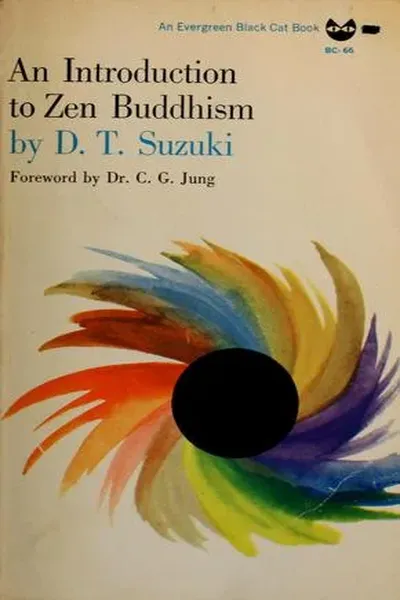





More Free Occult Philosophy Books
View all →