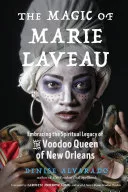
The Magic of Marie Laveau
 82
82

The Magic of Marie Laveau
Alvarado's "The Magic of Marie Laveau" offers a grounded perspective on a figure often shrouded in myth. The strength of this work lies in its diligent effort to separate historical fact from popular embellishment, providing a clear overview of New Orleans Voodoo's origins. Alvarado's examination of Laveau's life, particularly her role in the 19th-century city, is compelling. However, the book occasionally feels more like an academic survey than a deeply personal exploration, leaving one wishing for more direct engagement with Laveau's unique spiritual voice. A particular passage that stands out is the detailed breakdown of ritualistic recipes, offering a tangible connection to her practice. Ultimately, Alvarado delivers a well-researched and informative account that adds substantial clarity to Laveau's legacy.
📝 Description
82
Denise Alvarado’s 2020 book examines Marie Laveau’s actual magical work beyond popular legend.
Denise Alvarado’s "The Magic of Marie Laveau" looks past the myths to the historical reality of the famous New Orleans Voodoo priestess. Published in 2020, the book investigates Laveau’s life and magical practices within the specific cultural and spiritual context of 19th-century New Orleans. It traces the development of Louisiana Voodoo, noting its African origins, Catholic influences, and Creole adaptations.
The work focuses on how Laveau functioned as a central spiritual figure during a time of intense social and racial division. Alvarado details the practical application of magic, including the use of "gris-gris," spiritual baths, and offerings. The book also portrays Laveau as a community leader and businesswoman within her social network, not solely as a sorceress.
This book engages with the complex history of American folk magic, specifically focusing on the traditions that coalesced in New Orleans. It examines the syncretic nature of Louisiana Voodoo, a system that blended West African religious concepts with Roman Catholicism and local Caribbean influences. By detailing Laveau's role, the text illuminates a significant period in the formation of a distinct North American esoteric practice, showing how spiritual leadership and practical magic intertwined within a specific historical and cultural milieu.
💡 Why Read This Book?
• Gain practical knowledge of New Orleans Voodoo as practiced by Marie Laveau, including specific spells and prayers detailed in the text, offering a direct connection to historical magical techniques. • Understand the historical context of 19th-century New Orleans and how Marie Laveau navigated its complex social and spiritual landscape, as explained through the book's historical sections. • Learn about authentic Voudou practices, such as the preparation of "gris-gris" and the construction of altars, providing concrete skills and insights beyond generalized occult lore.
⭐ Reader Reviews
Honest opinions from readers who have explored this book.
❓ Frequently Asked Questions
What are the origins of New Orleans Voodoo as presented in "The Magic of Marie Laveau"?
The book traces New Orleans Voodoo's roots to West African spiritual traditions, blended with Roman Catholic beliefs and the unique cultural environment of Louisiana, particularly in the 19th century under figures like Marie Laveau.
Does "The Magic of Marie Laveau" include actual spells and rituals?
Yes, Denise Alvarado's work provides numerous authentic spells, prayers, recipes, and ritual instructions attributed to or inspired by Marie Laveau's practices.
Who was Marie Laveau according to this book?
The book portrays Marie Laveau as a highly influential practitioner of magical arts in 19th-century New Orleans, a spiritual leader, and a complex historical figure whose life and work are explored beyond popular legends.
What is "gris-gris" as discussed in the book?
"Gris-gris" refers to magical charms or fetishes, often in the form of small bags containing various ingredients, used for protection, luck, or other specific magical purposes within Voudou traditions.
Is this book suitable for beginners in occult studies?
It is suitable for those with an interest in folk magic and esoteric history, offering foundational knowledge on New Orleans Voodoo and Laveau's practices, though some familiarity with occult concepts may enhance the reader's experience.
When was "The Magic of Marie Laveau" first published?
Denise Alvarado's "The Magic of Marie Laveau" was first published in 2020, making it a contemporary examination of historical occult practices.
🔮 Key Themes & Symbolism
Marie Laveau's Historical Practice
This theme examines the documented magical activities and spiritual leadership of Marie Laveau in 19th-century New Orleans. It moves beyond folklore to present Laveau as a tangible historical figure whose practices were deeply integrated into the fabric of the city. The work highlights her role in Voudou, detailing rituals, spellcraft, and her influence on the community, distinguishing her legacy from later sensationalized depictions. It emphasizes the practical application of her magic and her status as a prominent practitioner.
New Orleans Voodoo Origins
The book provides an in-depth look at the genesis of New Orleans Voodoo, detailing its syncretic nature. It explores the fusion of West African spiritual beliefs, Indigenous American practices, and Roman Catholicism that coalesced in the unique environment of Louisiana. This theme covers the historical development, key figures, and the evolution of rituals and spiritual philosophies that define this distinct tradition, positioning Laveau as a key figure in its established form.
Practical Folk Magic
A central focus is the presentation of authentic folk magic as practiced historically and exemplified by Marie Laveau. This includes detailed instructions for spells, prayers, the creation of "gris-gris," spiritual baths, and altar work. The book aims to clarify these practices, offering readers concrete methods and recipes that reflect the traditional approaches to magic in the New Orleans context, emphasizing efficacy and spiritual connection.
Syncretism and Spirituality
This theme addresses the blending of diverse spiritual and religious elements that characterize New Orleans Voodoo. It examines how African spiritual concepts, Catholic saints, and local folk beliefs were integrated into a coherent system by practitioners like Marie Laveau. The book explores the symbolic meanings and practical applications of this syncretism, showing how it created a unique spiritual path accessible and relevant to the people of its time.
💬 Memorable Quotes
Direct passages from the work, attributed to the author.
“Marie Laveau's grave in New Orleans ranks among the most popular spiritual pilgrimages in the US.”
— This statement underscores Laveau's enduring cultural and spiritual significance, highlighting the continued veneration she receives nearly 150 years after her death, making her a focal point for modern spiritual seekers.
“This book explores Laveau's life and work—the history and mystery.”
— This indicates the book's dual approach: rigorously investigating the historical facts of Laveau's existence while also acknowledging and exploring the enigmatic aspects of her magical reputation and influence.
“It contains spells, prayers, rituals, recipes, and instruction.”
— This highlights the practical, instructional nature of the book, suggesting it serves not only as a historical account but also as a manual for understanding and potentially enacting the magical traditions associated with Marie Laveau.
“Marie Laveau may be the most influential—and is among the most famous—American practitioner of the magical arts.”
— This assertion places Laveau at the pinnacle of American occult history, emphasizing both her broad recognition and her lasting impact on magical practices within the United States.
“Her grave... is among the most popular spiritual pilgrimages in the US.”
— This fact points to the tangible, ongoing devotion to Marie Laveau, illustrating her lasting power as a spiritual figure and the continued draw of her resting place for devotees and the curious alike.
🌙 Esoteric Significance
Tradition
This work primarily situates itself within the context of American folk magic, specifically New Orleans Voodoo. While not strictly adhering to a single European esoteric lineage like Hermeticism or Kabbalah, it engages with the syncretic nature of Voudou, which incorporates elements often found in broader magical traditions, such as the use of correspondences, sympathetic magic, and spiritual invocation. It represents a significant branch of practical, lived spirituality that has influenced contemporary occultism.
Symbolism
Key symbols explored include the "gris-gris," typically a charm or amulet used for protection or to bring good fortune, often containing specific symbolic ingredients. The use of altars, representing a sacred space for communication with spirits and deities, is also central. Furthermore, the integration of Catholic imagery (like Saint Lazarus, associated with healing and the dead) within Voudou practice represents a powerful form of syncretic symbolism, bridging African spiritual concepts with European religious iconography.
Modern Relevance
Contemporary practitioners of Hoodoo, Voudou, and general folk magic draw heavily on the historical models presented in works like Alvarado's. Thinkers and practitioners focusing on diasporic African religions and Afro-Caribbean spirituality find value in this research. The book's clear presentation of rituals and historical context makes it relevant for modern spiritualists seeking to connect with ancestral practices and understand the evolution of magical traditions in the Americas.
👥 Who Should Read This Book
• Students of American folk magic and esoteric history seeking a scholarly yet accessible overview of New Orleans Voudou and its most famous practitioner. • Practitioners of Hoodoo, Voudou, or related magical systems interested in authentic historical rituals, spells, and recipes attributed to Marie Laveau. • Cultural historians and researchers interested in 19th-century New Orleans, Afro-Caribbean spiritual traditions, and the intersection of religion, magic, and society.
📜 Historical Context
Denise Alvarado's "The Magic of Marie Laveau" emerged in 2020, a period of renewed interest in folk magic and esoteric history. The book engages with the legacy of 19th-century New Orleans, a vibrant, multicultural hub where African spiritual traditions, Catholicism, and Southern folkways intertwined. Marie Laveau herself was a prominent figure during this era, operating as a Voudou priestess and healer, navigating a society marked by racial segregation and distinct class structures. The work implicitly contrasts with more romanticized or sensationalized portrayals of Voudou that have historically circulated, often influenced by figures like the novelist George Washington Cable, whose writings, though influential, sometimes contributed to stereotypes. Alvarado's text seeks to provide a more grounded, historically informed perspective on Laveau's practices and the spiritual milieu she inhabited.
📔 Journal Prompts
Marie Laveau's spiritual leadership in 19th-century New Orleans.
The syncretic blend of African and Catholic elements in Voudou.
Practical application of "gris-gris" charms.
Reflecting on the historical context of Laveau's practices.
The role of altars in spiritual communication.
🗂️ Glossary
New Orleans Voodoo
A unique spiritual tradition developed in Louisiana, blending West African religious practices, Roman Catholicism, and Southern folk magic, with Marie Laveau as a central historical figure.
Gris-gris
A magical charm or fetish, typically a small bag containing various ingredients, used for protection, luck, love, or other specific magical purposes within Voudou and Hoodoo traditions.
Hoodoo
A magical system rooted in African traditions, often practiced in the Southern United States, which incorporates elements of folk magic, herbalism, and spiritualism.
Syncretism
The merging or blending of different religious beliefs, practices, and symbols, particularly evident in New Orleans Voodoo's fusion of African and Catholic elements.
Spiritual baths
Ritualistic cleansing using water infused with herbs, oils, or other substances, performed for purification, healing, or to attract specific spiritual energies.
Altar
A sacred space dedicated to spiritual devotion, offerings, and communication with deities or spirits, often adorned with symbolic objects, candles, and effigies.
Ritual
A set of actions performed according to a prescribed order, typically for religious or magical purposes, often involving prayers, incantations, and symbolic gestures.