Levitation
 83
83

Levitation
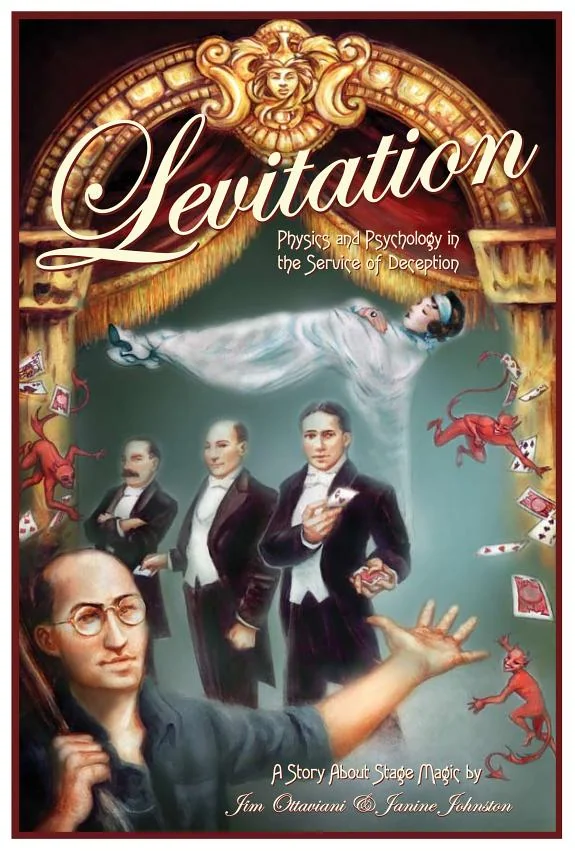
Ottaviani's "Levitation" is a sharp dissection of how the spectacle of the impossible can serve as a mirror to human desires and societal anxieties. Rather than a simple historical account of levitation claims, the book uses its archetypal characters like The Scientist and The Inventor to probe the very mechanisms of belief and deception. Its strength lies in its nuanced portrayal of characters who are not simply duped or deceivers, but complex individuals navigating the murky waters between genuine curiosity and calculated performance. A limitation, however, is that the allegorical nature can sometimes obscure a more direct engagement with specific historical levitation claims, leaving the reader wishing for more concrete examples of the illusions being deconstructed. The passage detailing The Heir's fascination with the power of suggestion is particularly potent, illustrating how belief itself can become a tool of control. Ultimately, "Levitation" offers a compelling, if at times abstract, examination of how we perceive and are perceived.
📝 Description
83
Jim Ottaviani's 2007 novel "Levitation" uses fictional characters to examine the mechanics of belief and illusion.
Published in 2007, Jim Ottaviani's "Levitation" is not a guide to defying gravity but a story about how people create and respond to illusions. The novel follows characters like The Scientist, The American, The Inventor, and The Heir. They approach the idea of levitation from different angles, including scientific study and outright trickery. The book looks at how beliefs form and how they are swayed, often by the spectacle of things that seem impossible. It explores the space where skepticism meets wonder, and how performance can shape what people accept as real. Ottaviani dissects the motivations behind these displays and the societal constructs that allow them to flourish. The narrative questions perception and offers no simple solutions, instead focusing on the underlying human psychology. It is suited for readers who enjoy intellectual puzzles and narratives that dissect the methods behind seemingly miraculous feats. The work appeals to those interested in the intersection of science, psychology, and performance art. It is a narrative that does not shy away from complexity, inviting readers to consider the construction of extraordinary claims. It examines how belief systems are built and manipulated, often using the impossible as a central element. The characters grapple with the concept of levitation through empirical investigation and outright trickery, showing the different ways people engage with the unknown.
The book is for readers who appreciate narratives that question perception and explore the mechanics of belief. Those interested in how seemingly miraculous feats are achieved, and the psychology behind accepting such claims, will find this novel rewarding. It dissects the methods behind illusion and the human desire to believe in something beyond ordinary limits. The story invites contemplation on the nature of deception and self-deception, and how these play out in society. It is a good fit for individuals who enjoy intellectual challenges and stories that encourage deeper thought about human motivation and societal frameworks. The novel provides a close look at the construction of extraordinary narratives and the human need for wonder.
While not a direct treatise on occult practices, "Levitation" engages with traditions of stage magic and spiritualism. It examines how these historical forms of presented marvels, often involving claims of supernatural ability, have been perceived and interpreted. The book situates these practices within a cultural moment where public fascination with unexplained phenomena coexisted with growing skepticism. It looks at the enduring human appeal of the seemingly impossible and how these narratives are built and sustained, echoing older traditions of wonder workers and illusionists.
💡 Why Read This Book?
• Understand the psychological mechanics of belief, as demonstrated through the interactions of characters like The Scientist and The American in the context of extraordinary claims, offering insights beyond simple skepticism. • Analyze the construction of illusion and spectacle, learning how perceived impossibilities are engineered and how audiences are predisposed to accept them, a skill applicable to understanding media and performance. • Explore the historical interplay between scientific inquiry and popular fascination with the unexplained, drawing parallels to early 20th-century spiritualism and stage magic as presented in the book.
⭐ Reader Reviews
Honest opinions from readers who have explored this book.
❓ Frequently Asked Questions
What is the primary focus of Jim Ottaviani's "Levitation"?
"Levitation" primarily explores the concept of illusion and deception, using archetypal characters to examine the human fascination with seemingly impossible feats and the psychology of belief surrounding them.
When was Jim Ottaviani's "Levitation" first published?
Jim Ottaviani's "Levitation" was first published in 2007, placing it within the early 21st-century cultural landscape.
Are there specific historical figures mentioned in "Levitation"?
While the book features archetypal characters like The Scientist and The Inventor, it focuses more on the conceptual exploration of illusion rather than detailing specific historical figures' claims.
What kind of narrative structure does "Levitation" employ?
The book employs an allegorical narrative structure, using distinct character archetypes to represent different facets of belief, skepticism, and deception surrounding the idea of levitation.
Does "Levitation" offer instructions on how to levitate?
No, "Levitation" does not provide instructions for physical levitation. Its focus is entirely on the cultural, psychological, and performative aspects of the concept of levitation as an illusion.
What is the main theme explored through characters like The American?
Through characters like The American, the book examines societal attitudes towards extraordinary claims, the role of national identity in belief, and the potential for both genuine wonder and manipulation.
🔮 Key Themes & Symbolism
The Nature of Illusion
The work meticulously unpacks how illusions are constructed and perceived, moving beyond simple trickery to examine the psychological conditions that make them effective. Characters like The Inventor and The Scientist represent different approaches to creating or debunking the seemingly impossible, highlighting that an illusion's power often lies in the audience's willingness to believe. This theme is central to understanding how phenomena, both mundane and extraordinary, are presented and accepted within society.
Psychology of Belief
Central to "Levitation" is an examination of why people believe what they do, especially when faced with claims that defy conventional understanding. The book probes the human desire for the miraculous, the susceptibility to suggestion, and the ways in which societal narratives shape individual conviction. The character of The Heir, for instance, embodies a fascination with power derived from belief, illustrating the potent psychological force at play.
Spectacle and Performance
Ottaviani's narrative explores the role of spectacle in shaping perception and influencing belief. The book considers how performances, whether theatrical, spiritual, or pseudo-scientific, are crafted to elicit specific reactions. It dissects the elements that contribute to a compelling show, from the presentation of The Scientist's experiments to the curated experiences designed to convince an audience of the unexplainable.
Skepticism vs. Wonder
The book presents a dynamic tension between critical examination and unadulterated wonder. Characters embody various positions on this spectrum, from rigorous scientific skepticism to outright credulity. This conflict explores how different mindsets approach extraordinary claims, questioning whether the pursuit of truth necessitates the suppression of wonder or if wonder can coexist with critical inquiry.
💬 Memorable Quotes
Direct passages from the work, attributed to the author.
“The Scientist's methodical approach to understanding phenomena.”
— This highlights the book's exploration of empirical investigation as a means to dissect claims of the impossible, contrasting with more faith-based or performance-oriented perspectives.
“The Heir's fascination with the power derived from commanding belief.”
— This points to the theme of manipulation and the potent psychological influence that can be wielded by those who understand how to foster conviction in others.
“The Inventor's drive to create experiences that challenge perception.”
— This suggests a focus on the artistry and engineering behind illusions, emphasizing the deliberate construction of phenomena designed to provoke astonishment.
“The American's engagement with the extraordinary through a lens of national identity.”
— This interpretation indicates an exploration of how cultural contexts and societal narratives can shape attitudes towards the unexplainable and the desire for the miraculous.
“The tension between verifiable fact and subjective experience.”
— This captures the core conflict within the book: the struggle to reconcile objective reality with the compelling power of personal conviction and perceived miracles.
🌙 Esoteric Significance
Tradition
While "Levitation" is not explicitly tied to a single esoteric lineage, its exploration of illusion, belief, and perception aligns with currents found in Hermeticism and Western esotericism. These traditions often emphasize the power of the mind, the nature of reality as perceived, and the potential for manipulating consciousness. The book's deconstruction of phenomena can be seen as a modern, analytical approach to understanding how 'miracles' and extraordinary claims are generated, echoing alchemical principles of transformation and the Gnostic concern with hidden knowledge and illusionary worlds.
Symbolism
The characters themselves—The Scientist, The American, The Inventor, The Heir—function as potent symbols. The Scientist represents empirical reason, The Inventor embodies creative manipulation, The American signifies societal belief systems, and The Heir suggests inherited power or illusion. The act of 'levitation' itself symbolizes transcendence, escape, or the attainment of a higher state, whether achieved through genuine spiritual means or artful deception.
Modern Relevance
In an age saturated with digital illusions, curated online personas, and the rapid spread of both genuine discovery and misinformation, "Levitation" offers a crucial lens for critical analysis. Contemporary thinkers and practitioners in fields ranging from cognitive psychology to media studies, as well as those interested in the critical examination of paranormal claims, can draw on its insights. It remains relevant for understanding how belief is formed and challenged in the digital public sphere.
👥 Who Should Read This Book
• Students of the history and psychology of belief systems, seeking to understand how extraordinary claims are constructed and received across different eras. • Practitioners of stage magic and performance art, interested in the theoretical underpinnings of illusion and audience engagement. • Skeptics and critical thinkers, wanting to dissect the mechanics of deception and the societal factors that foster credulity regarding the seemingly impossible.
📜 Historical Context
Published in 2007, "Levitation" arrived during a period where the internet had democratized information and misinformation alike, amplifying public interest in both scientific frontiers and fringe phenomena. The early 21st century saw a resurgence of interest in spiritualism and unexplained mysteries, often fueled by accessible media. Ottaviani's work engages with this cultural milieu by examining the enduring appeal of seemingly impossible feats, a fascination with roots stretching back to the Victorian era's spiritualist movement and the elaborate stage illusions of figures like Robert-Houdin. While not directly engaging with specific contemporaries in a polemical way, the book implicitly contrasts its analytical approach with the more sensationalist narratives prevalent in popular culture and certain esoteric circles of the time, offering a critique of how spectacle can overshadow substance.
📔 Journal Prompts
The Scientist's methods for dissecting perceived miracles.
The Inventor's creation of phenomena designed to challenge reality.
The Heir's understanding of the power derived from commanding belief.
The American's cultural context for accepting or rejecting the extraordinary.
The core tension between objective evidence and subjective conviction.
🗂️ Glossary
Archetype
A recurring symbol or motif in literature, art, or mythology that represents universal patterns of human nature or experience. In "Levitation," characters like The Scientist and The Inventor serve as archetypes.
Illusion
A deceptive appearance or impression; something that deceems or misleads. The book examines both theatrical illusions and the illusions created by belief systems.
Spectacle
A visually striking performance or display, often designed to attract attention and evoke strong emotions or a sense of wonder.
Deception
The act of causing someone to believe something that is not true, typically in order to gain some personal advantage.
Credulity
A tendency to be too ready to believe that something is real or true; gullibility.
Empirical Investigation
A method of research based on direct observation and experimentation, rather than theory or belief alone, as exemplified by The Scientist.
Suggestion
The unconscious or indirect introduction of an idea or feeling into a person's mind, often influencing their beliefs or actions.
This book appears in 1 collection
🔮 Readers Also Liked
Browse all →









From the “Levitation” Collection
View all →







More Free Occult Philosophy Books
View all →