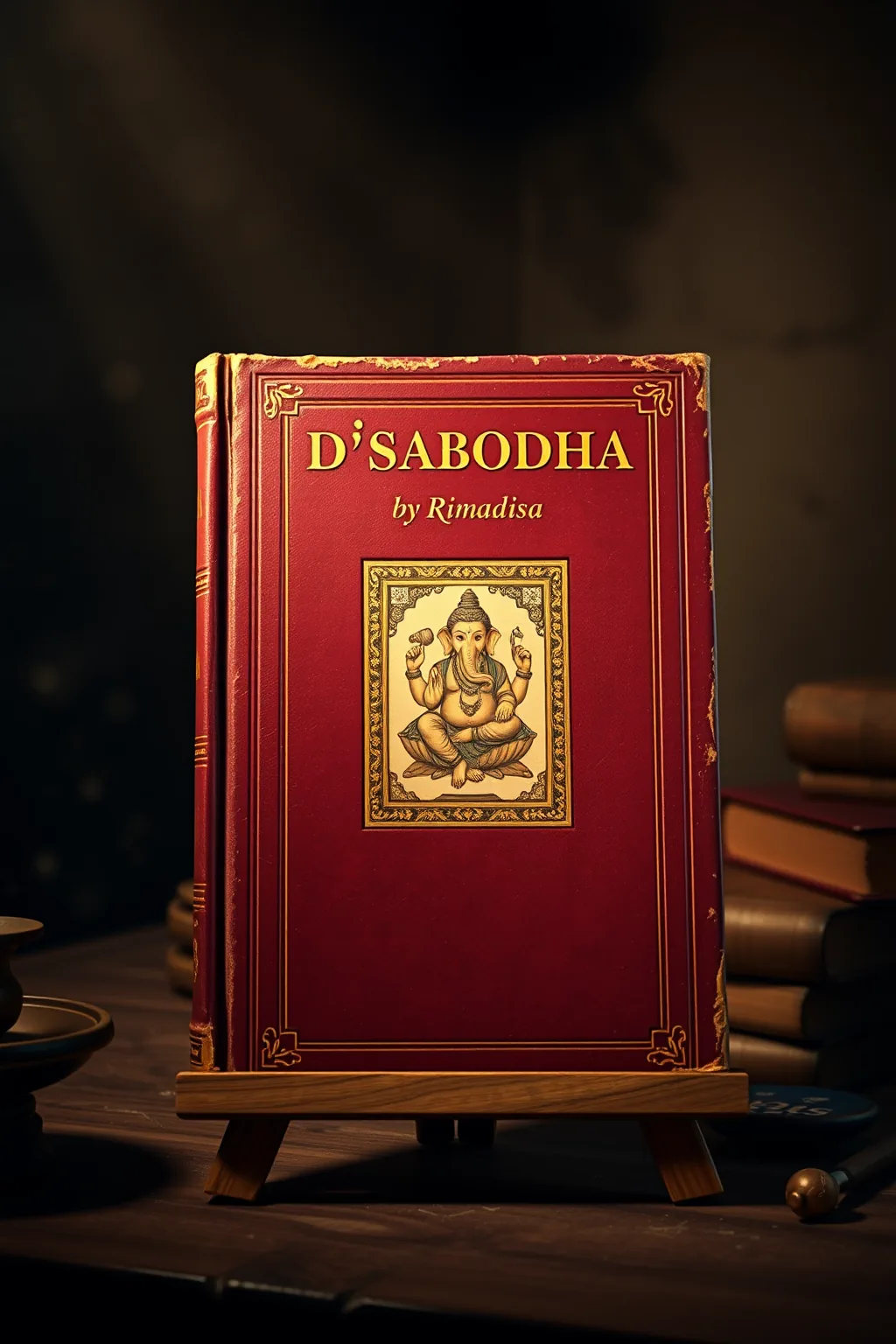
Dāsabodha
 62
62

Dāsabodha


Review by Lorelei Sage (Contemplative Literature Editor) — Dāsabodha by Rāmadāsa is a masterful exploration of the mystical dimensions of Hindu religious life. The book's strength lies in its ability to bridge the gap between traditional idol-worship and the deeper spiritual principles it embodies. Rāmadāsa's insights into the transformation of murti-pooja into vritti-pooja provide a fresh and esoteric perspective on Ganesha worship. The text is particularly valuable for those interested in the symbolism and hidden knowledge within Hinduism. It is a must-read for scholars of Hermeticism and Alchemy, as well as spiritual seekers looking to deepen their understanding of the mystical path.
📝 Description
62
Rāmadāsa wrote Dāsabodha in the 17th century, detailing a path from idol worship to inner principle.
Dāsabodha, authored by the Marathi saint Rāmadāsa in the 17th century, discusses Hindu religious practice. The text distinguishes between murti-pooja, the worship of idols, and vritti-pooja, which is the internalization of the deity's virtues and principles. Rāmadāsa uses Ganesha, the god of wisdom, as a focal point for this transformation. He suggests that through contemplation and inquiry, the devotee can embody the qualities of the worshipped deity, making spiritual practice a part of daily life.
The book uses rich symbolism to convey its teachings. It aims to guide practitioners toward a deeper understanding of Hindu spirituality, moving beyond ritual to a more lived experience. The author emphasizes the active role of the individual in cultivating spiritual awareness. Dāsabodha is intended for those who wish to explore the philosophical underpinnings of devotional practices and seek personal growth through them.
Dāsabodha fits within the devotional traditions of Hinduism, particularly the Varkari Sampradaya, though it also contains elements that resonate with broader Indian yogic and philosophical systems. Its emphasis on internalizing divine qualities and transforming worship into a way of life aligns with introspective practices found in various spiritual paths. The text presents a systematic approach to spiritual discipline that could be of interest to practitioners of Hermeticism or Alchemy seeking parallels in Eastern thought regarding the transformation of consciousness and the pursuit of wisdom.
💡 Why Read This Book?
Read Dāsabodha to gain a deeper understanding of the mystical evolution of Hindu worship. This book is ideal for seekers, scholars, and practitioners of Hermeticism and Alchemy who wish to explore the symbolism and hidden knowledge within Hinduism. It offers a unique perspective on the spiritual journey and the pursuit of knowledge through the worship of Ganesha.
⭐ Reader Reviews
Honest opinions from readers who have explored this book.
❓ Frequently Asked Questions
What is the main theme of Dāsabodha?
The main theme is the transformation of idol-worship into the embodiment of spiritual principles and values.
Who is the intended audience for this book?
The book is intended for seekers, scholars, and practitioners of Hermeticism and Alchemy, as well as those interested in the deeper aspects of Hindu spirituality.
What makes Dāsabodha unique?
Its unique perspective on the spiritual evolution of worship and the pursuit of knowledge through the worship of Ganesha.
How does Dāsabodha contribute to the study of Hermeticism and Alchemy?
It provides insights into the symbolism and hidden knowledge within Hinduism, making it a valuable resource for scholars and practitioners.
Can beginners benefit from reading Dāsabodha?
While the book is rich in esoteric insights, beginners can benefit from it by approaching it with an open mind and a willingness to delve into the mystical dimensions of Hindu spirituality.
🔮 Key Themes & Symbolism
The Evolution of Worship
Dāsabodha explores the mystical transformation of idol-worship into the embodiment of spiritual principles and values. It explores how the traditional practice of murti-pooja can evolve into vritti-pooja, a deeper, more meaningful form of worship that aligns with the true essence of the deity.
The Symbolism of Ganesha
The book provides a rich exploration of the symbolism associated with Ganesha, the deity of knowledge and wisdom. It discusses how the worship of Ganesha can lead to a deeper understanding of the principles of inquiry and the pursuit of knowledge.
The Dance of Inquiry
A central theme is the concept of the 'dance of inquiry,' where the spirit of questioning and seeking knowledge becomes a living, breathing part of one's existence. This theme is explored through the lens of Ganesha worship and its mystical implications.
💬 Memorable Quotes
Direct passages from the work, attributed to the author.
“The idol is a gateway to the divine principles it embodies.”
— This highlights the transformative potential of idol-worship when approached with a deeper understanding of its symbolism.
“Worship is not merely ritual but the embodiment of values.”
— This underscores the shift from external rituals to internalizing the values associated with the deity.
“The true worshipper seeks not the form but the essence.”
— This reflects the book's focus on the evolution from form-based worship to essence-based spiritual practice.
💡 Key Ideas
Editorial paraphrase of the work's core concepts — not direct quotes.
The dance of inquiry is the essence of spiritual evolution.
This quote emphasizes the importance of continuous questioning and seeking knowledge in one's spiritual journey.
Ganesha's wisdom is the key to unlocking the mysteries of the universe.
This quote emphasizes the significance of Ganesha in the pursuit of knowledge and spiritual enlightenment.
🌙 Esoteric Significance
Tradition
Dāsabodha belongs to the Hermetic and Alchemical traditions, focusing on the mystical evolution of worship and the pursuit of knowledge. It draws upon the detailed symbolism and hidden knowledge within Hinduism to provide a unique perspective on spiritual growth.
Symbolism
Key symbols include the idol of Ganesha, representing the deity of knowledge and wisdom, and the concept of the 'dance of inquiry,' symbolizing the continuous pursuit of spiritual understanding. These symbols are integral to the book's exploration of the mystical dimensions of worship.
Modern Relevance
Today, Dāsabodha remains relevant for modern practitioners of Hermeticism and Alchemy who seek to understand the deeper layers of spiritual practice. It offers insights into the symbolism and hidden knowledge within Hinduism, making it a valuable resource for spiritual seekers and scholars alike.
👥 Who Should Read This Book
Beginners interested in the mystical dimensions of Hinduism will find Dāsabodha to be a rich and enlightening read. Scholars of Hermeticism and Alchemy will appreciate its deep exploration of symbolism and hidden knowledge. Spiritual seekers looking to deepen their understanding of worship and the pursuit of knowledge will benefit greatly from this book. Practitioners of Hinduism who wish to evolve their worship practices will find valuable insights within its pages.
📜 Historical Context
Dāsabodha was written during a time when Hinduism was undergoing significant spiritual and philosophical evolution. The book's importance lies in its ability to bridge traditional practices with deeper spiritual insights, making it a valuable resource for understanding the mystical dimensions of Hindu worship. Its influence can be seen in the works of later scholars and practitioners who have explored the symbolism and hidden knowledge within Hinduism.
📔 Journal Prompts
How does the concept of the 'dance of inquiry' resonate with your spiritual journey?
In what ways can you embody the principles and values associated with Ganesha in your daily life?
Reflect on the transformation from murti-pooja to vritti-pooja in your own spiritual practice.
What symbols in Dāsabodha do you find most meaningful, and why?
How does Dāsabodha challenge or affirm your understanding of Hindu worship?
🗂️ Glossary
Murti-pooja
The traditional practice of idol-worship in Hinduism, focusing on the physical form of the deity.
Vritti-pooja
The embodiment of spiritual principles and values linked to the worshipped deity, representing a deeper form of worship.
Dance of Inquiry
The continuous pursuit of knowledge and spiritual understanding, symbolized by the spirit of questioning and seeking.
Ganesha
The Hindu deity of knowledge and wisdom, often depicted with the head of an elephant and revered for his intelligence and ability to remove obstacles.
Symbolism
The use of symbols to represent deeper spiritual truths and principles, integral to the mystical dimensions of Hindu worship.
This book appears in 3 collections
🔮 Readers Also Liked
Browse all →








From the “Hermeticism” Collection
View all →








More Free Alchemy & Hermeticism Books
View all →