Hermetic and Alchemical Writings of Aureolus Phillippus Theophrastus Bombast

 61
61

Hermetic and Alchemical Writings of Aureolus Phillippus Theophrastus Bombast

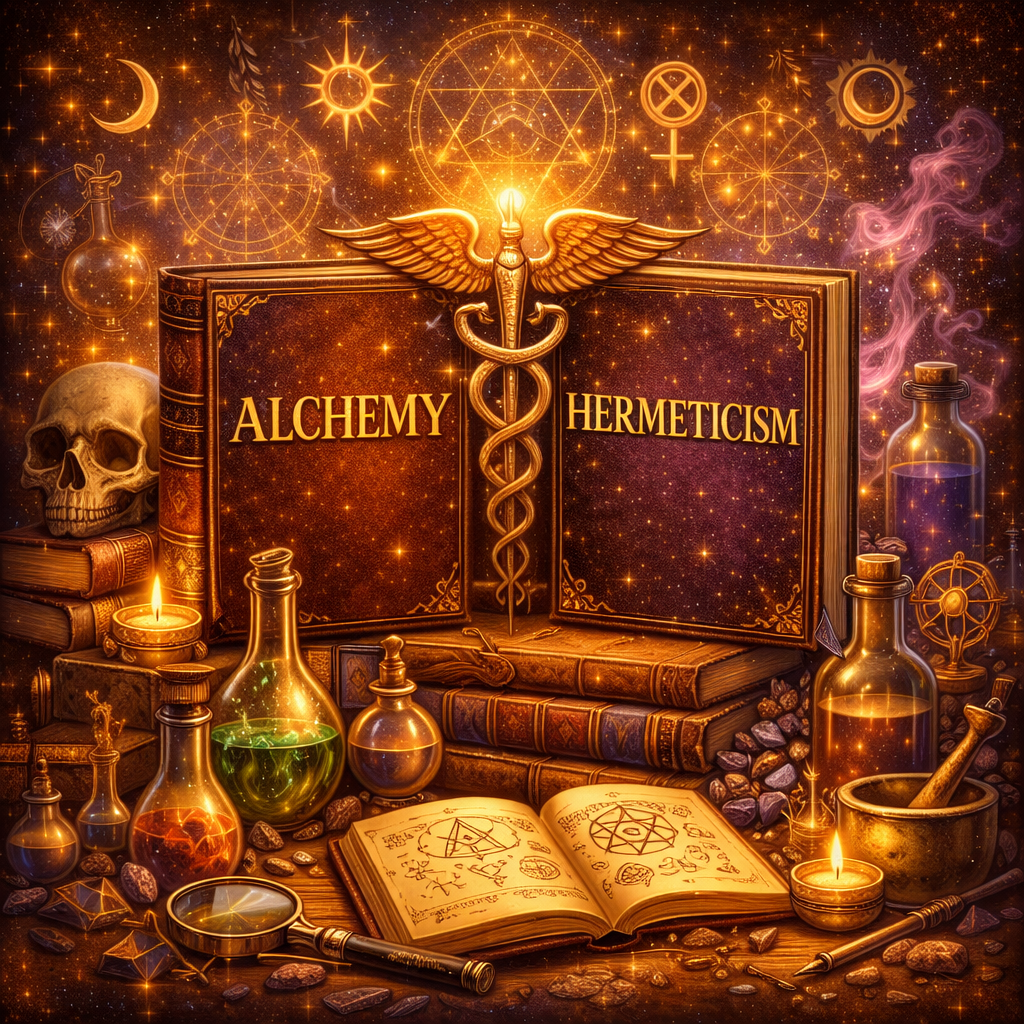

Review by Celeste Moreau (Divination & Symbolism Reviewer) — Paracelsus' Hermetic and Alchemical Writings are a treasure trove of esoteric insights and symbolic depth. This collection stands as a testament to the enduring fascination with alchemy and Hermeticism. Paracelsus' writings are rich with philosophical significance, offering readers a profound journey into the hidden realms of mystical knowledge. The strength of this work lies in its ability to bridge ancient wisdom with modern contemplation, making it invaluable for both scholars and spiritual seekers. Those with an interest in the occult and symbolic studies will find this book to be an indispensable resource.
📝 Description
61
Paracelsus's 1537 treatise 'De Natura Rerum' is a cornerstone of his Hermetic and Alchemical Writings.
The Hermetic and Alchemical Writings of Aureolus Phillippus Theophrastus Bombast collects key texts from Paracelsus, a central figure in Renaissance esotericism. These works detail his unique approach to alchemy, medicine, and cosmology. Paracelsus sought to understand the fundamental principles of nature, viewing the human body as a microcosm reflecting the macrocosm. His writings blend Christian mysticism with Hermetic philosophy and early scientific observation.
This volume presents his investigations into the properties of minerals, metals, and their medicinal applications. It covers his theories on the three primes (salt, sulfur, and mercury) and their role in both physical and spiritual transformation. Paracelsus's style is often dense, filled with allegory and a personal symbolic language. Readers will find discussions on the nature of disease, the power of the stars, and the hidden forces within the earth.
Paracelsus stands as a bridge between medieval magical traditions and the emerging scientific worldview of the Renaissance. His work drew heavily from Hermeticism, a philosophical and religious tradition rooted in the writings attributed to Hermes Trismegistus. He also integrated Neoplatonic ideas and Christian theology, seeking a unified understanding of the divine, the cosmos, and the human being. His emphasis on empirical observation, particularly in medicine, distinguished him from earlier alchemists, though his theories remained deeply embedded in a symbolic and spiritual framework.
💡 Why Read This Book?
Why read this book? The Hermetic and Alchemical Writings of Aureolus Phillippus Theophrastus Bombast offer seekers, scholars, and practitioners a deep dive into the mystical and esoteric traditions of alchemy and Hermeticism. It provides unique insights into the philosophical and symbolic underpinnings of these ancient practices, making it an essential read for anyone looking to expand their understanding of the occult and spiritual realms.
⭐ Reader Reviews
Honest opinions from readers who have explored this book.
❓ Frequently Asked Questions
What is the primary focus of this book?
The primary focus is on alchemy and Hermeticism, exploring their philosophical and symbolic dimensions.
Is this book suitable for beginners?
While it contains deep esoteric insights, beginners with an interest in occult studies will find it enlightening.
What makes Paracelsus' writings unique?
Paracelsus' works are unique for their blend of Renaissance philosophy and ancient mystical traditions.
How does this book contribute to modern esoteric studies?
It provides historical context and philosophical depth, enriching contemporary discussions on alchemy and Hermeticism.
Are there any modern practitioners who use this work?
Yes, many contemporary alchemists and Hermeticists study and apply Paracelsus' teachings in their practices.
🔮 Key Themes & Symbolism
Alchemical Transformation
Alchemy is the art of transforming base materials into gold, symbolizing the spiritual transformation of the self. Paracelsus looks at the alchemical process, exploring its metaphysical implications and the quest for spiritual enlightenment.
Hermetic Philosophy
Hermeticism is an ancient mystical tradition that emphasizes the unity of all things. Paracelsus' writings offer insights into Hermetic philosophy, revealing the interconnectedness of the cosmos and the human spirit.
Symbolism and Mysticism
The book is rich with symbolic language and mystical imagery, inviting readers to decode the hidden meanings within. Paracelsus uses symbolism to convey profound truths about the nature of reality and the human experience.
💬 Memorable Quotes
Direct passages from the work, attributed to the author.
“Nature is the art of God.”
— Paracelsus emphasizes the divine nature of the natural world, suggesting that understanding nature is key to spiritual enlightenment.
“Hermetic wisdom reveals the hidden connections between all things.”
— Paracelsus' writings underscore the interconnectedness of all things, as revealed through Hermetic teachings.
“The universe is a harmonious symphony of divine energies.”
— Paracelsus' view of the cosmos as a harmonious whole, guided by divine energies, is a central theme in his Hermetic philosophy.
💡 Key Ideas
Editorial paraphrase of the work's core concepts — not direct quotes.
The alchemist seeks to purify the soul through the transformation of matter.
This quote highlights the spiritual goal of alchemy, where the purification of the soul is achieved through the alchemical process.
The philosopher's stone is the symbol of ultimate spiritual attainment.
This quote alludes to the quest for the philosopher's stone, representing the ultimate goal of spiritual transformation.
🌙 Esoteric Significance
Tradition
This book belongs to the Hermetic tradition, which emphasizes the pursuit of hidden knowledge and the unity of all things. Paracelsus' writings are a core part of Hermetic philosophy, blending alchemical practices with mystical insights.
Symbolism
Key symbols in the book include the philosopher's stone, representing spiritual transformation, and the Hermetic principles of as above, so below, highlighting the interconnectedness of the cosmos.
Modern Relevance
Paracelsus' teachings remain relevant today, influencing modern practitioners of alchemy and Hermeticism. His ideas are studied and applied in contemporary esoteric circles, providing a foundation for spiritual and philosophical exploration.
👥 Who Should Read This Book
Beginners interested in the occult will find this book an enlightening introduction to alchemy and Hermeticism. Scholars of esoteric studies will appreciate the depth and historical significance of Paracelsus' writings. Spiritual seekers will be drawn to the philosophical insights and symbolic richness. Practitioners of alchemy and Hermeticism will find valuable guidance and inspiration in these ancient texts.
📜 Historical Context
Written during the Renaissance, Paracelsus' Hermetic and Alchemical Writings reflect the era's fascination with ancient wisdom and the quest for knowledge. This period saw a revival of interest in alchemy and Hermeticism, as scholars sought to reconcile classical learning with Christian theology. Paracelsus' works were instrumental in shaping the esoteric traditions of the time, influencing generations of alchemists and Hermeticists. His ideas continue to resonate in modern esoteric studies, providing a rich historical context for contemporary practitioners.
📔 Journal Prompts
How do Paracelsus' ideas on alchemy resonate with your own spiritual journey?
Reflect on the symbolism of the philosopher's stone in your life.
What insights can you gain from the Hermetic principle of as above, so below?
How does the interconnectedness of all things, as described by Paracelsus, manifest in your daily experiences?
What steps can you take to incorporate alchemical transformation into your spiritual practice?
🗂️ Glossary
Alchemy
The ancient practice of transforming base materials into gold, symbolizing spiritual transformation.
Hermeticism
An ancient mystical tradition emphasizing the unity of all things and the pursuit of hidden knowledge.
Philosopher's Stone
A symbol in alchemy representing the ultimate goal of spiritual attainment.
As Above, So Below
A Hermetic principle stating that the macrocosm and microcosm are interconnected.
Spiritual Transformation
The process of purifying and elevating the soul through mystical practices and philosophical insights.
This book appears in 3 collections
🔮 Readers Also Liked
Browse all →![Ancient fragments of the Phœnician, Chaldæan, Egyptian, Tyrian, Carthaginian, Indian, Persian, and other writers; with an introductory dissertation: and an inquiry into the philosophy and trinity of the ancients. By Isaac Preston Cory […]](/img/thumb/ancient-fragments-of-the-ph-nician-chald-an-egyptian-tyrian-carthaginian-indian-persian-and-other-writers-with-an-introductory-dissertation-and-an-inquiry-into-the-philosophy-and-trinity-of-the-ancien.webp)








More by Paracelsus
All books →





From the “Hermeticism” Collection
View all →









More Free Alchemy & Hermeticism Books
View all →