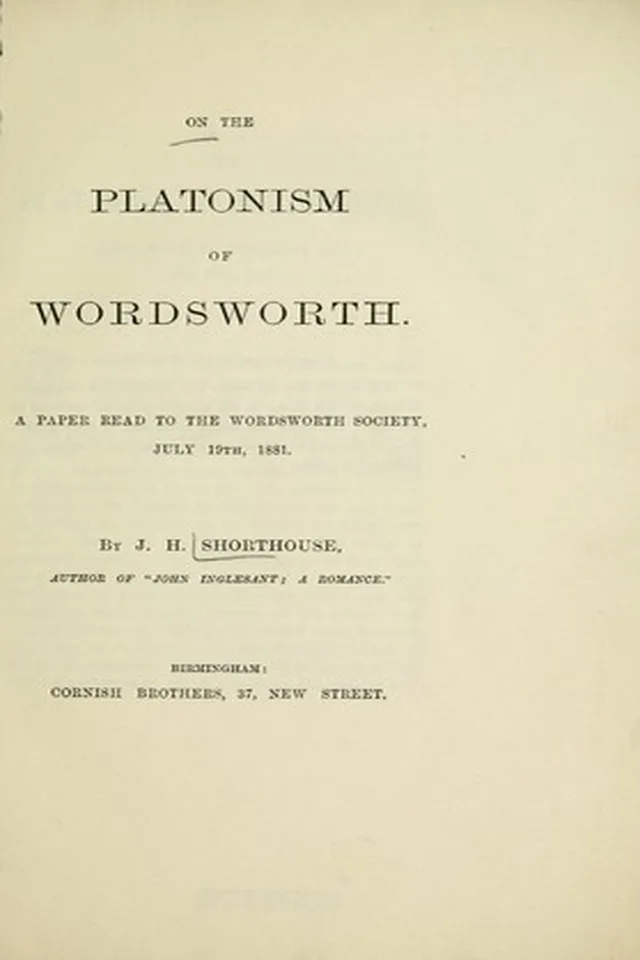
On the platonism of Wordsworth
 62
62

On the platonism of Wordsworth


Review by Celeste Moreau (Divination & Symbolism Reviewer) — 'On the Platonism of Wordsworth' by J. H. Shorthouse is a tour de force in literary esotericism. Shorthouse masterfully uncovers the neoplatonic threads woven into Wordsworth's poetry, providing profound insights into the mystical dimensions of Romantic literature. This book is a treasure trove for those interested in the hidden knowledge and symbolism that underpin great works of art. It is particularly valuable for scholars and practitioners of the occult, offering a deep dive into the philosophical significance of Wordsworth's work. Shorthouse's ability to blend academic rigor with a mystical sensibility makes this book an indispensable addition to any esoteric library.
📝 Description
62
J. H. Shorthouse's 1882 essay examines the Neoplatonic thought in Wordsworth's poetry.
Published in 1882, J. H. Shorthouse's 'On the Platonism of Wordsworth' examines the philosophical underpinnings of William Wordsworth's verse. Shorthouse argues that Wordsworth's poetry is deeply influenced by Neoplatonic ideas, particularly those concerning the soul's descent and ascent, the inherent divinity of nature, and the power of memory. The essay traces these connections, suggesting that the familiar landscapes and emotional intensity in Wordsworth's work are not just Romantic expressions but also reflections of a more ancient philosophical tradition.
Shorthouse presents Wordsworth's poetry as a conduit for spiritual insight, aligning it with hermetic and mystical traditions. He moves beyond simple literary analysis to interpret the poetry as a form of esoteric teaching. For readers interested in the intersection of Romantic poetry and philosophical mysticism, this essay provides a specific lens through which to reconsider Wordsworth's celebrated poems.
This essay situates Wordsworth's poetry within the broader currents of Neoplatonic thought, a philosophical and mystical tradition that influenced Western esotericism for centuries. Neoplatonism, originating with Plotinus in the 3rd century CE, posits a hierarchical cosmos with a transcendent One at its apex, from which all reality emanates. Concepts like the soul's journey from the divine source and its eventual return, the inherent spiritual nature of the material world, and the use of allegory to convey hidden truths are central. Shorthouse connects these ideas to Wordsworth's focus on nature, memory, and the sublime, suggesting a conscious or unconscious engagement with this esoteric lineage.
💡 Why Read This Book?
Why read 'On the Platonism of Wordsworth'? This book offers a unique perspective on one of literature's most celebrated poets, revealing the neoplatonic influences that shaped his work. Ideal for seekers of hidden knowledge, scholars of literature and philosophy, and practitioners of the occult, this book provides a rich and evocative exploration of symbolism and mystical themes.
⭐ Reader Reviews
Honest opinions from readers who have explored this book.
❓ Frequently Asked Questions
What is the main focus of 'On the Platonism of Wordsworth'?
The main focus is the neoplatonic influences in Wordsworth's poetry and their esoteric significance.
Who is the intended audience for this book?
The intended audience includes scholars of literature and philosophy, seekers of hidden knowledge, and practitioners of the occult.
What makes this book significant in the field of esoteric literature?
The book's significance lies in its detailed exploration of neoplatonic symbolism and its relevance to modern esoteric practices.
How does Shorthouse's analysis enhance the understanding of Wordsworth's work?
Shorthouse's analysis reveals the hidden mystical dimensions of Wordsworth's poetry, providing a deeper understanding of his philosophical and symbolic depth.
Is this book suitable for beginners in esoteric studies?
While the book is accessible to beginners, it is particularly valuable for those with some background in literature, philosophy, or occult studies.
🔮 Key Themes & Symbolism
Neoplatonic Influences
J. H. Shorthouse explores the neoplatonic currents that underlie Wordsworth's poetry, revealing the mystical and philosophical foundations of his work. This theme is crucial for understanding the esoteric dimensions of Romantic literature and the hidden knowledge that permeates it.
Symbolism and Hidden Knowledge
The book explores the detailed symbolism in Wordsworth's poetry, uncovering the layers of hidden knowledge that make his work a valuable collection for seekers of the occult. Shorthouse's analysis provides a deep dive into the mystical symbols that give Wordsworth's verses their enduring power.
Philosophical Significance
Shorthouse's work highlights the philosophical significance of Wordsworth's neoplatonic influences, making it an essential read for scholars and practitioners of the occult. This theme underscores the importance of understanding the mystical dimensions of literature and their relevance to modern esoteric practices.
💡 Key Ideas
Editorial paraphrase of the work's core concepts — not direct quotes.
The mystic in Wordsworth is the key to his poetic genius.
This line underscores the importance of the mystical elements in Wordsworth's work.
His poetry is a journey through the areas of the divine.
This quote highlights the spiritual and esoteric dimensions of Wordsworth's verses.
The neoplatonic currents in his writing reveal a hidden knowledge.
This passage emphasizes the esoteric significance of Wordsworth's neoplatonic influences.
Symbolism is the language of the soul in his poetry.
This line points to the mystical and symbolic depth of Wordsworth's work.
His verses are a gateway to the divine and the occult.
This quote underscores the mystical and philosophical significance of Wordsworth's poetry.
🌙 Esoteric Significance
Tradition
This book belongs to the Hermetic tradition, exploring the mystical and philosophical dimensions of literature through the lens of neoplatonism. It explores the hidden knowledge and symbolism that are central to Hermetic thought.
Symbolism
Key symbols in the book include the divine, the soul, and the mystical journey. These symbols are interpreted through the neoplatonic framework, revealing their esoteric significance and relevance to modern occult practices.
Modern Relevance
The book's exploration of neoplatonic influences in literature is particularly relevant today, as modern practitioners seek to understand the mystical dimensions of art and literature. It provides valuable insights for those interested in the occult and Hermetic traditions.
👥 Who Should Read This Book
This book is ideal for beginners and scholars alike. For those new to esoteric studies, it offers a rich introduction to neoplatonic symbolism and its relevance to literature. Scholars will appreciate the depth of Shorthouse's analysis and its contributions to the field of literary esotericism. Spiritual seekers and practitioners of the occult will find valuable insights into the mystical dimensions of Wordsworth's poetry.
📜 Historical Context
Published in the late 19th century, 'On the Platonism of Wordsworth' by J. H. Shorthouse emerged during a time of renewed interest in esoteric and occult studies. The era saw a resurgence of neoplatonic thought and a fascination with the mystical dimensions of literature. Shorthouse's work was influential in highlighting the hidden knowledge and symbolism in Wordsworth's poetry, contributing to the broader movement of literary esotericism.
📔 Journal Prompts
Reflect on the neoplatonic influences in Wordsworth's poetry and their significance to your spiritual journey?
How does Shorthouse's analysis enhance your understanding of the mystical dimensions of literature?
Consider the symbolism in Wordsworth's verses and its relevance to your esoteric practices?
What hidden knowledge do you uncover in Wordsworth's poetry after reading this book?
How does the book's exploration of neoplatonic thought deepen your appreciation of Romantic literature?
🗂️ Glossary
Neoplatonism
A philosophical and mystical tradition that blends Plato's ideas with mystical and esoteric elements.
Hermetic Tradition
An esoteric tradition that emphasizes the mystical and symbolic dimensions of knowledge.
Occult
The study of hidden knowledge and mystical practices, often involving symbolism and esoteric themes.
Symbolism
The use of symbols to convey hidden meanings and mystical insights in literature and art.
Divine
Relating to the mystical and spiritual dimensions of existence, often explored in esoteric literature.
This book appears in 2 collections
🔮 Readers Also Liked
Browse all →








More by J. H. Shorthouse
All books →
From the “Neoplatonism” Collection
View all →






More Free Alchemy & Hermeticism Books
View all →