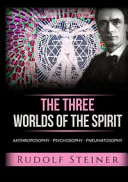
The Three Worlds of the Spirit. Anthroposophy, Psychosophy, Pneumatosophy
 81
81

The Three Worlds of the Spirit. Anthroposophy, Psychosophy, Pneumatosophy
Steiner's "The Three Worlds of the Spirit" offers a stark, systematic view of spiritual reality that demands significant intellectual engagement. The strength lies in its rigorous internal logic; Steiner constructs a detailed cosmology where each spiritual entity and plane has a precise function. However, the work's limitation is its inherent abstraction. While it proposes a path for spiritual development, the practical application can feel distant for the uninitiated reader. The passage discussing the interaction between Luciferic and Ahrimanic influences on human thought, for instance, highlights the intricate, almost adversarial, forces Steiner believed shaped consciousness. It’s a dense, demanding text for serious students of Anthroposophy.
📝 Description
81
Rudolf Steiner first articulated the concept of the three spiritual worlds in 1912.
Rudolf Steiner's "The Three Worlds of the Spirit" details his spiritual science, Anthroposophy. The book describes a tripartite division of existence: the Spirit-Self, the Spirit-Life, and the Spirit-Man. Steiner explains how these distinct but connected planes exist beyond the physical world and outlines a method for human spiritual growth, enabling individuals to perceive and engage with these higher realities. This is not a story but a structured presentation of cosmology and psychology from an esoteric viewpoint.
This work is for Anthroposophy students who want to grasp Steiner's core ideas about spiritual hierarchies and human development. It also interests those studying comparative esotericism, especially Theosophy and other spiritual movements from the late 19th century onwards. People involved in contemplative practices may find value in contextualizing their experiences within this organized spiritual framework.
Rudolf Steiner developed Anthroposophy after his departure from the Theosophical Society around 1912-1913. This period saw the formation of many esoteric groups in Europe, influenced by figures like Helena Blavatsky. "The Three Worlds of the Spirit" reflects this era of intense spiritual exploration and the establishment of distinct spiritual paths.
💡 Why Read This Book?
• Gain a structured understanding of Anthroposophy's cosmology, learning about the specific roles of the Spirit-Self, Spirit-Life, and Spirit-Man as outlined by Steiner. • Comprehend the esoteric basis for human consciousness and evolution, understanding how Steiner’s concepts of Imagination, Inspiration, and Intuition are presented as faculties for spiritual perception. • Contextualize early 20th-century spiritual movements by grasping Steiner's departure from Theosophy and the distinct philosophical framework he established around 1912-1913.
⭐ Reader Reviews
Honest opinions from readers who have explored this book.
❓ Frequently Asked Questions
What is Anthroposophy according to Rudolf Steiner in "The Three Worlds of the Spirit"?
Anthroposophy, as presented by Steiner, is a spiritual science seeking to understand the spiritual nature of the human being and the cosmos through rigorous, systematic spiritual investigation and development of higher consciousness faculties.
What are the 'three worlds' Steiner discusses in this book?
The three worlds are the Spirit-Self (often associated with Ahrimanic forces), the Spirit-Life (associated with Luciferic forces), and the Spirit-Man (associated with Christic forces), representing distinct spiritual planes of existence.
When did Rudolf Steiner develop these ideas?
Steiner developed these core ideas throughout the early 20th century, with significant formulations appearing after his departure from the Theosophical Society around 1912-1913.
How does "The Three Worlds of the Spirit" relate to Theosophy?
It represents a distinct development from Theosophy, with Steiner establishing his own path, Anthroposophy, which offers a different cosmological and evolutionary model, particularly concerning the nature of spiritual beings and their influence.
What spiritual faculties does Steiner emphasize for perceiving these worlds?
Steiner emphasizes the development of Imagination (Bild), Inspiration (Vorstellung), and Intuition (Intuition) as the primary means by which individuals can consciously perceive and engage with the spiritual worlds.
Is this book suitable for beginners in esoteric studies?
While foundational to Anthroposophy, the book's dense, systematic nature can be challenging for absolute beginners. It is best suited for those with some familiarity with spiritual or philosophical concepts.
🔮 Key Themes & Symbolism
The Tripartite Spiritual Cosmos
This work delineates a spiritual cosmology structured around three fundamental realms: the Spirit-Self, Spirit-Life, and Spirit-Man. Steiner presents these not as mere abstract concepts but as active forces and planes of existence influencing human development and earthly reality. The Spirit-Self is often linked to hardening, materialistic forces, while the Spirit-Life is associated with chaotic, spiritualizing influences. The Spirit-Man represents a harmonizing, Christic principle. Understanding the interplay between these worlds is crucial for grasping Steiner's view of human evolution and the challenges of maintaining spiritual balance.
Development of Spiritual Faculties
Central to Steiner's Anthroposophy is the cultivation of higher cognitive abilities to perceive the spiritual. "The Three Worlds of the Spirit" details the progression through Imagination (Bild), Inspiration (Vorstellung), and Intuition (Intuition). These are presented as distinct stages of spiritual cognition that enable the individual to move beyond sense-bound perception. This process is not passive but requires dedicated inner work, ethical development, and specific meditative exercises to achieve clarity and objective experience of non-physical realities.
Luciferic and Ahrimanic Influences
Steiner frequently discusses the roles of Luciferic and Ahrimanic beings or forces in human evolution. In this context, the Spirit-Life is often associated with Lucifer, who seeks to imbue humanity with excessive spiritual pride and premature spiritual insights, leading to illusion. Ahriman, linked to the Spirit-Self, aims to bind humanity solely to the material world, fostering rigid intellect and materialism. The work explores how working through the balance between these opposing influences is essential for healthy spiritual development and avoiding spiritual error.
Anthroposophy as Spiritual Science
Rudolf Steiner presented Anthroposophy as a rigorous, verifiable path of spiritual inquiry, distinct from mere belief or mysticism. "The Three Worlds of the Spirit" exemplifies this by offering a systematic, detailed framework for understanding the spiritual dimensions of existence. It aims to provide humanity with the knowledge and faculties necessary to consciously participate in cosmic evolution, moving beyond the limitations of purely materialistic science towards a more complete understanding of reality.
💬 Memorable Quotes
Direct passages from the work, attributed to the author.
“The Spirit-Self, the Spirit-Life, and the Spirit-Man.”
— This fundamental triad represents Steiner's core cosmological division. It signifies the distinct spiritual realms that human consciousness must understand and interact with to achieve self-awareness and spiritual evolution.
“Imagination, Inspiration, Intuition.”
— These are the three levels of spiritual cognition Steiner identified. They are the faculties through which the human being can perceive the spiritual worlds, moving from symbolic understanding to direct apprehension.
“The danger of Lucifer is to make man too spiritual, too much detached from the earthly.”
— This highlights the perceived risk associated with Luciferic influence: an overemphasis on the spiritual at the expense of practical, earthly realities, leading to delusion and a loss of grounding.
“Ahriman seeks to solidify man in the material, to make him entirely a creature of the senses.”
— This points to the Ahrimanic tendency to trap human consciousness within the physical world, suppressing spiritual perception and reducing existence to purely materialistic and intellectual processes.
“The Christ impulse mediates between these forces.”
— The concept of the Christ impulse is presented as a central, balancing force that works to harmonize the potentially disruptive influences of Lucifer and Ahriman within the human being and cosmic evolution.
🌙 Esoteric Significance
Tradition
This work is a core part of Anthroposophy, a modern esoteric tradition founded by Rudolf Steiner. While drawing from a broad esoteric heritage, including Gnosticism and Hermeticism, Anthroposophy distinguishes itself through its emphasis on a scientific methodology for spiritual inquiry and its unique cosmology centered on the Christ impulse and specific evolutionary stages of consciousness.
Symbolism
Key symbolic motifs include the triad of Spirit-Self, Spirit-Life, and Spirit-Man, representing distinct spiritual planes and influences. The concepts of Lucifer and Ahriman function as potent symbolic representations of opposing forces that challenge human spiritual development. The progression of faculties—Imagination, Inspiration, and Intuition—serves as a symbolic map for the inner journey towards higher perception.
Modern Relevance
Contemporary practitioners of Anthroposophy continue to engage with these concepts. Steiner's ideas also resonate with thinkers in transpersonal psychology and consciousness studies who seek systematic models for understanding non-ordinary states of awareness. Furthermore, his tripartite division of spiritual influence informs modern discussions on the psychological and spiritual challenges of technological advancement and materialism.
👥 Who Should Read This Book
• Students of Rudolf Steiner's Anthroposophy seeking a detailed exposition of his spiritual cosmology and the nature of higher worlds. • Scholars of Western Esotericism interested in the development of post-Theosophical movements and distinct spiritual scientific approaches. • Contemplative practitioners aiming to contextualize their inner experiences within a structured framework of spiritual evolution and consciousness development.
📜 Historical Context
Rudolf Steiner’s "The Three Worlds of the Spirit" emerged from his key philosophical and spiritual explorations in the early 20th century. Following his departure from the Theosophical Society leadership around 1912-1913, Steiner founded Anthroposophy, a distinct spiritual science. This period was marked by intense intellectual ferment in Europe, with movements like Theosophy, Spiritualism, and various esoteric orders vying for influence. Steiner's work offered a rigorously structured alternative to the more syncretic or mystical approaches of contemporaries like Annie Besant. While Theosophy often focused on Eastern traditions and ancient wisdom, Steiner emphasized a scientific, empirical approach to the spiritual, grounded in European philosophical traditions and his own developed clairvoyant faculties. His reception was largely confined to his dedicated followers, though his ideas have since influenced fields ranging from education (Waldorf schools) to agriculture (biodynamics).
📔 Journal Prompts
The interplay between the Spirit-Self and Spirit-Life.
Developing Imagination, Inspiration, and Intuition.
The role of the Christ impulse in balancing Luciferic and Ahrimanic forces.
Perceiving the spiritual hierarchy.
Anthroposophy's distinction from earlier esoteric movements.
🗂️ Glossary
Anthroposophy
A spiritual philosophy and practice founded by Rudolf Steiner, aiming to investigate the spiritual dimensions of existence through a method described as 'spiritual science'.
Psychosophy
The study of the soul or psyche, focusing on its inner life, development, and relationship to the spiritual and physical realms within the Anthroposophical framework.
Pneumatosophy
The study of the spirit (pneuma), concerning the higher, divine aspects of the human being and their connection to cosmic spiritual realities.
Spirit-Self
In Steiner's cosmology, one of the three primary spiritual worlds, often associated with Ahrimanic influences that tend towards hardening and materialism.
Spirit-Life
Another of the three primary spiritual worlds, typically linked to Luciferic influences that promote spiritual inflation and detachment from the earthly.
Spirit-Man
The third spiritual world, representing a harmonizing, Christic principle that mediates between the Spirit-Self and Spirit-Life, crucial for human balance and evolution.
Imagination, Inspiration, Intuition
The three stages of spiritual cognition Steiner outlined, forming a pathway for perceiving and understanding the spiritual worlds beyond ordinary sensory experience.