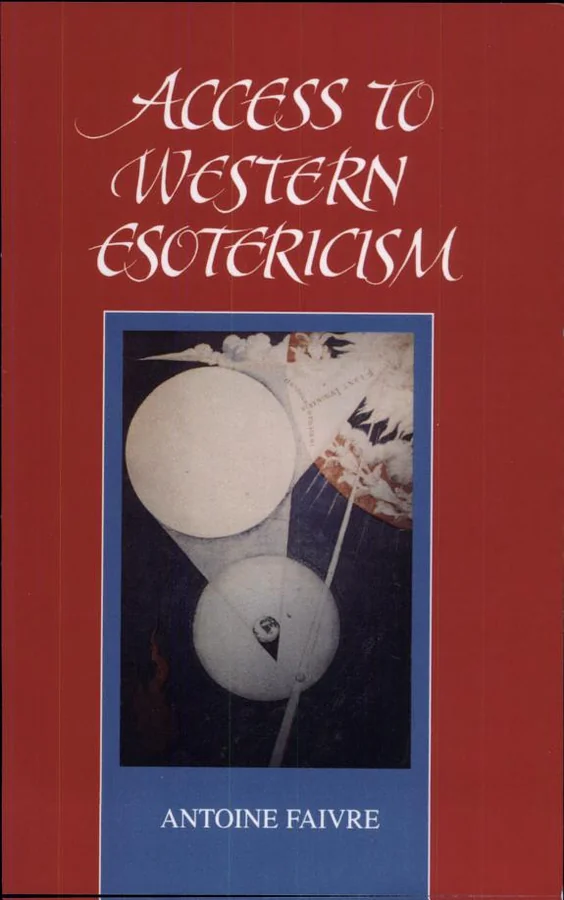
Access to Western Esotericism
 77
77

Access to Western Esotericism
Antoine Faivre's "Access to Western Esotericism" remains a signal achievement in the academic study of the subject, providing a much-needed systematic framework. Its strength lies in Faivre's meticulous methodology and clear definitions, particularly his distinction between 'esotericism' and 'exotericism,' which helps to clarify a historically nebulous field. The historical survey, beginning from the Alexandrian Period, is ambitious and illuminates connections between seemingly disparate traditions like Christian Kabbalah and Theosophy. However, the sheer breadth of the survey, while impressive, can sometimes feel compressed, leaving the reader wishing for deeper dives into specific movements. The exploration of the concept of 'spiritual transformation' as a unifying element is particularly compelling, offering a psychological and experiential dimension often missing in purely historical accounts. Faivre's work sets a high bar for the academic study of Western esotericism, establishing it as a legitimate field of inquiry.
📝 Description
77
Antoine Faivre's 1994 work offers the first systematic English study of Western esoteric traditions.
Antoine Faivre's "Access to Western Esotericism" provides a systematic historical examination of esoteric currents in the West. The book traces these traditions from the Alexandrian period to their modern forms, identifying shared concepts and goals. Faivre situates esoteric thought within the broader history of ideas, beginning with the Hellenistic era and the syncretic environment of Alexandria. He charts the development of these ideas through figures and movements like Christian Kabbalah, Theosophy, and the philosophical ideas behind Alchemy.
The text highlights two core characteristics found in many esoteric traditions: the principle of universal interdependency, where all things are seen as connected, and the pursuit of spiritual transformation or gnosis. Faivre carefully defines essential terms, establishing a scholarly basis for understanding concepts such as 'esotericism,' 'gnosis,' and the nature of initiatory paths. This work distinguishes these movements from superstition or occultism, offering a critical perspective on often marginalized intellectual and spiritual currents.
This book emerges from the academic study of Western esotericism, a field that gained significant traction in the late 20th century. Faivre's work is a landmark contribution, providing a structured historical and conceptual framework for understanding a diverse range of traditions often categorized as "esoteric." It moves beyond simple categorization to analyze the underlying principles and historical trajectories of groups and ideas associated with Hermeticism, Kabbalah, Alchemy, Rosicrucianism, and others, placing them within the intellectual history of Western thought.
💡 Why Read This Book?
• Gain a clear, scholarly definition of 'esotericism' and its distinction from exoteric thought, a foundational concept established by Faivre in his analysis of Hermeticism. • Understand the historical development of key esoteric currents, such as Alchemy and Christian Kabbalah, from their Alexandrian Period roots through to the 20th century. • Grasp the core unifying principles of esoteric traditions, particularly the notions of universal interdependency and spiritual transformation, as articulated by Faivre.
⭐ Reader Reviews
Honest opinions from readers who have explored this book.
❓ Frequently Asked Questions
What is the primary historical period covered in Antoine Faivre's "Access to Western Esotericism"?
The book begins its historical survey from the Alexandrian Period, a significant era of syncretism, and traces the development of esoteric currents through subsequent centuries up to modern times.
What are the two central characteristics of esoteric traditions according to Faivre?
Faivre identifies two key characteristics: the principle of universal interdependency, suggesting a fundamental interconnectedness of all things, and the experience of spiritual transformation or gnosis.
Does the book focus on specific esoteric traditions or offer a general overview?
It offers a systematic overview, examining various currents including Christian Kabbalah, Theosophy, Alchemy, Rosicrucianism, and Hermeticism, while highlighting their commonalities.
What methodology does Antoine Faivre employ in his study?
Faivre establishes a rigorous, interdisciplinary methodology for the study of esotericism, providing clarifying definitions for key terms and analyzing historical and conceptual frameworks.
Who is Antoine Faivre and what is his contribution to the study of esotericism?
Antoine Faivre is a preeminent scholar of Western esotericism. His 1994 work is considered the first systematic treatment of the subject in English, setting a standard for academic research.
What is the significance of the Alexandrian Period in the context of this book?
The Alexandrian Period is identified as a crucial starting point for tracing the lineage of Western esoteric traditions due to its rich environment of syncretism and the confluence of various philosophical and religious ideas.
🔮 Key Themes & Symbolism
Defining Esotericism
Faivre meticulously defines 'esotericism' as distinct from 'exotericism,' establishing a crucial methodological boundary. This involves understanding specific forms of knowledge, practices, and experiences often characterized by secrecy, initiation, and a pursuit of deeper realities beyond surface appearances. The work clarifies how to academically approach traditions like Hermeticism and Gnosticism without reducing them to mere historical curiosities or simple superstition.
Universal Interdependency
A core concept explored is the notion that all elements of the cosmos are interconnected and mutually influential. This principle, found across traditions from Hermeticism to Alchemy, suggests a hidden order and correspondence between the macrocosm and microcosm. Faivre illustrates how this belief underpins the esoteric worldview, driving practices aimed at harmonizing with or manipulating these universal forces for spiritual growth.
Spiritual Transformation
The pursuit of personal spiritual transformation, often termed 'gnosis' or enlightenment, is presented as a universal goal within esoteric currents. Faivre examines how various traditions, from Christian Kabbalah to Theosophy, offer distinct paths and methods for achieving this inner metamorphosis. This transformative aim distinguishes esoteric practices from purely intellectual pursuits, emphasizing experiential knowledge and inner realization.
Historical Currents
The book provides a sweeping historical survey, charting the evolution of key esoteric traditions from their origins in the Alexandrian Period. It connects diverse movements such as Rosicrucianism, Alchemy, and Hermeticism, demonstrating their shared roots and intellectual lineage. This historical mapping is crucial for understanding the context and development of Western esoteric thought over centuries.
💬 Memorable Quotes
Direct passages from the work, attributed to the author.
“The author establishes a rigorous methodology; provides clarifying definitions of such key terms as “gno”
— This excerpt highlights Faivre's commitment to academic rigor in studying esoteric traditions. It points to his crucial work in defining terms like 'gnosis,' essential for scholarly discourse and understanding the experiential goals of esotericism.
“Common characteristics of these currents are the notion of universal interdependency and the experience of spiritual transformation.”
— This captures Faivre's central thesis about unifying principles within diverse esoteric traditions. It underscores that despite varying forms, the belief in cosmic connection and the goal of personal transformation are shared foundational elements.
“This is the first systematic treatment of esotericism to appear in English.”
— This statement emphasizes the book's pioneering status. It signifies its importance in establishing a coherent academic framework for studying Western esotericism, filling a significant gap in English-language scholarship.
“Here is also a historical survey, beginning with the Alexandrean Period, of the various esoteric currents such as Christian Kabbalah, Theosophy, Alchemy, Rosicrucianism, and Hermeticism.”
— This highlights the book's comprehensive historical scope. It signals that the reader will encounter a detailed exploration of major esoteric movements, tracing their origins and interconnections from antiquity onwards.
“The author establishes a rigorous methodology”
— This emphasizes Faivre's academic approach. It suggests that the book is not a speculative or devotional text, but a carefully constructed analysis grounded in scholarly principles for understanding esoteric phenomena.
🌙 Esoteric Significance
Tradition
Faivre's work is deeply rooted in the Hermetic and Gnostic traditions, but its primary significance lies in its meta-level analysis of *all* Western esoteric traditions. It seeks to identify common structures and aims across seemingly disparate schools, from Kabbalah to Theosophy. By establishing a comparative framework, Faivre positions his work not as a participant in a specific lineage, but as a scholarly guide *to* these lineages, offering a map for understanding their shared philosophical and spiritual landscape.
Symbolism
While not focused on specific symbols, Faivre's work inherently deals with the symbolic language of esotericism. Concepts like the 'macrocosm' and 'microcosm' represent a fundamental symbolic correspondence central to Hermeticism and Alchemy. The idea of 'gnosis' itself functions as a symbolic representation of ultimate spiritual attainment, a hidden knowledge that transforms the initiate. These symbolic frameworks are presented as vehicles for understanding universal interdependency.
Modern Relevance
Faivre's rigorous definition of esotericism and his emphasis on spiritual transformation continue to influence contemporary scholars and practitioners. Thinkers exploring comparative religion, altered states of consciousness, and the history of ideas engage with his foundational work. Modern practitioners of Hermeticism, Kabbalah, and related paths often use his book as a scholarly reference to contextualize their practices within a broader historical and philosophical framework.
👥 Who Should Read This Book
• Scholars of religion, history, and philosophy: to gain a foundational, interdisciplinary methodology for studying esoteric traditions and understanding their place in Western intellectual history. • Students and practitioners of Hermeticism, Kabbalah, and Alchemy: to acquire a rigorous historical and theoretical framework for their chosen paths, understanding their roots and common principles. • General readers interested in the hidden currents of Western thought: to explore the major esoteric movements and their shared characteristics beyond popular misconceptions.
📜 Historical Context
Published in 1994, Antoine Faivre's "Access to Western Esotericism" emerged at a time when the academic study of esoteric traditions was gaining momentum but still lacked a universally accepted framework. Faivre's work provided this crucial systematic methodology, distinguishing itself from earlier, more popular or uncritical accounts. He built upon the work of scholars like Frances Yates, who explored Hermeticism and the Renaissance, but Faivre's focus was broader and more explicitly focused on defining the field itself. His approach was informed by French intellectual traditions and a desire to establish esotericism as a legitimate subject of historical and religious study, akin to major world religions. The book's reception marked a significant step in legitimizing the academic inquiry into movements like Gnosticism, Kabbalah, and Alchemy, setting a precedent for future scholarship and scholarly debates about the nature and boundaries of Western esotericism.
📔 Journal Prompts
The notion of universal interdependency: how might this concept manifest in contemporary scientific or social theories?
Spiritual transformation: reflect on the author's definition and consider its implications for personal development.
The Alexandrian Period: research one syncretic philosophical or religious movement from this era and its potential esoteric connections.
Esotericism vs. Exotericism: analyze a contemporary belief system or practice, categorizing it using Faivre's definitions.
Gnosis: explore the different ways this concept is understood across the esoteric currents mentioned by Faivre.
🗂️ Glossary
Esotericism
A category of knowledge and practice characterized by specific forms of experience, symbolic language, and often secrecy, aiming at spiritual transformation or gnosis, distinguished from exoteric (publicly accessible) knowledge.
Exotericism
The external, public, or common form of knowledge and practice, contrasted with esotericism. It represents the readily accessible aspects of religious or philosophical systems.
Gnosis
Direct spiritual knowledge or insight, often considered salvific. It represents experiential understanding and enlightenment achieved through esoteric paths, distinct from intellectual or doctrinal knowledge.
Universal Interdependency
The esoteric principle that all parts of the cosmos are interconnected and mutually influential, reflecting a hidden order or correspondence between the macrocosm and microcosm.
Alexandrian Period
A historical era (roughly 3rd century BCE to 3rd century CE) centered in Alexandria, Egypt, known for its intense syncretism of Greek, Egyptian, Jewish, and other religious and philosophical traditions, a fertile ground for early esotericism.
Christian Kabbalah
A form of Jewish mysticism that was adapted and reinterpreted by Christian scholars during the Renaissance, seeking to find Christian meanings within Kabbalistic texts and concepts.
Hermeticism
A religious, philosophical, and esoteric tradition based primarily upon the writings attributed to Hermes Trismegistus, emphasizing concepts like the correspondence between the microcosm and macrocosm.