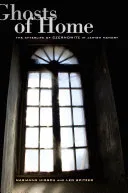
Ghosts of Home
 78
78

Ghosts of Home
Marianne Hirsch and Leo Spitzer’s Ghosts of Home offers a poignant examination of Czernowitz, a city that exists more vibrantly in recollection than in present geography. The authors succeed in their ambitious project of excavating a lost world, particularly the Jewish-German intellectual milieu that characterized the "Vienna of the East." Their exploration of "postmemory" is particularly compelling, illustrating how the children of survivors internalize and re-tell the stories of their parents' lost homeland. A limitation, however, lies in the sometimes-dense academic prose which, while precise, can occasionally distance the reader from the raw emotion of the subject matter. The passage describing the city’s transformation from a Habsburg jewel to a site of profound loss, particularly concerning the fate of its Jewish population after 1941, is handled with both scholarly rigor and deep sensitivity. This book is a vital, albeit challenging, testament to the enduring power of place in shaping identity.
📝 Description
78
Ghosts of Home reconstructs Czernowitz's vanished Jewish-German culture from personal and collective memory.
Marianne Hirsch and Leo Spitzer's Ghosts of Home chronicles the Jewish-German culture of Czernowitz, a city once called the "Vienna of the East" in Bukovina. This work reconstructs the intellectual and artistic life of this Eastern European metropolis before its destruction during World War II. The authors draw on personal and collective memory to show how a lost world is preserved and transformed across generations.
The book is set against the backdrop of the late Habsburg Empire, a multi-ethnic state that fostered unique cultural syntheses, and its collapse after World War I. Czernowitz, as the capital of Bukovina, exemplified this cosmopolitanism, particularly its vibrant Jewish intellectual and cultural life. The city's fate after World War II, under Soviet and later Ukrainian rule, led to the erasure of its pre-war identity, a process the authors meticulously examine.
Readers interested in the history of Eastern European Jewry, the cultural impact of the Habsburg Empire, and the processes of memory and inheritance will find this book engaging. It speaks to those seeking to understand how dispersed communities maintain their identity and heritage through narrative and remembrance. Scholars of Holocaust studies, cultural history, and trauma studies will find significant material.
While not strictly an esoteric text, Ghosts of Home engages with concepts that resonate within esoteric traditions concerning memory, the afterlife of cultures, and inherited psychic landscapes. The idea of an "invisible city" existing in memory and the "haunted heirloom" of trauma and nostalgia touches on how past experiences and cultural imprints persist beyond physical presence. Marianne Hirsch's concept of "postmemory" further explores how the past is not just remembered but felt and re-experienced by subsequent generations, a theme familiar in discussions of ancestral influence and collective consciousness.
💡 Why Read This Book?
• You will learn about the concept of "postmemory" as defined by Marianne Hirsch, understanding how the second generation grapples with the unexperienced traumas of their predecessors, specifically in relation to the lost Jewish culture of Czernowitz. • You will gain insight into the specific historical context of the Austro-Hungarian Empire's Bukovina region and its unique Jewish-German cultural efflorescence before World War II, a detail often overlooked in broader historical narratives. • You will feel the weight of inherited memory and the spectral presence of a vanished city, Czernowitz, which the authors reconstruct through the lens of familial narrative and collective remembrance.
⭐ Reader Reviews
Honest opinions from readers who have explored this book.
❓ Frequently Asked Questions
What historical period does Ghosts of Home primarily focus on regarding Czernowitz?
The book centers on Czernowitz during its time as part of the Austro-Hungarian Empire, particularly its vibrant Jewish-German cultural period, and its subsequent destruction and erasure after World War II.
What is the significance of the term 'invisible city' in the book?
The 'invisible city' refers to Czernowitz as it exists in the collective and individual memories of its dispersed former inhabitants and their descendants, a place preserved through stories and imagination.
Who are Marianne Hirsch and Leo Spitzer in relation to Czernowitz?
Marianne Hirsch, a scholar, is the daughter of Czernowitz survivors, and Leo Spitzer is her father, a survivor himself. Their familial connection deeply informs the book's exploration of memory.
How does the book define 'postmemory'?
Postmemory describes the relationship that the generation after the Holocaust has to the traumatic experiences of the preceding one. It's about how those who did not directly experience trauma still internalize and are shaped by its legacy.
What cultural atmosphere characterized Czernowitz before World War II?
Before World War II, Czernowitz was known as the "Vienna of the East" and was a significant center for Jewish-German culture, intellectual life, and artistic expression within the Habsburg Empire.
What is the main argument of Ghosts of Home regarding lost cultures?
The book argues that while physical places and cultures can be destroyed, they can persist and be kept alive through the power of memory, storytelling, and the inheritance of that remembrance by subsequent generations.
🔮 Key Themes & Symbolism
The Invisible City
Czernowitz, the "Vienna of the East," exists as an 'invisible city' primarily in the memories of its dispersed inhabitants and their descendants. This theme explores how a place, erased by historical cataclysm, continues to inhabit the psychic range of those connected to it. The book meticulously reconstructs this spectral metropolis not through brick and mortar, but through personal narratives, photographs, and the shared consciousness of a lost world, highlighting the enduring power of collective memory against historical erasure.
Postmemory and Inheritance
Central to the work is Marianne Hirsch's concept of 'postmemory,' examining how the generation after trauma inherits its stories and affects. This theme studies how children of Holocaust survivors, like Hirsch herself, are deeply shaped by experiences they did not directly live through. The book illustrates how these inherited memories function as a 'haunted heirloom,' passed down through generations, influencing identity, belonging, and the understanding of one's past and present.
Cultural Synthesis Under the Habsburgs
The book illuminates the unique cultural synthesis fostered by the Austro-Hungarian Empire, using Czernowitz as a prime example. This theme focuses on the vibrant Jewish-German intellectual and artistic milieu that flourished in the region's borderlands. It contrasts this cosmopolitanism with the subsequent devastation, underscoring the fragility of such cultural formations and the profound loss incurred when they are annihilated by war and political upheaval.
Memory as Preservation
Ghosts of Home posits memory not merely as recollection, but as an active force of preservation. The authors demonstrate how storytelling, familial bonds, and scholarly inquiry work to keep a vanished culture alive. This theme addresses the ethical imperative of remembering and how the act of chronicling the past, particularly the experiences of marginalized communities, serves as a bulwark against oblivion and a means of reclaiming a lost heritage.
💬 Memorable Quotes
Direct passages from the work, attributed to the author.
“Known as Czernowitz, the 'Vienna of the East' under the Habsburg empire, this vibrant Jewish-German Eastern European culture vanished after World War II.”
— This statement firmly grounds the narrative in historical fact, identifying Czernowitz and its specific cultural identity. It sets up the central tragedy the book addresses: the disappearance of a unique cultural entity due to historical violence.
“Hirsch and Spitzer chronicle the city through a blend of history and communal memoir.”
— This describes the methodological approach of the authors, combining rigorous historical research with personal, familial accounts. It signals a work that is both scholarly and deeply intimate, seeking to capture the lived experience of a lost community.
“The memory of Czernowitz is passed down like a precious and haunted heirloom.”
— This interpretation focuses on the dual nature of inherited memory. It is 'precious' because it connects individuals to their heritage and identity, but 'haunted' by the trauma and loss associated with the original experience.
💡 Key Ideas
Editorial paraphrase of the work's core concepts — not direct quotes.
An idealized version lives on, suspended in the memories of its dispersed people and passed down to their children like a precious and haunted heirloom.
This quote expresses the core of the book's exploration: the enduring, yet often idealized, legacy of a lost culture. It highlights how memory becomes a sacred, yet burdensome, inheritance, shaping the identity of subsequent generations who never knew the original place.
The work explores the city east of the Carpathian Mountains, a place that exists more vividly in recollection than in present geography.
This paraphrased concept emphasizes the book's focus on the subjective reality of memory. It suggests that the emotional and cultural resonance of Czernowitz transcends its physical absence, existing powerfully in the minds of those who remember it.
🌙 Esoteric Significance
Tradition
While not strictly adhering to a single esoteric lineage, Ghosts of Home touches upon themes resonant with Gnostic and Hermetic traditions concerning the remembrance of lost spiritual homelands and the preservation of knowledge against oblivion. The concept of an 'invisible city' existing beyond the material world can be seen as analogous to esoteric realms or spiritual planes accessible through consciousness. The focus on inherited memory and the 'haunted' nature of remembrance echoes ideas of ancestral knowledge and karmic imprints found in various mystical systems.
Symbolism
The 'invisible city' itself serves as a potent symbol of an idealized, spiritualized homeland that transcends physical destruction. The 'haunted heirloom' symbolizes the burden and blessing of inherited memory, carrying both the beauty of the past and the trauma of its loss. Photographs and personal artifacts, as described in the book, function as talismans or anchors, objects that connect the present to a vanished past, facilitating a form of spiritual or psychic retrieval.
Modern Relevance
The work's exploration of 'postmemory' and the enduring impact of historical trauma on subsequent generations has significant relevance for contemporary studies in trauma, memory, and identity. Thinkers and practitioners in fields ranging from psychoanalysis to cultural studies draw upon Hirsch's conceptual framework. The book's meticulous reconstruction of a lost cultural space also informs contemporary discussions on heritage preservation, the ethics of remembrance, and the ways in which communities maintain identity in diaspora, resonating with practices in diaspora studies and memorialization.
👥 Who Should Read This Book
• Scholars and students of Holocaust studies and Eastern European history seeking detailed accounts of cultural loss and remembrance in a specific, often-overlooked region. • Readers interested in the concept of "postmemory" and how historical trauma is transmitted across generations, offering a framework for understanding inherited grief and identity. • Individuals with personal connections to displaced communities or a general interest in the power of memory, storytelling, and the construction of identity in the face of historical adversity.
📜 Historical Context
Ghosts of Home situates Czernowitz within the complex ethno-cultural range of the late Austro-Hungarian Empire, a period marked by both imperial administration and burgeoning nationalisms. The city, as the capital of Bukovina, was a nexus of German, Romanian, Ukrainian, and Yiddish cultures, with a particularly strong and influential Jewish intellectual and artistic presence. This cosmopolitanism, fostered by the Habsburgs' relatively liberal policies, created a unique "Jewish-German" cultural sphere. The book was published in 2010, decades after the devastating impact of World War II, which saw the systematic annihilation of Czernowitz's Jewish population by the Nazis and their collaborators, followed by the city's incorporation into the Soviet Union. This historical backdrop of imperial grandeur followed by violent destruction and subsequent political shifts is crucial to understanding the authors' project of remembrance. The work implicitly engages with post-war historical narratives that often overlooked or simplified the specific cultural losses of cities like Czernowitz, offering a counter-narrative rooted in personal and collective memory.
📔 Journal Prompts
Czernowitz as a 'haunted heirloom'—what does this spectral inheritance signify for identity?
The 'invisible city' and its persistence in memory—how does place survive destruction?
Reflecting on the concept of 'postmemory' through familial narratives.
The cultural synthesis of Czernowitz: what elements are most poignant in their loss?
Examining the role of photographs and artifacts in preserving a vanished world.
🗂️ Glossary
Czernowitz
The city formerly known as Czernowitz, capital of Bukovina in the Austro-Hungarian Empire, renowned for its vibrant Jewish-German culture before its destruction during World War II.
Vienna of the East
A moniker for Czernowitz, reflecting its status as a major cultural, intellectual, and administrative center within the Austro-Hungarian Empire, particularly admired for its European sophistication.
Habsburg Empire
The powerful Central European empire that ruled over diverse ethnic groups, including those in Bukovina, from the 15th century until its dissolution after World War I in 1918.
Postmemory
A term coined by Marianne Hirsch, describing the relationship that the generation after the Holocaust (or other major historical traumas) has to the traumatic experiences of the preceding one, which they did not directly experience but are deeply affected by.
Bukovina
A historical region in Central Europe, located at the crossroads of Eastern Europe, which was part of the Austro-Hungarian Empire and later contested by Romania and the Soviet Union.
Jewish-German culture
A distinct cultural phenomenon, particularly prominent in Central and Eastern Europe, characterized by Jewish intellectuals and artists operating within and contributing to German language and culture.
Haunted heirloom
A metaphor used in the book to describe the legacy of a lost culture or traumatic past passed down through generations, carrying both precious memories and the specter of loss and suffering.