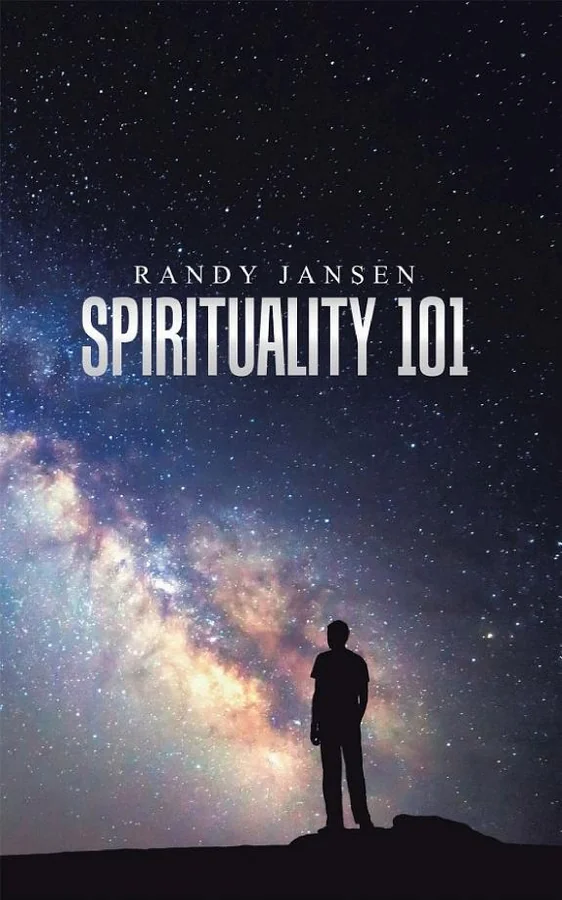
Spirituality 101
 78
78

Spirituality 101
Randy Jansen’s Spirituality 101 offers a refreshingly direct approach to a subject often shrouded in jargon. The author skillfully guides the reader from an initial state of unawareness toward a nascent understanding of spiritual principles. A particular strength lies in its clear delineation of the 'true self' versus the ego, a crucial distinction for beginners.
However, the book’s ambition to cover both basic and intermediate topics occasionally leads to a somewhat generalized treatment of complex ideas. For instance, the section on 'universal energy' could benefit from more specific examples or theoretical grounding, perhaps referencing concepts like Qi or Prana more explicitly, rather than remaining at a high level.
Read more ↓
The work's primary value is its accessibility, making it a useful starting point for those feeling spiritually adrift. It provides a foundational map for navigating the vast terrain of contemporary spiritual thought. Jansen's direct address to the 'asleep' reader is both a hook and a challenge, urging introspection.
📝 Description
78
Randy Jansen's Spirituality 101, published in 2020, demystifies modern spiritual thought for newcomers.
Spirituality 101, by Randy Jansen, offers a structured introduction to contemporary spiritual ideas. The book begins with basic concepts and builds toward more complex topics, aiming to equip individuals new to self-exploration with a framework for understanding modern spirituality. It is written for those who feel a pull toward deeper meaning but lack the language or conceptual tools to begin their personal quest.
This work is intended for individuals beginning their spiritual awareness. It speaks to those who are looking for something beyond conventional explanations and wish to examine their inner lives. Jansen guides readers toward a clearer understanding of their own potential for growth and awareness.
Published in 2020, Spirituality 101 enters a lineage of spiritual inquiry that gained momentum with the New Thought movement in the 19th century. Jansen addresses the contemporary spiritual seeker, distinct from earlier traditions like Theosophy or Christian Science. His aim is to translate metaphysical concepts into accessible language for a generation accustomed to digital communication, offering a modern perspective on personal well-being and metaphysical exploration.
💡 Why Read This Book?
• You will learn to identify and differentiate your 'true self' from your ego, a core concept Jansen introduces early in the book, providing a foundational distinction for self-awareness. • You will gain an understanding of basic spiritual concepts like consciousness and interconnectedness, as presented in the book's foundational chapters, enabling you to begin framing your personal spiritual inquiries. • You will explore practical ways to engage with spirituality, as detailed in sections discussing mindfulness and self-discovery, offering actionable steps to apply these ideas to your daily life starting from the book's 2020 publication date.
⭐ Reader Reviews
Honest opinions from readers who have explored this book.
❓ Frequently Asked Questions
What is the main goal of Randy Jansen's Spirituality 101?
The primary aim of Spirituality 101 is to awaken individuals who are unaware of their spiritual nature. It seeks to introduce fundamental concepts of contemporary spirituality, guiding readers from a state of unconsciousness towards self-realization and personal growth.
Is Spirituality 101 suitable for absolute beginners?
Yes, the book is explicitly designed for those new to spiritual exploration. It covers basics and moves into intermediate topics, serving as an accessible introduction to the vast universe of spiritual thought first published in 2020.
What kind of spiritual concepts does the book cover?
The book introduces core ideas such as the 'true self,' consciousness, universal energy, and the practice of mindfulness. It aims to provide a foundational understanding for individuals embarking on their spiritual journey.
Who is the author, Randy Jansen?
Randy Jansen is the author of Spirituality 101, a work aimed at guiding individuals toward spiritual awakening. The book first appeared on July 15, 2020, marking his contribution to contemporary spiritual literature.
Does the book offer practical exercises?
While the book focuses on introducing concepts, it encourages self-discovery through awareness and introspection. The principles discussed, such as mindfulness, are inherently practical and intended for application in daily life.
What makes this book different from other spirituality guides?
Spirituality 101 distinguishes itself through its direct address to the 'asleep' individual and its structured progression from basic to intermediate concepts. It aims for clarity and accessibility in a field often perceived as complex.
🔮 Key Themes & Symbolism
The True Self
A central theme is the distinction between the 'true self' and the conditioned ego. Jansen posits that our authentic essence exists beyond personality constructs and societal imprints. The work guides the reader to recognize this deeper identity, suggesting that true fulfillment and peace arise from aligning with this core being. This concept is fundamental to understanding personal liberation and spiritual evolution within the context of contemporary spiritual discourse.
Consciousness and Awareness
The book explores consciousness not merely as a biological function but as a fundamental aspect of reality. Jansen emphasizes the power of awareness to shape experience and facilitate transformation. By cultivating present-moment awareness, readers are encouraged to observe their thoughts and emotions without judgment, thereby gaining mastery over their inner world and external circumstances.
Spiritual Awakening
The core objective of Spirituality 101 is to facilitate spiritual awakening. This is presented as a process of moving from unconscious living to a state of conscious understanding of one's spiritual nature and connection to the universe. The book acts as a catalyst, prompting readers to question their perceived reality and embrace a broader, more meaningful existence.
Universal Energy
Jansen introduces the concept of a pervasive universal energy that connects all things. This energy is seen as the life force that animates the cosmos and individual beings. Understanding and harmonizing with this energy is presented as key to well-being and spiritual integration. The work suggests that recognizing this energetic connection can foster empathy and a sense of unity.
💬 Memorable Quotes
Direct passages from the work, attributed to the author.
“The journey begins when you realize you are more than your thoughts and feelings.”
— This statement highlights the initial spark of spiritual inquiry – the dawning awareness that one's identity is not solely defined by the fluctuating mental and emotional landscape. It marks the transition from ego identification to the exploration of a deeper self.
“Awakening is not a destination, but a continuous unfolding.”
— This interpretation emphasizes that spiritual growth is an ongoing process rather than a singular event. It suggests that embracing the journey of self-discovery with patience and openness is more crucial than reaching a supposed end state.
“Recognize the interconnectedness of all life; you are part of a vast cosmic web.”
— This sentiment underscores the theme of unity. It encourages the reader to perceive beyond superficial separation and acknowledge the fundamental energetic and spiritual links that bind all beings and phenomena in existence.
“The universe responds to the vibration of your inner state.”
— This idea connects personal inner experience with external manifestation. It suggests that one's dominant emotional and mental frequencies influence the reality one attracts, implying the power of inner work for outer change.
💡 Key Ideas
Editorial paraphrase of the work's core concepts — not direct quotes.
Your true self is the quiet observer behind the noise of the mind.
This quote defines the 'true self' as the underlying consciousness that witnesses thoughts and emotions without being entangled by them. It points towards a stable, observing presence that can be accessed through mindful attention.
🌙 Esoteric Significance
Tradition
Spirituality 101 aligns broadly with the modern New Age and Self-Help traditions, which draw eclectically from various esoteric streams, including Hermeticism, Eastern mysticism, and transpersonal psychology. It emphasizes direct personal experience and inner knowing over adherence to dogma, a hallmark of many contemporary spiritual movements that depart from the more structured lineages of historical Western esotericism.
Symbolism
While the book primarily uses conceptual language, the 'true self' can be seen as a symbolic representation of the divine spark or the Higher Self found in Hermetic and Gnostic traditions. The concept of 'universal energy' functions symbolically to represent the interconnectedness and animating force of the cosmos, akin to the 'Akashic field' or 'Aether' in older esoteric cosmologies.
Modern Relevance
Jansen's work is highly relevant to contemporary spiritual seekers exploring mindfulness, law of attraction principles, and non-dual awareness. It provides a foundational text for individuals engaging with modern spiritual teachers and online courses that focus on personal transformation and conscious living, echoing themes found in the works of Eckhart Tolle and similar contemporary figures.
👥 Who Should Read This Book
• Individuals new to spiritual concepts: Those feeling a vague sense of searching or dissatisfaction will find a clear, non-intimidating entry point into understanding their inner world and potential. • Seekers of personal transformation: Readers looking to move beyond surface-level understanding and explore deeper aspects of consciousness and self-awareness will benefit from the book's foundational concepts. • Comparative religion students: Those interested in the evolution of spiritual thought might find value in understanding how Jansen synthesizes contemporary ideas for a modern audience, as presented in his 2020 publication.
📜 Historical Context
Published in 2020, Randy Jansen's Spirituality 101 entered a spiritual landscape already rich with self-help and metaphysical literature, a lineage tracing back to 19th-century movements like Christian Science and Theosophy. The early 21st century saw a significant rise in interest in mindfulness, Eastern philosophies adapted for Western audiences, and non-denominational spiritual practices, often facilitated by online communities and digital resources. Jansen's work positions itself within this contemporary milieu, offering accessible language for individuals seeking meaning outside traditional religious structures. It avoids the more esoteric jargon found in earlier works by figures like Helena Blavatsky, aiming for broader appeal. While not directly engaging with specific academic debates, the book reflects the ongoing cultural shift towards personalized spirituality, a trend observed by scholars analyzing the decline of institutional religion and the rise of the 'spiritual but not religious' demographic.
📔 Journal Prompts
The nature of your 'true self' beyond daily thoughts.
Moments when you have felt a connection to universal energy.
Practices for cultivating present-moment awareness.
Identifying the core messages of your inner voice.
Your personal definition of spiritual awakening.
🗂️ Glossary
True Self
The authentic, essential core of an individual, distinct from the ego, personality, and conditioned mind. It represents the unchanging aspect of one's being.
Ego
The sense of self derived from personal identity, memories, and societal conditioning; often contrasted with the 'true self'.
Consciousness
The state of being aware of and responsive to one's surroundings; in a spiritual context, often viewed as the fundamental fabric of reality.
Awareness
The quality or state of knowing or perceiving something; often cultivated as a tool for self-understanding and presence.
Universal Energy
A concept referring to a pervasive, animating force or field that interconnects all beings and phenomena in the universe.
Spiritual Awakening
A process of gaining clear insights into the nature of reality and one's own spiritual identity, leading to a shift in consciousness.
Mindfulness
A mental state achieved by focusing one's awareness on the present moment, while calmly acknowledging and accepting one's feelings, thoughts, and bodily sensations.
This book appears in 1 collection
🔮 Readers Also Liked
Browse all →








From the “Clairsentience” Collection
View all →








More Free Sacred Texts & Gnosticism Books
View all →