Western Esotericism
 80
80

Western Esotericism
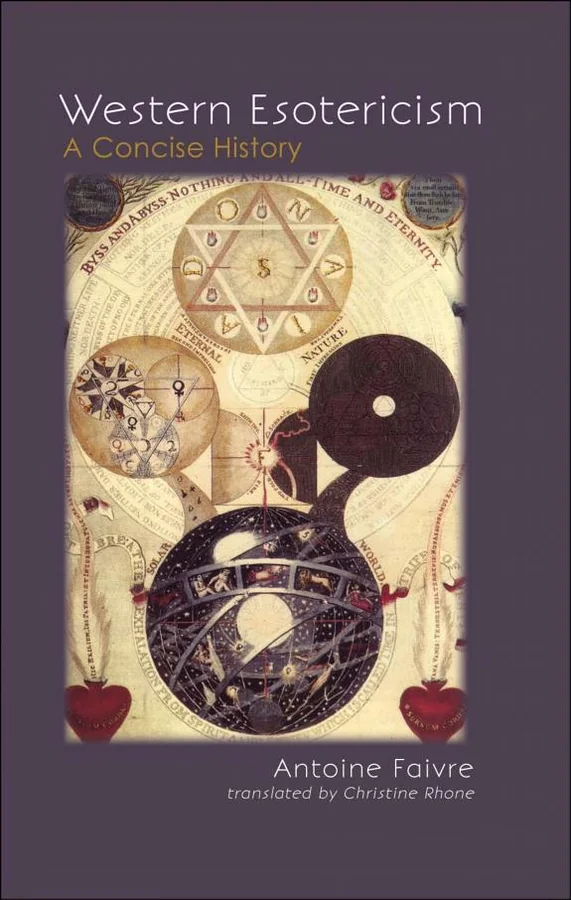
Antoine Faivre’s "Western Esotericism" arrives in English as a welcome, albeit dense, primer. Faivre, a towering figure in the academic study of esotericism, meticulously outlines the field he helped define. The book’s primary strength lies in its comprehensive scope, charting a course from ancient Gnosticism to the intellectual currents of the 20th century with admirable clarity. He avoids sensationalism, presenting these traditions as legitimate subjects of historical inquiry. However, the very breadth can feel overwhelming for absolute beginners; the text assumes a certain academic familiarity. A notable passage discusses the concept of 'spiritual authority' as distinct from institutional power, a crucial distinction for understanding many esoteric groups. While invaluable for students, its academic tone may not fully satisfy those seeking practical application or spiritual guidance. It serves best as a reliable, if demanding, academic introduction.
📝 Description
80
Antoine Faivre's 2010 survey maps Western esoteric thought from antiquity to the modern day.
Antoine Faivre's "Western Esotericism" offers a structured introduction to a broad range of Western esoteric traditions. Published in French in 2010 and later translated, this work serves as a historical account and a pedagogical guide. It aims to clarify intellectual and spiritual currents that have shaped Western thought, from late antiquity through the modern era.
The book is written for students new to the field. Faivre uses clear language to explain complex philosophical ideas and historical movements that are often misunderstood. The text also presents a useful overview for scholars familiar with Faivre's own substantial research.
Faivre places Western esotericism within the larger context of intellectual history, showing how it developed alongside or in response to dominant religious and philosophical systems. The work concentrates on the period from late antiquity, with a particular focus on the last six centuries, demonstrating the evolution of concepts that continue to influence modern thinking.
This book examines the historical development of Western esoteric traditions, which have often existed outside mainstream religious and philosophical discourse. Faivre traces the intellectual lineage of movements like Hermeticism and Kabbalah, showing their connections and transformations over centuries. The work positions these traditions not as isolated curiosities but as integral components of Western intellectual history, influencing art, science, and philosophy.
💡 Why Read This Book?
• Gain a foundational understanding of the historical development of Western esoteric thought, from late antiquity to the 20th century, as presented by a leading scholar. • Learn to distinguish between various esoteric traditions like Hermeticism and Kabbalah, and understand their place within broader intellectual history. • Grasp key concepts such as the difference between exoteric and esoteric knowledge, crucial for deciphering the underlying principles of many spiritual movements.
⭐ Reader Reviews
Honest opinions from readers who have explored this book.
❓ Frequently Asked Questions
When was Antoine Faivre's "Western Esotericism" first published?
The original French edition of "Western Esotericism" by Antoine Faivre was first published on October 1, 2010. This English translation makes his foundational work accessible to a wider academic and student audience.
Who is Antoine Faivre and why is he important in this field?
Antoine Faivre is a highly influential French historian and scholar who pioneered the academic study of Western esotericism. His work established methodologies and definitions that are now standard in the field.
What historical periods does the book primarily cover?
The book provides an overview from late antiquity but places a significant emphasis on the last six centuries of Western esoteric thought, tracing its evolution through various historical movements and intellectual shifts.
Is this book suitable for someone with no prior knowledge of esotericism?
Yes, the book is written primarily for students and novices. Faivre uses clear, precise language to introduce complex concepts and historical currents, making it a suitable starting point for beginners.
What types of esoteric traditions are discussed in the book?
The book explores a range of traditions including Hermeticism, Kabbalah, alchemy, Rosicrucianism, Freemasonry, and various mystical and philosophical currents that fall under the umbrella of Western esotericism.
What is the main goal of Antoine Faivre's "Western Esotericism"?
The main goal is to provide a comprehensive, historical, and pedagogical introduction to the diverse currents of Western esotericism, clarifying their significance and development over centuries.
🔮 Key Themes & Symbolism
The Esoteric Divide
Faivre distinguishes between 'exoteric' and 'esoteric' knowledge, a fundamental concept for understanding spiritual traditions. Exoteric refers to public, outward teachings, while esoteric denotes hidden, inner knowledge accessible to initiates. This distinction is crucial for comprehending why certain teachings were veiled or transmitted through specific symbolic languages, as explored in the book's analysis of Hermeticism and Kabbalah.
Historical Evolution of Currents
The book meticulously traces the lineage and transformation of esoteric thought across centuries. It highlights how concepts from late antiquity, such as Neoplatonism and Gnosticism, were reinterpreted and integrated into later movements like Renaissance Hermeticism and 17th-century Rosicrucianism. This historical mapping reveals the dynamic and adaptive nature of these traditions.
Spiritual Authority and Practice
Faivre examines how spiritual authority operates within esoteric contexts, often diverging from established religious or political structures. The work discusses various practices, including meditation, ritual, and the study of symbolic texts, employed by adherents seeking direct spiritual experience or gnosis. This focus provides insight into the lived experience of Western esoteric practitioners.
Interconnectedness of Traditions
A significant theme is the interconnectedness and cross-pollination between seemingly disparate esoteric movements. Faivre demonstrates how figures and ideas from Kabbalah, alchemy, and Hermeticism influenced each other, creating a complex web of intellectual and spiritual exchange. Understanding these links is vital for a holistic view of Western esotericism.
💬 Memorable Quotes
Direct passages from the work, attributed to the author.
“The bulk of the book is laid out as a historical and pedagogical guide.”
— This statement from the original blurb highlights the dual purpose of Faivre's work: to document the historical trajectory of Western esoteric thought while simultaneously serving as an accessible introduction for learners.
“An overview of Western esoteric currents since late antiquity, with an emphasis on the last six centuries.”
— This framing defines the chronological scope of the book, indicating that while ancient roots are acknowledged, the primary focus is on the more recent, and arguably more influential, developments in Western esotericism.
“Widely received in France, this brief, comprehensive introduction to Western esotericism by the founder of the field is at last available in English.”
— This points to the book's significance as a translation of a key text by Antoine Faivre, a central figure in the academic study of esotericism, making his foundational insights accessible to an international audience.
“The book is written primarily for students and novices.”
— This clarifies the intended audience, emphasizing that the text aims for clarity and foundational knowledge rather than advanced scholarly debate, making it a suitable entry point for newcomers.
“In clear, precise language, author Antoine Faivre provides an overview of Western esoteric currents since late antiquity.”
— This underscores Faivre's pedagogical approach, promising a direct and understandable explanation of complex historical and philosophical traditions that often suffer from obscurity or misinterpretation.
🌙 Esoteric Significance
Tradition
Faivre's work is situated within the academic tradition of studying Western esotericism, a field he significantly shaped. It doesn't belong to a single esoteric lineage but rather provides a framework for understanding multiple traditions—Hermetic, Gnostic, Kabbalistic, alchemical, and mystical—as interconnected parts of a broader Western esoteric landscape. He emphasizes identifying common structural features and historical developments across these diverse currents.
Symbolism
The book frequently engages with symbolism as a core element of esoteric transmission. Concepts like the 'divine spark' within humanity, the symbolic language of alchemical processes (e.g., the Philosopher's Stone), and the geometric or numerological symbolism found in Kabbalistic texts are explored. These symbols are presented not as mere decorative elements but as vehicles for conveying profound spiritual truths and methods for transformation.
Modern Relevance
Faivre's analytical framework continues to inform contemporary scholarship on esotericism. Thinkers and practitioners exploring modern occultism, New Age spirituality, and the revival of Hermetic or Kabbalistic practices often draw upon his definitions and historical analyses. His work provides essential context for understanding how ancient esoteric ideas are reinterpreted and adapted in contemporary spiritual landscapes.
👥 Who Should Read This Book
• Students of comparative religion and intellectual history seeking to understand the role of esoteric traditions within the broader Western cultural context. • Novices and beginners interested in exploring the historical development of movements like Hermeticism, Kabbalah, and alchemy in a structured, academic manner. • Scholars of philosophy, mysticism, and the history of science who wish to grasp the foundational concepts and historical trajectory of Western esoteric thought as defined by a leading expert.
📜 Historical Context
Antoine Faivre's "Western Esotericism" emerged within a burgeoning academic field dedicated to the study of previously marginalized spiritual and philosophical traditions. Published initially in 2010, the book synthesized decades of research by Faivre himself, a foundational figure who established rigorous methodologies for analyzing movements like Hermeticism, Kabbalah, and alchemy. The era saw a growing academic acceptance of esotericism as a legitimate subject of historical inquiry, moving beyond purely theological or philosophical frameworks. Faivre's work engaged with the intellectual currents of Renaissance Humanism, the Enlightenment's rationalism, and subsequent Romantic and modern spiritual movements, often positioning esoteric thought as a distinct but influential current within Western intellectual history. While not facing overt censorship, esoteric ideas have historically been subject to critique from both religious orthodoxy and positivist science. Faivre's scholarship, however, gained significant recognition, building upon the work of predecessors and influencing contemporaries like Wouter J. Hanegraaff.
📔 Journal Prompts
Reflect on the distinction between exoteric and esoteric knowledge as presented by Faivre.
Consider the historical continuity of symbols like the divine spark across different esoteric currents.
Analyze the role of spiritual authority outside institutional structures discussed in the text.
How did the influence of Neoplatonism shape later esoteric movements?
Explore the pedagogical methods Faivre uses to introduce complex ideas to novices.
🗂️ Glossary
Exoteric
Relating to or denoting knowledge or teachings that are open and accessible to the public, as opposed to esoteric.
Esoteric
Intended for or likely to be understood by only a small number of people with a specialized knowledge or interest; secret or mysterious.
Hermeticism
A religious, philosophical, and esoteric tradition based primarily upon the writings attributed to Hermes Trismegistus. It presents a cosmology and theology.
Kabbalah
A system of Jewish mysticism and esoteric interpretation of the Torah, seeking to understand the nature of God and the universe through symbolic methods.
Alchemy
An ancient practice involving the transmutation of matter, often associated with the pursuit of immortality and spiritual enlightenment alongside its chemical aspects.
Gnosticism
A collection of religious ideas and systems of that are generally considered to be esoteric, developing into a major religion in the first centuries CE.
Rosicrucianism
A secret society founded in the late Middle Ages, claiming to possess secret knowledge concerning nature, the universe, and the divine.
This book appears in 1 collection
🔮 Readers Also Liked
Browse all →








From the “Western Esotericism” Collection
View all →









More Free Sacred Texts & Gnosticism Books
View all →