The Philosophy of Classical Yoga
 78
78

The Philosophy of Classical Yoga
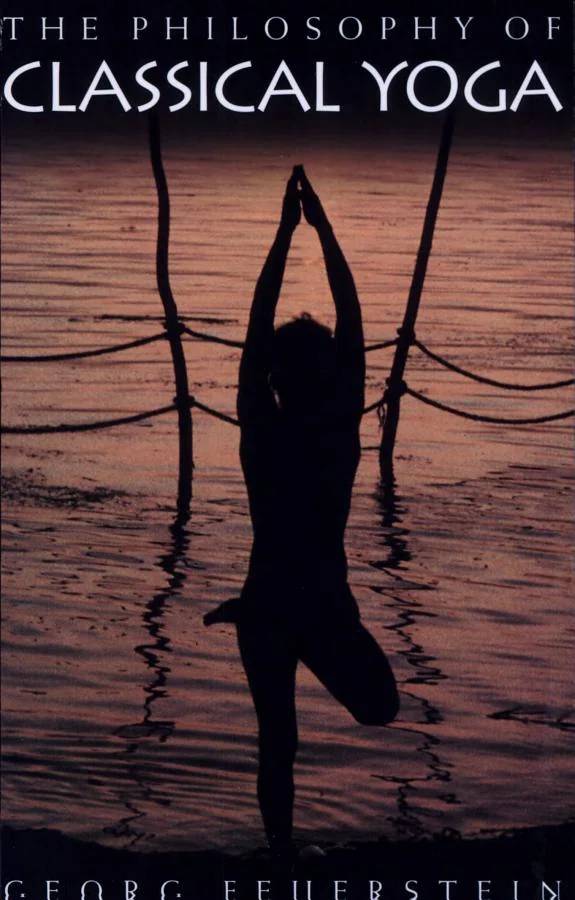
Georg Feuerstein's *The Philosophy of Classical Yoga* offers a necessary corrective to the often-anecdotal approach to Patanjali's Yoga-Sutra. Its primary strength lies in its rigorous historical contextualization, arguing persuasively that the sutra is the genesis of classical yoga's philosophical system, not merely a summary. Feuerstein avoids the typical hagiography, treating the text as a complex philosophical document. A notable limitation, however, is the dense academic prose which, while precise, may pose a barrier for the casual practitioner. The section dissecting the interplay between *purusha* and *prakriti* is particularly illuminating, demonstrating the philosophical depth often overlooked. This book stands as a vital scholarly resource for anyone seeking a grounded understanding of yoga's intellectual heritage.
📝 Description
78
Georg Feuerstein's 1996 work re-evaluates Patanjali's Yoga-Sutra as the philosophical core of classical yoga.
Published in 1996, this book examines Patanjali's Yoga-Sutra not just as a collection of yogic ideas, but as the text that established the philosophical structure of classical yoga. Feuerstein reconstructs the historical and intellectual world around the sutras, proposing new views on who wrote them and why. The book is for dedicated yoga students and practitioners who want to grasp its philosophical basis beyond modern ideas. It also suits academics studying philosophy and religion, especially Indian traditions, and those interested in the deeper roots of meditation.
In the mid-1990s, as Eastern philosophies gained traction in the West, Feuerstein's research stood apart. Unlike many popular guides, it directly addressed the Yoga-Sutra's place within Indian philosophical schools like Samkhya. This academic approach provided a grounded alternative to more general spiritual manuals, focusing on the sutra's role as a guide to liberation rather than solely physical or mental training.
This study situates Patanjali's Yoga-Sutra within the classical Indian philosophical tradition. It looks at the sutra's role in developing concepts like purusha and prakriti, fundamental to yogic thought. The book also examines sadhana, the practice leading to liberation (kaivalya), and the structured path of the eight limbs (ashtanga). Feuerstein argues for the sutra's primary function as a manual for spiritual freedom, distinguishing it from purely physical or psychological disciplines. This perspective connects directly to esoteric traditions seeking ultimate realization through systematic inner work.
💡 Why Read This Book?
• Gain a nuanced understanding of the Yoga-Sutra as the origin point for classical yoga's philosophical architecture, moving beyond simplistic interpretations, as detailed in the book's re-evaluation of its historical position. • Appreciate the philosophical distinctions between *purusha* and *prakriti*, core concepts that underpin the yogic worldview, as explored in the text's analysis of these foundational ideas. • Comprehend the Yoga-Sutra's original intent as a guide towards *kaivalya* (liberation), rather than solely as a manual for physical or mental exercises, as argued through the book's focus on *sadhana*.
⭐ Reader Reviews
Honest opinions from readers who have explored this book.
❓ Frequently Asked Questions
What is the primary argument of Georg Feuerstein's *The Philosophy of Classical Yoga* regarding Patanjali's Yoga-Sutra?
Feuerstein argues that the Yoga-Sutra is the foundational text of classical yoga's philosophical system, not merely a summary of existing practices. He places it within its original historical and intellectual context, emphasizing its generative role.
When was *The Philosophy of Classical Yoga* first published?
The book was first published in June 1996, offering a scholarly perspective during a period of increased Western engagement with yoga.
Who is Georg Feuerstein, and what is his background?
Georg Feuerstein is a scholar and author specializing in yoga, tantra, and comparative religion. He is known for his rigorous academic approach to esoteric traditions.
How does this book differ from other studies of the Yoga-Sutra?
Unlike many studies, Feuerstein's work posits the Yoga-Sutra as the origin of classical yoga's philosophical framework, analyzing it within its specific historical milieu rather than as an isolated text.
What are the core philosophical concepts discussed in the book?
The book delves into concepts such as *sadhana* (spiritual practice), *kaivalya* (liberation), and the fundamental dualism of *purusha* (consciousness) and *prakriti* (matter).
Is this book suitable for beginners in yoga?
While comprehensive, the book's academic depth makes it most suitable for practitioners and students who have a foundational understanding and are seeking deeper philosophical insight into yoga's roots.
🔮 Key Themes & Symbolism
The Yoga-Sutra as Genesis
This work challenges the prevalent view of Patanjali's Yoga-Sutra as a mere digest of earlier yogic developments. Feuerstein argues for its position as the originating philosophical blueprint from which the entire edifice of classical yoga emerged. The book meticulously examines the sutra's potential authorship and its primary function not just as a guide to practice, but as the foundational articulation of yogic philosophy, influencing subsequent schools and interpretations profoundly.
Philosophical Dualism: Purusha and Prakriti
Central to the text's exploration is the Samkhya-influenced dualism between *purusha* (pure consciousness) and *prakriti* (primordial matter/nature). Feuerstein elucidates how this fundamental distinction shapes the yogic understanding of existence, suffering, and liberation. The book details how the aim of yoga, *kaivalya*, is understood as the realization of *purusha*'s distinctness from *prakriti*, a core tenet guiding the entire yogic path.
Sadhana and Kaivalya
The concept of *sadhana*, or spiritual practice, is presented not as an end in itself but as the systematic means to achieve *kaivalya*, the ultimate state of liberation or absolute freedom. Feuerstein analyzes Patanjali's framework, particularly the *ashtanga* (eight limbs), as a structured progression designed to purify consciousness and lead the practitioner to the unadulterated awareness of *purusha*, free from the entanglements of *prakriti*.
Historical Contextualization
Feuerstein situates the Yoga-Sutra within the intellectual currents of ancient India, particularly its relationship with the Samkhya philosophical system. By dating and contextualizing the sutra, he offers a scholarly perspective that moves beyond modern, often Westernized, interpretations. This historical grounding is crucial for understanding the text's original intent and its subsequent influence on various yogic and meditative traditions throughout history.
💬 Memorable Quotes
Direct passages from the work, attributed to the author.
“The Yoga-Sutra is not a summary of previous developments, but the source of the whole edifice of classical yoga.”
— This core assertion reframes the Yoga-Sutra's significance, positioning it as the foundational text from which classical yoga's philosophical and practical systems grew, rather than a mere compilation.
“The distinction between purusha and prakriti is fundamental to yogic liberation.”
— This highlights the essential dualistic worldview within classical yoga, where freedom (*kaivalya*) is achieved through the recognition of the self (*purusha*) as separate from material reality (*prakriti*).
“Sadhana is the path toward kaivalya.”
— This concisely states the purpose of yogic practice (*sadhana*): to attain the ultimate state of liberation (*kaivalya*), emphasizing the goal-oriented nature of the yogic discipline.
“Patanjali's work provides a philosophical framework for understanding consciousness.”
— This interpretation underscores the book's focus on the Yoga-Sutra as a text that offers clear insights into the nature of consciousness and its role in human experience and liberation.
“Understanding the historical context is crucial for interpreting the sutras.”
— This emphasizes Feuerstein's methodological approach, stressing that the original historical and intellectual environment is key to grasping the Yoga-Sutra's intended meaning and significance.
🌙 Esoteric Significance
Tradition
This work is deeply rooted in the Indic philosophical traditions, primarily Samkhya and Yoga, which form the bedrock of classical yogic thought. While not strictly an esoteric lineage like Hermeticism or Kabbalah, these Indic schools possess profound esoteric dimensions focused on consciousness, liberation, and subtle energetic principles. Feuerstein's analysis fits within the broader esoteric library by informative the sophisticated metaphysical framework that underpins many modern spiritual practices, offering a pathway to understanding their deeper, often hidden, origins.
Symbolism
The text implicitly deals with potent symbols central to yogic cosmology. The ultimate goal, *kaivalya*, symbolizes absolute separation and freedom of consciousness (*purusha*). The interplay between *purusha* and *prakriti* represents the cosmic dance of spirit and matter, consciousness and manifestation. The *ashtanga* (eight limbs) can be seen as a symbolic map of the yogic journey, each limb representing a stage of refinement and integration leading towards spiritual realization.
Modern Relevance
Contemporary thinkers and practitioners exploring the philosophical depths of yoga, meditation, and consciousness studies often draw upon the foundational insights illuminated by Feuerstein's work. Schools focusing on classical yoga lineages, comparative philosophy of religion, and the psychological underpinnings of spiritual development benefit from his rigorous contextualization. His emphasis on the Yoga-Sutra as a philosophical origin point continues to inform discussions on the integrity and historical accuracy of yogic teachings in the modern era.
👥 Who Should Read This Book
• Students of comparative religion and philosophy seeking to understand the origins of Indian contemplative traditions and their foundational texts. • Serious yoga practitioners interested in moving beyond postural practice to grasp the philosophical depth and historical context of the Yoga-Sutra. • Scholars of esoteric studies looking for a critical, academically sound analysis of classical yoga's metaphysical framework and its place in intellectual history.
📜 Historical Context
The mid-1990s saw a surge in Western interest in yoga, often accompanied by simplified or generalized interpretations of its philosophical underpinnings. Georg Feuerstein's *The Philosophy of Classical Yoga*, first published in June 1996, arrived as a scholarly counterpoint. It meticulously placed Patanjali's Yoga-Sutra within its original Indian philosophical milieu, particularly its close relationship with the Samkhya school. This approach distinguished it from contemporary works that might have treated the sutra in isolation or focused primarily on its practical applications. Feuerstein's work engaged directly with the intellectual currents of classical India, offering a rigorous academic perspective that sought to recover the sutra's role as the generative source of classical yoga's philosophical structure, rather than merely a compendium of prior knowledge. This academic grounding provided a vital resource for serious students and scholars.
📔 Journal Prompts
The foundational concept of *purusha* and its relation to *prakriti*.
Patanjali's *sadhana* as a structured path to *kaivalya*.
The Yoga-Sutra's role as the genesis of classical yoga's philosophy.
The distinction between summary and origin in textual analysis.
The philosophical implications of the *ashtanga* system.
🗂️ Glossary
Yoga-Sutra
The foundational text of classical Yoga philosophy, traditionally attributed to Patanjali, comprising aphorisms on the nature of mind and liberation.
Patanjali
The sage traditionally credited with compiling the Yoga-Sutras, a key figure in the development of classical Yoga philosophy in ancient India.
Purusha
In Samkhya and Yoga philosophy, the principle of pure consciousness, the self, or spirit, distinct from all material phenomena.
Prakriti
In Samkhya and Yoga philosophy, the primordial matter or nature from which the material universe evolves; the non-conscious principle.
Sadhana
Spiritual practice; the disciplined effort undertaken to achieve a specific spiritual goal, such as liberation or enlightenment.
Kaivalya
Absolute liberation or freedom; the ultimate goal in Yoga philosophy, characterized by the isolation of consciousness (*purusha*) from matter (*prakriti*).
Ashtanga
The 'eight limbs' or stages of yoga as outlined by Patanjali in the Yoga-Sutra: Yamas, Niyamas, Asana, Pranayama, Pratyahara, Dharana, Dhyana, and Samadhi.
This book appears in 1 collection
🔮 Readers Also Liked
Browse all →







From the “Yoga” Collection
View all →






More Free Occult Philosophy Books
View all →