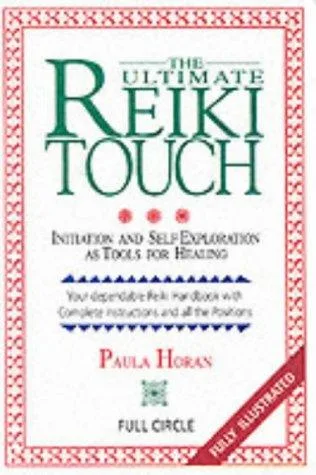
The Ultimate Reiki Touch
 72
72

The Ultimate Reiki Touch
Paula Horan’s 'The Ultimate Reiki Touch' offers a direct, no-nonsense approach to understanding Reiki. Unlike many texts that obscure practice in layers of esoteric jargon, Horan’s work is commendably clear, particularly in its detailed exposition of hand positions. The book’s strength lies in its grounded presentation of Usui Reiki principles, making the practice accessible to newcomers. However, its primary limitation is a lack of engagement with the broader philosophical debates surrounding energy healing or alternative spiritualities that were certainly present in 2002. The section detailing the 'Reiki Precepts' is particularly effective, translating ancient wisdom into actionable daily guidelines. While it may not satisfy those seeking deep theoretical exploration, it succeeds as a practical manual.
📝 Description
72
Paula Horan's 2002 book, 'The Ultimate Reiki Touch,' explains Reiki principles and application for self-healing and helping others.
Paula Horan's 'The Ultimate Reiki Touch,' published in 2002, serves as a guide to Reiki practice. The book details the origins of Reiki, its core ideas, and practical methods for using it on oneself and others. It functions as both an introduction to the theory and a practical manual for those interested in this form of spiritual and physical well-being.
This book is for people interested in alternative healing, especially those drawn to the Japanese practice of Reiki. It is suitable for beginners wanting to understand energy work and how to start practicing. More experienced practitioners might find value in Horan's particular interpretations and methods, which could offer new insights or confirm existing knowledge. The book also suits those looking for a structured way to develop spiritually through hands-on healing.
Published in 2002, 'The Ultimate Reiki Touch' appeared as global interest in alternative medicine grew. The early 2000s saw a rise in the popularity of Eastern spiritual practices in Western cultures. Reiki, which began in Japan in the early 20th century, had gained international recognition by this time. Horan's work adds to the literature aiming to make these practices understandable and accessible to a Western audience, aligning with other spiritual and wellness guides from the New Age movement.
💡 Why Read This Book?
• Learn specific hand positions for self-treatment and for working with others, as detailed in Horan's original 2002 publication, providing a practical foundation for initiating Reiki practice. • Understand the five core Reiki principles, or 'precepts,' presented by Horan, enabling a framework for integrating spiritual discipline into daily life. • Gain insight into the attunement process, a critical step in formal Reiki training, as explained by Horan, to comprehend its significance in connecting with universal life force energy.
⭐ Reader Reviews
Honest opinions from readers who have explored this book.
❓ Frequently Asked Questions
When was 'The Ultimate Reiki Touch' first published?
'The Ultimate Reiki Touch' by Paula Horan was first published in 2002, positioning it within a period of burgeoning interest in alternative healing modalities.
What is the primary focus of Paula Horan's book?
The book's primary focus is on providing a comprehensive guide to the practice of Reiki, covering its principles, techniques, and application for self-healing and assisting others.
Who is Mikao Usui and why is he mentioned?
Mikao Usui is the founder of the Reiki system of natural healing. Horan's work details the origins and development of Reiki as established by Usui in early 20th century Japan.
Does the book explain how to become a Reiki practitioner?
Yes, 'The Ultimate Reiki Touch' discusses the attunement process, which is a key component of training and certification within the Reiki tradition.
What are the 'Reiki Precepts' discussed in the book?
The 'Reiki Precepts' are ethical guidelines and spiritual principles associated with Reiki practice, focusing on mindfulness, gratitude, and positive living, as presented by Horan.
Is this book suitable for complete beginners to Reiki?
Absolutely. Horan's work is structured to guide beginners through the fundamental concepts and practical application of Reiki, making it an accessible entry point.
🔮 Key Themes & Symbolism
Universal Life Force Energy
The book posits that all living beings are permeated by a universal life force energy, referred to as 'ki' in Japanese. Horan explains that Reiki practice involves channeling this energy through the hands to promote balance and healing. This concept is foundational, suggesting that illness or discomfort arises from blockages or deficiencies in this vital flow. The text guides readers on how to become conduits for this energy, emphasizing intention and a meditative state as crucial for its effective transmission and therapeutic application.
The Usui System of Reiki
Horan's work is firmly rooted in the system of Reiki as developed by Mikao Usui in Japan in the early 20th century. The book meticulously outlines Usui's approach, including the historical development of the practice, its spiritual underpinnings, and the structured progression of its teachings. It highlights Usui's emphasis on both physical healing and spiritual growth, presenting Reiki not merely as a therapeutic technique but as a path for self-improvement and enlightenment, aligning with traditional Japanese spiritual practices.
Reiki Principles and Daily Practice
Central to Horan's exploration are the five Reiki principles, often termed 'Gokai' or 'precepts.' These are not strict commandments but rather guiding philosophies for living a balanced and mindful life, designed to be recited daily. The book interprets these principles—such as 'Just for today, do not worry' and 'Just for today, do not anger'—as essential components for both the practitioner's well-being and the efficacy of their healing work, linking personal spiritual discipline to energetic practice.
Hands-On Healing Techniques
A significant portion of 'The Ultimate Reiki Touch' is dedicated to practical instruction on Reiki hand positions. Horan details specific placements for the hands on the body, explaining their corresponding energetic effects. The book provides clear diagrams and descriptions, enabling readers to learn how to administer Reiki treatments effectively for themselves and others, covering various physical and emotional conditions that can be addressed through this method.
💬 Memorable Quotes
Direct passages from the work, attributed to the author.
“Reiki is a path to inner peace that also brings healing to the body.”
— This statement expresses the dual nature of Reiki as presented by Horan. It's not solely a physical healing modality but also a spiritual discipline that fosters mental and emotional tranquility. The practice is framed as a holistic approach to well-being, addressing the interconnectedness of mind, body, and spirit.
“The hand positions are guides, but the energy flows where it is needed most.”
— This highlights the intuitive aspect of Reiki. While Horan provides specific placements for practitioners to follow, the underlying principle is that the universal life force energy itself possesses a form of intelligence. It directs itself to the areas requiring the most attention, transcending the limitations of a fixed protocol.
“Just for today, do not worry.”
— This is one of the core Reiki Precepts. Horan interprets it as an instruction to focus on the present moment, releasing anxieties about the past or future. Cultivating this mindset is seen as crucial for reducing energetic blockages caused by stress and fear, thereby enhancing the flow of healing energy.
“Attunement is the key that unlocks your connection to the universal energy.”
— This emphasizes the importance of the initiation process in Reiki. Horan explains that attunement, typically performed by a Reiki Master, is a necessary step to enable an individual to channel Reiki energy effectively. It's viewed as a spiritual empowerment that opens the practitioner's energetic pathways.
“Healing begins with self-awareness and a commitment to balance.”
— Horan suggests that genuine healing, whether physical or emotional, starts with introspection and a dedication to maintaining equilibrium. This principle aligns with the Reiki Precepts and underscores the idea that external healing is often facilitated by internal cultivation and mindful living.
🌙 Esoteric Significance
Tradition
The work is situated within the lineage of Mikao Usui's Reiki, a system that, while originating in Japan, has been widely adopted and adapted within global esoteric and New Age movements. It draws implicitly on Buddhist concepts of compassion and mindfulness, as well as Shinto reverence for nature and universal energy. Horan's presentation aims to bridge the gap between these Eastern roots and Western practitioners seeking accessible spiritual healing techniques.
Symbolism
Central to Reiki symbolism are the Kanji characters representing 'Reiki' itself (spiritual energy/universal life force) and 'Ki' (life force energy). The concept of energy flowing through the hands, visualized as light or warmth, is a primary motif. The hand positions themselves function as symbolic representations of focused intent and energetic mapping of the body's subtle energy systems, guiding the practitioner's attention and intention.
Modern Relevance
Horan's work remains relevant for contemporary practitioners of Usui Reiki, particularly those seeking clear, foundational instruction. Its straightforward approach continues to appeal to individuals exploring energy healing, mindfulness, and self-care practices. The book's accessible explanations of core principles and techniques make it a resource for those initiating their journey in Reiki or seeking to deepen their understanding of its practical application in modern wellness contexts.
👥 Who Should Read This Book
• Aspiring Reiki practitioners seeking foundational knowledge and practical techniques from a 2002 publication. • Individuals interested in energy healing modalities who wish to understand the core principles and historical context of Usui Reiki. • Wellness enthusiasts looking for self-care methods that integrate spiritual discipline with physical well-being.
📜 Historical Context
Published in 2002, 'The Ultimate Reiki Touch' arrived at a time when interest in holistic health and Eastern spiritual practices had significantly permeated Western culture. Reiki, founded by Mikao Usui in Japan around 1922, had gained substantial international traction by the turn of the millennium. Horan's book contributed to a growing body of literature clarifying and popularizing these techniques for a Western audience. This period saw numerous books on alternative therapies, energy healing, and mindfulness, often presented as complements or alternatives to conventional medicine. While not directly engaging with specific philosophical debates like those between Western Hermeticism and Eastern philosophies, Horan’s work implicitly aligned with the broader New Age movement’s embrace of spiritual technologies for personal empowerment and well-being.
📔 Journal Prompts
The concept of 'Just for today,' as applied to the Reiki Precepts.
Reflecting on personal experiences with universal life force energy.
Mapping the primary Reiki hand positions onto your own body.
Identifying potential blockages in your personal energy flow.
The role of intention in your daily activities.
🗂️ Glossary
Reiki
A Japanese form of energy healing, translated as 'universal life force energy.' It involves channeling this energy through the practitioner's hands to promote relaxation, reduce pain, and support healing.
Ki
The Japanese word for the universal life force energy that flows through all living things. It is also known as 'Qi' in Chinese and 'Prana' in Sanskrit.
Attunement
A sacred energy transfer ceremony performed by a Reiki Master to initiate a student into the practice of Reiki, opening their energetic channels to receive and transmit Reiki energy.
Reiki Precepts
A set of five guiding principles for daily living, attributed to Mikao Usui, that focus on mindfulness, gratitude, and positive conduct to support spiritual and physical well-being.
Hand Positions
Specific placements of the practitioner's hands on the recipient's body, designed to direct Reiki energy to various areas for therapeutic purposes.
Usui System
The original method of Reiki healing as founded by Mikao Usui in Japan in the early 20th century, emphasizing both healing and personal spiritual development.
Energy Blockage
A disruption or stagnation in the natural flow of life force energy within the body, believed to contribute to physical, emotional, or mental imbalances.
🔮 Readers Also Liked
Browse all →









More by Paula Horan
All books →





More Free Occult Philosophy Books
View all →