Out of the Darkness
 79
79

Out of the Darkness
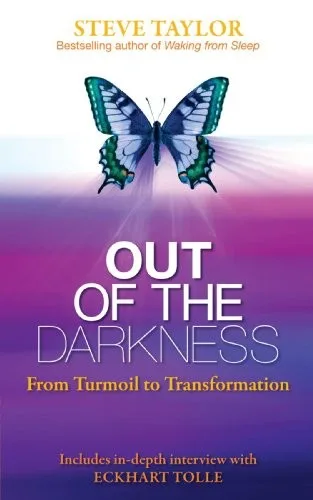
Steve Taylor’s "Out of the Darkness" offers a compelling counter-narrative to purely clinical interpretations of profound inner shifts. He adeptly compiles a range of personal accounts, moving beyond the sterile language of pathology to articulate the often-sacred nature of spiritual emergencies. Taylor’s strength lies in his ability to synthesize disparate experiences into a coherent exploration of consciousness's wider potential. He draws a clear line between disruptive breakdown and transformative awakening, a distinction often blurred in conventional discourse. A particular passage detailing the emergence of synesthesia-like perceptions following a crisis offers a vivid example of his thesis. While the book excels at cataloging these phenomena, a more in-depth engagement with the philosophical implications of these altered states, perhaps referencing specific metaphysical traditions, could have further solidified its esoteric grounding. Nevertheless, Taylor presents a vital perspective for understanding the human psyche's capacity for radical transformation.
📝 Description
79
Steve Taylor's 2011 book examines spontaneous spiritual awakenings and altered states.
Steve Taylor's "Out of the Darkness," published in 2011, investigates spontaneous spiritual awakenings and unusual states of consciousness. The book moves past typical psychological and neurological explanations, suggesting these experiences can be doorways to different realities. Taylor gathers accounts and analyses from people who report sudden shifts in how they perceive the world, often brought on by crisis or major life events. These shifts frequently result in significant changes to their outlook and sense of self.
This work is for readers interested in the connections between consciousness studies, spirituality, and psychology. It will appeal to those who have had uncommon states of awareness and are looking for ways to understand them. Academics and practitioners who study non-ordinary consciousness will also find it relevant. Individuals who are skeptical of mainstream mental health views and are open to a wider understanding of human potential may find Taylor's perspective particularly interesting.
Emerging in the early 21st century, "Out of the Darkness" engages with a long tradition of thinkers who have studied mystical experiences, tracing back to William James's "The Varieties of Religious Experience." Taylor's work sits within a lineage that values subjective experience, even as neuroscience gained prominence. It connects with transpersonal psychology and a broader interest in validating inner experiential wisdom against purely empirical scientific models.
💡 Why Read This Book?
• Understand spiritual emergencies: Learn to distinguish between psychological breakdown and spontaneous spiritual awakening, a concept Taylor explores through numerous case studies first documented around 2011. • Explore altered states of consciousness: Gain insight into the nature of non-ordinary perceptions and their potential for personal transformation, as detailed in the book's exploration of sudden awakenings. • Broaden your view of mental well-being: Discover how experiences often labeled as crises might represent profound shifts in consciousness, as evidenced by the detailed accounts compiled by Steve Taylor.
⭐ Reader Reviews
Honest opinions from readers who have explored this book.
❓ Frequently Asked Questions
What is the primary focus of Steve Taylor's 'Out of the Darkness'?
The book focuses on spontaneous spiritual awakenings and altered states of consciousness, examining them as potentially transformative experiences rather than solely pathological conditions. It explores how crises can trigger profound shifts in perception and worldview.
When was 'Out of the Darkness' first published?
Steve Taylor's 'Out of the Darkness' was first published in 2011, a period marked by increasing interest in subjective experience and consciousness studies.
Does the book offer practical advice for dealing with spiritual emergencies?
While the book is primarily analytical and descriptive, it offers a framework for understanding these experiences. It provides context for individuals undergoing such shifts and for those supporting them, emphasizing potential positive outcomes.
What kind of experiences does Taylor discuss?
Taylor discusses a wide range of experiences, including sudden enlightenments, profound mystical encounters, heightened sensory awareness, and a sense of interconnectedness, often occurring unexpectedly in individuals' lives.
How does 'Out of the Darkness' relate to psychology?
The book challenges purely conventional psychological or neurological interpretations of certain profound inner experiences. It proposes that some states, often labeled as mental illness, may in fact be spiritual emergences.
Who is Steve Taylor?
Steve Taylor is an author and researcher known for his work on spirituality, consciousness, and psychology. He has written extensively on mystical experiences and altered states of awareness since the early 2000s.
🔮 Key Themes & Symbolism
Spiritual Emergence vs. Illness
The core theme is the re-framing of experiences traditionally pathologized as mental illness. Taylor argues that certain profound, often sudden, shifts in consciousness—termed 'spiritual emergencies'—can represent genuine awakenings. He distinguishes these from purely clinical conditions by examining their potential for leading to increased wisdom, compassion, and a more integrated sense of self. The book provides numerous case studies to illustrate this distinction, challenging a solely biomedical model for understanding these intense inner states.
The Transformative Power of Crisis
Taylor explores how life crises, such as loss, trauma, or severe illness, can paradoxically act as catalysts for spiritual transformation. Rather than solely being destructive events, these challenging circumstances can shatter old ego structures and open individuals to deeper levels of awareness. The book details instances where individuals, pushed to their limits, experience radical shifts in perspective, leading to a re-evaluation of life priorities and a newfound sense of purpose and connection.
Altered States of Consciousness
The work examines the nature of various non-ordinary states of consciousness that can accompany spiritual awakenings. This includes profound mystical experiences, heightened sensory perception, encounters with archetypal figures, and a pervasive sense of unity or interconnectedness. Taylor examines these states not as mere hallucinations or delusions, but as valid forms of knowing that can offer insights into the nature of reality and the self, expanding the conventional understanding of human consciousness.
The Shift in Worldview
A significant aspect of the awakened experience is the fundamental alteration of an individual's worldview. Taylor describes how old beliefs and materialistic perspectives are often replaced by a more holistic, spiritual, or interconnected understanding of existence. This often involves a de-emphasis on material possessions and societal status, and a greater focus on inner peace, love, and service. The book illustrates how these shifts can lead to a more authentic and meaningful life.
💬 Memorable Quotes
Direct passages from the work, attributed to the author.
“The experience of profound interconnectedness often replaces feelings of isolation and separateness.”
— This highlights a common outcome of spiritual awakenings discussed in the book: the dissolution of the ego's boundaries and the realization of unity with all existence.
“Sudden awakenings can shatter limiting beliefs and open individuals to a vaster reality.”
— This concisely represents the transformative impact of these events, suggesting they dismantle restrictive mental frameworks and reveal deeper truths about existence.
“What appears as madness may, in some cases, be a glimpse of a higher order of consciousness.”
— This interpretation emphasizes the book's central thesis: challenging the conventional view of certain altered states as purely pathological by suggesting they might be access points to expanded awareness.
“The crisis of awakening often leads to a reorientation towards compassion and selfless service.”
— This points to a common ethical and behavioral shift observed in individuals who undergo profound spiritual transformations, moving from self-centeredness to a broader concern for others.
💡 Key Ideas
Editorial paraphrase of the work's core concepts — not direct quotes.
Spiritual emergencies can be seen as a crisis of the soul, a breakdown of the old self to allow for the emergence of a more authentic being.
This paraphrase captures the essence of Taylor's argument that intense psychological upheaval isn't necessarily a disease, but can be a necessary, albeit difficult, process of profound personal and spiritual evolution.
🌙 Esoteric Significance
Tradition
While not strictly adhering to a single esoteric lineage, "Out of the Darkness" aligns with traditions that emphasize inner transformation and the potential for direct experience of higher realities. It shares common ground with Gnostic ideas of awakening from illusion and the Hermetic principle of 'As Above, So Below,' suggesting that profound shifts within the individual psyche reflect universal principles. The work departs from more dogmatic traditions by focusing on spontaneous, often unmediated, experiences rather than prescribed rituals or doctrines.
Symbolism
The primary symbolic motif is the journey 'out of the darkness' – representing the transition from a state of ignorance, suffering, or egoic confinement into illumination, awareness, and spiritual freedom. The 'darkness' symbolizes the mundane, materialistic worldview or psychological distress, while the 'light' signifies expanded consciousness, useful insights, and a connection to a deeper reality. The concept of 'crisis' itself acts symbolically, representing a necessary shattering of the old form to allow for new, more evolved spiritual content to emerge.
Modern Relevance
Contemporary thinkers and practitioners in fields like transpersonal psychology, psychedelic-assisted therapy, and integral theory draw upon the concepts explored in "Out of the Darkness." Researchers investigating the neurobiology of spiritual experiences and those advocating for a more holistic understanding of mental health find Taylor’s work a valuable resource. The book's emphasis on the positive potential of intense inner states continues to inform discussions about human flourishing and the broader spectrum of consciousness.
👥 Who Should Read This Book
• Individuals experiencing profound or unusual shifts in consciousness: Those undergoing intense inner experiences that feel significant but are difficult to categorize will find validation and a potential framework for understanding. • Students of psychology and spirituality: Readers interested in the intersections of mental health, altered states, and spiritual development will benefit from Taylor's nuanced perspective. • Skeptics open to expanded views of reality: Those who question purely materialistic explanations for consciousness and are curious about phenomena beyond conventional understanding will find challenging and clear content.
📜 Historical Context
Published in 2011, "Out of the Darkness" emerged during a period of expanding dialogue around consciousness, spirituality, and the limitations of purely materialist explanations for human experience. The book engages with a long tradition of exploring mystical states, building upon the foundational work of figures like William James, whose "The Varieties of Religious Experience" (1902) cataloged similar phenomena. Taylor’s approach offered a counterpoint to the dominant paradigm of neuroscience, which, while advancing rapidly, often struggled to account for subjective, qualitative shifts in consciousness. While not directly engaging with explicit esoteric schools like Theosophy or Hermeticism, the work resonated with a broader cultural interest in non-ordinary states that had been fostered by movements in transpersonal psychology and the New Age. The book’s reception was largely within circles interested in psychology, spirituality, and the potential for human transformation, offering a voice to experiences that often fell outside mainstream discourse.
📔 Journal Prompts
The experience of shattering old limitations, as described in the book's accounts of awakening.
The shift from isolation to interconnectedness following a profound inner event.
Moments when perceived 'darkness' led unexpectedly to clarity or insight.
The role of crisis in catalyzing personal transformation, referencing the book's 2011 publication context.
Interpreting seemingly disruptive inner states as potential gateways to deeper awareness.
🗂️ Glossary
Spiritual Emergency
A term describing a profound crisis that involves intense psychological, physiological, and spiritual upheaval, but which has the potential to lead to significant personal growth and transformation rather than lasting pathology.
Spontaneous Spiritual Awakening
A sudden and unexpected shift in consciousness characterized by clear insights, altered perceptions, and a deep sense of interconnectedness, often occurring without prior spiritual practice or intention.
Altered States of Consciousness
Any state of awareness that deviates significantly from the normal waking state, including mystical experiences, deep meditation, ecstatic states, and visionary episodes.
Psychological Disturbance
A broad term referring to conditions affecting mood, thinking, and behavior that cause distress and impair functioning. The book questions whether all such disturbances are purely pathological.
Ego Structure
The psychological framework through which an individual perceives themselves and the world, often associated with a sense of separateness. Spiritual awakenings can involve a dissolution or transformation of this structure.
Holistic Worldview
A perspective that emphasizes the interconnectedness of all things and understands phenomena within a larger, unified context, often incorporating spiritual or metaphysical dimensions.
Transpersonal Psychology
A branch of psychology that studies the higher or optimal human potentials and experiences, such as transcendence, spiritual development, and non-ordinary states of consciousness.
🔮 Readers Also Liked
Browse all →









More by Steve Taylor
All books →

More Free Occult Philosophy Books
View all →