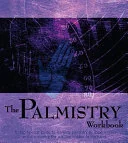
The Palmistry Workbook
 75
75

The Palmistry Workbook
Laeticia Valverde's The Palmistry Workbook offers a structured, almost clinical, approach to a practice often shrouded in mystique. Its strength lies in its systematic breakdown of hand features, providing clear diagrams and explanations for the myriad lines and mounts. The book avoids sensationalism, presenting palmistry as an analytical tool. However, this very precision can sometimes feel reductive, stripping away some of the intuitive artistry that seasoned practitioners cherish. The section detailing the 'Mounts' – Venus, Jupiter, Saturn, Apollo, Mercury, Mars, and Luna – is particularly well-executed, offering a solid foundation for understanding the energetic influences associated with each. While it covers the essentials thoroughly, it might leave advanced students seeking deeper psychological or spiritual correlations wanting. It serves admirably as a foundational text, a reliable primer for deciphering the script written on one's palms.
📝 Description
75
Laeticia Valverde's 2004 book, The Palmistry Workbook, offers a clear guide to chiromancy.
Published in 2004, The Palmistry Workbook serves as a practical introduction to hand reading. Laeticia Valverde breaks down the art of chiromancy into manageable parts, suitable for beginners and those with some experience. The book focuses on understanding both the diagnostic and divinatory potentials within the hand.
This text is for the dedicated student of esoteric practices, especially those who view divination as a tool for self-discovery rather than simple fortune-telling. Readers interested in the symbolic meanings of the hand and body will find it useful. It helps move beyond surface-level readings toward a more systematic interpretive approach.
Valverde's workbook covers the interpretation of major and minor hand lines like the Life, Head, and Heart lines. It also details hand shapes, such as Earth, Air, Fire, and Water types, along with the meanings of mounts, fingers, and thumbs. Subtle elements like skin texture, color, and specific markings are also discussed.
Palmistry has ancient origins, with roots in Vedic and Greek traditions. Valverde's 2004 workbook emerged during a modern revival of interest in esoteric subjects, often linked to the New Age movement and a search for deeper meaning. While earlier figures like Comte C. de Saint-Germain and William Benham shaped 19th and early 20th-century palmistry, Valverde's work distills these historical practices for a contemporary audience.
💡 Why Read This Book?
• Learn to differentiate and interpret the seven major mounts (Venus, Jupiter, Saturn, Apollo, Mercury, Mars, Luna) as described in Chapter 3, gaining insight into the inherent psychological tendencies and energetic patterns associated with each. • Master the distinct meanings of the major palm lines—Life, Head, Heart, Fate—and their variations, as detailed throughout the text, enabling a more nuanced understanding of personal history and future potentials. • Understand the symbolic language of hand shapes (Earth, Air, Fire, Water) and finger lengths, as presented in the early chapters, to identify core personality archetypes and innate strengths or challenges.
⭐ Reader Reviews
Honest opinions from readers who have explored this book.
❓ Frequently Asked Questions
What is the origin of palmistry?
Palmistry, or chiromancy, has ancient origins, with roots traceable to Vedic astrology in India and practices in Hellenistic Greece. Its study and practice have evolved across cultures for millennia, becoming a significant esoteric tradition.
Does The Palmistry Workbook cover hand shapes?
Yes, the workbook dedicates significant attention to hand shapes, classifying them into elemental types such as Earth, Air, Fire, and Water, and explaining the personality characteristics associated with each.
What are the main lines interpreted in palmistry?
The primary lines typically interpreted are the Life Line, Head Line, Heart Line, and Fate Line. The Palmistry Workbook provides detailed explanations for these and other minor lines.
Is this book suitable for beginners?
Absolutely. The Palmistry Workbook is designed as a practical guide, systematically breaking down complex concepts into understandable lessons, making it ideal for those new to palmistry.
When was The Palmistry Workbook first published?
The book was first published in 2004, placing it within a period of renewed interest in esoteric studies and practical occultism.
What are the 'mounts' in palmistry?
The mounts are the fleshy, raised areas on the palm beneath the fingers and at the base of the thumb. Each mount is associated with a planet and specific character traits or energies.
🔮 Key Themes & Symbolism
Interpreting Palm Lines
The workbook meticulously details the meaning of numerous palm lines, distinguishing between major lines like the Life, Head, and Heart, and minor ones such as the Apollo or Mercury lines. It emphasizes that these lines are not static predictions but rather indicators of tendencies, experiences, and the individual's relationship with their own life path. The text guides the reader to observe the clarity, depth, and breaks in these lines to form a comprehensive interpretation of a person's character and potential life events.
Hand Shape Symbolism
A core element of the workbook is the classification of hand shapes into elemental categories: Earth, Air, Fire, and Water. Each shape is linked to a fundamental personality archetype and disposition. For instance, Earth hands are associated with practicality and groundedness, while Air hands suggest intellect and communication. This system provides a foundational understanding of an individual's innate nature before studying the specifics of their palm markings.
The Mounts and Their Influence
Valverde’s text explains the seven primary mounts of the palm—named after planets like Jupiter, Saturn, Apollo, Mercury, Venus, Mars, and Luna. These fleshy, raised areas are interpreted as centers of specific energies and psychological drives. The workbook details how the prominence or flatness of these mounts, along with any markings they bear, can reveal an individual's strengths, weaknesses, ambitions, and emotional landscape.
Practical Application of Chiromancy
The Palmistry Workbook is structured to facilitate practical learning. It moves beyond theoretical explanations to offer exercises and guidance for applying palmistry principles. The emphasis is on using chiromancy as a tool for self-awareness and understanding others, rather than solely for fortune-telling. The book encourages readers to practice consistently, observing patterns and correlations in their own hands and those of others.
💬 Memorable Quotes
Direct passages from the work, attributed to the author.
“The lines on the palm are not destiny, but rather indicators of tendencies and experiences.”
— This highlights the workbook's perspective on palmistry as an interpretive art focused on potential and inclination, rather than a deterministic prophecy. It suggests that hands offer a map of possibilities, not a fixed itinerary.
“The mounts represent the energetic centers of the palm.”
— This interpretation underscores the connection between the physical topography of the palm—the fleshy mounds—and the subtle energies or psychological influences they are believed to represent in chiromancy.
“Clarity of a line indicates a well-defined expression of its associated faculty.”
— This points to the workbook's method of line interpretation, where the physical appearance of a line—its depth and definition—is directly correlated with the strength and clarity of the life aspect it signifies.
💡 Key Ideas
Editorial paraphrase of the work's core concepts — not direct quotes.
Each hand shape corresponds to a fundamental character type.
This summarizes the workbook's approach to classifying hands into elemental types (Earth, Air, Fire, Water), linking broad physical characteristics to core personality traits and predispositions.
Palmistry offers a unique lens for self-discovery.
This paraphrased concept emphasizes the workbook's aim to position palmistry as a tool for introspection and personal growth, facilitating a deeper understanding of one's own psyche and life path.
🌙 Esoteric Significance
Tradition
The Palmistry Workbook aligns with the Western Hermetic tradition, which historically incorporates various divinatory arts as tools for understanding the macrocosm (universe) reflected in the microcosm (human being). While not explicitly Kabbalistic or alchemical, its systematic approach to interpreting physical signs as symbolic representations of inner states echoes Hermetic principles of correspondence. It offers a practical application of the Hermetic axiom 'As above, so below,' applied to the human hand.
Symbolism
Key symbols include the major palm lines (Life, Head, Heart), which represent fundamental human experiences and psychological functions. Hand shapes (Earth, Air, Fire, Water) symbolize elemental archetypes influencing personality. The mounts, named after planets, represent specific energetic influences and desires, such as the Mount of Venus signifying love and passion, or the Mount of Mercury representing communication and intellect.
Modern Relevance
Contemporary practitioners of modern witchcraft, psychological astrology, and humanistic psychology often draw upon the structured interpretive frameworks found in works like Valverde's. It serves as a foundational text for those exploring embodied spirituality and somatic wisdom, providing a tangible system for understanding personal potential and life patterns in an era increasingly focused on self-awareness and personal growth.
👥 Who Should Read This Book
• Aspiring chiromancers seeking a structured, step-by-step introduction to reading palms, moving from basic line interpretation to complex mount analysis. • Individuals interested in psychological archetypes and self-discovery, who wish to explore a symbolic language that maps personality traits and life potentials. • Students of esoteric traditions looking to understand a practical divinatory art that has been practiced across cultures for centuries, offering insights into human nature.
📜 Historical Context
Published in 2004, Laeticia Valverde's The Palmistry Workbook emerged during a period marked by a significant resurgence of interest in esoteric practices and New Age spirituality. This era saw a growing demand for accessible guides to ancient arts, driven by a cultural search for meaning and personal development beyond conventional paradigms. Palmistry, with its deep historical roots stretching back to ancient India and Greece, found a renewed audience. While the late 19th and early 20th centuries saw seminal works from figures like Comte C. de Saint-Germain and William Benham, Valverde's 2004 publication offered a more contemporary, systematic approach. It positioned itself against purely fortune-telling methods, aligning with a broader trend that viewed such practices as psychological or divinatory tools for self-understanding. The work engaged with a growing popular interest in comparative mysticism and alternative wisdom traditions.
📔 Journal Prompts
The prominence of the Mount of Jupiter on your palm, its characteristics, and associated aspirations.
The clarity and length of your Head Line, and how it reflects your thinking patterns.
Comparing the different hand shapes described in the text to your own hand and dominant characteristics.
The interpretation of a specific marking (e.g., a star, cross) found on one of your palm's mounts.
Reflecting on the relationship between your Heart Line and your emotional expression.
🗂️ Glossary
Chiromancy
The art or practice of telling fortunes from the lines and marks on the palm of the hand; synonymous with palmistry.
Mounts
The fleshy, raised pads on the palm, located below the fingers and at the base of the thumb, each associated with a planet and specific human characteristics or energies.
Life Line
The semi-circular line originating near the thumb and curving around the Mount of Venus, typically interpreted as relating to vitality, physical health, and major life events.
Head Line
A horizontal line across the palm, generally starting between the thumb and index finger, interpreted as representing mental abilities, intellect, and the style of thinking.
Heart Line
The uppermost horizontal line on the palm, running across the hand below the fingers, interpreted as relating to emotional life, romantic relationships, and heart health.
Fate Line
A vertical line, often starting near the wrist and extending upwards towards the fingers, interpreted as relating to career, life path, and significant external influences.
Hand Shapes
The overall form and proportions of the hand, categorized into elemental types (Earth, Air, Fire, Water) which are believed to indicate fundamental personality traits and dispositions.
This book appears in 1 collection
🔮 Readers Also Liked
Browse all →








From the “Palmistry” Collection
View all →








More Free Occult Philosophy Books
View all →