Liberating Atlantis

 77
77

Liberating Atlantis
Harry Turtledove's *Liberating Atlantis* presents a fascinating, if somewhat sprawling, alternate history where the island continent becomes a world-spanning empire rather than a sunken myth. The strength of the novel lies in Turtledove's characteristic meticulousness in detailing the long-term societal and technological consequences of this premise. The depiction of Atlantean legions marching across continents and their influence on nascent Greek city-states is particularly vivid. However, the sheer scope of millennia covered can sometimes lead to a sense of narrative diffusion, with individual character arcs occasionally feeling secondary to the grand sweep of history. A notable passage involves the description of Atlantean engineering adapting to different terrestrial environments, showcasing the author's imaginative problem-solving. Ultimately, *Liberating Atlantis* is a compelling thought experiment for those who enjoy historical 'what ifs' executed with intellectual rigor, despite its occasional pacing challenges.
📝 Description
77
Harry Turtledove's 2009 novel imagines Atlantis not sinking, but conquering the ancient world.
In Harry Turtledove's 2009 novel *Liberating Atlantis*, the legendary island civilization does not meet a watery end. Instead, Atlantis becomes a dominant, expansionist empire that assimilates large swathes of the known world, including ancient Greece and Egypt. The book examines the extensive consequences of this Atlantean dominance, showing how their advanced technology, political systems, and culture influenced human societies for thousands of years.
The narrative shifts focus from the myth of Atlantis's destruction to its prolonged, world shaping reign. This work is for readers who enjoy alternate history that significantly alters established timelines, particularly those interested in antiquity and the potential effects of a technologically advanced, unified civilization. Fans of Turtledove's detailed world building and his logical extrapolation of societal changes from a single premise will find the novel engaging. It appeals to those who like exploring 'what if' scenarios, especially concerning advanced ancient societies and their impact on global politics and culture.
While *Liberating Atlantis* is primarily an alternate history novel, it draws on the persistent myth of a lost, advanced civilization. The concept of Atlantis has long been a subject of esoteric speculation, often posited as a source of ancient wisdom or lost technology predating known history. Turtledove's treatment recontextualizes this myth not as a forgotten utopia, but as a force that actively shaped the historical record, engaging with historical periods like the Bronze Age collapse and the rise of classical civilizations through a speculative lens.
💡 Why Read This Book?
• Gain a novel perspective on the origins of civilization by exploring how a unified, advanced Atlantean empire, as depicted in the book's alternate timeline, could have shaped early human societies differently than the fragmented development seen in our own history. • Understand the long-term implications of technological disparity through the lens of Atlantean dominance, examining how their sophisticated inventions and governance systems, detailed in the novel, might have influenced societal structures and cultural evolution across continents. • Re-evaluate the Atlantis myth not as a story of catastrophe, but as a narrative of enduring, world-altering influence, as presented in Turtledove's 2009 novel, which offers a unique take on the legendary island's legacy.
⭐ Reader Reviews
Honest opinions from readers who have explored this book.
❓ Frequently Asked Questions
What is the primary premise of Harry Turtledove's 'Liberating Atlantis'?
The book's core idea is that Atlantis did not sink but instead became a dominant, expansionist empire that profoundly shaped human history and civilization across millennia, rather than being a lost, advanced civilization.
Does 'Liberating Atlantis' focus on the destruction of Atlantis?
No, contrary to popular myth, this novel's focus is on Atlantis as a powerful, surviving entity that actively influences and conquers the ancient world, exploring its long-term reign.
What historical periods does 'Liberating Atlantis' engage with?
The novel imagines Atlantean influence during periods akin to Earth's Bronze Age and the rise of classical antiquity, depicting interactions with societies comparable to ancient Greece and Egypt.
Is 'Liberating Atlantis' based on any real historical events or theories about Atlantis?
While inspired by the Atlantis legend, the book is a work of speculative alternate history. It uses historical periods as a backdrop for its fictional premise of a surviving Atlantean empire.
What kind of world-building can readers expect from 'Liberating Atlantis'?
Readers can expect Turtledove's signature detailed world-building, extrapolating the societal, technological, and political consequences of a single, advanced civilization dominating the ancient world over thousands of years.
Who is Harry Turtledove and what is his specialty?
Harry Turtledove is a prolific American author renowned for his extensive work in the alternate history genre, often exploring large-scale divergences from established historical timelines.
🔮 Key Themes & Symbolism
Dominant Pre-Historical Empire
The novel explores the wide impact of a technologically and culturally advanced Atlantis that doesn't perish but instead establishes a global empire. This perspective shifts the focus from Atlantis as a lost wonder to a foundational, world-altering power. Turtledove meticulously details how Atlantean governance, scientific principles, and language might have become the bedrock of subsequent civilizations, creating a historical trajectory vastly different from our own. It examines the long-term consequences of such singular dominance, considering how it might foster or stifle human development over millennia.
Cultural Assimilation and Divergence
A central theme is the process by which a dominant culture assimilates or influences others. In *Liberating Atlantis*, Atlantean society interacts with and subsumes nascent cultures, akin to ancient Greece and Egypt. The work investigates how this enforced cultural homogeneity might affect innovation, societal complexity, and the eventual development of distinct national identities. It poses questions about whether a single, enduring empire leads to stability or eventual stagnation, and how local traditions might persist or be radically transformed under prolonged Atlantean rule.
Mythogenesis from History
Turtledove's novel offers a unique interpretation of the Atlantis myth itself. Instead of a disaster narrative, the legend becomes a distorted echo of Atlantis's long reign and eventual, perhaps gradual, decline or transformation. The book suggests that the stories of a lost, powerful civilization might originate not from its cataclysmic end, but from the memory of its immense, pervasive influence on the ancient world. This frames Atlantis not as a singular event but as a pervasive historical force whose legacy was eventually mythologized.
Alternate Technological Progression
The book looks at how human technological and scientific progress might unfold under the guidance of a singular, advanced civilization. Rather than independent invention and discovery across various cultures, *Liberating Atlantis* presents a scenario where Atlantean technology is disseminated and adapted. This explores the potential for accelerated advancement but also the risk of dependency and the suppression of alternative scientific paths. The narrative examines how Atlantean innovations, from architecture to weaponry, would reshape the ancient world's development.
💬 Memorable Quotes
Direct passages from the work, attributed to the author.
“The Atlanteans, confident in their superior wisdom and technology, saw no reason to remain isolated.”
— This sentiment captures the imperialistic drive and self-assuredness attributed to Turtledove's fictional Atlantis, suggesting their expansion was a deliberate act driven by a belief in their own preeminence.
“Their aqueducts and paved roads stretched across continents, monuments to an order that predated the rise of petty kingdoms.”
— This illustrates the tangible, infrastructural legacy of the Atlantean empire as depicted in the book, emphasizing their advanced engineering and their role in establishing a long-lasting, unified order.
“They had solved the riddle of power, but perhaps not the riddle of permanence.”
— This interpretation suggests that while Atlantis achieved political and technological supremacy, the narrative may explore underlying vulnerabilities or the inherent impermanence of even the most dominant empires.
💡 Key Ideas
Editorial paraphrase of the work's core concepts — not direct quotes.
Millennia passed, and the memory of Atlantis became a legend whispered in lands that had long forgotten its true dominion.
This paraphrase highlights the novel's concept that the myth of Atlantis might stem from the enduring, albeit faded, influence of its historical empire, rather than a singular, catastrophic event.
The dialect of the ruling class, though altered by time and distance, could still be traced in the tongues of their subject peoples.
This paraphrased concept points to the linguistic impact of Atlantean dominance, suggesting that their language served as a substratum influencing the development of numerous regional dialects and languages over vast periods.
🌙 Esoteric Significance
Tradition
While not strictly within a single esoteric lineage like Hermeticism or Kabbalah, *Liberating Atlantis* draws heavily from the modern esoteric interest in Atlantis, a theme popularized by figures like Helena Blavatsky and Ignatius Donnelly in the late 19th and early 20th centuries. Turtledove's work reinterprets this legend, moving away from the mystical downfall often associated with it and instead presenting Atlantis as a pragmatic, technologically advanced empire. It engages with the idea of a progenitor civilization that significantly influenced global development, a common motif in Theosophical and related world-conspiracy narratives, but grounds it in a more secular, political, and military framework.
Symbolism
The primary symbolic element is Atlantis itself, re-envisioned not as a spiritual haven but as a powerful, earthly empire. Symbols of Atlantean dominance might include their advanced architecture (e.g., grand cities, sophisticated infrastructure like aqueducts and paved roads) and their military prowess, represented by organized legions. These symbols signify order, technological superiority, and control over the natural world and other human societies. The novel might also implicitly symbolize the dangers of unchecked power and the potential for even the most advanced civilizations to face decline or transformation, echoing broader themes of cyclical history found in many esoteric traditions.
Modern Relevance
Contemporary interest in lost civilizations, advanced ancient technologies, and grand alternate histories continues to resonate with the themes explored in *Liberating Atlantis*. While not directly cited by modern esoteric practitioners, the book contributes to a broader cultural fascination with pre-diluvian advanced societies that informs speculative fiction and some New Age narratives. Thinkers and writers exploring concepts of globalism, ancient technological capabilities, or the potential for civilizational collapse and rebirth might find Turtledove's detailed extrapolation of a surviving Atlantean empire a compelling case study in speculative historical development.
👥 Who Should Read This Book
• Alternate history enthusiasts seeking a grand-scale 'what if' scenario involving a powerful ancient civilization. • Readers interested in speculative fiction that meticulously details the long-term societal, political, and technological consequences of a single, dominant empire. • Individuals intrigued by reinterpretations of the Atlantis myth, moving beyond the cataclysmic narratives to explore its potential as a world-shaping historical force.
📜 Historical Context
Published in 2009, Harry Turtledove's *Liberating Atlantis* enters a rich tradition of alternate history, a genre that flourished throughout the late 20th and early 21st centuries. Authors like Isaac Asimov and Robert Silverberg had already explored grand 'what if' scenarios, but Turtledove's approach often focuses on meticulous, large-scale extrapolations. This novel posits a surviving, imperialistic Atlantis, a concept that diverges from the more common 'lost civilization' trope. The work engages with the historical periods of the Bronze Age and early classical antiquity, imagining Atlantean dominance during the eras of Mycenaean Greece and Egypt's New Kingdom. While not directly engaging with specific contemporaneous esoteric movements, the book taps into the enduring fascination with Atlantis present in fringe theories and speculative history since figures like Ignatius L. Donnelly popularized the idea in the late 19th century. The reception of such works typically involves appreciation for the imaginative scope and historical detail, though they remain firmly within speculative fiction rather than academic discourse.
📔 Journal Prompts
The Atlantean legacy of infrastructure and governance: how might these have shaped societies differently?
Reflect on the concept of 'progress' when imposed by a singular, dominant civilization like the Atlantis depicted.
Consider the potential for cultural memory to transform into myth over vast spans of time, as suggested by the book's premise.
How might the absence of fragmented nation-states in an Atlantean-dominated world affect human innovation and conflict?
Analyze the symbolic representation of Atlantean power through their technological achievements and societal structure.
🗂️ Glossary
Atlantis
In Turtledove's novel, Atlantis is not a sunken island but a powerful, technologically advanced continent-state that becomes a dominant global empire, shaping ancient history.
Alternate History
A subgenre of speculative fiction that explores historical events unfolding differently than in our known timeline, often focusing on the consequences of a single point of divergence.
Bronze Age Collapse
A period of societal upheaval and transition around the end of the Late Bronze Age (approx. 1200 BCE) in the ancient Near East, Aegean, and Eastern Mediterranean, which Turtledove's imagined Atlantean influence could potentially avert or alter.
Cultural Assimilation
The process by which a dominant culture absorbs or influences the traits of another, often less dominant, culture. This is a key theme in how Atlantis interacts with other ancient societies in the book.
Mythogenesis
The process by which myths are created. The novel suggests the Atlantis myth might arise from the historical memory of its enduring empire, rather than its destruction.
Speculative Fiction
A broad category of fiction encompassing genres like science fiction, fantasy, horror, and alternate history, which deals with imaginative concepts and hypothetical scenarios.
World-Building
The process of constructing an imaginary world, including its geography, history, politics, and culture. Turtledove is known for his detailed world-building.
🔮 Readers Also Liked
Browse all →








More by Harry Turtledove
All books →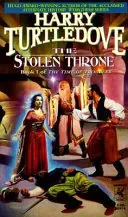


More Free Occult Philosophy Books
View all →