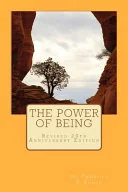
The Power of Being
 79
79

The Power of Being
Christian R. Komor's "The Power of Being" tackles a familiar modern malaise: the feeling of being overwhelmed and underwhelmed simultaneously. Komor, a psychologist, grounds his approach in practical exercises, a significant strength that differentiates it from more abstract philosophical treatises. His discussion of the "doing versus being" dichotomy is particularly sharp, identifying how our culture's relentless drive for productivity can erode inner peace. However, the book's initial publication in 1992 means some of its references to societal pressures might feel slightly dated, though the core message remains potent. A passage where Komor describes the "phantom demands" of an imagined ideal self is quite illuminating, capturing the anxiety many feel. Ultimately, "The Power of Being" serves as a valuable, accessible guide for those seeking to recalibrate their internal compass.
📝 Description
79
Christian R. Komor's 1992 book, The Power of Being, argues that modern stress stems from a disconnect between action and inner life.
Psychologist Christian R. Komor wrote "The Power of Being" in 1992 to address widespread stress and dissatisfaction. He identifies a core problem: our focus on outward achievement often neglects inner well-being. Komor proposes that lasting contentment comes not from accomplishing more, but from developing a stronger connection to oneself. This book is for anyone feeling burnt out, unfulfilled, or lacking peace despite success. It offers practical methods to regain inner balance, suitable for both self-help veterans and newcomers.
Komor's work emerged during a time of growing awareness about stress and interest in alternative psychology. While the self-help market was growing, his book stood apart by grounding its exercises in psychological principles. It also resonated with the period's renewed interest in Eastern philosophies and contemplative practices, particularly his focus on inner presence. The central idea is the contrast between "doing" and "being." Komor contends that an excessive emphasis on productivity has led to an underdeveloped inner life, causing a lack of peace and fulfillment. He presents specific methods to redirect attention inward, promoting mindful presence and self-acceptance as the basis for true well-being.
The book aligns with contemplative traditions that emphasize inner awareness over external action. It shares ground with certain branches of Western psychology that look to Eastern thought for practices like mindfulness and self-inquiry. Komor's approach, which emerged in the 1990s, reflects a broader cultural shift towards incorporating these introspective methods into secular frameworks for personal growth. It speaks to the perennial spiritual quest for a stable inner life amidst the demands of the external world.
💡 Why Read This Book?
• You will learn to differentiate between "doing" and "being," a core concept introduced by Komor, to understand how prioritizing internal states over external actions can cultivate lasting peace, a principle explored throughout the book. • You will discover specific exercises developed by Dr. Christian R. Komor, a nationally acclaimed psychologist, for shifting your focus inward, offering practical methods not found in purely theoretical texts. • You will gain a new perspective on stress and dissatisfaction by examining the "phantom demands" Komor discusses, helping you to identify and release self-imposed pressures that detract from your well-being.
⭐ Reader Reviews
Honest opinions from readers who have explored this book.
❓ Frequently Asked Questions
What is the core message of 'The Power of Being' by Christian R. Komor?
The book's core message, first published in 1992, is that true contentment and peace are found not in constant activity ('doing') but in cultivating a state of inner presence and self-acceptance ('being'). Komor offers practical exercises to achieve this balance.
Who is Christian R. Komor and what is his background?
Christian R. Komor is a nationally acclaimed psychologist. His professional background in psychology lends a structured, evidence-based approach to the self-help concepts presented in 'The Power of Being'.
Are the exercises in 'The Power of Being' difficult to follow?
Komor designed the exercises in 'The Power of Being' to be accessible. They focus on shifting awareness and practicing mindfulness, aiming to be practical and integrated into daily life rather than requiring extensive training.
How does 'The Power of Being' address modern stress?
The book addresses modern stress by identifying the disconnect between our outward 'doing' and our inner 'being.' It proposes that by cultivating 'being,' individuals can reduce the impact of external demands and find more internal peace, a concept explored through specific psychological techniques.
What distinguishes 'The Power of Being' from other self-help books published around 1992?
Published in 1992, 'The Power of Being' distinguishes itself by offering psychological grounding for its self-improvement techniques. Unlike purely anecdotal accounts, Komor's work is rooted in his expertise as a psychologist, providing a more structured framework for achieving inner peace.
Can 'The Power of Being' help with feelings of disillusionment?
Yes, the book directly addresses disillusionment stemming from an overemphasis on external achievements. By guiding readers toward the 'power of being,' Komor suggests a path to finding deeper satisfaction internally, independent of external validation.
🔮 Key Themes & Symbolism
The Doing-Being Dichotomy
The central theme is the stark contrast between an outward-focused life of constant activity ('doing') and an inward-focused state of presence and acceptance ('being'). Komor argues that modern society excessively rewards 'doing,' leading to burnout and a deficit in genuine well-being. He posits that true fulfillment arises from cultivating 'being,' which involves mindful awareness, self-acceptance, and a connection to one's intrinsic self, rather than merely accumulating achievements or possessions.
Cultivating Inner Presence
This theme focuses on the practical methods Komor provides to develop and maintain inner presence. It's not about escapism but about anchoring oneself in the present moment, observing thoughts and feelings without judgment. This practice counteracts the anxiety generated by future worries or past regrets, fostering a sense of calm and clarity that permeates all aspects of life. Komor suggests this presence is the gateway to understanding oneself more deeply.
Addressing Stress and Disillusionment
Komor directly confronts the widespread feelings of stress, overwhelm, and disillusionment prevalent in contemporary life. He attributes these states to the imbalance caused by prioritizing external demands over internal needs. The book offers a framework for understanding the psychological roots of these feelings and provides actionable steps, grounded in psychological principles, to mitigate their impact and regain a sense of control and satisfaction.
Self-Acceptance as Foundation
A crucial element is the emphasis on self-acceptance as the bedrock of genuine well-being. Komor suggests that the drive for 'doing' often stems from a subconscious belief that we are not 'enough' as we are. By fostering 'being,' the book encourages readers to embrace themselves fully, flaws and all, thereby reducing the need for external validation and releasing the pressure to constantly perform or achieve.
💬 Memorable Quotes
Direct passages from the work, attributed to the author.
“We do and do, but are less and less satisfied.”
— This concise observation from the original blurb highlights the paradox of modern life: increased activity does not equate to increased happiness or contentment. It points to a systemic issue where external effort is misaligned with internal fulfillment.
“The enjoyment, peace and love we long for is somehow missing.”
— This captures the core emotional deficit many experience. It suggests that the essential elements of a fulfilling life are elusive, despite our best efforts to adapt to a demanding world, implying a need for a different approach.
“People everywhere are feeling overwhelmed and disillusioned.”
— This statement sets the stage by identifying a universal contemporary condition. It frames the book's purpose as addressing this widespread psychological and emotional distress experienced by many in the early 1990s and beyond.
“We have and do more, but are less and less satisfied.”
— This reiterates the central thesis of the book, emphasizing the inverse relationship between outward action ('have and do more') and internal satisfaction. It points to a fundamental disconnect in how we pursue happiness.
“Alarmed by increasing rates of stress-related illness.”
— This points to the tangible, physical consequences of the imbalance between 'doing' and 'being.' It underscores the urgency of Komor's message by linking psychological distress to physiological health outcomes prevalent in the era of the book's publication.
🌙 Esoteric Significance
Tradition
While primarily presented as psychological self-help, "The Power of Being" appeals to Western esoteric traditions that emphasize the inner life. Its focus on cultivating presence and self-awareness aligns with contemplative practices found in Hermeticism and certain Gnostic interpretations that prioritize inner knowledge and gnosis over external phenomena. Komor's approach, however, is secularized, making these concepts accessible without requiring adherence to specific metaphysical doctrines, thus bridging psychological understanding with timeless spiritual principles.
Symbolism
The core symbolism lies in the dichotomy of "doing" versus "being." "Doing" can be seen as representing the phenomenal world, action, and external achievement, often associated with the ego's striving. "Being," conversely, symbolizes the inner sanctuary, the immutable self, and effortless existence, akin to the Hermetic concept of 'As Above, So Below' where the inner state mirrors the outer reality. The "power" itself signifies the inherent capacity within each individual to access this state of being, a latent force waiting to be realized.
Modern Relevance
Komor's emphasis on "being" has found renewed relevance in contemporary wellness culture, particularly in the widespread adoption of mindfulness and meditation practices. Thinkers and practitioners in fields like positive psychology, coaching, and even certain branches of secular Buddhism echo his core message. The book's accessible framing of inner peace anticipates much of the current discourse around work-life balance and the search for meaning beyond material success, making its principles applicable to today's digitally saturated and performance-driven society.
👥 Who Should Read This Book
• Individuals feeling perpetually overwhelmed by modern life's demands, seeking practical psychological tools to regain a sense of calm and control. • Students of psychology or personal development interested in the interplay between action-oriented living and the cultivation of inner peace, particularly those exploring works published in the early 1990s. • Anyone experiencing burnout or disillusionment who wishes to explore the concept of "being" as a counterpoint to excessive "doing," offering a structured path toward greater self-acceptance and contentment.
📜 Historical Context
Christian R. Komor's "The Power of Being" emerged in 1992, a period characterized by a burgeoning self-help industry and a growing public discourse on stress management and mental well-being. The early 1990s saw a confluence of psychological thought, with humanistic psychology still influential alongside the rise of cognitive-behavioral therapies. Komor's work can be seen as interacting with this landscape by offering a blend of psychological insight and introspective practice. While not explicitly aligned with a single movement, its emphasis on inner states and presence drew parallels with emerging mindfulness practices and the enduring influence of existentialist thought. Unlike some New Age approaches gaining traction, Komor's background as a psychologist lent his work a perceived academic rigor. The book appeared during a time when figures like Stephen Covey were popularizing concepts of personal effectiveness, yet Komor offered a counterpoint by emphasizing the value of stillness over perpetual motion, a subtle but significant departure.
📔 Journal Prompts
The 'power of being' versus the drive for 'doing': Which currently dominates your daily life?
Identify a 'phantom demand' Komor might discuss and how it impacts your sense of self.
Reflect on a moment of genuine inner presence you have experienced.
How does prioritizing 'doing' affect your pursuit of enjoyment, peace, and love?
Consider the link between stress-related illness and neglecting the 'being' aspect of yourself.
🗂️ Glossary
Doing
In the context of Komor's work, 'doing' refers to the state of constant activity, external achievement, and outward focus. It represents the societal emphasis on productivity, accomplishment, and measurable results, often at the expense of internal well-being.
Being
The counterpart to 'doing,' 'being' signifies a state of inner presence, self-acceptance, and mindful awareness. It involves cultivating a connection with one's intrinsic self, focusing on the quality of existence rather than the quantity of actions.
Inner Presence
The state of being fully aware and anchored in the present moment, observing thoughts and feelings without judgment. Cultivating inner presence is presented as a key method for accessing the 'power of being'.
Disillusionment
A feeling of disappointment resulting from the discovery that something is not as good as it was believed to be. In the book, it's linked to the unfulfilled promises of a life solely focused on external 'doing'.
Stress-Related Illness
Physical or mental health conditions exacerbated or caused by prolonged exposure to stress. Komor links increasing rates of such illnesses to an imbalance favoring 'doing' over 'being'.
Phantom Demands
Implied or imagined requirements placed upon oneself, often stemming from societal pressures or internal insecurities, which create anxiety and a feeling of inadequacy. These are distinct from actual, necessary tasks.
Self-Acceptance
The recognition and acceptance of one's own qualities, both positive and negative, without undue self-criticism. It is presented as a fundamental component of achieving true well-being and peace.
This book appears in 1 collection
🔮 Readers Also Liked
Browse all →









From the “Affirmations” Collection
View all →









More Free Occult Philosophy Books
View all →