The philosopher's stone

 62
62

The philosopher's stone


Review by Celeste Moreau (Divination & Symbolism Reviewer) — Peter H. Marshall's 'The Philosopher's Stone' is a masterful exploration of alchemy that stands out for its depth and clarity. Marshall's ability to weave together historical context, esoteric insights, and philosophical musings makes this book a must-read for anyone interested in the mystical arts. The strengths of this work lie in its meticulous research and the author's evident passion for the subject. Marshall's prose is both engaging and informative, making complex alchemical concepts accessible to a wide audience. This book is particularly valuable for practitioners and scholars who seek to understand the deeper symbolism and philosophical underpinnings of alchemy.
📝 Description
62
Peter H. Marshall's 'The Philosopher's Stone' examines alchemy's hidden knowledge and symbolism.
Peter H. Marshall’s 'The Philosopher's Stone' examines the historical practice of alchemy. The book looks at the symbolism and philosophical underpinnings that have drawn seekers for centuries. Marshall discusses the secrets of transformation and enlightenment sought by alchemists. He addresses the philosophical importance of alchemy and its lasting impact. This work is for anyone interested in the esoteric arts, offering insights into a practice rich with mystical wisdom. It aims to resonate with those on a spiritual quest.
The text details the concepts and symbols central to alchemical pursuits. It moves beyond simple historical narrative to consider the deeper meanings and practices. Readers will find an examination of the transformation sought, both material and spiritual. The book considers alchemy as a system of thought that influenced many areas of occult history. It provides context for understanding this complex tradition.
Alchemy represents a significant tradition within esoteric thought, often linked to Hermeticism and Gnosticism. It was not merely a proto-chemistry but a spiritual discipline focused on the purification and perfection of the self, mirroring the transformation of base metals into gold. The search for the Philosopher's Stone was a metaphor for achieving spiritual enlightenment and understanding the fundamental principles of the cosmos. Marshall's work situates this practice within its historical and symbolic context, connecting it to broader currents of Western esotericism.
💡 Why Read This Book?
Why read 'The Philosopher's Stone'? This book is essential for seekers of hidden knowledge, scholars of esoteric traditions, and practitioners of alchemy. Marshall's work offers a comprehensive look into the history and symbolism of alchemy, providing a deeper understanding of its philosophical significance. Whether you are a beginner or an experienced practitioner, this book will enrich your journey into the mystical and occult.
⭐ Reader Reviews
Honest opinions from readers who have explored this book.
❓ Frequently Asked Questions
What is the main focus of 'The Philosopher's Stone'?
The main focus of this book is the exploration of alchemy, its history, and its esoteric symbolism. Marshall delves into the philosophical significance of alchemy and its enduring relevance.
Who is the intended audience for this book?
The intended audience includes seekers of hidden knowledge, scholars of esoteric traditions, and practitioners of alchemy. Both beginners and experienced readers will find valuable insights.
What makes this book unique?
This book stands out for its depth of research and clarity of presentation. Marshall's passion for the subject shines through, making complex alchemical concepts accessible to a wide audience.
Is this book suitable for beginners?
Yes, this book is suitable for beginners as well as experienced practitioners. Marshall's engaging prose and informative content make it accessible to all levels of readers.
How does this book contribute to the study of alchemy?
This book contributes significantly to the study of alchemy by providing a comprehensive look into its history, symbolism, and philosophical underpinnings. It is a valuable resource for scholars and practitioners alike.
🔮 Key Themes & Symbolism
Transformation and Enlightenment
Alchemy is often seen as a path to transformation and enlightenment. Marshall studies the symbolic processes of transmutation, illustrating how the pursuit of the philosopher's stone mirrors the seeker's journey towards spiritual awakening. This theme emphasizes the mystical and esoteric aspects of alchemy, highlighting its role in the quest for hidden knowledge.
Historical Context of Alchemy
Marshall provides a detailed historical context for alchemy, tracing its origins and evolution through the centuries. This theme explores how alchemy has been practiced and understood in different eras, offering insights into its enduring appeal and relevance. The book studies the lives of famous alchemists and their contributions to the field.
Symbolism and Hidden Knowledge
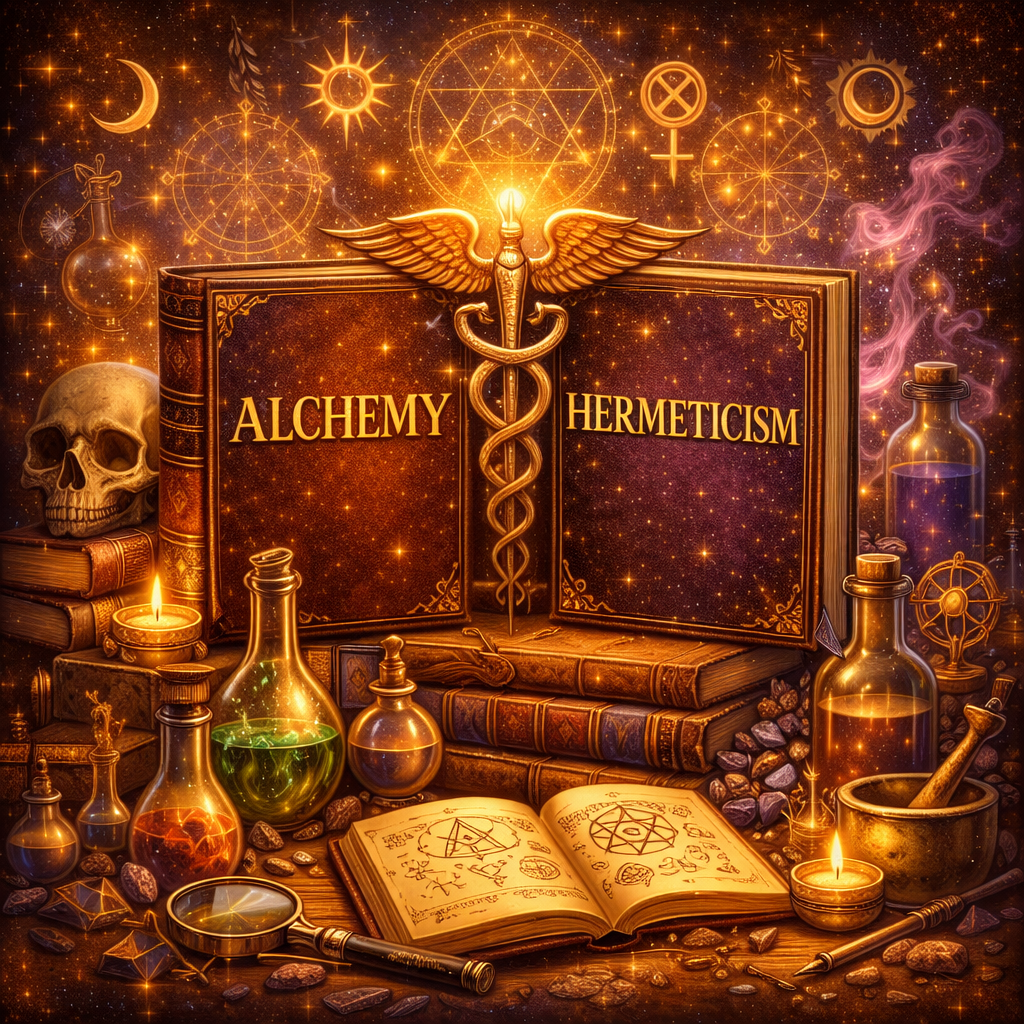
Alchemy is rich in symbolism, and Marshall unpacks the hidden meanings behind its various symbols. This theme examines the esoteric language of alchemy, revealing how symbols like the ouroboros, the caduceus, and the philosopher's stone hold deep mystical significance. Readers will gain a deeper understanding of the symbolic framework that underpins alchemical practice.
💬 Memorable Quotes
Direct passages from the work, attributed to the author.
“Alchemy is the art of transmuting the base metals of the soul into gold.”
— Marshall's words highlight the esoteric nature of alchemy, portraying it as a path to spiritual purification and enlightenment.
“Symbolism is the language of the occult, and alchemy is its most profound expression.”
— Marshall's insight into the symbolic nature of alchemy underscores its esoteric significance, inviting readers to delve deeper into its mysteries.
💡 Key Ideas
Editorial paraphrase of the work's core concepts — not direct quotes.
The philosopher's stone is not merely a physical substance but a symbol of spiritual transformation.
This quote underscores the mystical significance of the philosopher's stone, emphasizing its role in the seeker's journey towards enlightenment.
The pursuit of the philosopher's stone is a journey into the depths of the self.
This quote emphasizes the introspective and mystical aspects of alchemical practice, encouraging readers to explore their inner selves.
The alchemist's laboratory is a microcosm of the universe, reflecting its hidden harmonies.
This quote highlights the mystical and hermetic aspects of alchemy, portraying it as a microcosmic reflection of the cosmos.
🌙 Esoteric Significance
Tradition
This book belongs to the Hermetic tradition, which emphasizes the mystical and esoteric aspects of alchemy. Marshall's work studies the symbolic and philosophical underpinnings of alchemy, highlighting its role in the quest for hidden knowledge and spiritual transformation.
Symbolism
Key symbols in this book include the philosopher's stone, the ouroboros, and the caduceus. These symbols hold deep mystical significance, representing the processes of transformation, enlightenment, and the unity of opposites. Marshall unpacks the hidden meanings behind these symbols, revealing their esoteric significance.
Modern Relevance
This book remains relevant today as modern practitioners and scholars continue to explore the mystical and esoteric aspects of alchemy. Its insights into the symbolic and philosophical underpinnings of alchemy are valuable for those seeking to understand its deeper meanings and apply them to their spiritual journeys.
👥 Who Should Read This Book
Beginners interested in the mystical arts will find 'The Philosopher's Stone' an accessible and informative introduction to alchemy. Scholars of esoteric traditions will appreciate its depth of research and clarity of presentation. Spiritual seekers will be drawn to its exploration of transformation and enlightenment, while practitioners of alchemy will find valuable insights into the symbolic and philosophical aspects of their practice.
📜 Historical Context
Written in an era of renewed interest in esoteric traditions, 'The Philosopher's Stone' captures the essence of alchemy's enduring appeal. Marshall's work is important because it provides a comprehensive historical context for alchemy, tracing its origins and evolution through the centuries. The book's influence can be seen in the renewed interest in alchemy among modern practitioners and scholars, who seek to understand its deeper symbolic and philosophical meanings.
📔 Journal Prompts
Reflect on the symbolism of the philosopher's stone in your own spiritual journey.
How does the historical context of alchemy influence your understanding of its esoteric practices?
Consider the role of transformation and enlightenment in your pursuit of hidden knowledge.
Explore the significance of alchemical symbols in your personal growth and spiritual development.
How does the Hermetic tradition inform your understanding of alchemy and its mystical aspects?
🗂️ Glossary
Philosopher's Stone
A legendary alchemical substance believed to transform base metals into gold and grant immortality. It symbolizes spiritual transformation and enlightenment.
Ouroboros
A serpent swallowing its own tail, representing the unity of opposites and the cycle of life and death in alchemy.
Caduceus
A staff entwined by two serpents, symbolizing the duality and harmony of the alchemical process.
Hermetic Tradition
A mystical and esoteric tradition that emphasizes the pursuit of hidden knowledge and spiritual transformation through alchemy and other occult practices.
Transmutation
The alchemical process of transforming one substance into another, often symbolizing spiritual purification and enlightenment.
This book appears in 3 collections
🔮 Readers Also Liked
Browse all →








More by Peter H. Marshall
All books →


From the “Hermeticism” Collection
View all →







More Free Alchemy & Hermeticism Books
View all →