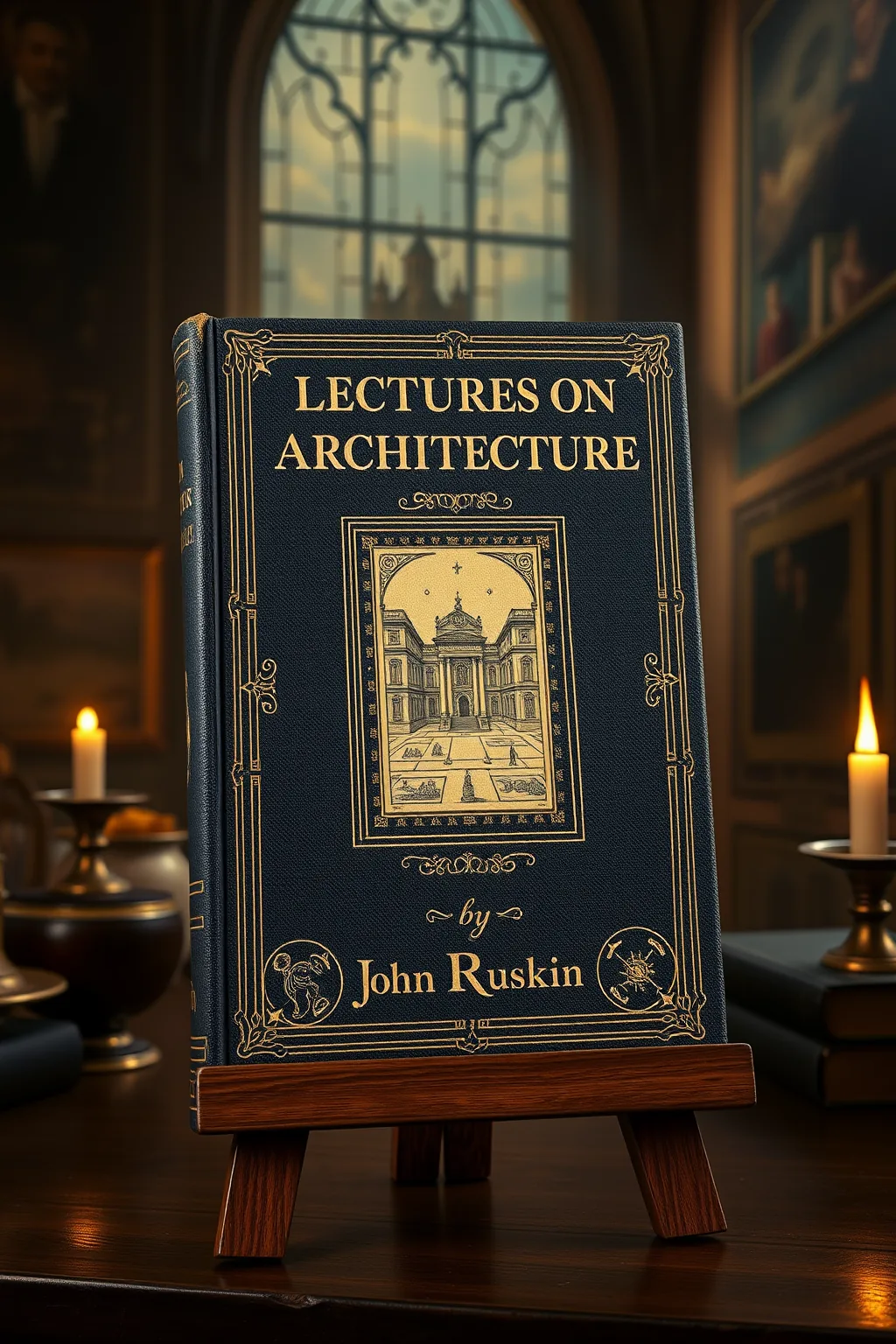
Lectures on architecture, comprising the history of the art from the earliest times to the present day
 61
61

Lectures on architecture, comprising the history of the art from the earliest times to the present day


Review by Celeste Moreau (Divination & Symbolism Reviewer) — John Ruskin's 'Lectures on Architecture' is a masterclass in esoteric insights, offering a profound exploration of the mystical dimensions of architectural history. Ruskin's deep understanding of symbolism and hidden knowledge makes this book an essential read for anyone interested in the occult and hermetic traditions. The strength of this work lies in its ability to illuminate the spiritual significance of architectural forms, making it a valuable resource for scholars and practitioners alike. Readers will find themselves drawn into a world where every stone and beam holds a secret, and the built environment becomes a living testament to the mysteries of the universe.
📝 Description
61
John Ruskin published 'Lectures on Architecture' in 1850, detailing architecture's history and its symbolic meanings.
Ruskin's 1850 lectures examine architecture's historical development, connecting it to broader cultural and spiritual ideas. He argues that buildings are not merely functional structures but contain embedded meanings that reflect human civilization and its underlying philosophies. The work invites readers to look beyond the physical form of architecture and consider the symbolic language and spiritual truths it can convey. Ruskin suggests that the design and construction of buildings reveal much about the human mind and its inner states.
The lectures treat architectural history as a narrative of human consciousness. Ruskin's approach emphasizes how built environments can embody specific beliefs and aspirations, acting as conduits for understanding deeper realities. This perspective encourages a contemplative engagement with architecture, viewing it as a discipline with a significant philosophical and psychological dimension. The book is suited for those interested in the intersection of art, philosophy, and esoteric thought.
Ruskin's lectures align with a 19th-century interest in finding spiritual significance in art and history, often outside mainstream religious or academic frameworks. This period saw a rise in movements that sought hidden knowledge within established traditions, including art and architecture. His focus on symbolism and the 'inner workings' of buildings connects to esoteric philosophies that view the material world as a manifestation of deeper, often spiritual, principles. The lectures contribute to a broader discussion of how art can serve as a key to understanding the human condition and its connection to transcendent realities.
💡 Why Read This Book?
Read 'Lectures on Architecture' to delve into the esoteric symbolism hidden within the world's most iconic structures. Ideal for seekers of hidden knowledge, scholars of the occult, and practitioners of hermetic traditions, this book offers a unique perspective on the mystical aspects of architecture. Ruskin's insights will enrich your understanding of how buildings can serve as conduits for spiritual enlightenment and deeper self-awareness.
⭐ Reader Reviews
Honest opinions from readers who have explored this book.
❓ Frequently Asked Questions
What makes 'Lectures on Architecture' a mystical read?
The book delves into the esoteric symbolism and hidden knowledge embedded within architectural history, making it a rich source of mystical insights.
Who is the intended audience for this book?
Scholars of the occult, spiritual seekers, and practitioners of hermetic traditions will find this book particularly enlightening.
What is the philosophical significance of architecture according to Ruskin?
Ruskin argues that buildings can embody spiritual truths and reflect the inner workings of the human psyche, serving as portals to higher realms of consciousness.
How does Ruskin's work influence modern architecture?
His insights into the mystical aspects of architecture continue to inspire practitioners who seek to infuse spiritual meaning into their designs.
Can beginners benefit from reading this book?
While it is dense with esoteric knowledge, beginners with an interest in the mystical and occult will find Ruskin's work an enriching introduction to the subject.
🔮 Key Themes & Symbolism
Esoteric Symbolism in Architecture
Ruskin's lectures reveal the hidden symbolism within architectural forms, showing how buildings can serve as repositories of mystical knowledge. He studies the spiritual significance of various architectural styles, from ancient temples to modern structures, highlighting the ways in which these forms reflect deeper truths about the human condition.
The Philosophy of Built Environments
The book explores the philosophical underpinnings of architecture, arguing that buildings are not merely functional structures but embodiments of spiritual truths. Ruskin's insights into the inner workings of the human psyche as reflected in architectural design offer a unique perspective on the role of the built environment in shaping our spiritual journeys.
The Evolution of Architectural History
Through a comprehensive survey of architectural history, Ruskin traces the evolution of building styles from the earliest times to the present day. This historical context provides a rich backdrop for understanding the mystical dimensions of architecture, showing how different eras have infused their structures with unique spiritual meanings.
💬 Memorable Quotes
Direct passages from the work, attributed to the author.
“Without imagination, there is no art.”
— Ruskin emphasizes the importance of imagination in creating meaningful and spiritually significant architectural forms.
“The man who does not read has no advantage over the man who cannot read.”
— Ruskin's words underscore the importance of knowledge and learning in the pursuit of architectural excellence.
💡 Key Ideas
Editorial paraphrase of the work's core concepts — not direct quotes.
The greatest glory is not in never falling, but in rising every time we fall.
This quote underscores the resilience and spiritual growth that can be found in the study of architecture.
The essence of all beautiful art, all great art, is gratitude.
This quote highlights the role of gratitude in the creative process, showing how it can elevate architectural design to a higher spiritual plane.
The art of architecture is the art of repeating the infinitely various, in a constant unity.
This quote reflects Ruskin's belief in the harmonious balance between diversity and unity in architectural design.
🌙 Esoteric Significance
Tradition
This book belongs to the Hermetic tradition, which emphasizes the hidden knowledge and mystical symbolism embedded within the natural and built environments. Ruskin's insights into the spiritual significance of architecture align with Hermetic principles of unity and harmony, revealing the deeper truths that underlie the physical world.
Symbolism
Key symbols in the book include the use of geometric forms, sacred geometry, and the integration of natural elements into architectural design. These symbols are interpreted as reflections of spiritual truths and the inner workings of the human psyche, providing a wide range of esoteric knowledge.
Modern Relevance
Ruskin's work continues to inspire modern practitioners of the occult and hermetic traditions, who seek to infuse spiritual meaning into their architectural designs. His insights into the mystical aspects of architecture remain relevant today, offering a unique perspective on the ways in which built environments can serve as conduits for spiritual enlightenment.
👥 Who Should Read This Book
Beginners interested in the mystical and occult will find 'Lectures on Architecture' an enlightening introduction to the subject. Scholars of the occult and hermetic traditions will appreciate Ruskin's deep understanding of esoteric symbolism and hidden knowledge. Spiritual seekers will find the book's exploration of the spiritual significance of architecture to be a rich source of inspiration and insight. Practitioners of the occult will benefit from Ruskin's insights into the ways in which built environments can serve as portals to higher domains of consciousness.
📜 Historical Context
John Ruskin's 'Lectures on Architecture' was written during a time of significant cultural and intellectual ferment in the 19th century. The era was marked by a renewed interest in the mystical and occult, as well as a fascination with the history and symbolism of architecture. Ruskin's work was influential in shaping the Pre-Raphaelite movement, which sought to revive the spiritual and artistic values of the Middle Ages. His lectures provided a comprehensive survey of architectural history, highlighting the esoteric dimensions of various building styles and their spiritual significance.
📔 Journal Prompts
How do the esoteric symbols in architecture reflect your personal spiritual journey?
In what ways can understanding the mystical dimensions of architecture enhance your connection to the divine?
How does the philosophy of built environments influence your perception of the world?
What insights into the human psyche can be gained from studying the evolution of architectural history?
How can you incorporate Hermetic principles into your own architectural designs or spiritual practices?
🗂️ Glossary
Hermeticism
A philosophical and spiritual tradition based on the writings of Hermes Trismegistus, emphasizing the hidden knowledge and unity of all things.
Esoteric Symbolism
The use of symbols and imagery to convey hidden or mystical knowledge, often found in architecture and art.
Sacred Geometry
The study of geometric shapes and patterns that are believed to hold spiritual and mystical significance.
Pre-Raphaelitism
An artistic and literary movement of the 19th century that sought to revive the spiritual and artistic values of the Middle Ages.
Built Environment
The human-made surroundings that provide the setting for human activity, including buildings, infrastructure, and public spaces.
This book appears in 3 collections
🔮 Readers Also Liked
Browse all →








More by John Ruskin
All books →

From the “Hermeticism” Collection
View all →







More Free Alchemy & Hermeticism Books
View all →