General Book of the Tarot
 76
76

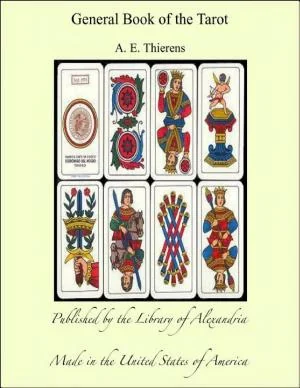
General Book of the Tarot
A. E. Thierens’ *General Book of the Tarot* attempts a comprehensive systematization of the cards, a task ambitious in any era. The strength of this 2020 publication lies in its detailed cataloging of correspondences, meticulously linking each card to astrological signs, Hebrew letters, and numerological values. Thierens’ exposition on the Major Arcana, particularly his exploration of their Kabbalistic associations, provides a dense but rewarding study for those familiar with such esoteric frameworks. However, the work's primary limitation is its sheer density; it can feel less like an intuitive guide and more like an academic treatise at times. The section detailing the Minor Arcana, while thorough, occasionally sacrifices clarity for exhaustive linkage. For instance, the intricate explanations of the suits' relationship to elemental forces and planetary rulership, while factually rich, demand significant prior knowledge. Ultimately, Thierens offers a rigorous, if somewhat austere, framework for understanding the Tarot’s symbolic architecture.
📝 Description
76
A. E. Thierens' General Book of the Tarot was published in 2020.
This 2020 edition of A. E. Thierens' work examines the 78-card Tarot deck. It covers the Major and Minor Arcana, assigning meanings drawn from occult philosophies. The book aims to establish a complete system for Tarot readings, highlighting the connections between cards and their predictive potential.
It is written for serious Tarot students seeking a deep, systematic understanding. The text will interest practitioners of occultism, symbology students, and those curious about divination's history. Readers who prefer a structured approach, moving from basic card meanings to complex spreads, will find it valuable. Those studying comparative esotericism will also appreciate its detailed analysis.
Thierens' book belongs to the late 19th and early 20th-century revival of occultism. This era saw thinkers like Eliphas Lévi and Papus connect Tarot to Kabbalah and Hermeticism. Thierens builds on this, attempting to create a clear system from these ideas. The work reflects a broader movement to adapt ancient traditions for contemporary spiritual and psychological insight.
💡 Why Read This Book?
• Gain a structured understanding of Tarot correspondences, learning how the 22 Major Arcana are linked to Hebrew letters and planetary rulership, as detailed in Thierens' system. • Explore the historical esoteric frameworks that informed early 20th-century Tarot interpretation, specifically referencing the Kabbalistic associations presented in the book. • Develop a method for interpreting card spreads by understanding the interconnectedness of the suits and their elemental, numerological, and astrological relationships, as outlined by Thierens.
⭐ Reader Reviews
Honest opinions from readers who have explored this book.
❓ Frequently Asked Questions
What esoteric traditions does A. E. Thierens' General Book of the Tarot draw upon?
The book primarily draws from Western Esotericism, integrating Kabbalistic principles, Hermetic philosophy, and astrological correspondences to interpret the Tarot's symbolism.
When was A. E. Thierens' General Book of the Tarot first published?
The work was first published on September 28, 2020, making this edition a recent entry into the study of Tarot.
Does the book cover both the Major and Minor Arcana?
Yes, the General Book of the Tarot provides extensive coverage for all 78 cards, detailing meanings and symbolic connections for both the Major and Minor Arcana.
Is this book suitable for absolute beginners to Tarot?
While comprehensive, the book's dense, academic style and deep dive into esoteric correspondences might be more accessible to those with some prior familiarity with Tarot or occult studies.
What is the core philosophy behind Thierens' Tarot interpretation?
Thierens views the Tarot as a symbolic language, a coherent system of divination rooted in universal principles, where each card's meaning is intricately linked to astrology, numerology, and Kabbalah.
How does this book relate to other works on Tarot from its historical period?
It aligns with the late 19th/early 20th-century trend of systematizing Tarot, similar to works by Papus or Eliphas Lévi, by providing detailed correspondences and occult linkages.
🔮 Key Themes & Symbolism
Kabbalistic Correspondences
Thierens meticulously maps the 22 Major Arcana cards to the Hebrew alphabet and the Tree of Life, a central to Kabbalistic study. This linkage provides a framework for understanding the archetypal energies and spiritual pathways represented by each card. The book explores how these connections inform the card's divinatory meanings and its role within a larger cosmic order, offering a method to decode the Tarot as a symbolic representation of divine emanation and human consciousness.
Astrological and Elemental Systems
A significant portion of the work is dedicated to the intricate astrological and elemental attributions for both the Major and Minor Arcana. Thierens systematically assigns planets, zodiacal signs, and the four elements (Fire, Water, Air, Earth) to specific cards. This creates a multi-layered interpretive grid, allowing for readings that consider not only the card's inherent meaning but also its energetic influences and how it interacts with other cards within a spread based on these celestial and elemental dynamics.
Tarot as a Symbolic Language
The central thesis of Thierens' work is that the Tarot functions as a universal symbolic language, a 'Book of Thoth' accessible through dedicated study. He argues that the deck's structure and imagery encode profound truths about existence, consciousness, and destiny. The book encourages readers to view the cards not merely as tools for fortune-telling, but as keys to unlocking deeper psychological and spiritual understanding, emphasizing pattern recognition and symbolic interpretation.
Numerological Significance
Numerology plays a central role in Thierens' system, with each card's numerical value contributing to its interpretation. The book details how numbers from 1 to 10, as well as the unique values of the court cards and Major Arcana, correlate with specific concepts and energetic qualities. This numerical layer adds another dimension to the reading, allowing for the analysis of sequential progression, cyclical patterns, and underlying numerical vibrations within a Tarot spread.
💬 Memorable Quotes
Direct passages from the work, attributed to the author.
“Each card is connected to astrological and numerological principles.”
— This captures Thierens' core interpretive method, emphasizing that understanding these correspondences is key to unlocking the Tarot's deeper meanings and divinatory power.
“The Major Arcana represent archetypal forces.”
— This interpretation points to Thierens' understanding of the trump cards as representing fundamental spiritual, psychological, or cosmic principles that influence human experience.
“A complete reading considers the interplay of all cards.”
— This underscores Thierens' holistic approach, suggesting that effective Tarot interpretation requires analyzing the relationships and combined meanings of cards within a spread, rather than isolated interpretations.
💡 Key Ideas
Editorial paraphrase of the work's core concepts — not direct quotes.
The Tarot is a symbolic language.
This paraphrased concept highlights Thierens' view of the Tarot not as random images, but as a structured system of symbols encoding profound knowledge, akin to ancient texts like the Book of Thoth.
The Minor Arcana detail the unfolding of life's events.
This paraphrased concept reflects Thierens' view of the numbered cards and court cards as illustrating the practical manifestation of energies and circumstances in the everyday world.
🌙 Esoteric Significance
Tradition
Thierens' work is firmly rooted in the Western Esoteric tradition, particularly drawing from Hermeticism and Kabbalah. It seeks to present a unified system of Tarot interpretation that aligns with these ancient streams of thought. By meticulously detailing correspondences with Hebrew letters, astrological signs, and numerology, he positions the Tarot not as a standalone divinatory tool, but as a symbolic manifestation of universal principles understood within these mystical lineages.
Symbolism
Key symbols explored include the Fool's journey through the Major Arcana, representing spiritual progression and individuation. The four suits of the Minor Arcana (Wands, Cups, Swords, Pentacles) are central, representing elemental forces and different facets of human experience – creative energy, emotions, intellect, and material reality, respectively. Thierens also emphasizes the numerical symbolism of each card, linking their values to specific stages of development or cosmic principles.
Modern Relevance
Contemporary Tarot practitioners and occult scholars often reference Thierens' systematic approach when seeking to understand the historical development of Tarot correspondences. His work provides a foundational text for those interested in the Kabbalistic and astrological underpinnings of the cards, influencing modern decks and interpretive methods that seek a return to more traditional, complex systems beyond simpler, popularized readings.
👥 Who Should Read This Book
• Serious students of Tarot seeking a comprehensive system: Those who want to move beyond basic meanings and understand the intricate web of correspondences (Kabbalistic, astrological, numerological) that Thierens details. • Practitioners of Western Esotericism: Individuals already engaged with Hermeticism, Kabbalah, or astrology will find Thierens' work a valuable resource for integrating Tarot into their existing philosophical framework. • Comparative occultism researchers: Scholars and enthusiasts interested in the historical development of divinatory arts and occult symbolism will appreciate this book's detailed analysis and its place within early 20th-century esoteric thought.
📜 Historical Context
A. E. Thierens' *General Book of the Tarot* emerges from the fertile ground of late 19th and early 20th-century esoteric revivalism. This era, marked by intellectual ferment following figures like Eliphas Lévi and the rise of Theosophy under Helena Blavatsky, saw a concerted effort to synthesize occult traditions. Scholars and practitioners sought to establish Tarot as a serious divinatory and symbolic system, often linking it to ancient Egyptian mysteries, Kabbalah, and Hermeticism. Thierens' work fits squarely within this movement, aiming to provide a systematic and comprehensive interpretation that codifies the card’s meanings through detailed correspondences. Unlike purely psychological interpretations that would gain traction later, this period emphasized the Tarot’s role in revealing cosmic laws and predicting future events. The book's detailed astrological and Kabbalistic framework reflects a desire to ground Tarot in established esoteric frameworks, differentiating it from more spiritualist or purely intuitive approaches gaining popularity concurrently.
📔 Journal Prompts
The Fool's journey through the Major Arcana, as described by Thierens, invites contemplation on life's initiatory stages.
Reflect on the symbolic meaning of the four suits (Wands, Cups, Swords, Pentacles) in relation to your current life circumstances.
Consider the astrological attributions for your birth date and how they might intersect with the Tarot cards.
Analyze the numerological value of a significant card in a recent reading and its potential implications.
Explore the concept of the Tarot as a symbolic language, as presented by Thierens, and how it applies to your understanding of universal archetypes.
🗂️ Glossary
Major Arcana
The set of 22 trump cards in a Tarot deck, typically depicting archetypal figures and significant life events, considered to represent major spiritual or psychological forces.
Minor Arcana
The 56 cards of a Tarot deck, divided into four suits (Wands, Cups, Swords, Pentacles), which correspond to the four elements and represent more mundane events and circumstances.
Kabbalah
A system of Jewish mysticism concerned with the nature of God and the universe, often represented by the Tree of Life, which Thierens incorporates into Tarot interpretation.
Hermeticism
A philosophical tradition based on the writings attributed to Hermes Trismegistus, emphasizing principles like 'As Above, So Below,' and often integrated into esoteric Tarot systems.
Astrological Correspondences
The system of assigning planets, zodiacal signs, and astrological houses to Tarot cards, linking their meanings to celestial influences and cycles.
Numerology
The study of the mystical or divine significance of numbers, used by Thierens to interpret the inherent qualities and progression of Tarot cards.
Suits
The four divisions of the Minor Arcana (Wands, Cups, Swords, Pentacles), each associated with an element and representing distinct areas of life and energy.
This book appears in 1 collection
🔮 Readers Also Liked
Browse all →

From the “Tarot” Collection
View all →
More Free Occult Philosophy Books
View all →