The Tarot
 71
71

The Tarot



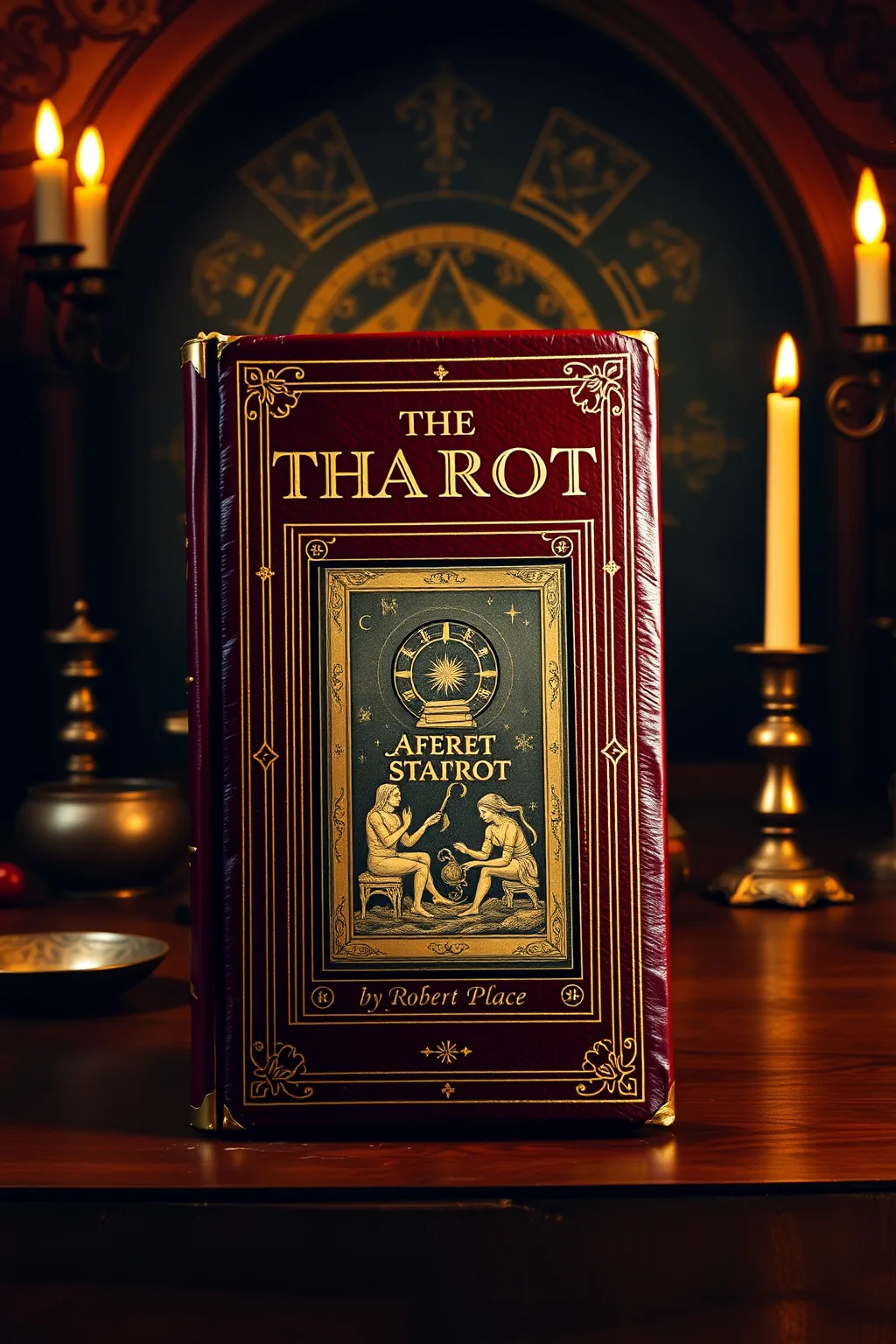
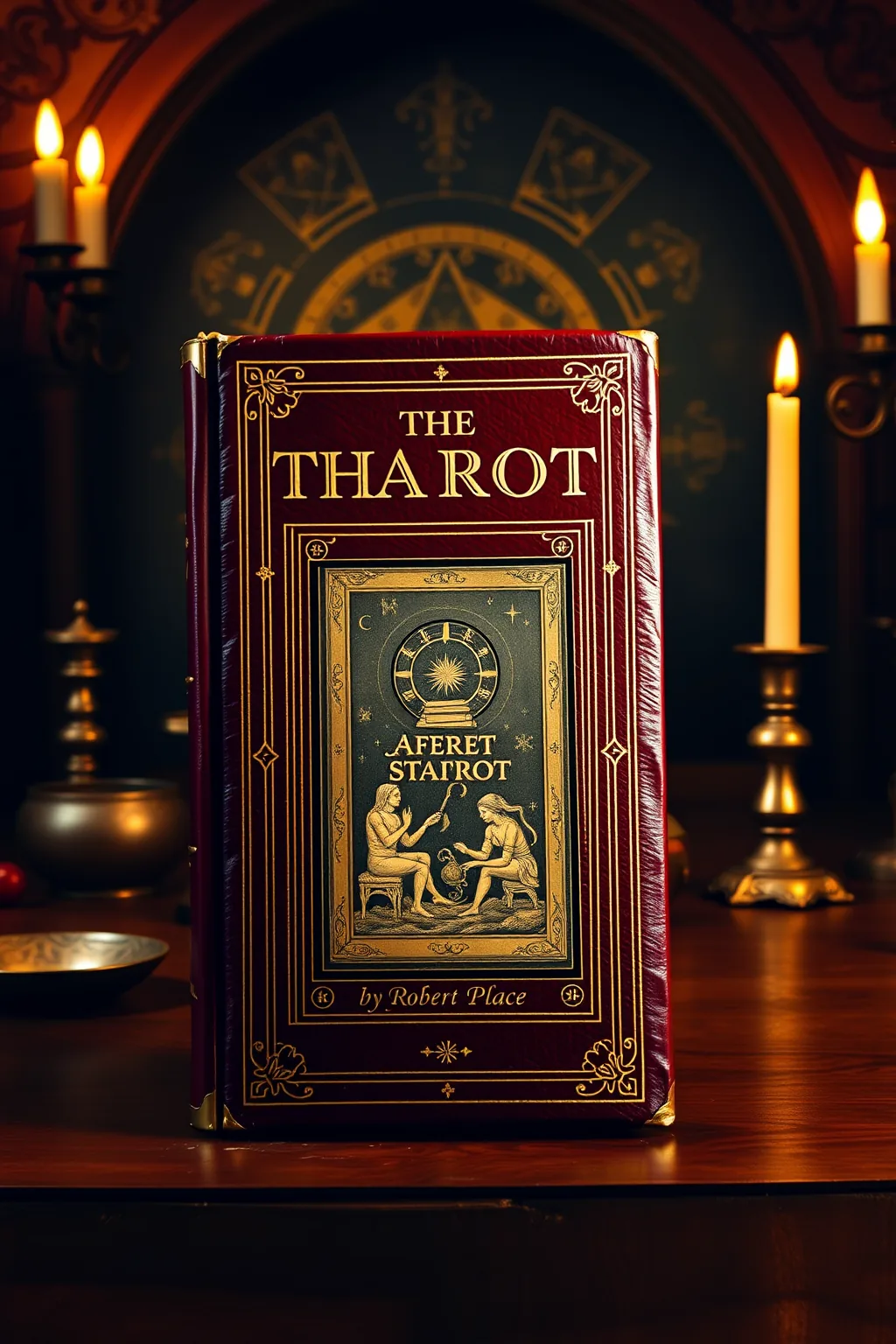
Robert Place's 'The Tarot' stands as a cornerstone for serious students of cartomancy and esoteric philosophy. Drawing from a deep wellspring of artistic and occult scholarship, Place illuminates the intricate symbolism and historical underpinnings of the Tarot with unparalleled clarity. His approach is both rigorous and intuitive, revealing the Tarot not just as a divinatory tool, but as a profound map of the soul's journey and a repository of ancient wisdom traditions. This work is essential for those seeking to move beyond superficial readings and engage with the Tarot on a truly transformative, intellectual, and spiritual level.
📝 Description
71
Robert Place's 2005 book 'The Tarot' deciphers the occult symbolism within the cards.
Robert Place's 'The Tarot' examines the occult meanings embedded in the Tarot deck. Place, an artist and scholar of Western esotericism, treats the cards not just as tools for divination but as a complex symbolic system. He traces the historical and philosophical underpinnings of the Tarot, connecting its imagery to alchemy, Kabbalah, and ancient philosophies. The book details the symbolism of both the Major and Minor Arcana, explaining how these images relate to broader esoteric traditions. Place aims to provide a deeper understanding of the Tarot's structure and its potential as a framework for contemplating the cosmos and human consciousness.
This book positions the Tarot within the Western esoteric tradition, drawing connections to Hermeticism, alchemy, and Kabbalah. It treats the cards as a visual language that developed alongside these mystical and philosophical systems. Place argues that the imagery of the Tarot reflects ancient archetypes and esoteric doctrines that have influenced Western thought for centuries. The work aims to illuminate these connections for readers interested in the deeper, symbolic layers of the Tarot beyond simple fortune telling.
💡 Why Read This Book?
Uncover the profound esoteric depths of the Tarot, guided by an artist-scholar's intimate knowledge. 'The Tarot' reveals the hidden symbolism and philosophical underpinnings of this ancient system, offering a pathway to self-discovery and spiritual insight. Ideal for practitioners seeking deeper understanding, scholars exploring Western esotericism, and anyone drawn to the mystical language of archetypes and divination.
⭐ Reader Reviews
Honest opinions from readers who have explored this book.
❓ Frequently Asked Questions
What is the primary focus of Robert Place's 'The Tarot'?
This book delves into the esoteric, symbolic, and philosophical dimensions of the Tarot, exploring its historical roots and its function as a map of consciousness and spiritual development, rather than just a predictive tool.
Who is the intended audience for this book?
The book is ideal for dedicated Tarot practitioners, students of Western esotericism, occultists, artists interested in symbolism, and anyone seeking a profound, intellectual, and spiritual engagement with the Tarot.
Does the book offer practical reading techniques?
While deeply analytical, 'The Tarot' emphasizes understanding the foundational symbolism and philosophical context, which inherently enhances practical reading abilities by providing a richer interpretative framework.
What historical periods or traditions does Place draw upon?
Place draws extensively from various esoteric traditions, including Hermeticism, Kabbalah, alchemy, and Renaissance symbolism, contextualizing the Tarot within a broad sweep of Western mystical thought.
How does the author's background as an artist influence the book?
Place's artistic sensibility informs his keen eye for visual symbolism, allowing him to dissect the intricate imagery of the Tarot cards with exceptional depth and nuance, revealing layers of meaning often overlooked.
🔮 Key Themes & Symbolism
The Tarot as a Mystical Map
This book positions the Tarot not merely as a deck of cards, but as a profound symbolic map charting the field of human consciousness, spiritual evolution, and cosmic order. It emphasizes the archetypal journeys embedded within the Major Arcana, akin to initiatory pathways, and how the Minor Arcana reflect the unfolding of life's experiences. Place illuminates how each card, from the Fool's leap of faith to the World's completion, represents a stage in the alchemical transformation of the soul, offering a framework for understanding one's own life journey through the lens of divine symbolism.
Symbolism and Esoteric Traditions
Robert Place meticulously decodes the body of symbols that adorn the Tarot, connecting them to ancient esoteric traditions such as Hermeticism, Kabbalah, and alchemy. The book explores how these symbols, often drawn from mythology, astrology, and sacred geometry, carry layers of hidden meaning intended for the initiated seeker. Understanding these connections reveals the Tarot as a sophisticated language of the soul, capable of communicating profound truths about the universe and our place within it, making it a vital tool for spiritual exploration and gnosis.
Artistic Interpretation and Visual Language
As an artist, Robert Place brings a unique perspective to the Tarot, emphasizing the visual language of the cards and their aesthetic impact as carriers of meaning. He explores how the composition, color, and imagery of each card are not arbitrary but are deliberate expressions of esoteric principles. This focus on the artistic dimension allows readers to appreciate the Tarot's visual storytelling, understanding how the interplay of forms and figures evokes specific psychological and spiritual states, thereby enhancing both intuitive comprehension and intellectual grasp of its mystical content.
💬 Memorable Quotes
Direct passages from the work, attributed to the author.
“Each card is a key, unlocking chambers of the subconscious mind.”
— This highlights the Tarot's power as a psychotherapeutic and introspective tool, revealing inner truths and hidden potentials within the individual psyche.
“The path of the Fool is the beginning of all wisdom.”
— This emphasizes the importance of embracing the unknown and the courage required for personal growth and spiritual awakening, as embodied by the archetypal Fool.
“Symbolism is the language of the soul.”
— This asserts the fundamental role of symbolic representation in conveying deep spiritual and psychological truths that transcend ordinary language.
“The Tarot reveals not fate, but the currents of potential.”
— This frames the Tarot's function as useful possibilities and influencing factors, rather than dictating an unchangeable destiny, empowering the user to navigate their path.
💡 Key Ideas
Editorial paraphrase of the work's core concepts — not direct quotes.
The Tarot is a mirror reflecting the hidden architecture of the cosmos.
This quote suggests the Tarot's profound connection to universal patterns and divine order, acting as a tool to perceive the underlying structure of reality.
🌙 Esoteric Significance
Tradition
Robert Place situates 'The Tarot' firmly within the Western Esoteric Tradition, drawing heavily on Hermeticism, Kabbalah, Neoplatonism, and Alchemy. He presents the Tarot as a microcosm of these interconnected philosophical and mystical systems, offering a visual and symbolic language to explore concepts such as divine emanation, the seven planets, the four elements, and the archetypal journey of the soul. The book serves as a bridge, translating these ancient, often abstract, doctrines into accessible yet useful insights through the imagery of the cards.
Symbolism
The book is a deep dive into the complex symbolism of the Tarot. Place meticulously unpacks the iconography of each card, revealing its connections to astrological correspondences, alchemical processes, numerological significance, and mythological archetypes. He explores how symbols like the Ouroboros, the Caduceus, and the Tree of Life are integrated into the Tarot's structure, providing a rich vocabulary for understanding the hidden forces that shape existence. This detailed symbolic analysis is crucial for unlocking the Tarot's divinatory and meditative potential.
Modern Relevance
'The Tarot' remains profoundly relevant today by offering a timeless framework for working through the complexities of modern life. In an era often characterized by fragmentation and superficiality, the book provides a path to deeper self-awareness, spiritual grounding, and the cultivation of intuition. The archetypal narratives within the Tarot offer solace, guidance, and a means to understand personal challenges and aspirations within a broader cosmic context. Its principles of transformation, balance, and understanding the interplay of forces are essential tools for personal growth and conscious living.
👥 Who Should Read This Book
This comprehensive exploration of the Tarot is designed for a diverse audience. For the **beginner**, it offers a foundational understanding of the cards' deeper meanings, moving beyond rote memorization to genuine comprehension. **Scholars** of Western esotericism and art history will find a rigorous analysis of symbolism and historical context. **Spiritual seekers** will discover a profound tool for introspection, self-discovery, and connecting with universal archetypes. **Practitioners** seeking to elevate their readings will gain invaluable insights into the layers of meaning and symbolic resonance within each card, transforming their practice into a more profound art.
📜 Historical Context
Emerging from a rich lineage of esoteric thought, the Tarot has captivated mystics, artists, and scholars for centuries. Its origins are debated, but its widespread adoption and development as an esoteric system flourished during periods of intense philosophical and spiritual inquiry, particularly in Renaissance Europe and later during the occult revival of the 19th century. Robert Place's work situates the Tarot within this continuum, tracing its evolution from ancient roots to its modern manifestations. The book reflects a deep engagement with the intellectual currents of Hermeticism, Kabbalah, and alchemical symbolism, viewing the Tarot as a crystallization of these complex traditions, and a vital tool for working through the perennial search for wisdom and self-understanding.
📔 Journal Prompts
Reflect on the journey of the Fool. What 'leap of faith' are you currently contemplating or experiencing in your life?
Choose a card that appeals to a current challenge. How does its symbolism offer a new perspective or potential solution?
Consider the four suits (Wands, Cups, Swords, Pentacles) as representations of different life energies. How are these energies manifesting in your daily existence?
Meditate on the concept of the Tarot as a 'mirror.' What hidden aspects of yourself or your situation are the cards reflecting back to you?
Explore the relationship between the Major and Minor Arcana in your own life. How do the grand themes connect with the everyday experiences you are currently navigating?
🗂️ Glossary
Arcana
Referring to the two divisions of the Tarot deck: the Major Arcana (22 cards representing archetypal journeys and major life lessons) and the Minor Arcana (56 cards depicting everyday experiences and circumstances).
Esotericism
A broad category of mystical and occult traditions that focus on hidden knowledge, inner spiritual development, and direct experience of the divine, often transmitted through symbolic language and initiatory practices.
Hermeticism
An ancient philosophical and religious tradition based on the purported teachings of Hermes Trismegistus, emphasizing the unity of all things, the correspondence between the macrocosm and microcosm, and the pursuit of gnosis (spiritual knowledge).
Kabbalah
A system of Jewish mysticism that seeks to understand the nature of God and the universe through esoteric interpretation of scripture, often involving the Tree of Life diagram and numerical symbolism.
Archetype
In Jungian psychology and esoteric thought, a universal, archaic pattern or image that derives from the collective unconscious and is inherited in the imagery of dreams and myths. The Tarot's Major Arcana are often seen as embodiments of these archetypes.
This book appears in 3 collections
🔮 Readers Also Liked
Browse all →
More by Robert Place
All books →
From the “Tarot” Collection
View all →
![CIA Reading Room cia-rdp78t05439a000400230090-7: MENSURATION OF THE [ ]-BUKHARA CANAL, USSR](/img/thumb/cia-reading-room-cia-rdp78t05439a000400230090-7-mensuration-of-the-bukhara-canal-ussr-cia-reading-room.webp)
More Free Divination & Tarot Books
View all →