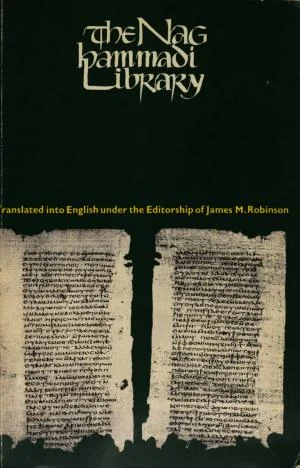
The Nag Hammadi Library in English
 78
78

The Nag Hammadi Library in English
Robinson's edition of The Nag Hammadi Library is a monumental scholarly achievement, presenting the Coptic texts in clear English. The sheer volume and diversity of the writings—from the enigmatic Gospel of Thomas to the elaborate cosmology of the Hypostasis of the Archons—are staggering. The inclusion of scholarly introductions and textual notes is invaluable for contextualizing these complex documents. A particular strength lies in the accessibility it grants to texts that were, for centuries, known only through the polemics of their opponents, offering a direct encounter with Gnostic thought. However, the sheer density of the material can be overwhelming for the uninitiated; the scholarly apparatus, while informative, does not fully bridge the gap for a casual reader unfamiliar with the historical and theological debates of the 2nd and 3rd centuries CE. The translation of the Gospel of Philip, for instance, with its unique understanding of spiritual union, exemplifies both the profound revelations and the interpretive challenges these texts present. This volume remains an indispensable resource for anyone serious about understanding the earliest strata of Christian thought and its esoteric offshoots.
📝 Description
78
Published in 1984, James McConkey Robinson's English translation of the Nag Hammadi Library offers a direct encounter with Gnostic texts.
This volume gathers the Coptic manuscripts found near Nag Hammadi, Egypt, in 1945. These texts, primarily from the 4th century CE, include gospels, apocalypses, and philosophical writings that illuminate early Christian and Gnostic beliefs. Many of these documents were previously unknown, existing only as references in the condemnations of early Church fathers.
The collection is a vital resource for anyone studying early Christianity, Gnosticism, or religious history. It provides primary source material for students and scholars, allowing for a direct engagement with the diverse ideas circulating in nascent Christian communities. Beyond academic study, the texts offer insights for those interested in alternative spiritual traditions and challenge conventional views on the development of religious thought in the Roman Empire.
The Nag Hammadi texts represent a significant body of Gnostic literature, a diverse set of religious and philosophical movements active in the early centuries CE. Gnosticism often posited a complex cosmology involving divine emanations, a flawed creator god (the Demiurge), and a path to spiritual knowledge (gnosis) for the liberation of the divine spark within humanity. These writings offer a counterpoint to the emerging orthodox Christian narrative, revealing a more pluralistic religious environment in the ancient world.
💡 Why Read This Book?
• Gain direct access to primary Gnostic texts like the Gospel of Thomas, offering alternative sayings of Jesus not found in canonical scripture. • Understand the historical context of early Christianity's diversity, moving beyond singular narratives to appreciate the range of beliefs present in the 2nd and 3rd centuries CE. • Explore concepts such as the Pleroma and the Demiurge, which provide alternative cosmological frameworks and challenge traditional theological interpretations.
⭐ Reader Reviews
Honest opinions from readers who have explored this book.
❓ Frequently Asked Questions
When were the Nag Hammadi texts discovered and what language are they originally in?
The manuscripts were discovered in 1945 near Nag Hammadi, Egypt. They are primarily written in Coptic, an ancient Egyptian language, and date from the 4th century CE, though they represent earlier Greek originals.
Who was James McConkey Robinson and what was his role in this publication?
James McConkey Robinson was a scholar of religion who served as the general editor for the first major English translation of the Nag Hammadi Library, published in 1977 (Harper & Row) and revised in 1984. His work made these texts accessible to a global audience.
Are the Nag Hammadi texts considered part of the Christian Bible?
No, the Nag Hammadi texts are not part of the Christian Bible (the New Testament canon). They are considered apocryphal or Gnostic texts, representing a diversity of early Christian thought that was ultimately excluded from the mainstream canon.
What is Gnosticism and how do these texts relate to it?
Gnosticism is a complex religious movement characterized by the belief in salvation through esoteric knowledge (gnosis). The Nag Hammadi Library contains many key Gnostic texts, offering direct insights into their myths, theology, and mystical practices.
Where was the Nag Hammadi Library found?
The collection was discovered by local farmers in 1945 in an earthenware jar near the town of Nag Hammadi, located in Upper Egypt, close to the Nile River.
What is the significance of the Gospel of Thomas found in the Nag Hammadi collection?
The Gospel of Thomas is significant because it contains over 100 sayings attributed to Jesus, many of which are not found in the canonical Gospels. It emphasizes immediate, personal knowledge of the divine within.
🔮 Key Themes & Symbolism
The Divine Spark Within
Many texts within the Nag Hammadi Library emphasize the presence of a divine spark or fragment of the divine within the human soul. This inner essence is often seen as trapped within the material world, created by a lesser deity (the Demiurge). Salvation is achieved not through external rituals or dogma, but through awakening this inner divinity via gnosis, or direct, experiential knowledge. This concept contrasts sharply with later orthodox Christian doctrines that emphasize sin and redemption through Christ's sacrifice, highlighting a more immanent and personal path to spiritual liberation found in these ancient writings.
Cosmology and the Demiurge
A central theme is the Gnostic cosmology, which often describes a transcendent, supreme God (the Monad or Pleroma) from whom emanate divine beings called aeons. A disruption within this divine realm, typically involving the aeon Sophia (Wisdom), leads to the creation of the material universe and its ruler, the Demiurge. This Demiurge, often identified with the God of the Old Testament, is depicted as ignorant or malevolent, having mistakenly created the flawed physical world. Texts like the 'Hypostasis of the Archons' detail this creation myth, offering a counter-narrative to Genesis and framing the material realm as a prison from which the divine spark seeks escape.
Gnosis as Salvation
The very name 'Gnosticism' derives from the Greek word 'gnosis,' meaning knowledge. Unlike faith or works, gnosis represents a direct, intuitive, and often ecstatic understanding of the divine and one's true spiritual nature. This knowledge is not intellectual accumulation but a transformative realization that liberates the soul from the ignorance perpetuated by the material world and its rulers. The Gospel of Thomas, with its focus on uncovering the 'living Jesus' and the 'kingdom of heaven within,' exemplifies this path, where understanding hidden truths leads to spiritual awakening and freedom.
Reinterpretations of Jesus and Scripture
The Nag Hammadi Library presents a radically different portrayal of Jesus and his teachings compared to the New Testament canon. Texts like the 'Gospel of Mary' and the 'Gospel of Thomas' offer dialogues and sayings that emphasize esoteric wisdom, inner spiritual experience, and the direct accessibility of the divine, often bypassing traditional authority structures. These writings suggest that Jesus revealed secret knowledge to his disciples, particularly Mary Magdalene, and that his true message was about recognizing the divine immanence within humanity, rather than solely focusing on his sacrificial death and resurrection.
💬 Memorable Quotes
Direct passages from the work, attributed to the author.
“Let him who seeks not cease seeking, until he finds. When he finds, he will be astonished. When he is astonished, he will rule over the All, and will reign over the All.”
— This saying from the Gospel of Thomas expresses the Gnostic pursuit of knowledge. It suggests that the journey of seeking spiritual truth is paramount, leading to a profound realization and ultimately, spiritual sovereignty over one's existence.
“Many are standing at the door, but the aeons have not entered.”
— This enigmatic line hints at the complex Gnostic cosmology, possibly referring to divine beings (aeons) and the spiritual realms from which the material world is separated. It suggests a state of potential or incomplete spiritual realization.
“Know that which is before your face, and that which is hidden from you will be revealed to you.”
— This statement from the Gospel of Thomas underscores the Gnostic belief in gnosis. It posits that direct perception and understanding of the immediate, tangible reality (what is before your face) is the key to unlocking hidden spiritual truths.
“Jesus said, 'It is I who am the knowledge of truth.'”
— This attribution suggests that for Gnostics, Jesus represented not just a savior figure, but the embodiment and source of the direct, experiential knowledge (gnosis) that leads to liberation from the material world.
💡 Key Ideas
Editorial paraphrase of the work's core concepts — not direct quotes.
The kingdom of the Father is not coming, it is already here.
This quote, also from the Gospel of Thomas, highlights the Gnostic emphasis on the immanence of the divine. It suggests that spiritual liberation and the divine realm are not future destinations but present realities accessible through inner awareness.
🌙 Esoteric Significance
Tradition
The Nag Hammadi Library is foundational to the study of Gnosticism, a diverse set of religious and philosophical movements prominent in the early centuries CE. While often seen as a heterodox branch of early Christianity, Gnosticism also drew from Platonism, Hermeticism, and Eastern influences. This collection is the primary source for understanding Gnostic myths, cosmologies, and soteriologies, which emphasize salvation through direct, intuitive knowledge (gnosis) rather than faith or works alone. It represents a significant departure from mainstream religious traditions, offering an alternative path to spiritual liberation.
Symbolism
Key symbols include the Pleroma, representing the fullness of the divine realm, and the aeons, emanations of the divine. The figure of Sophia (Wisdom) is central, her fall or desire often initiating the creation of the flawed material world and its ruler, the Demiurge. The serpent often symbolizes liberating knowledge or a spiritual guide, contrasting with its traditional role. The divine spark within humanity, trapped in the material body, is another crucial motif, signifying the potential for liberation through gnosis.
Modern Relevance
Contemporary esoteric traditions, including some branches of Western esotericism, modern occultism, and certain New Age spiritualities, draw heavily on the concepts and myths found in the Nag Hammadi texts. Thinkers and practitioners interested in Gnostic philosophy, alternative interpretations of Christianity, and the exploration of consciousness find resonance in its emphasis on inner knowledge and spiritual autonomy. The texts continue to inspire discussions on dualism, the nature of reality, and the potential for human spiritual awakening.
👥 Who Should Read This Book
• Students of Comparative Religion and Early Christianity: Those seeking primary source material to understand the diverse beliefs and practices that existed alongside nascent orthodox Christianity. • Scholars of Gnosticism: Researchers and academics who require direct access to the foundational texts that define Gnostic thought and mythology. • Individuals exploring Esoteric and Mystical Traditions: Anyone interested in alternative spiritual paths, concepts of inner knowledge (gnosis), and non-dualistic philosophies that challenge conventional religious paradigms.
📜 Historical Context
The discovery of the Nag Hammadi Library in 1945 near Nag Hammadi, Egypt, profoundly reshaped the academic understanding of early religious movements. These Coptic texts, primarily dating from the 4th century CE but representing earlier Greek originals, offered direct access to Gnostic and early Christian thought, which had previously been known mainly through the condemnations of Church Fathers like Irenaeus of Lyons in the 2nd century CE. This period saw intense scholarly debate, with figures like Walter Bauer arguing for significant diversity in early Christianity. The publication of these texts, notably under the editorship of James McConkey Robinson starting in the 1970s, provided empirical evidence for the pluralistic landscape Bauer described. The Gnostic worldview, with its emphasis on esoteric knowledge and a complex cosmology involving aeons and a Demiurge, stood in stark contrast to the developing orthodox doctrines, offering a vital counterpoint to the Nicene Creed and later Christian dogma.
📔 Journal Prompts
The concept of the Demiurge as presented in 'The Hypostasis of the Archons'.
Reflect on the significance of Sophia's role in Gnostic cosmology.
The 'Gospel of Thomas' sayings emphasizing inner knowledge.
The contrast between salvation through gnosis versus faith.
The symbolism of the divine spark trapped within the material world.
🗂️ Glossary
Gnosis
Greek for 'knowledge,' referring to esoteric, intuitive, or direct experiential knowledge of the divine, often seen as the key to spiritual liberation in Gnosticism.
Demiurge
In Gnostic cosmology, the creator of the material world, often depicted as ignorant or malevolent, distinct from the supreme, transcendent God.
Pleroma
The spiritual totality or fullness of the divine realm, inhabited by aeons, from which the material world is seen to have emanated or fallen away.
Aeons
Divine beings or emanations of the supreme God within the Gnostic Pleroma, often appearing in pairs (syzygies).
Sophia
Greek for 'Wisdom,' a prominent aeon in Gnostic mythology whose actions or fall often lead to the creation of the material world and the Demiurge.
Coptic
The ancient Egyptian language written using a modified Greek alphabet, in which the Nag Hammadi texts were preserved.
Apocrypha
Religious texts not included in the canonical scriptures of a particular faith; in this context, often referring to non-canonical Christian writings, including Gnostic texts.
This book appears in 1 collection
🔮 Readers Also Liked
Browse all →






![Erzählungen [40 stories, 4 poems]](/img/thumb/erzählungen-40-stories-4-poems-edgar-allan-poe-214101.webp)


From the “Gnosticism” Collection
View all →


More Free Occult Philosophy Books
View all →