The Kybalion

 75
75

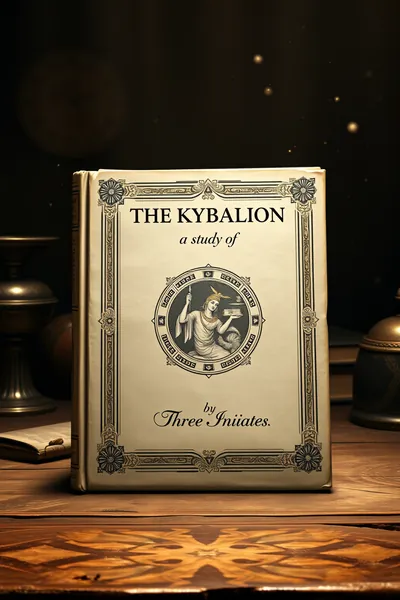
The Kybalion


By Marcus Thorne (Esoteric Sciences Reviewer) — 'The Kybalion' remains an unparalleled distillation of Hermetic wisdom, a compact yet potent guide to the foundational principles of the universe. The 'Three Initiates' masterfully translate complex metaphysical concepts into accessible language, making the arcane comprehensible without sacrificing its profundity. Its strength lies in its systematic presentation of the Seven Hermetic Principles, offering a coherent framework for understanding reality. This work is essential reading for any serious student of occultism, spirituality, or ancient philosophy, providing not just knowledge, but the very tools for self-transformation and spiritual liberation.
The Kybalion: A Study of the Hermetic Philosophy of Ancient Egypt and Greece
- Attribution
- Three Initiates
- Date
- 1908
- Tradition
- Hermeticism (New Thought reinterpretation)
- Language
- Originally written in English. Presents itself as a distillation of an older Hermetic teaching but the underlying Kybalion text is not known to be a historical document.
- Status
- Public domain (US): published 1908, pre-1929 cutoff.
Note: Published anonymously by 'Three Initiates'. Modern scholarship primarily attributes the work to William Walker Atkinson (1862–1932), an American New Thought author.
See also: Not to be confused with the historical Corpus Hermeticum, which is a separate body of much older Greek-Egyptian texts.
Editorial provenance record — bibliographic facts verified against reference works. How we curate ↗
📝 Description
75
Published in 1908, The Kybalion presents seven Hermetic principles.
Authored by the 'Three Initiates,' this 1908 book explains the core tenets of Hermetic philosophy. It distills these teachings into seven specific principles: Mentalism, Correspondence, Vibration, Polarity, Rhythm, Cause and Effect, and Gender. The authors aim to present these concepts in a clear manner for contemporary readers.
The text suggests these principles are fundamental to understanding the workings of the universe and personal development. It proposes that by grasping these laws, individuals can gain insight into the nature of reality and influence their own experiences. The book encourages a shift in how one perceives the world and their place within it.
The Kybalion is a key text within modern Hermeticism, drawing inspiration from ancient Egyptian and Greek traditions attributed to Hermes Trismegistus. It aims to synthesize and simplify these complex philosophical and spiritual ideas for a wider audience. The book's presentation of the seven principles offers a framework for understanding occult and metaphysical concepts, influencing numerous subsequent esoteric movements.
✍️ Author
Three Initiates
The Three Initiates authored The Kybalion, a foundational text of Hermetic philosophy.
Hermetic Philosopher
💡 Why Read This Book?
Embark on a transformative journey by exploring the seven core principles of Hermeticism, unlocking profound insights into the nature of reality and consciousness. 'The Kybalion' offers practical guidance for personal growth, spiritual awakening, and mastering the mind. Ideal for seekers of ancient wisdom, students of esoteric traditions, and practitioners aiming to deepen their understanding of the universe's hidden laws. This text provides a foundational map for self-discovery.
⭐ Reader Reviews
Honest opinions from readers who have explored this book.
❓ Frequently Asked Questions
What is the primary purpose of 'The Kybalion'?
Its primary purpose is to impart the fundamental teachings of Hermetic philosophy, offering a concise yet comprehensive understanding of the universe's underlying principles and their application to personal transformation and spiritual enlightenment.
Who were the 'Three Initiates'?
The 'Three Initiates' are an anonymous group who compiled and presented the core teachings of Hermeticism in 'The Kybalion.' Their identities remain a subject of speculation within esoteric circles, adding to the book's mystique.
How does 'The Kybalion' relate to Hermes Trismegistus?
'The Kybalion' is presented as a modern interpretation and distillation of the ancient teachings attributed to Hermes Trismegistus, the legendary founder of Hermetic philosophy and alchemy. It aims to make these ancient truths accessible to contemporary readers.
Are the principles in 'The Kybalion' practical or purely theoretical?
While deeply philosophical, the principles are presented with an emphasis on practical application. The book suggests that understanding and applying these laws can lead to tangible changes in one's life and perception of reality.
Is 'The Kybalion' suitable for beginners in esoteric studies?
Yes, 'The Kybalion' is highly recommended for beginners due to its clear, didactic tone and systematic presentation of complex ideas. It serves as an excellent foundational text for those new to Hermeticism and metaphysical concepts.
🔮 Key Themes & Symbolism
The Seven Hermetic Principles
The central to 'The Kybalion,' these seven principles—Mentalism, Correspondence, Vibration, Polarity, Rhythm, Cause and Effect, and Gender—form the bedrock of Hermetic philosophy. Each principle offers a unique lens through which to understand the intricate workings of the cosmos and the human psyche. They are presented not as abstract theories but as fundamental laws that govern all creation, providing a framework for comprehending the interconnectedness of all phenomena and the power of conscious awareness. Their systematic exploration reveals a profound, unified vision of existence that transcends dogma and superstition.
The Power of the Mind
Central to 'The Kybalion' is the principle of Mentalism, asserting that 'The All is Mind; the Universe is Mental.' This profound concept underscores the idea that reality is fundamentally a mental construct, and that our thoughts, beliefs, and consciousness are the architects of our experience. The book elucidates how understanding and mastering one's own mind is the key to influencing one's environment and achieving personal freedom. It encourages readers to recognize the creative power inherent within their own consciousness, offering practical pathways to harness this potent force for self-improvement and spiritual growth.
Transmutation and Transformation
'The Kybalion' is more than a philosophical treatise; it is a manual for alchemical transformation, both internal and external. By understanding and applying the Hermetic principles, particularly those of Vibration and Polarity, individuals are empowered to transmute their mental states, emotional patterns, and even their circumstances. The text suggests that through conscious effort and the application of these universal laws, one can achieve a higher state of being, moving from limitation to liberation. This emphasis on practical alchemy offers a path to self-mastery and the realization of one's highest potential.
💬 Memorable Quotes
Direct passages from the work, attributed to the author.
“As above, so below; as below, so above.”
— This iconic phrase from the Emerald Tablet highlights the principle of Correspondence, illustrating the mirroring relationship between the macrocosm and the microcosm.
“Everything flows, out and in; everything has its tides; everything has its wings.”
— This evocative line captures the essence of the Principle of Rhythm, describing the cyclical nature of existence and the constant movement and change inherent in all things.
“Cause and effect governs all.”
— This statement succinctly articulates the Principle of Cause and Effect, asserting that every cause has a corresponding effect, and that nothing happens by chance.
💡 Key Ideas
Editorial paraphrase of the work's core concepts — not direct quotes.
The lips of wisdom are closed, except to the ears of understanding.
This quote emphasizes that true wisdom is not readily available to everyone, but only to those who possess the inner receptivity and insight to comprehend it.
The principle of Mentalism...
This quote introduces the foundational concept that the universe is mental, implying that consciousness is the primary reality and the source of all phenomena.
🌙 Esoteric Significance
Tradition
The Kybalion is deeply rooted in the Hermetic tradition, a mystical and philosophical system attributed to Hermes Trismegistus. This tradition encompasses a rich body of ancient wisdom concerning alchemy, astrology, and theology, emphasizing the interconnectedness of the cosmos and the individual. It provides a framework for understanding the hidden laws of nature and the universe, and for achieving spiritual enlightenment through self-knowledge and the mastery of these principles.
Symbolism
While 'The Kybalion' is known for its direct, didactic style, it implicitly draws upon rich Hermetic symbolism. The Emerald Tablet, from which the principle of Correspondence is derived ('As above, so below'), is a foundational text. Concepts like the Philosopher's Stone (alchemical transformation) and the Caduceus (as a symbol of Hermes) are part of the Hermetic lexicon, representing the unification of opposites and the flow of cosmic energy. The book's own structure, distilling wisdom into seven principles, can be seen as a symbolic representation of completeness and divine order.
Modern Relevance
In an age often characterized by disconnection and superficiality, 'The Kybalion' offers a timeless roadmap to understanding the fundamental nature of reality and one's place within it. Its principles of Mentalism, Vibration, and Cause and Effect resonate powerfully with modern concepts in quantum physics and psychology, suggesting that consciousness plays a more active role in shaping reality than previously thought. The emphasis on personal responsibility and self-mastery remains profoundly relevant for individuals seeking to work through the complexities of modern life with greater wisdom, purpose, and inner peace.
👥 Who Should Read This Book
This key work is essential for anyone beginning a journey of spiritual or philosophical exploration. Beginners to esoteric studies will find its clear exposition of the Seven Hermetic Principles an invaluable starting point. Scholars of comparative religion and ancient philosophies will appreciate its systematic distillation of a profound tradition. Spiritual seekers yearning for a deeper understanding of the universe and their connection to it will find useful insights. Practitioners of various spiritual disciplines, from meditation to energy work, will discover practical applications for enhancing their practice and accelerating their personal growth.
📜 Historical Context
Published in 1908, 'The Kybalion' emerged during a period of intense spiritual and intellectual ferment in the Western world. The late Victorian and Edwardian eras saw a resurgence of interest in mysticism, occultism, and Eastern philosophies, fueled by a reaction against rigid materialism and a growing dissatisfaction with conventional religious dogma. Movements like Theosophy and the Hermetic Order of the Golden Dawn were popularizing esoteric concepts. 'The Kybalion' tapped into this zeitgeist, presenting ancient Hermetic wisdom in a format accessible to a burgeoning audience of seekers and scholars interested in alternative spiritual paths and the deeper mysteries of life. Its publication contributed significantly to the popularization of Hermeticism.
📔 Journal Prompts
Reflect on a recent situation where the Principle of Correspondence might have been at play. How did the 'above' (your thoughts/beliefs) manifest in the 'below' (your experience)?
Consider the Principle of Vibration. How can you consciously change your vibrational state to influence your mood, energy, or interactions?
Explore the Principle of Polarity. Identify a situation or belief where you perceive a strong dichotomy. What lies in the middle ground or the point of transcendence?
How can you apply the Principle of Cause and Effect to take greater responsibility for your current circumstances and future outcomes?
Thinking about the Principle of Mentalism, what are three core beliefs you hold about yourself or the world? How might these beliefs be shaping your reality?
🗂️ Glossary
Hermeticism
An ancient philosophical and religious tradition attributed to Hermes Trismegistus, emphasizing mystical wisdom, alchemy, astrology, and the hidden laws of the universe. It seeks understanding of the cosmos and the human soul.
Mentalism
The first Hermetic principle, stating that 'The All is Mind; the Universe is Mental.' It posits that reality is fundamentally a mental construct, and consciousness is the primary essence of existence.
Correspondence
The principle that states 'As above, so below; as below, so above.' It signifies the mirroring relationship between different planes of existence, from the microcosm to the macrocosm.
Vibration
The principle asserting that everything in the universe is in constant motion, vibrating at different frequencies. It explains how mental states and physical phenomena are expressions of varying vibrations.
Polarity
The principle that everything has two poles, two extremes, and that opposites are identical in nature but different in degree. It highlights the concept of dualities and their inherent unity.
This book appears in 1 collection
🔮 Readers Also Liked
Browse all →








More by Three Initiates
All books →



From the “Hermeticism” Collection
View all →









More Free Alchemy & Hermeticism Books
View all →