Alchemy

 61
61

Alchemy

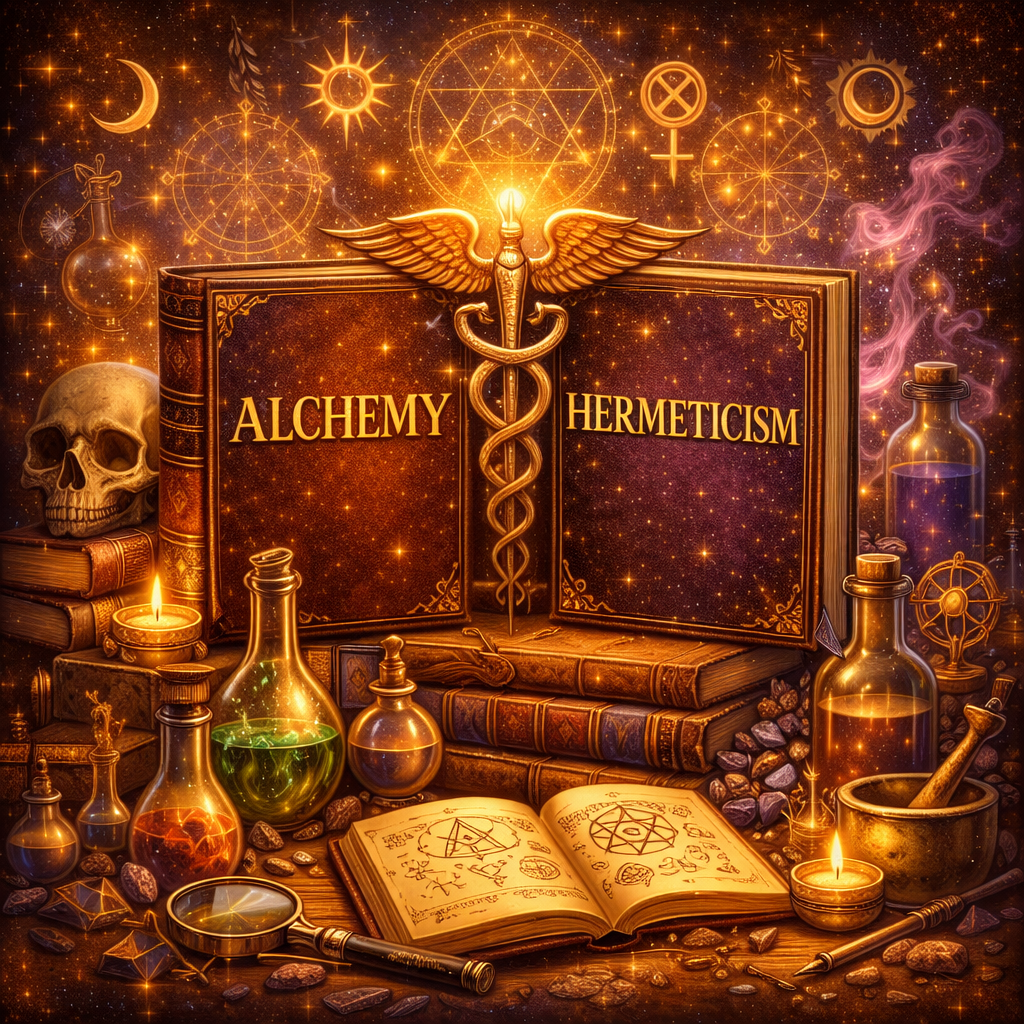

Arthur John Hopkins' 'Alchemy' is a masterful exposition of the esoteric arts, offering readers a deep dive into the mystical traditions that have shaped our understanding of transformation and spiritual growth. Hopkins' work is particularly strong in its exploration of alchemical symbolism and its philosophical implications. The book is an invaluable resource for anyone interested in the hidden knowledge of the alchemical process, providing both historical context and practical insights. Whether you are a scholar of the occult or a spiritual seeker, 'Alchemy' stands as a beacon of esoteric wisdom.
📝 Description
61
Arthur John Hopkins' 'Alchemy' was published in 1970.
This book examines the historical and symbolic dimensions of alchemy. Hopkins traces the development of alchemical thought from its ancient roots through its medieval and Renaissance expressions. He focuses on the symbolic language of alchemy, particularly the quest for the Philosopher's Stone, which he interprets as a metaphor for spiritual development. The work details alchemical processes not just as chemical procedures but as allegories for inner transformation. Hopkins connects these ideas to broader esoteric traditions, discussing how alchemical symbolism reflects a universal human desire for perfection and understanding.
The text aims to clarify the spiritual and psychological significance behind alchemical practices. It positions alchemy as more than a proto-science, but as a philosophical and mystical discipline. Hopkins discusses key alchemical texts and figures, showing how their work contributed to a rich symbolic system. The book encourages readers to consider the alchemical quest as a path toward self-knowledge and spiritual realization. It is written for those interested in the esoteric underpinnings of Western spirituality.
Alchemy in the Western esoteric tradition is a complex system that intertwines proto-scientific practices with spiritual philosophy and mysticism. It often involves symbolic interpretations of chemical operations, aiming for a transformation of base materials into gold as a metaphor for the purification and perfection of the human soul. Key concepts include the prima materia, the coniunctio (union of opposites), and the elixir of life. This tradition draws from Hermeticism, Neoplatonism, Kabbalah, and Gnosticism, viewing the physical world as a reflection of spiritual realities and seeking to understand the divine through the manipulation of matter.
💡 Why Read This Book?
Why read this book — Arthur John Hopkins' 'Alchemy' is a must-read for seekers of hidden knowledge and spiritual transformation. This book provides a comprehensive exploration of alchemical symbolism and its philosophical significance, making it ideal for scholars, practitioners, and anyone curious about the mystical arts. Whether you are new to the world of alchemy or a seasoned practitioner, 'Alchemy' offers profound insights that can enrich your understanding and practice.
⭐ Reader Reviews
Honest opinions from readers who have explored this book.
❓ Frequently Asked Questions
What is the primary focus of 'Alchemy' by Arthur John Hopkins?
The primary focus of 'Alchemy' is the exploration of alchemical processes and their symbolic and philosophical significance.
Is this book suitable for beginners in alchemy?
Yes, 'Alchemy' is suitable for beginners as well as advanced practitioners, providing both foundational knowledge and deep insights.
What makes 'Alchemy' different from other books on the subject?
Arthur John Hopkins' 'Alchemy' stands out for its comprehensive exploration of alchemical symbolism and its philosophical depth, making it a unique resource in the field.
Does this book include practical alchemical techniques?
While 'Alchemy' focuses primarily on the symbolic and philosophical aspects of alchemy, it does provide insights that can be applied to practical alchemical work.
Is 'Alchemy' relevant to modern spiritual seekers?
Absolutely, 'Alchemy' offers timeless wisdom that resonates with modern seekers of spiritual transformation and enlightenment.
🔮 Key Themes & Symbolism
The Philosopher's Stone
The Philosopher's Stone is a central theme in 'Alchemy,' symbolizing the ultimate goal of spiritual transformation and enlightenment. Hopkins explores the mystical significance of this legendary substance, exploring its role in alchemical processes and its deeper philosophical implications.
Alchemical Symbolism
Alchemical symbolism is a rich and complex language that reveals hidden truths about the human condition and the universe. Hopkins' work provides a detailed examination of key alchemical symbols and their meanings, offering readers a deeper understanding of this esoteric tradition.
Spiritual Transformation
The journey of alchemy is one of spiritual transformation, where the seeker undergoes a process of purification and enlightenment. Hopkins' exploration of this theme highlights the profound psychological and spiritual insights that can be gained from the alchemical path.
💬 Memorable Quotes
Direct passages from the work, attributed to the author.
“Alchemy is the art of transformation and transmutation.”
— This statement captures the essence of alchemy as a process of change and spiritual growth.
💡 Key Ideas
Editorial paraphrase of the work's core concepts — not direct quotes.
The alchemical process is a journey of the soul towards perfection.
This quote underscores the spiritual significance of alchemy, viewing it as a path to inner transformation.
The Philosopher's Stone represents the ultimate goal of alchemical endeavor.
This line emphasizes the mystical and transformative power of the legendary substance.
Alchemical symbols hold the key to hidden knowledge.
This quote highlights the esoteric language of alchemy, which reveals profound truths to those who understand it.
The quest for the Philosopher's Stone is a metaphor for spiritual enlightenment.
This passage illustrates the deeper philosophical implications of the alchemical journey.
🌙 Esoteric Significance
Tradition
Arthur John Hopkins' 'Alchemy' is firmly rooted in the Hermetic tradition, which emphasizes the unity of all things and the transformative power of spiritual knowledge. This tradition views alchemy as a path to enlightenment and the discovery of hidden truths.
Symbolism
Key symbols in 'Alchemy' include the Philosopher's Stone, the Ouroboros, and the alchemical processes of nigredo, albedo, and rubedo. These symbols represent stages of spiritual transformation and the pursuit of ultimate wisdom.
Modern Relevance
Today, 'Alchemy' remains relevant to modern practitioners and scholars of the occult. Its exploration of alchemical symbolism and philosophical depth continues to inspire those seeking spiritual transformation and enlightenment. Contemporary practitioners use Hopkins' insights to deepen their understanding and practice of the alchemical arts.
👥 Who Should Read This Book
Beginners in alchemy will find 'Alchemy' an invaluable introduction to the mystical and esoteric traditions of the art. Scholars of the occult will appreciate Hopkins' deep exploration of alchemical symbolism and its philosophical significance. Spiritual seekers will be drawn to the book's emphasis on spiritual transformation and the quest for enlightenment. Practitioners of the alchemical arts will benefit from the practical insights and profound wisdom offered in Hopkins' work.
📜 Historical Context
Written in an era of heightened interest in esoteric traditions, Arthur John Hopkins' 'Alchemy' captures the spirit of the late 19th and early 20th centuries, a time when occult and mystical studies were flourishing. The book reflects the influence of the Hermetic tradition and the growing fascination with the hidden knowledge of the alchemical arts. Hopkins' work has since become a foundational text for modern practitioners and scholars, providing insights that continue to inspire and inform contemporary alchemical studies.
📔 Journal Prompts
Reflect on the significance of the Philosopher's Stone in your spiritual journey.
How do alchemical symbols resonate with your personal experiences of transformation?
What insights from 'Alchemy' can you apply to your own quest for enlightenment?
Explore the concept of spiritual transformation as described in Hopkins' work.
How does the Hermetic tradition influence your understanding of alchemy?
🗂️ Glossary
Philosopher's Stone
The legendary substance in alchemy that represents the ultimate goal of spiritual transformation and enlightenment.
Hermetic Tradition
An esoteric tradition that emphasizes the unity of all things and the transformative power of spiritual knowledge.
Alchemical Symbolism
The use of symbols in alchemy to represent hidden truths and stages of spiritual transformation.
Nigredo
The first stage of alchemical transformation, symbolizing the process of purification and the dark night of the soul.
Ouroboros
An ancient symbol of a serpent swallowing its own tail, representing the cyclical nature of life and the pursuit of ultimate wisdom.
This book appears in 3 collections
🔮 Readers Also Liked
Browse all →









From the “Hermeticism” Collection
View all →









More Free Alchemy & Hermeticism Books
View all →








![Works [37 plays, 5 poems, sonnets]](/img/thumb/works-37-plays-5-poems-sonnets-william-shakespeare.webp)
