The lure and romance of alchemy

 81
81

The lure and romance of alchemy
C. J. S. Thompson’s 'The Lure and Romance of Alchemy' offers a commendable overview of a subject often shrouded in mystification. The book succeeds admirably in demystifying the core concepts, presenting the historical trajectory of alchemy from its ancient roots to its influence on early modern science. Thompson’s strength lies in his clear enumeration of alchemical principles and processes, such as the tria prima of sulfur, mercury, and salt, which he explains without undue jargon. However, the work occasionally feels more like a historical survey than an exploration of the 'romance' hinted at in its title. While it details the mechanics and historical figures, the deeper psychological or spiritual resonance for the modern practitioner remains somewhat understated. A particularly effective section details the symbolic transformation of metals, linking it to the aspirant's inner journey. Overall, Thompson provides a solid, fact-based introduction for the uninitiated.
📝 Description
81
C. J. S. Thompson's 'The Lure and Romance of Alchemy' was first published in 1987.
This book examines alchemy not just as a pursuit of gold, but as a complex philosophical system. Thompson moves past common misunderstandings to detail the alchemical quest for the Philosopher's Stone and the Elixir of Life. He explains these were often symbolic goals, representing spiritual transformation and perfection rather than literal outcomes. The work traces alchemy's historical development and its conceptual roots.
Thompson's writing suits those interested in the history of science and spiritual inquiry. It provides context for Western esotericism and occult traditions, showing how early natural philosophers thought. Readers seeking the origins of modern chemistry or the symbolic language found in older spiritual systems will find this exposition valuable. It is especially useful for students of comparative religion or the history of science.
Published in 1987, Thompson's work engaged with a late 20th century resurgence of interest in esoteric subjects. At a time when mainstream science had largely dismissed alchemy, this book presented a scholarly yet accessible account of alchemical practices and theories. It connects historical alchemy, from antiquity through the Renaissance, with ongoing esoteric traditions and modern understanding.
💡 Why Read This Book?
• Gain a foundational understanding of alchemical terminology and historical progression, distinguishing between practical laboratory work and its symbolic interpretations as presented in the text, particularly concerning the Magnum Opus. • Discover the historical connections between alchemy and early chemistry, learning how figures like Robert Boyle engaged with alchemical ideas in the 17th century, as outlined in the book's historical context. • Grasp the spiritual and philosophical dimensions of alchemy, understanding how concepts like the Philosopher's Stone represented not just material wealth but inner perfection and spiritual attainment.
⭐ Reader Reviews
Honest opinions from readers who have explored this book.
❓ Frequently Asked Questions
What is the primary goal of alchemy as described by C. J. S. Thompson?
Thompson explains that alchemy's primary goal, the Great Work or Magnum Opus, involved both the transmutation of base metals into gold and the creation of the Elixir of Life for longevity and health, symbolizing spiritual perfection.
When was 'The Lure and Romance of Alchemy' first published?
The book 'The Lure and Romance of Alchemy' by C. J. S. Thompson was first published in 1987.
Does the book focus only on the spiritual aspects of alchemy?
No, the book explores both the practical laboratory aspects, the historical development of alchemical theories, and their profound philosophical and spiritual interpretations.
Who would benefit most from reading this book?
Students of esoteric history, comparative religion, the history of science, and anyone curious about the philosophical underpinnings of early chemistry and Western mystical traditions would find it beneficial.
What are some key alchemical concepts mentioned in the book?
Key concepts include the prima materia, the tria prima (sulfur, mercury, salt), the four elements, and the symbolic processes of the Great Work like calcination and distillation.
Is 'The Lure and Romance of Alchemy' suitable for absolute beginners?
Yes, the book is written to be accessible to beginners, providing a clear and structured introduction to the complex field of alchemy without requiring prior specialized knowledge.
🔮 Key Themes & Symbolism
The Great Work
The central pursuit of alchemy, the Main work, is thoroughly examined. Thompson details its dual aim: the material transmutation of base metals into gold and the spiritual transformation of the alchemist. This process is presented not as a mere chemical experiment but as a profound allegory for achieving inner perfection and union with the divine, reflecting a core Hermetic principle of correspondence between the macrocosm and microcosm.
Alchemical Symbolism and Language
Thompson deciphers the rich symbolic language of alchemy, explaining the significance of figures, processes, and substances. From the prima materia representing undifferentiated potential to the symbolic roles of sulfur, mercury, and salt, the book elucidates how alchemists encoded their understanding of nature and spirit. This symbolic vocabulary formed a crucial part of the esoteric tradition, allowing practitioners to communicate profound ideas across generations.
Alchemy's Historical Trajectory
The work traces alchemy's evolution from its Hellenistic Egyptian and Arabian roots through its flourishing in medieval and Renaissance Europe. It highlights alchemy's complex relationship with early science, acknowledging its contributions to chemical knowledge while distinguishing it from empirical scientific methodology. Thompson positions alchemy as a vital precursor to modern chemistry, deeply embedded in the intellectual currents of its time.
Spiritual and Philosophical Underpinnings
Beyond the laboratory, Thompson explores the philosophical and spiritual dimensions that informed alchemical practice. He discusses how alchemists viewed their work as a path to spiritual enlightenment, purification, and the attainment of gnosis. This spiritual quest intertwined with Neoplatonic, Gnostic, and Hermetic philosophies, shaping alchemy into a holistic discipline concerned with both the material and the divine.
💬 Memorable Quotes
Direct passages from the work, attributed to the author.
“The alchemist sought not only the transmutation of metals but also the perfection of his own soul.”
— This captures the dual nature of the alchemical quest, emphasizing that the external process of creating gold was intrinsically linked to the internal spiritual development of the practitioner.
“Alchemy provided a symbolic language for understanding the hidden forces of nature and the divine.”
— This highlights alchemy's role as a philosophical system and a method of spiritual inquiry, using allegorical language to describe cosmic principles and the human condition.
“The Philosopher's Stone represented the ultimate goal of both material and spiritual attainment.”
— This points to the many-sided symbolism of the Stone, signifying not just a means to wealth but the achievement of perfect knowledge, spiritual enlightenment, and immortality.
“Early chemical discoveries were often intertwined with alchemical experimentation.”
— This acknowledges the historical reality that many foundational advancements in chemistry emerged from the practical endeavors of alchemists, bridging ancient wisdom with emerging scientific understanding.
“The processes of alchemy, such as calcination and distillation, were seen as mirroring stages of spiritual purification.”
— This illustrates the allegorical application of laboratory techniques, where physical operations were interpreted as symbolic steps in the alchemist's journey toward spiritual refinement and perfection.
🌙 Esoteric Significance
Tradition
This work primarily aligns with the Hermetic tradition, exploring the philosophical and practical aspects of alchemy as a path toward spiritual and material perfection. It fits within the broader Western esoteric lineage that includes Neoplatonism, Kabbalah, and later Theosophy, by demonstrating alchemy's foundational role in shaping these interconnected systems of thought.
Symbolism
Key symbols include the Philosopher's Stone, representing ultimate perfection, spiritual enlightenment, and the successful completion of the Great Work; and the Elixir of Life, symbolizing immortality and perfect health. The processes described, such as calcination and distillation, are imbued with meaning, representing stages of purification and refinement for both matter and spirit.
Modern Relevance
Contemporary practitioners of Western esotericism, including those in Hermetic orders and students of comparative mysticism, continue to draw on foundational texts like Thompson's for understanding alchemy's historical context and symbolic depth. It informs modern approaches to psychological alchemy and provides a historical anchor for spiritual disciplines focused on transformation and self-realization.
👥 Who Should Read This Book
• Aspiring practitioners of Western esotericism seeking a clear historical and conceptual framework for understanding alchemy's role within traditions like Hermeticism. • Students of the history of science interested in the transition from ancient philosophical systems to early modern chemistry and the intellectual currents of the Renaissance. • Readers curious about the symbolic language of mystical traditions, looking to decode the allegorical meanings behind alchemical processes and materials.
📜 Historical Context
Published in 1987, 'The Lure and Romance of Alchemy' emerged during a period of resurgence for esoteric studies, following decades of skepticism from mainstream academia. The work situates itself within the lineage of scholarship that sought to understand alchemy not merely as pseudoscience but as a complex philosophical and proto-scientific tradition. It engages with the intellectual climate shaped by figures like Carl Jung, whose psychological interpretations of alchemical symbolism had gained traction. Thompson's book provides a historical survey that contrasts with purely psychological readings, grounding the practice in its historical manifestations from Hellenistic Egypt through the European Renaissance. While specific reception details for this 1987 edition are not widely documented, it contributed to a broader academic effort to integrate esoteric traditions into the history of Western thought, alongside figures like Frances Yates who explored Hermeticism's influence on the Renaissance.
📔 Journal Prompts
The dual quest for material gold and spiritual perfection: how does this dichotomy manifest in your own pursuits?
Reflect on the symbolic meaning of the Prima Materia in relation to your own initial stages of learning or creation.
Consider the alchemical process of Calcination; what aspects of yourself might require 'burning away' for purification?
How does the concept of the Main work as a holistic transformation influence your understanding of personal growth?
Explore the historical relationship between alchemical experimentation and the development of early chemical knowledge.
🗂️ Glossary
Prima Materia
The fundamental, undifferentiated substance from which all other matter is believed to be derived in alchemical theory. It represents pure potentiality before creation.
Main work
The Great Work, referring to the alchemical process of creating the Philosopher's Stone. It encompasses both the physical transmutation of metals and the spiritual transformation of the alchemist.
Philosopher's Stone
A legendary alchemical substance said to be capable of transmuting base metals into gold and silver, and of producing the Elixir of Life.
Elixir of Life
A mythical potion that alchemists sought to create, believed to grant longevity, health, and immortality.
Tria Prima
The three fundamental principles of Paracelsus: Sulfur (spirit/soul), Mercury (mind/consciousness), and Salt (body/matter), which were believed to constitute all substances.
Calcination
An alchemical process involving heating a substance to a high temperature to drive off volatile components, often interpreted as a process of purification or spiritual burning.
Distillation
An alchemical process of heating a liquid to vaporize it and then condensing the vapor back into a liquid, symbolizing separation and refinement.
🔮 Readers Also Liked
Browse all →








More by C. J. S. Thompson
All books →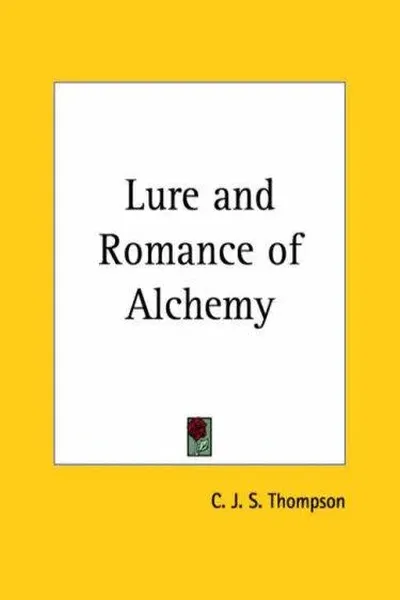




More Free Alchemy & Hermeticism Books
View all →