The vision & the voice
 76
76

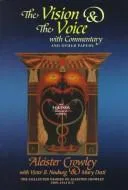
The vision & the voice
The unvarnished transcription of Crowley and Neuburg's 1918 desert experiences in *The Vision & The Voice* offers a stark contrast to the polished theoretical works often found in occult literature. The raw, almost brutal, honesty of the visionary accounts, particularly the descent into the 'Babalon-Undine' current, is its signal strength. It provides an unfiltered glimpse into the subjective mechanics of high ceremonial magic. However, the dense, often idiosyncratic, language and the reliance on prior knowledge of Crowley's system can present a significant barrier to entry. A passage describing the encounter with the "Great Serpent" serves as a potent example of the text's challenging yet revelatory power, demanding considerable interpretive effort. It is a vital, if demanding, document for understanding the experiential core of Thelema.
📝 Description
76
Aleister Crowley and Victor B. Neuburg recorded visionary experiences in the Algerian desert in 1918.
The Vision & The Voice documents a series of magical operations undertaken by Aleister Crowley and Victor B. Neuburg in 1918, primarily in the Algerian desert. This work is not a theoretical treatise but a record of subjective experiences, ecstatic utterances, and visionary encounters. It comprises the "Vision" of the Book of the Law's final chapter and the "Voice" of the angelic being Aiwass, as interpreted and transcribed by Crowley. The text presents a raw, unvarnished account of the quest for direct knowledge of the divine, charting the descent into the subconscious and ascent into altered states of consciousness.
This text is intended for serious students of ceremonial magic and the Western Esoteric Tradition, particularly those interested in the practical application of Crowley's magical system. It appeals to researchers of comparative mysticism, occult history, and the psychological dimensions of spiritual exploration. Individuals seeking to understand the experiential basis of esoteric doctrines, rather than purely academic or historical accounts, will find its direct, often challenging, narrative appealing. It is not a primer for the uninitiated but a continuation for those already familiar with Crowley's broader philosophy.
Published in 1972, The Vision & The Voice records events from 1918, a period of intense occult revival influenced by figures like Helena Blavatsky and the Hermetic Order of the Golden Dawn. Crowley's unique synthesis of Thelemic philosophy, ritual magic, and personal visionary experience distinguished him from contemporaries. The work emerged during a period following his establishment of the O.T.O. and A∴A∴ orders, marking a significant moment in his magical career.
💡 Why Read This Book?
• Understand the direct, unmediated experience of ceremonial magic as practiced by Aleister Crowley and Victor Neuburg during their 1918 Algerian expedition, moving beyond theoretical discussions of ritual. • Grasp the concept of the "Knowledge and Conversation of the Holy Guardian Angel" through the lens of Crowley's personal quest, a central pursuit in his magical system. • Engage with the symbolic language and visionary encounters documented in the text, offering a unique window into the psychological and spiritual landscape of early 20th-century occultism.
⭐ Reader Reviews
Honest opinions from readers who have explored this book.
❓ Frequently Asked Questions
What is the significance of the 'Voice' in 'The Vision & The Voice'?
The 'Voice' refers to the pronouncements and messages received by Aleister Crowley and Victor Neuburg during their 1918 magical operations, notably the entity Aiwass, who is considered the messenger of the Book of the Law.
Where did the 1918 magical operations documented in the book take place?
The primary operations detailed in *The Vision & The Voice* occurred in the Algerian desert, specifically near Bou-Saada, during the spring of 1918.
Who were the main participants in the events described?
The central figures are Aleister Crowley, the primary scribe and interpreter, and Victor B. Neuburg, who acted as the magical assistant and underwent significant visionary experiences.
Is 'The Vision & The Voice' related to Crowley's Book of the Law?
Yes, it is directly related. The 'Vision' part of the title refers to the final chapter of the Book of the Law, which Crowley received in 1904, and this work documents a subsequent attempt to understand and enact its principles.
What is the role of Mary Desti in relation to this book?
Mary Desti was the wife of Leah Furcifer (a pseudonym used by Leah Hadden) and assisted Crowley and Neuburg during their operations, acting as a witness and participant in some aspects of the ritual.
When was 'The Vision & The Voice' first published?
Although the events described took place in 1918, *The Vision & The Voice* was first published much later, in 1972, by the University Books edition.
🔮 Key Themes & Symbolism
The Holy Guardian Angel
The pursuit of the Knowledge and Conversation of the Holy Guardian Angel (K&C of HGA) is a foundational element. This involves a direct, personal communion with one's higher genius or divine aspect. The work chronicles the arduous path towards achieving this union, detailing the internal struggles, ecstatic visions, and profound revelations that accompany such an undertaking within the framework of ceremonial magic and Thelemic philosophy.
Enochian Magic
The text extensively incorporates elements of the Enochian system, derived from the angelic communications of John Dee. Crowley and Neuburg utilize these angelic calls and table of correspondences as a framework for their magical operations in the Algerian desert. The book provides a practical, albeit highly subjective, account of how these ancient angelic invocations can be employed to induce visionary states and interact with non-physical intelligences.
Thelemic Doctrine
As a product of Aleister Crowley's mature thought, *The Vision & The Voice* is deeply imbued with Thelemic principles, particularly the Law of Thelema: 'Do what thou wilt shall be the whole of the Law.' It explores the practical manifestation of these tenets, showing how ritual and vision can lead to self-realization and the alignment with one's True Will, distinguishing it from earlier esoteric systems.
Visionary Experience
The book is fundamentally a record of ecstatic and visionary states. It documents the subjective experiences of altered consciousness, apparitions, and symbolic encounters. The raw, often chaotic, nature of these visions highlights the psychological intensity of the magical work, presenting a challenge to conventional understanding of reality and consciousness.
💬 Memorable Quotes
Direct passages from the work, attributed to the author.
“The attainment of the Knowledge and Conversation of the Holy Guardian Angel.”
— This phrase expresses the supreme goal of many Western esoteric traditions, representing a direct, personal union with one's divine self or higher intelligence, as sought by Crowley and Neuburg.
“The invocations of the Enochian Calls.”
— These are ancient angelic languages and invocations, purportedly received by John Dee, which Crowley and Neuburg employed in their desert rituals to achieve contact with spiritual entities.
“The desert as a crucible for spiritual purification.”
— The harsh, isolating environment of the Algerian desert served as a potent backdrop and tool for the magical operations, stripping away the mundane and intensifying the focus on spiritual and visionary pursuits.
“The nature of Aiwass as messenger.”
— This refers to the entity Aiwass, credited by Crowley with delivering the Book of the Law in 1904, whose voice and messages are central to the visionary experiences documented in this work.
“The descent into the Infernal or Subconscious.”
— This concept describes the intentional journey into the darker, often repressed aspects of the psyche, a necessary stage in many magical systems for achieving wholeness and understanding.
🌙 Esoteric Significance
Tradition
This work is firmly rooted in the Western Esoteric Tradition, specifically Aleister Crowley's Thelemic system, which synthesizes elements of Hermeticism, Kabbalah, Gnosticism, and Tantra. It represents a practical application of the magical theories outlined in earlier texts like *Magick in Theory and Practice*, focusing on direct experiential attainment rather than purely theoretical discourse.
Symbolism
Key symbols include the desert landscape, representing isolation and spiritual trial; the figure of Aiwass, the divine messenger; and the Enochian script, signifying communication with angelic realms. The visions themselves often involve archetypal figures and potent imagery that serve as symbolic maps of the inner journey toward self-realization.
Modern Relevance
Contemporary practitioners of ceremonial magic, particularly those within Thelemic lineages, continue to study *The Vision & The Voice* for its insights into ritual practice and altered states. Its documentation of intense visionary experiences also appeals to those exploring transpersonal psychology and the phenomenological aspects of consciousness and spirituality.
👥 Who Should Read This Book
• Students of Aleister Crowley's magical system and Thelemic philosophy seeking primary source material on his practical workings. • Researchers of 20th-century occultism and comparative mysticism interested in experiential accounts of ritual magic. • Advanced practitioners of ceremonial magic looking to understand the subjective challenges and potential rewards of deep magical operations.
📜 Historical Context
The events recorded in *The Vision & The Voice* took place in 1918, a period when Aleister Crowley was solidifying his personal magical system, Thelema, and leading the Ordo Templi Orientis (O.T.O.) and the Astrum Argenteum (A∴A∴). This era was marked by a fervent interest in spiritualism and occultism, influenced by figures like Helena Blavatsky and the Theosophical Society, and the earlier work of John Dee. Crowley’s combination of ritual magic, Eastern philosophy, and his controversial Book of the Law set him apart. His contemporaries, such as Dion Fortune, were also exploring occult themes, though often with a more psychological or Jungian bent that emerged later. The publication of *The Vision & The Voice* itself in 1972, long after the events, reflects the esoteric nature of the material and the delayed reception of Crowley’s more extreme practical works.
📔 Journal Prompts
The invocations of the Enochian Calls: how might their structure inform a personal meditative practice?
The symbolism of Aiwass: what qualities does this messenger represent in your own spiritual quest?
The desert as a crucible: reflect on environments that have tested or purified your resolve.
The ascent to the K&C of HGA: what internal barriers must be overcome for such a connection?
The nature of the 'Voice': consider instances where guidance felt external yet deeply personal.
🗂️ Glossary
Aiwass
The entity identified by Aleister Crowley as the minister-plenipotentiary of the god Hoor-par-kraat, who delivered the Book of the Law to him in Cairo in 1904.
Book of the Law
The sacred text of Thelema, dictated to Aleister Crowley by Aiwass in 1904. Its central tenet is 'Do what thou wilt'.
Enochian Magic
A complex system of magic based on angelic communications purportedly received by John Dee and Edward Kelley in the late 16th century.
Holy Guardian Angel (HGA)
In the A∴A∴ system, the HGA represents the highest spiritual aspect of an individual, the divine genius, with whom union is the primary magical goal.
Thelema
The philosophical, religious, and magical system founded by Aleister Crowley, based on the Book of the Law.
True Will
The fundamental purpose or destiny of an individual, as revealed through spiritual practice and alignment with the principles of Thelema.
Vision
In this context, refers to subjective experiences of altered consciousness, symbolic apparitions, and direct spiritual perception during magical operations.
🔮 Readers Also Liked
Browse all →








More Free Alchemy & Hermeticism Books
View all →