The Little Prince
 83
83

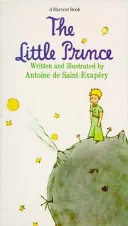
The Little Prince
The Little Prince is a curious artifact, masquerading as a simple children's book while posing profound questions about existence. Its enduring appeal, despite being first published in 1943, lies in its deceptively straightforward narrative. The aviator's encounter with the prince in the Sahara Desert serves as a fertile ground for exploring adult disillusionment and the forgotten wisdom of childhood. One particular strength is the depiction of the various planet dwellers – the king without subjects, the conceited man, the drunkard – each a sharp, albeit gentle, satire of human foibles. However, the book's allegorical nature can sometimes feel overly didactic, especially for younger readers, where the symbolism might not fully land. The concept of 'taming' a fox, while beautifully articulated as a metaphor for building relationships, can be interpreted through various lenses, highlighting its layered meaning. It’s a work that demands a second reading in adulthood to fully appreciate its melancholic beauty and critical commentary on societal values.
📝 Description
83
Antoine de Saint-Exupéry's 1943 novella questions adult obsessions with numbers and power.
Stranded in the Sahara, an aviator meets a young prince from asteroid B-612. The prince recounts visits to other small planets, each ruled by a solitary, often irrational, adult. These encounters serve as allegorical critiques of adult preoccupations with status, material wealth, and empty authority.
The narrative contrasts the unclouded perception of childhood with the rigid conventions of adult society. Saint-Exupéry emphasizes the value of genuine relationships, love, and the ability to perceive essential truths beyond superficial appearances. The prince’s experiences highlight the isolation and absurdity that can result from lives governed solely by logic or self-interest.
While not overtly occult, 'The Little Prince' functions allegorically within esoteric traditions by examining the corruption of innate wisdom through societal conditioning. It critiques a materialist worldview that prioritizes quantifiable metrics over qualitative experience and emotional connection. The prince's innocent perspective serves as a foil to the 'grown-ups'' rationalizations, suggesting a lost understanding of deeper realities that esoteric philosophy often seeks to recover.
💡 Why Read This Book?
• Understand the esoteric concept of 'taming' as a metaphor for genuine relationship building, as exemplified by the fox's interaction with the prince on Earth. • Grasp the critique of adult obsessions with material wealth and status, illustrated by the businessman counting stars from his asteroid, a symbol of pointless accumulation. • Reconnect with the importance of imagination and seeing beyond the superficial, a core tenet of many mystical traditions, as championed by the prince's perspective.
⭐ Reader Reviews
Honest opinions from readers who have explored this book.
❓ Frequently Asked Questions
Is 'The Little Prince' a public domain book?
No, 'The Little Prince' is not in the public domain in the United States. It was first published in 1943 and its copyright is still protected.
What is the significance of the rose in 'The Little Prince'?
The rose represents love, vanity, and the complexities of relationships. The prince's journey is partly motivated by his desire to understand his feelings for his demanding yet beautiful rose on his home planet, asteroid B-612.
Who is the author of 'The Little Prince'?
The author is Antoine de Saint-Exupéry, a French writer, poet, aristocrat, journalist, and pioneering aviator.
What does the snake symbolize in 'The Little Prince'?
The snake, encountered in the Sahara, symbolizes mortality and the return to the earth. Its ability to send the prince back to his planet through its venom is a darkly poetic interpretation of death and transcendence.
Why did the aviator crash in the Sahara Desert?
The aviator's plane experienced mechanical failure, forcing him to crash-land in the Sahara Desert. This unexpected isolation becomes the catalyst for his profound encounter with the Little Prince.
What is the central message of 'The Little Prince'?
The central message revolves around the importance of love, friendship, imagination, and seeing with the heart rather than just the eyes, critiquing the superficial values often embraced by adults.
🔮 Key Themes & Symbolism
The Illusion of Adult Values
The work systematically deconstructs the preoccupations of adult society through the prince's encounters. The king desires dominion over nothing, the conceited man craves unearned admiration, and the businessman obsessively counts stars he cannot use. These figures represent the esoteric understanding that true value lies not in external validation or material possessions, but in inner states of being and genuine connection. The book suggests that adulthood often involves a spiritual myopia, a failure to perceive what is truly essential.
The Nature of True Connection
The relationship between the prince and his rose, and later with the fox, explores the esoteric principle that bonds are forged through time, effort, and vulnerability. The fox's lesson on 'taming'—creating ties—is central. It posits that true affection requires patience and mutual understanding, transforming the ordinary into the unique. This contrasts sharply with the superficial interactions and possessiveness often mistaken for love in the adult world, advocating for a Gnostic appreciation of authentic spiritual bonds.
Seeing with the Heart
The famous line, 'What is essential is invisible to the eye,' captures a core tenet found across many mystical traditions. The Little Prince teaches that perception is not merely a physical act but a spiritual one. The prince's ability to see the beauty in the fox, the uniqueness of his rose, and the true nature of things stems from an inner vision. This concept challenges the materialist worldview, suggesting that true understanding and wisdom come from intuition and emotional intelligence, a hallmark of esoteric thought.
Responsibility and Care
The prince's profound sense of responsibility for his rose, despite her difficult nature, highlights the esoteric duty of care that arises from creating connections. His journey is partly a quest to understand this burden and its accompanying love. This theme reflects the Hermetic principle of 'as above, so below,' where microcosmic relationships reflect macrocosmic order. The commitment to one's unique creations, whether a planet, a rose, or a bond, is presented as a fundamental aspect of spiritual maturity.
💬 Memorable Quotes
Direct passages from the work, attributed to the author.
“All grown-ups were once children—although few of them remember it.”
— This highlights the loss of innocence and imaginative capacity that often accompanies the transition to adulthood. It suggests that a connection to one's inner child is vital for maintaining perspective and accessing deeper truths.
“It is the time you have wasted for your rose that makes your rose so important.”
— This emphasizes the value of invested time and emotional energy in relationships. It posits that the effort and care we put into another being are what truly create their significance and our love for them.
“You become responsible, forever, for what you have tamed.”
— This principle underscores the sacred bond formed through connection and care. It speaks to the ethical and spiritual implications of building relationships, asserting that we have an enduring duty to those we have nurtured.
“What is essential is invisible to the eye.”
— A central to the book's philosophy, this concept urges readers to trust intuition and inner perception over mere physical observation. It aligns with esoteric traditions that prioritize spiritual sight and understanding over empirical data.
💡 Key Ideas
Editorial paraphrase of the work's core concepts — not direct quotes.
What makes the desert beautiful is that somewhere it hides a well.
This line speaks to the esoteric belief that apparent emptiness or desolation often conceals profound sources of life, wisdom, or spiritual sustenance. It encourages looking beyond the surface to find hidden meaning and hope.
🌙 Esoteric Significance
Tradition
While not overtly belonging to a single esoteric lineage, "The Little Prince" aligns strongly with Gnostic and Hermetic principles. Its emphasis on the invisible, the importance of inner sight over material perception, and the critique of a world obsessed with superficialities echo Gnostic ideas of spiritual awakening and the rejection of worldly illusions. The Hermetic ideal of understanding the cosmos through introspection and recognizing the interconnectedness of all things is also present, particularly in the prince's responsibility for his rose and planet.
Symbolism
The **rose** symbolizes the beloved, the unique individual that requires care and understanding, often representing the soul or a specific spiritual connection that can be both beautiful and demanding. The **snake** represents mortality and the transition between states of being; its venom offers a return to the spiritual realm, a concept found in alchemical symbolism of transformation through death. The **stars** represent distant aspirations, the infinite, and the often-misunderstood concept of ownership, highlighting the difference between true value and possessiveness.
Modern Relevance
Contemporary spiritual seekers and philosophers often draw on "The Little Prince" for its accessible articulation of complex ideas. Mindfulness practitioners and those interested in conscious relationships find resonance in the concepts of 'taming' and responsibility. Its critique of consumerism and superficiality remains potent in an age of digital distraction, making it relevant to modern discussions on authenticity, intentional living, and the search for deeper meaning beyond material pursuits.
👥 Who Should Read This Book
• Aspiring mystics and philosophers: Those beginning their journey into esoteric thought will find clear, allegorical representations of core principles like inner vision and the nature of reality. • Artists and creatives: Individuals seeking inspiration for understanding the creative process and the importance of nurturing unique ideas, much like the prince nurtures his rose. • Those questioning societal norms: Readers disillusioned with materialism and superficiality will appreciate the book's gentle yet firm critique and its call to prioritize genuine connection and inner value.
📜 Historical Context
Published in 1943, Antoine de Saint-Exupéry's "The Little Prince" emerged during World War II, a period ripe with existential anxieties and a search for meaning. The work's gentle allegory and critique of adult materialism offered a stark contrast to the prevailing atmosphere of conflict and destruction. Saint-Exupéry, an aviator whose own experiences informed his writing, was part of a literary generation grappling with disillusionment. While often compared to fables, its philosophical depth places it alongside works that explored the human condition, such as Albert Camus' "The Stranger" (1942), though "The Little Prince" offered a more hopeful, albeit melancholic, perspective. Its initial release in New York, in both French and English, reached an audience seeking solace and introspection amidst global turmoil. Despite its whimsical tone, the book was received with seriousness by critics recognizing its allegorical weight.
📔 Journal Prompts
The businessman's counting of stars versus the prince's appreciation.
The fox's definition of 'taming' and its application to relationships.
The aviator's perspective shift after encountering the prince.
Your personal 'rose' and the responsibility it entails.
The contrast between adult preoccupations and childhood wonder.
🗂️ Glossary
Asteroid B-612
The small home planet of the Little Prince. It symbolizes a personal microcosm, a unique world that requires individual care and attention from its inhabitant.
Taming
The process of establishing ties and creating meaningful connections with another being through patience, ritual, and mutual understanding, transforming the ordinary into the unique.
The Rose
A unique flower on the prince's planet, representing love, vanity, and the complexities of relationships. Her demanding nature challenges the prince and prompts his journey.
The Fox
A wise creature who teaches the prince about the importance of 'taming' and the nature of true friendship and responsibility.
Seeing with the Heart
The ability to perceive the essential truths and beauty of things that are not apparent to the physical eye, relying on intuition and emotional understanding.
The Well
A symbol of hidden life, spiritual sustenance, and the source of hope that can be found even in barren or desolate circumstances, like the Sahara Desert.
The Snake
Represents mortality and the transition between worlds. Its venom offers a path back to the spiritual realm, a form of release or transcendence.
This book appears in 1 collection
🔮 Readers Also Liked
Browse all →








From the “Self-Realization” Collection
View all →




More Free Occult Philosophy Books
View all →