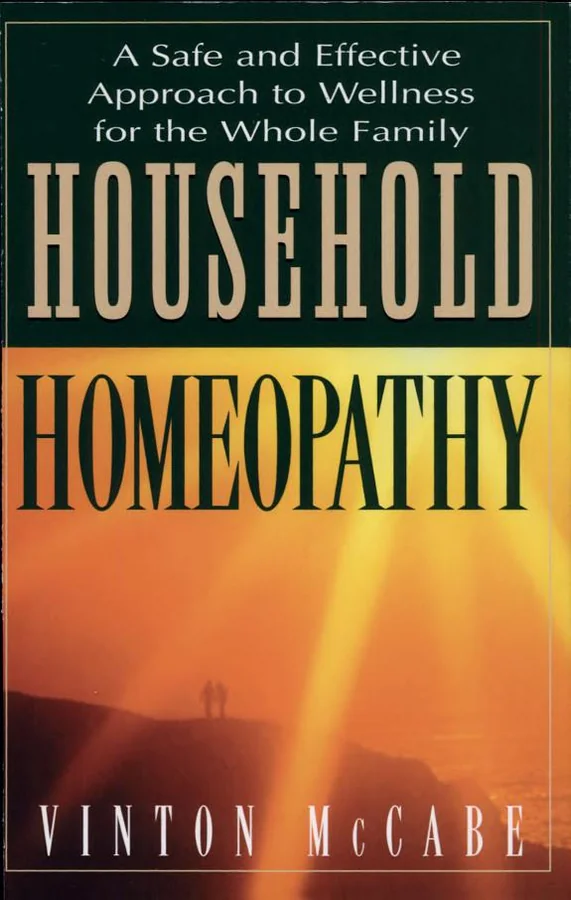
Household Homeopathy
 75
75

Household Homeopathy
Vinton McCabe's "Household Homeopathy" presents a clear exposition of its subject, grounding the reader in the foundational tenets of this alternative medical system. The strength of the book lies in its accessible explanation of complex ideas, particularly the 'law of similars' and the holistic perspective on health. McCabe effectively bridges the gap between theoretical principles and practical application, making the practice seem less esoteric than its reputation might suggest. However, the work could benefit from a more critical engagement with the scientific evidence or lack thereof surrounding homeopathic dilutions, a common point of contention for skeptics and practitioners alike. A particularly illuminating section discusses the individualized nature of remedy selection, emphasizing that symptom presentation is key. While thorough for its intended audience, the book remains firmly within the homeopathic paradigm without significant external critique. It offers a solid introduction for the curious layperson.
📝 Description
75
Vinton McCabe's Household Homeopathy (1998) details applying homeopathic principles within a home.
Household Homeopathy introduces the practice of homeopathy for use in a domestic setting. The book explains the core idea of treating like with like, employing highly diluted substances to encourage the body's natural healing processes. It presents homeopathy's view of individuals as whole beings, where physical, mental, and spiritual states are linked to symptoms and their remedies.
This text is for anyone interested in alternative health methods. It serves as a guide for understanding homeopathy's basics for personal or family health, offering practical advice. The book is especially helpful for newcomers to homeopathy who want a clear, uncomplicated introduction without dense technical language. It covers the historical development of homeopathy, starting with Samuel Hahnemann's work in the late 18th century and its spread through the 19th century.
Key concepts discussed include the law of similars, 'like cures like,' and the potentization process involving dilution and succussion. McCabe emphasizes tailoring treatments to the individual, acknowledging that each person's experience of illness is unique. The holistic perspective, viewing mind and body as connected parts of a single system needing balance, is also a central focus.
Household Homeopathy sits within the broader tradition of vitalistic and energetic healing systems that emerged in the late 18th and 19th centuries. These systems, often developing outside mainstream medical establishments, posit an underlying life force or vital energy that governs health. Homeopathy, as developed by Samuel Hahnemann, is a prime example of this, focusing on stimulating this vital force through highly diluted remedies. The book's focus on the interconnectedness of physical, mental, and spiritual well-being aligns with other esoteric philosophies that see the human being as a unified energetic entity.
💡 Why Read This Book?
• Understand the core principle of 'like cures like' as detailed in the book's explanation of Hahnemann's 'law of similars,' offering a distinct approach to symptom management not found in conventional medicine. • Grasp the holistic philosophy that views the body, mind, and spirit as interconnected, a perspective that can inform personal well-being strategies beyond purely physical remedies. • Learn about the process of potentization, the unique method of preparing homeopathic remedies, providing insight into a specific historical and alternative therapeutic modality.
⭐ Reader Reviews
Honest opinions from readers who have explored this book.
❓ Frequently Asked Questions
What is the primary principle of homeopathy discussed in "Household Homeopathy"?
The primary principle is 'similia similibus curentur,' or 'like cures like.' This means a substance that causes symptoms in a healthy person is used in minute, diluted doses to treat similar symptoms in a sick person.
When was homeopathy first developed?
Homeopathy was developed in the late 18th century by the German physician Samuel Hahnemann, with its principles being systematized over time.
Does "Household Homeopathy" explain how remedies are made?
Yes, the book details the process of potentization, which involves serial dilution and succussion (vigorous shaking) to prepare homeopathic remedies.
What does it mean to view health holistically according to this book?
A holistic view means considering the patient as a whole being – body, mind, and spirit – recognizing that symptoms are interconnected and interrelated, not isolated events.
Is this book suitable for someone new to homeopathy?
Yes, "Household Homeopathy" is designed as an accessible introduction, explaining foundational concepts clearly for beginners interested in alternative medicine.
Who is Vinton McCabe?
Vinton McCabe is the author of "Household Homeopathy," first published in March 2011, who presents the principles and practice of this alternative medical system.
🔮 Key Themes & Symbolism
The Law of Similars
This book extensively explores Samuel Hahnemann's central tenet, 'similia similibus curentur,' or 'like cures like.' It details how this principle, derived from observations in the late 18th century, forms the bedrock of homeopathic treatment. The text elaborates on how a substance that induces specific symptoms in a healthy individual can be used in a highly diluted form to alleviate similar symptoms in a patient. This concept is presented as a fundamental departure from conventional medical approaches of the time, emphasizing a unique understanding of disease and cure.
Holistic Patient View
A core theme is the holistic perspective on health, positing that an individual is an integrated whole of body, mind, and spirit. "Household Homeopathy" argues that symptoms, whether physical or emotional, are manifestations of an imbalance within this entirety. The book emphasizes that effective treatment requires addressing the person comprehensively, rather than focusing solely on isolated physical ailments. This integrated approach underpins the personalized nature of homeopathic prescriptions, where the totality of symptoms informs remedy selection.
Potentization and Dilution
The book provides insight into the unique method of preparing homeopathic remedies through potentization. This process involves serial dilution of a substance, often with water or alcohol, followed by succussion (vigorous shaking). The text explains the rationale behind this practice, suggesting that it not only removes toxicity but also imbues the remedy with a vital energy or curative property. Understanding potentization is key to appreciating the distinct methodology that differentiates homeopathy from other medicinal systems.
Individualized Symptomology
A crucial aspect of "Household Homeopathy" is its focus on individualized symptomology. The work stresses that no two individuals experience an illness identically. Therefore, treatment must be tailored to the specific and unique constellation of symptoms presented by each patient. This includes not only physical signs but also mental and emotional states, preferences, and aversions, all of which are considered vital clues for selecting the most appropriate homeopathic remedy.
💬 Memorable Quotes
Direct passages from the work, attributed to the author.
“Homeopathy is the full expression of holistic medicine, seeing all people as whole beings in body, mind and spirit.”
— This statement expresses the philosophical underpinnings of homeopathy, highlighting its view of the individual as an integrated unit rather than a collection of separate parts.
“A health condition is treated by administering minute doses of a remedy that would produce symptoms of that condition in a healthy person.”
— This defines the core principle of 'like cures like,' explaining the fundamental mechanism by which homeopathic remedies are understood to work.
“All symptoms must then be both interconnected and interrelated.”
— This emphasizes the holistic approach, suggesting that disparate symptoms are not isolated but part of a larger pattern of imbalance within the individual.
“The underlying principles of homeopathy date back to over 200 years ago.”
— This anchors the practice historically, pointing to its origins and long-standing tradition, distinct from more recent medical developments.
“As a specific form of medical treatment, homeopathy dates back to just over 200 years ago...”
— This provides a concrete timeframe for the development of homeopathy as a structured medical system, situating it within modern history.
🌙 Esoteric Significance
Tradition
Homeopathy, while presenting as a medical system, carries strong undertones of vitalism and energetic medicine, aligning it with certain esoteric traditions. Its emphasis on a 'vital force' or 'life energy' that can be influenced by subtle remedies echoes concepts found in Hermeticism and Theosophy, particularly regarding the energetic or spiritual components of health. The practice departs from purely materialist explanations of disease, suggesting that the energetic signature of a substance, amplified through dilution, can interact with the body's own subtle energies.
Symbolism
The core symbolism lies in the 'law of similars' itself – the idea that a microcosm (the drug's effect) can reflect and thus heal a macrocosm (the disease state). The process of dilution and succussion can be seen as a symbolic act of purification and amplification, akin to alchemical processes where substances are refined to their essence. The remedy itself, often derived from natural sources like plants or minerals, carries symbolic meaning related to its origin and inherent properties, which are then translated into a therapeutic action.
Modern Relevance
Contemporary thinkers and practitioners in fields like energy healing, subtle body work, and integral medicine often draw inspiration from homeopathic principles. While direct adoption of homeopathic remedies may vary, the underlying philosophy of treating the whole person and addressing energetic imbalances continues to influence alternative health modalities. Movements focused on personalized medicine and the mind-body connection also find conceptual resonance in the individualized and holistic approach championed by homeopathy.
👥 Who Should Read This Book
• Beginners interested in alternative health seeking an accessible entry point to homeopathic principles and domestic application. • Individuals exploring holistic approaches to wellness who want to understand a system that treats the body, mind, and spirit as interconnected. • Those curious about the historical development of medical practices and seeking knowledge beyond conventional Western medicine.
📜 Historical Context
The early 19th century saw a burgeoning interest in alternative medical practices, a stark contrast to the often harsh and invasive treatments of conventional allopathy. Homeopathy, developed by Samuel Hahnemann in Germany around 1796, emerged as a gentle yet potent system. Its principles of "like cures like" and the use of highly diluted remedies challenged established medical dogma. By the mid-1800s, homeopathic hospitals and societies flourished across Europe and the United States, demonstrating significant public and some professional acceptance. However, it also faced considerable opposition from the established medical community, which often viewed its dilutions as ineffective or even fraudulent. For instance, the American Medical Association (AMA) actively campaigned against homeopathy in its formative years. "Household Homeopathy" situates itself within this lineage, offering a contemporary perspective on a practice with deep historical roots and ongoing debate.
📔 Journal Prompts
The concept of 'like cures like' and its application to personal symptom patterns.
Reflections on the interconnectedness of body, mind, and spirit in your own well-being.
The process of potentization and its perceived energetic transfer.
How individualized symptomology might apply to understanding your own health experiences.
The historical contrast between homeopathy and allopathic medicine in the 19th century.
🗂️ Glossary
Similia Similibus Curentur
Latin for 'like cures like,' this is the fundamental principle of homeopathy, stating that a substance causing symptoms in a healthy person can cure similar symptoms in a sick person.
Potentization
The process of preparing homeopathic remedies involving serial dilution of a substance and succussion (vigorous shaking) to increase its therapeutic efficacy.
Holistic Medicine
An approach to health that treats the whole person—body, mind, and spirit—recognizing the interconnectedness of all aspects of well-being.
Allopathy
A term used to describe conventional Western medicine, often contrasted with alternative or complementary therapies like homeopathy.
Vital Force
An esoteric concept referring to the animating principle or life energy believed to sustain living organisms, which homeopathy aims to influence.
Succussion
The vigorous shaking or striking of a diluted substance during the preparation of homeopathic remedies, believed to enhance its energetic properties.
Remedy
In homeopathy, a substance prepared through potentization, used to treat specific symptoms based on the law of similars.