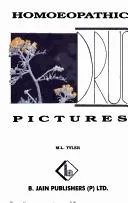
Homoeopathic drug pictures
 72
72

Homoeopathic drug pictures
Tyler's Homoeopathic Drug Pictures offers a solid, if somewhat unadorned, presentation of materia medica. Its strength lies in the clarity with which it delineates the core symptomatology of numerous remedies, providing a useful reference for practitioners. The author's focus on characteristic symptoms is commendable, guiding the reader toward discerning the essence of each drug picture. However, the work's presentation can feel dry; it lacks the narrative flair or the deeper philosophical explorations found in some earlier homeopathic texts. For instance, the description of Lachesis mutus, while accurate in its symptom listing, doesn't fully capture the dynamic, complex nature of the Lachesis state as explored by Kent. Despite this, it serves as a dependable manual for those needing to quickly access and compare remedy profiles. It is a functional tool, not a philosophical treatise.
📝 Description
72
M. L. Tyler's 1952 work, Homoeopathic Drug Pictures, details the symptomatic profiles of homeopathic remedies.
Published in 1952, M. L. Tyler's Homoeopathic Drug Pictures serves as a detailed examination of the symptomatic profiles associated with various homeopathic remedies. The book functions as a compendium, systematically cataloging the characteristic effects that substances have on the human organism. These effects are documented through homeopathic provings and clinical experience. Tyler structured the work to offer practitioners a clear understanding of each remedy's distinct 'picture.' This approach aims to facilitate more precise prescription choices.
The text is primarily aimed at practicing homeopaths, students of homeopathy, and individuals with a serious commitment to studying materia medica. It appeals to those who seek a deeper comprehension of individual drug actions, going beyond simple symptom matching. The book also holds value for those studying psychosomatic medicine or the energetic impacts of substances. Tyler's approach emphasizes the recognition of characteristic, peculiar, and striking symptoms as key indicators for remedy selection. The differentiation of remedies based on subtle variations within their pictures is a core idea, showing how similar drugs might have different applications depending on a patient's specific presentation.
Emerging in the mid-20th century, a period of significant expansion and refinement in homeopathic literature, Tyler's Homoeopathic Drug Pictures builds upon the historical tradition of materia medica compilation. This era saw a growing focus on the subtle actions of remedies, moving beyond purely physical symptoms to incorporate mental and emotional states. The work is influenced by earlier figures such as James Tyler Kent, reflecting a lineage dedicated to understanding the holistic effects of medicinal substances on the vital force.
💡 Why Read This Book?
• Learn the nuanced 'drug pictures' of numerous homeopathic remedies, moving beyond superficial symptom matching to grasp the energetic essence of each substance, as detailed in Tyler's structured approach. • Understand the critical importance of characteristic, peculiar, and striking symptoms in homeopathic prescribing, a core tenet emphasized throughout the text since its 1952 publication. • Differentiate between similar remedies by studying their unique symptom profiles, enabling more precise therapeutic interventions based on the detailed symptom totality presented by Tyler.
⭐ Reader Reviews
Honest opinions from readers who have explored this book.
❓ Frequently Asked Questions
What is the primary focus of M. L. Tyler's Homoeopathic Drug Pictures?
The book's primary focus is on presenting detailed 'drug pictures' for homeopathic remedies. It meticulously catalogs the characteristic physical, mental, and emotional symptoms associated with each substance, aiding practitioners in accurate remedy selection.
Who would benefit most from reading Homoeopathic Drug Pictures?
Practicing homeopaths, students of homeopathy, and individuals deeply interested in materia medica would benefit most. It's for those seeking a comprehensive and precise understanding of individual remedy actions.
When was Homoeopathic Drug Pictures first published?
Homoeopathic Drug Pictures was first published in 1952, placing it within the mid-20th-century expansion of homeopathic literature.
Does the book offer historical context for homeopathic remedies?
While the book focuses on the drug pictures themselves, its 1952 publication date situates it within a historical lineage of homeopathic materia medica, building upon earlier works.
What is a 'drug picture' in the context of this book?
A 'drug picture' refers to the complete set of symptoms—physical, mental, and emotional—that a specific substance produces when used in homeopathic provings or clinical practice.
How does this book compare to other materia medica texts?
Tyler's work is noted for its clear, structured presentation of symptom totality, emphasizing characteristic symptoms. It serves as a practical reference, though it may be less philosophical than some older texts.
🔮 Key Themes & Symbolism
The Totality of Symptoms
This work meticulously details the 'drug picture,' which represents the complete symptom complex—physical, mental, and emotional—elicited by a substance in homeopathic provings. Tyler stresses that successful prescription hinges on matching the individual's unique constellation of symptoms to this comprehensive picture. It's not merely about isolated complaints but the entire pattern of disturbance, emphasizing peculiar and striking symptoms that most vividly represent the remedy's action, a concept central to Hahnemannian homeopathy.
Characteristic Symptoms
A central to Tyler's approach is the identification and prioritization of 'characteristic' symptoms. These are the unusual, specific, and defining features of a patient's condition that deviate from the norm. The book guides the reader to recognize these salient points within a drug's picture, distinguishing it from other similar remedies. This focus ensures that the prescription addresses the deepest level of the patient's illness, not just superficial ailments.
Remedy Differentiation
Homoeopathic Drug Pictures serves as a critical tool for differentiating between remedies that may appear similar on the surface. By presenting the subtle yet vital distinctions within each drug picture—from mental states to specific physical concomitants—Tyler enables practitioners to make finer, more accurate choices. This detailed comparison is crucial for avoiding confusion and selecting the single best-matching remedy for optimal therapeutic outcomes.
The Organon's Principles
While not explicitly a commentary on Hahnemann's Organon of the Healing Art, Tyler's work is deeply embedded in its principles. The emphasis on individualization, the hierarchy of symptoms, and the totality of the case are all direct applications of the foundational laws of homeopathy laid out by Samuel Hahnemann. The 'drug picture' itself is the representation of the artificial disease created according to the principles described in the Organon.
💬 Memorable Quotes
Direct passages from the work, attributed to the author.
“Peculiar symptoms are the most important.”
— This emphasizes Tyler's focus on symptoms that are unusual, specific to the individual, or striking in their presentation, as these are considered the most reliable indicators for matching a remedy's action.
“Each drug has its own personality.”
— This interpretation suggests that every substance used in homeopathy possesses a unique and recognizable pattern of effects on the human organism, akin to a distinct personality, which the homeopath must learn to identify.
“We must know our remedies to cure our patients.”
— This concise statement underscores the necessity for a homeopath to possess deep knowledge of the materia medica (the 'remedies') to effectively treat the sick ('cure our patients').
💡 Key Ideas
Editorial paraphrase of the work's core concepts — not direct quotes.
The totality of symptoms is the only guide we have in the selection of a remedy.
This paraphrased concept highlights the foundational principle of homeopathy that the complete symptom picture of the patient, not just isolated complaints, is the essential basis for choosing a curative medicine.
The mental symptoms are often the key.
This paraphrased idea points to the significance of a patient's mental and emotional state in understanding their overall condition and selecting the most appropriate homeopathic remedy.
🌙 Esoteric Significance
Tradition
Tyler's work, while primarily a materia medica for homeopathic practice, aligns with the vitalistic and energetic principles found within many esoteric traditions. Homeopathy itself, originating from Samuel Hahnemann's work in the late 18th century, posits a 'vital force' and views disease as a disturbance of this force, treatable by potentized substances that act on an energetic level. This appeals to Hermetic and Theosophical concepts of subtle bodies and the energetic nature of reality, seeing the 'drug picture' as a manifestation of the substance's energetic imprint.
Symbolism
The primary 'symbol' in this work is the 'drug picture' itself, which functions as a symbolic representation of a substance's entire energetic signature on the human organism. Specific remedies can carry symbolic weight; for instance, Lachesis, the Bushmaster snake, symbolically embodies themes of jealousy, toxicity, and suppressed expression. Similarly, Phosphorus, representing light and fire, symbolically relates to conditions of inflammation, burning sensations, and effervescent personalities.
Modern Relevance
Contemporary practitioners of classical homeopathy continue to rely on detailed materia medica works like Tyler's. Its structured approach to remedy differentiation is particularly relevant for modern students and practitioners seeking to hone their prescribing skills. Furthermore, the increasing interest in psychosomatic health and holistic wellness means that the energetic and mental-emotional aspects detailed in these drug pictures find resonance with current therapeutic paradigms seeking to understand the interconnectedness of mind, body, and spirit.
👥 Who Should Read This Book
• Beginning students of homeopathy seeking a clear, structured introduction to the symptom profiles of key remedies. • Experienced homeopaths looking for a concise reference to differentiate between similar remedies and confirm their prescribing choices. • Researchers and practitioners of mind-body medicine interested in the detailed symptomatic effects of natural substances on human consciousness and physiology.
📜 Historical Context
M. L. Tyler's Homoeopathic Drug Pictures, first published in 1952, emerged during a period of continued development and dissemination of homeopathic knowledge in the post-war era. It represents a continuation of the detailed materia medica tradition established by earlier pioneers like James Tyler Kent, whose influential 'Lectures on Homeopathic Philosophy' and 'Repertory' were widely studied. The mid-20th century saw homeopathy firmly established but also facing ongoing dialogue with the burgeoning field of conventional medicine. While Tyler's work is a practical compilation, it implicitly engages with the theoretical underpinnings of Hahnemannian homeopathy, emphasizing symptom totality and individualization. It did not arise from a specific public controversy but rather contributed to the ongoing refinement of homeopathic education and practice, serving as a valuable reference for practitioners seeking clear differentiations between remedies.
📔 Journal Prompts
The characteristic symptoms of Arsenicum album, as presented by Tyler, and their manifestation in daily life.
Comparing the mental picture of Lachesis mutus with that of Naja tripudians.
Reflecting on the concept of 'drug picture' as an energetic imprint.
How the totality of symptoms, as emphasized in the 1952 text, guides therapeutic intervention.
The role of peculiar symptoms in selecting a remedy for a complex case.
🗂️ Glossary
Drug Picture
The complete set of symptoms, including physical, mental, and emotional characteristics, that a specific substance produces when administered to healthy individuals (provings) or observed in its therapeutic application.
Materia Medica
A comprehensive body of knowledge detailing the effects of medicinal substances on the human body, typically organized by remedy and including symptoms, modalities, and indications for use.
Characteristic Symptoms
Symptoms that are peculiar, unusual, striking, or specific to the patient's condition, distinguishing it from common ailments and offering the clearest indications for remedy selection.
Totality of Symptoms
The sum of all symptoms experienced by the patient, encompassing physical complaints, mental states, emotional conditions, and peculiar sensations, which forms the basis for homeopathic case analysis.
Provings
Controlled experiments where healthy volunteers ingest specific substances to record the physical, mental, and emotional symptoms they experience, thereby establishing the drug's medicinal picture.
Concomitant Symptoms
Symptoms that occur alongside a primary complaint, often providing crucial details that help differentiate between remedies. For example, a headache accompanied by nausea.
Potentization
The homeopathic process of diluting and succussing (shaking) a substance, believed to increase its energetic or dynamic healing properties while reducing its material toxicity.
🔮 Readers Also Liked
Browse all →









More by M. L. Tyler
All books →

More Free Occult Philosophy Books
View all →