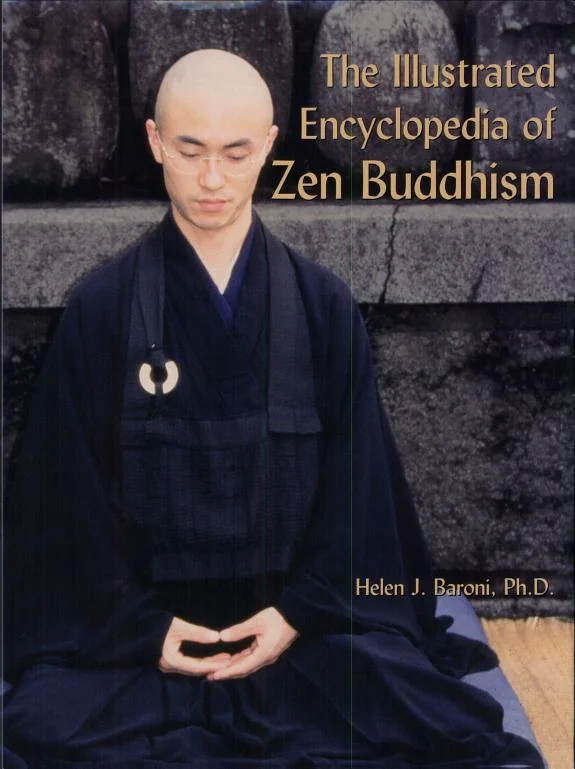
The Illustrated Encyclopedia of Zen Buddhism
 81
81

The Illustrated Encyclopedia of Zen Buddhism
Helen J. Baroni's "The Illustrated Encyclopedia of Zen Buddhism" is a formidable undertaking, presenting over 1,700 entries with admirable clarity. Its strength lies in its sheer breadth and the meticulous alphabetical organization, making it an exceptionally practical tool for quick reference. I found the entries on specific monastic lineages, such as the various "temple names" and their historical connections, particularly illuminating—a level of detail often absent in broader surveys. However, while the "illustrated" aspect suggests visual aids, the book's visual content is sparse, primarily consisting of a few black-and-white images that do little to enhance understanding of complex concepts or aesthetics. The entry on the Rinzai school's koan system, while informative, could have benefited from more illustrative examples to truly convey the experiential nature of this practice. Despite this minor limitation, the encyclopedia stands as a solid, scholarly resource for anyone seriously engaging with Zen Buddhism.
📝 Description
81
Helen J. Baroni's 2002 encyclopedia defines over 1,700 terms related to Zen Buddhism.
Published in 2002, The Illustrated Encyclopedia of Zen Buddhism presents an alphabetical compendium of Zen Buddhist thought and practice. Helen J. Baroni, Ph.D., compiled over 1,700 entries that detail core beliefs, ritual practices, significant historical movements, organizational structures, and influential figures across various Zen schools and periods. The work provides clear definitions and explanations for concepts and individuals central to understanding Zen. This resource is suitable for students and scholars of Buddhism, comparative religion, and Asian studies, as well as practitioners of Zen meditation, from novices to experienced individuals. Those with a general interest in Eastern philosophy or mindfulness will also find its coverage accessible and thorough. The alphabetical structure allows for easy lookup of specific terms or people, supporting both focused study and casual reading.
The encyclopedia emerged during a time of growing global interest in Eastern spiritual practices. As academic study of Buddhism and meditation techniques expanded in the West, a need for accessible reference works became apparent. Baroni's compilation addressed this need by consolidating extensive scholarly research into a format appropriate for both academic and general readers. It offered a structured approach to Zen that complemented more broadly circulated introductions to the subject.
Zen Buddhism itself is a school of Mahayana Buddhism that originated in China. It emphasizes meditation and direct experience over scripture. Its esoteric nature stems from practices that are often transmitted directly from teacher to student, focusing on awakening through insight rather than intellectual understanding. This encyclopedia, by cataloging its terms and history, makes the concepts of this tradition more accessible to a wider audience, bridging the gap between its practice-oriented core and academic or general inquiry.
💡 Why Read This Book?
• Gain precise definitions for over 1,700 Zen terms, from 'anatta' (non-self) to 'zazen,' providing a foundational vocabulary for deeper study. • Understand the historical development of Zen by exploring entries on specific movements and figures, such as the influence of Bodhidharma and the establishment of Rinzai Zen. • Clarify the distinctions between major Zen schools and their unique practices, as detailed in sections covering Soto and Rinzai traditions.
⭐ Reader Reviews
Honest opinions from readers who have explored this book.
❓ Frequently Asked Questions
What is the primary purpose of "The Illustrated Encyclopedia of Zen Buddhism"?
Its primary purpose is to serve as a comprehensive, alphabetically arranged reference guide to the beliefs, practices, historical movements, organizations, and key figures associated with Zen Buddhism, offering clear explanations for over 1,700 entries.
Who is the intended audience for this encyclopedia?
The intended audience includes students of Buddhism and comparative religion, practitioners of Zen meditation, and general readers interested in Eastern philosophy and spiritual traditions.
When was "The Illustrated Encyclopedia of Zen Buddhism" first published?
The book was first published on January 15, 2002, by Helen J. Baroni, Ph.D.
Does the encyclopedia cover different schools of Zen Buddhism?
Yes, it covers various schools, including detailed entries on prominent ones like Rinzai and Soto Zen, explaining their distinct approaches and historical contexts.
Are there biographical entries for important Zen masters?
Yes, the encyclopedia includes biographical entries for significant personalities, tracing their contributions and influence within the Zen tradition from its origins to more contemporary figures.
What kind of 'illustrations' can be found in the book?
While titled 'illustrated,' the book primarily features factual content with limited visual elements, typically black-and-white images that support the textual explanations rather than offering extensive artistic renditions.
🔮 Key Themes & Symbolism
Foundations of Zen Practice
This encyclopedia meticulously details the core practices fundamental to Zen Buddhism. Entries on 'zazen' (seated meditation) explain its posture and purpose, while 'koan' study is presented as a method for confronting paradoxical truths, particularly within the Rinzai school. It also defines essential ethical precepts and the role of mindfulness in daily life, providing a structured understanding of how Zen is actively lived rather than merely theorized.
Philosophical Tenets
Central Zen philosophical concepts are given thorough treatment. The encyclopedia explains 'sunyata' (emptiness) not as nihilism, but as the absence of inherent, independent existence, a central to Mahayana thought. It also explores 'anicca' (impermanence) and 'dukkha' (suffering), framing them within the context of Buddhist cosmology and the path to liberation. These entries clarify the often-subtle metaphysical underpinnings of Zen practice.
Historical Development and Lineages
The work traces the lineage of Zen from its roots in Indian Buddhism through its development in China and subsequent spread to Japan, Korea, and the West. Entries on key figures like Bodhidharma and Hui-neng, along with specific monastic traditions and temples, provide a chronological and geographical framework. Understanding these historical currents is crucial for appreciating the diversity and evolution of Zen schools.
Zen and the Arts
While not its primary focus, the encyclopedia touches upon the intersection of Zen and traditional East Asian arts. Entries related to calligraphy ('shodo'), ink painting ('sumi-e'), and even the tea ceremony ('chanoyu') often highlight the Zen aesthetic principles of simplicity, naturalness, and immediacy. These connections reveal how Zen philosophy permeates cultural expression.
💬 Memorable Quotes
Direct passages from the work, attributed to the author.
“The work defines 'Satori' as a sudden awakening or enlightenment.”
— This entry clarifies that satori is not a final, permanent state of Buddhahood but rather a glimpse or intuitive understanding, often achieved through intense practice and insight.
“Baroni explains the concept of 'Mu' (nothingness).”
— This entry likely details the famous koan attributed to Joshu, emphasizing that 'Mu' is not mere negation but a pointing towards the absence of conceptual duality and inherent self.
“The encyclopedia outlines the structure of the 'Sangha'.”
— This definition would explain the Sangha as the monastic community, but also, in a broader sense, the community of all practitioners, highlighting its importance as a support system for the spiritual path.
“Entries discuss the significance of the 'Lotus Sutra'.”
— This indicates the book's recognition of foundational Mahayana texts that influenced Zen, explaining the sutra's teachings on universal Buddhahood and skillful means.
“The work details the practice of ' kinhin'.”
— This definition would describe kinhin as mindful walking meditation, often performed between periods of zazen, emphasizing the integration of awareness into all activities.
🌙 Esoteric Significance
Tradition
While Zen Buddhism is a distinct tradition with roots in Mahayana Buddhism, its emphasis on direct experience, mind-to-mind transmission, and the potential for awakening in this life aligns with certain esoteric currents. Its focus on experiential realization rather than solely scriptural adherence shares common ground with traditions like Chan (its Chinese precursor) and certain mystical branches of other religions. The emphasis on the 'transmission outside the scriptures' appeals to esoteric principles of inner knowing and direct spiritual authority.
Symbolism
Key symbols explored include the Bodhi tree, representing enlightenment; the Dharma wheel, symbolizing the Buddha's teachings; and the empty circle (enso), often representing satori, emptiness, and the ultimate unity of all things. The encyclopedia likely details the significance of these and other icons, such as the begging bowl (patra) symbolizing renunciation and interdependence, within the visual and meditative language of Zen.
Modern Relevance
Contemporary mindfulness movements, secularized meditation practices, and certain streams of Western psychotherapy that incorporate contemplative techniques often draw implicitly or explicitly on Zen principles. Thinkers exploring consciousness, non-duality, and embodied cognition find resonance in Zen's direct approach to mind and reality. Furthermore, artists and writers continue to be inspired by Zen aesthetics and philosophy, seeking its emphasis on simplicity, immediacy, and the profound in the ordinary.
👥 Who Should Read This Book
• Students of comparative religion and Asian philosophy seeking a structured overview of Zen's history, key figures, and doctrines. • Dedicated practitioners of Zen meditation (zazen, koan study) looking for precise definitions and historical context for their practice. • Researchers and academics requiring a reliable, alphabetically organized reference tool for scholarly work on Buddhism and East Asian traditions.
📜 Historical Context
Published in 2002, Helen J. Baroni's encyclopedia arrived at a time when Western engagement with Zen Buddhism had matured considerably beyond the initial post-war enthusiasm. Scholarly frameworks for understanding Buddhism were well-established, with figures like D.T. Suzuki having paved the way decades earlier. Baroni's work offered a more systematic and encyclopedic approach compared to earlier, often more personal or philosophical accounts. It provided a much-needed reference point amidst a growing body of secondary literature, situating Zen within its broader Mahayana context and differentiating it from other Buddhist schools. While not directly engaging in polemics, its comprehensive nature implicitly addressed potential misunderstandings or oversimplifications of Zen that circulated in popular culture. The book's release coincided with academic conferences and publications focused on Buddhist modernism and cross-cultural transmission, reflecting its scholarly grounding.
📔 Journal Prompts
The concept of 'emptiness' (sunyata) as presented in the encyclopedia.
Bodhidharma's role in transmitting Buddhism to China.
The practice of 'zazen' and its described purpose.
The significance of 'koan' study within the Rinzai school.
How the encyclopedia differentiates between Soto and Rinzai Zen.
🗂️ Glossary
Zazen
Seated meditation central to Zen practice, involving specific postures and mindful awareness, aimed at cultivating concentration and insight.
Koan
A paradoxical question or statement used in Rinzai Zen to break down conceptual thinking and provoke direct, intuitive understanding.
Sunyata
A core Mahayana Buddhist concept often translated as 'emptiness,' referring to the lack of inherent, independent existence in all phenomena.
Anatta
The Buddhist doctrine of 'non-self,' asserting that there is no permanent, unchanging soul or self.
Satori
A Japanese Buddhist term for awakening or enlightenment, often understood as a sudden, intuitive glimpse into the nature of reality.
Bodhidharma
Considered the founder of Chan (Zen) Buddhism in China, traditionally believed to have brought Buddhist teachings from India in the 5th or 6th century.
Rinzai
One of the two major schools of Zen Buddhism in Japan, known for its emphasis on koan study and sudden enlightenment.
This book appears in 1 collection
🔮 Readers Also Liked
Browse all →









From the “Zen Buddhism” Collection
View all →








More Free Occult Philosophy Books
View all →