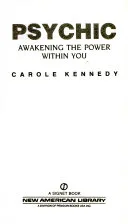
Psychic
 74
74

Psychic
Carole Kennedy’s "Psychic" attempts to bridge the gap between the mystical and the mundane, presenting psychic ability as a trainable mental faculty. Its strength lies in its practical, exercise-driven methodology. The initial self-test, designed to pinpoint natural aptitudes, is a commendable effort to personalize the learning process. However, the book occasionally falters by presenting its exercises with a certainty that might oversimplify the complex nature of psychic phenomena. For instance, the detailed routines for "visual psychic perception" feel somewhat prescriptive, potentially overlooking individual variations in how psychic energies manifest. While Kennedy's 1989 publication offered a structured approach, some of its underlying assumptions about psychic mechanics might feel dated to contemporary readers familiar with more nuanced parapsychological research. It remains a solid primer for those seeking a direct, hands-on introduction to psychic development techniques.
📝 Description
74
Carole Kennedy's 1989 book 'Psychic' presents practical exercises for developing latent abilities.
Published in 1989, Carole Kennedy's 'Psychic' provides a systematic method for understanding and cultivating innate psychic capacities. The author moves beyond mere anecdotes, instead offering concrete exercises and self-assessment tools. Kennedy's central argument frames psychic phenomena not as mysterious occurrences, but as potentials within the human mind. These potentials, she suggests, can be strengthened through focused effort and specific techniques, making the subject accessible to a self-help audience.
The book is designed for individuals curious about their intuition or those aiming to sharpen their existing psychic awareness. It appeals to readers who prefer structured, practical approaches to personal growth and mental exploration over abstract philosophical discussions. Kennedy's work emerged during a period of growing interest in New Age thought and parapsychology, contributing to a trend of presenting esoteric concepts in accessible, modern formats.
Kennedy's 'Psychic' situates itself within late 1980s New Age literature, a time when interest in parapsychology and consciousness studies was widespread. It drew from earlier traditions of psychic development but aimed for a more grounded, exercise-oriented presentation. This approach distinguished it from more speculative writings, emphasizing the idea that psychic talent is a trainable faculty rather than an exclusive gift.
💡 Why Read This Book?
• Learn a systematic method for identifying your specific psychic talents, as outlined in Kennedy's self-diagnostic tests, allowing you to focus your development efforts effectively. • Gain practical exercises for honing abilities such as telepathy or precognition, directly applicable from the chapter instructions, moving beyond theoretical understanding to tangible practice. • Understand the 1989 publication context of "Psychic," appreciating its place within the evolution of popular parapsychology literature and its contribution to structured psychic training.
⭐ Reader Reviews
Honest opinions from readers who have explored this book.
❓ Frequently Asked Questions
When was Carole Kennedy's book 'Psychic' first published?
Carole Kennedy's "Psychic" was first published on October 3, 1989. This places it within a period of significant public interest in parapsychology and esoteric studies.
What is the main goal of Carole Kennedy's 'Psychic'?
The primary goal of "Psychic" is to guide readers in discovering and developing their innate psychic abilities through practical exercises and self-assessment, demystifying the process.
Does 'Psychic' by Carole Kennedy offer a way to test psychic abilities?
Yes, the book includes an easy-to-use test designed to help readers determine which areas of psychic talent they may possess naturally.
What kind of exercises does 'Psychic' provide?
"Psychic" provides specific exercises aimed at developing identified psychic powers, focusing on practical application rather than abstract theory.
Who is Carole Kennedy, and what is her background?
Carole Kennedy is described as a highly respected psychic who authored "Psychic" to share professional methods for psychic development. Her background emphasizes practical experience in the field.
Is 'Psychic' suitable for beginners in psychic development?
Yes, "Psychic" is presented as a guide for those new to psychic development, offering accessible tests and exercises to cultivate latent mental powers.
🔮 Key Themes & Symbolism
Cultivating Innate Talents
Kennedy emphasizes that psychic ability is not an exclusive gift but a latent human faculty. The book focuses on identifying these innate potentials through self-assessment tools, such as the diagnostic test presented early on. Once a reader understands their natural leanings—be it telepathy, precognition, or clairvoyance—the work provides structured exercises designed to nurture and strengthen these specific abilities. This approach grounds esoteric concepts in practical, actionable steps, making psychic development accessible to a wider audience interested in self-improvement.
Practical Psychic Development
Moving beyond theoretical discussions, "Psychic" offers a methodology for actively developing psychic powers. The core of the book comprises a series of exercises and techniques that readers can implement in their daily lives. These practices are designed to systematically enhance mental focus, intuitive perception, and receptivity to subtle energies. The book aims to explain the process, presenting it as a skill that can be honed through consistent effort and application, much like learning a new language or instrument.
Clarifying Psychic Phenomena
Carole Kennedy's work seeks to remove the aura of mystery and exclusivity often associated with psychic abilities. By framing these as extensions of the mind's inherent capabilities, the book makes them understandable and approachable. The original blurb highlights revealing "secrets used by professionals," suggesting an insider's perspective that normalizes and clarifies complex intuitive processes. This demystification encourages readers to explore their own potential without intimidation, fostering a more grounded understanding of the psychic spectrum.
Self-Assessment and Focus
A crucial element of Kennedy's approach is the emphasis on self-awareness and targeted development. The book introduces a specific test that allows individuals to gauge their natural psychic inclinations. This diagnostic step is vital, as it guides the reader toward exercises most relevant to their inherent strengths. Rather than a one-size-fits-all program, "Psychic" advocates for a personalized path, ensuring that developmental efforts are efficient and aligned with the individual's unique psychic blueprint.
💬 Memorable Quotes
Direct passages from the work, attributed to the author.
“Reveals the secrets used by professionals to develop the hidden powers of the mind.”
— This statement suggests the book offers insider knowledge, presenting techniques that experienced psychics employ. It positions the work as a guide to advanced, practical methods for mental enhancement.
“The work explores developing the hidden powers of the mind.”
— This interpretation highlights the book's central theme: unlocking and utilizing mental faculties that are not commonly recognized or employed. It frames psychic ability as an inherent, yet concealed, human capacity.
“The book helps readers identify their natural psychic talents.”
— This interpretation points to the self-diagnostic aspect of the book, suggesting it offers tools for personal insight into one's intuitive strengths and potential psychic aptitudes.
💡 Key Ideas
Editorial paraphrase of the work's core concepts — not direct quotes.
An easy-to-use test determines in what area natural psychic talents lie, then exercises help develop those powers.
This quote from the original blurb captures the book's practical, diagnostic, and developmental approach. It promises a structured method for self-discovery and skill-building in psychic abilities.
It provides exercises to cultivate psychic awareness.
This paraphrased concept emphasizes the active, skill-building nature of the book. It suggests that psychic growth is achieved through deliberate practice and focused mental training.
🌙 Esoteric Significance
Tradition
While not explicitly tied to a single esoteric lineage like Hermeticism or Kabbalah, Kennedy's work draws from the broader stream of Western Esotericism that gained popular traction in the 20th century, particularly within the New Age movement. It reflects a shift towards secularizing and individualizing esoteric practices, presenting psychic development as a psychological and trainable skill rather than solely a spiritual gift or result of divine grace. This approach aligns with the self-help ethos that became prominent from the mid-20th century onwards, making esoteric concepts accessible through psychological frameworks.
Symbolism
The primary 'symbol' within Kennedy's work is the mind itself, depicted as a vast, untapped resource. The exercises often involve visualization, which can be seen as a form of inner symbolic work, where imagined scenarios or objects serve as focal points for mental energy. While the book may not explore complex symbolic systems like Tarot or astrology, the act of focusing intention and visualizing outcomes can be interpreted as a practical application of symbolic thought processes, aiming to manifest desired psychic effects.
Modern Relevance
Kennedy's emphasis on practical, self-guided development of psychic abilities remains relevant today. Contemporary practices in mindfulness, intuition training, and even certain aspects of positive psychology echo her approach. While academic parapsychology has evolved, the popular interest in psychic phenomena persists, and books like "Psychic" serve as foundational texts for individuals seeking accessible entry points. Its structured methodology can be seen as a precursor to modern online courses and workshops that promise to unlock latent mental potentials through systematic training.
👥 Who Should Read This Book
• Aspiring psychics seeking a structured, practical introduction to developing their abilities, moving beyond theory to hands-on exercises. • Individuals interested in the psychological aspects of intuition and consciousness who prefer a systematic, self-help approach rather than purely spiritual or philosophical texts. • Readers curious about the history of popular parapsychology and esoteric self-help from the late 20th century, seeking a representative example of its practical methodologies.
📜 Historical Context
Carole Kennedy's "Psychic" arrived in 1989, a period marked by the burgeoning New Age movement and a popular fascination with consciousness expansion. Books exploring parapsychology, ESP, and self-help psychology were abundant, often building on foundations laid by earlier figures like J.B. Rhine and the Theosophical Society. Kennedy's work distinguished itself by offering a structured, exercise-driven approach, moving away from purely theoretical or spiritual interpretations towards a more pragmatic, skill-development model. This era also saw increased academic interest in parapsychology, though mainstream scientific circles often remained skeptical, creating a dynamic where popular literature like Kennedy's offered accessible pathways for exploration. Its reception likely aligned with the broader interest in practical spirituality and personal empowerment prevalent in the late 1980s, contrasting with more esoteric or ritualistic occult traditions.
📔 Journal Prompts
Reflect on the diagnostic test for natural psychic talents presented in the book.
Describe a psychic exercise you attempted and your subjective experience of it.
Consider the concept of "hidden powers of the mind" as explored by Kennedy.
Analyze how the "secrets used by professionals" might differ from amateur approaches.
How does the idea of 'developing powers' change your perception of psychic ability?
🗂️ Glossary
Psychic Talents
Natural aptitudes or abilities related to intuition, extrasensory perception (ESP), and precognition, which the book suggests can be identified and cultivated.
Mental Powers
Capabilities of the mind that extend beyond ordinary cognitive functions, often referring to intuitive, telepathic, or clairvoyant faculties.
Self-Assessment Test
A tool within the book designed for readers to gauge their inherent psychic strengths and areas of natural inclination towards specific abilities.
Development Exercises
Specific techniques and practices provided in the book intended to systematically strengthen and enhance identified psychic talents.
Intuitive Perception
The faculty of gaining knowledge or understanding directly, without the need for conscious reasoning or sensory input.
Telepathy
The purported direct communication of thoughts or feelings between minds, considered one of the psychic abilities explored in the book.
Precognition
The ability to foresee future events, another psychic faculty that the book aims to help readers develop.