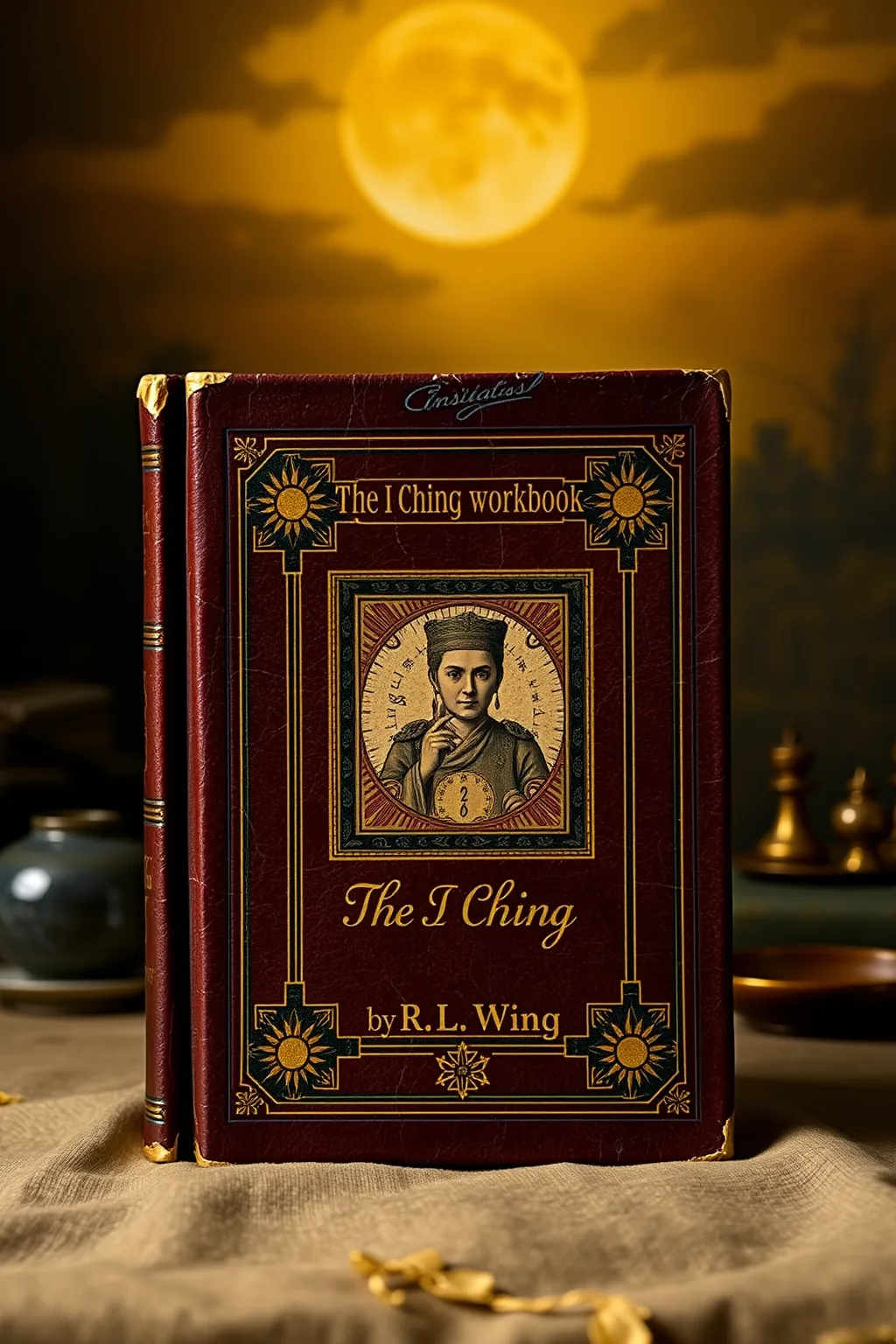
The I Ching workbook
 77
77

The I Ching workbook
R. L. Wing's The I Ching Workbook, originating in 1979, offers a refreshingly direct approach to a text often shrouded in academic or mystical abstraction. Its strength lies in its disciplined, exercise-driven format, which compels the reader to actively engage with the I Ching's 64 hexagrams rather than passively absorb them. This workbook transforms the oracle from a text to be studied into a tool to be used. A notable limitation, however, is that its focus on structured practice might, for some, overshadow the poetic and philosophical nuances that also define the Book of Changes. The detailed instructions for casting and interpreting, particularly concerning the movement of changing lines, are exceptionally clear. This is a functional guide, prioritizing utility. For those seeking a practical method to integrate the I Ching into their lives, this workbook is an indispensable, albeit narrowly focused, resource.
📝 Description
77
R. L. Wing's The I Ching Workbook, published in 1979, offers a structured approach to the ancient Chinese oracle.
This book is a practical manual for working with the I Ching, the Book of Changes. Unlike texts that focus solely on theory, Wing's method emphasizes direct experience. It includes exercises and techniques designed to help users consult the oracle for personal guidance. The workbook aims to make the I Ching accessible for everyday application, bridging its philosophical underpinnings with practical needs.
It is suited for anyone interested in a hands-on relationship with the I Ching. The book moves beyond academic study to encourage a dialogue with the oracle's wisdom. Those studying divination, self-awareness, or Eastern thought will find its systematic method useful. It serves both beginners and those with some familiarity who seek a more disciplined practice.
Published in 1979, this workbook appeared as Western interest in Eastern traditions grew. While earlier translations like Richard Wilhelm's had introduced the I Ching, Wing focused on practical use rather than historical analysis. It emerged during a time of broader cultural curiosity about divination and self-discovery, offering a resource for those exploring alternative wisdom systems.
💡 Why Read This Book?
• Learn a structured method for consulting the I Ching, moving beyond theoretical knowledge to practical application, as detailed in Wing's specific hexagram consultation exercises. • Gain a tangible way to explore the 64 hexagrams, understanding their symbolic language through the workbook's systematic approach to judgments, images, and line statements. • Develop a personal practice of seeking guidance from the Book of Changes, using the coin-casting or yarrow-stalk methods explained step-by-step in the text.
⭐ Reader Reviews
Honest opinions from readers who have explored this book.
❓ Frequently Asked Questions
What is the primary goal of R. L. Wing's The I Ching Workbook?
The primary goal is to provide a practical, hands-on method for users to consult the I Ching for guidance and insight, moving beyond purely academic study to personal application through structured exercises.
When was The I Ching Workbook first published?
The I Ching Workbook by R. L. Wing was first published in 1979, a period of significant Western interest in Eastern wisdom traditions.
Does the workbook explain how to cast the hexagrams?
Yes, the workbook provides detailed instructions on the traditional methods for casting hexagrams, such as using coins or yarrow stalks, enabling direct interaction with the oracle.
Is this book suitable for beginners with no prior knowledge of the I Ching?
Yes, its structured approach and clear explanations make it accessible for beginners who wish to learn how to use the I Ching for personal reflection and decision-making.
What is the core component of the I Ching that the workbook focuses on?
The workbook centers on the 64 hexagrams, their symbolic meanings, and the process of interpreting them through their associated judgments, images, and line statements.
How does Wing's workbook differ from other I Ching translations or commentaries?
Wing's workbook emphasizes practical application and personal engagement through exercises, distinguishing it from translations that may focus more on historical, philosophical, or purely scholarly aspects.
🔮 Key Themes & Symbolism
Hexagram Consultation Methods
The workbook systematically breaks down the process of consulting the I Ching. It moves beyond simply presenting the hexagrams and their meanings to detailing the practical steps of casting and interpretation. Emphasis is placed on the changing lines within a hexagram, which provide dynamic insights into the unfolding situation. Wing guides the reader through understanding the interplay of the trigrams and the resulting hexagram, making the oracle an active partner in self-inquiry.
Symbolic Language of the Trigrams
Central to the I Ching's structure are the eight trigrams (Bagua), composed of three yin or yang lines. The workbook explores how these fundamental symbols, representing concepts like Heaven, Earth, Water, and Fire, combine to form the 64 hexagrams. Understanding the inherent meanings and relationships of the trigrams is presented as crucial for grasping the deeper layers of wisdom within each hexagram and its associated judgments and images.
Personal Application and Guidance
This work frames the I Ching not as a predictive tool but as a mirror reflecting the user's internal state and external circumstances. The workbook is designed to facilitate self-reflection, helping individuals gain clarity on decisions, understand challenges, and align their actions with the flow of events. The exercises encourage a dialog with the oracle, fostering personal growth and a more nuanced understanding of life's processes.
The Nature of Change
At its heart, the I Ching is a book about change, and Wing's workbook emphasizes this dynamic principle. Each hexagram represents a phase or a type of transformation. The text teaches how to recognize these shifts, both in the external world and within oneself, and how to respond adaptively. The focus on changing lines within a hexagram specifically illustrates how situations evolve and what actions are appropriate at each stage.
💬 Memorable Quotes
Direct passages from the work, attributed to the author.
“The I Ching is a book of wisdom and change.”
— This statement captures the dual nature of the I Ching: its profound philosophical insights and its core principle of constant flux. Wing's workbook is designed to help readers access both aspects.
“Each hexagram represents a situation.”
— This highlights the practical utility of the I Ching. Wing's approach focuses on understanding the specific context or challenge that each of the 64 hexagrams symbolizes.
“Lines change to show the movement of events.”
— This refers to the dynamic aspect of the I Ching, where specific lines within a hexagram can transform, indicating the progression or shift in a situation over time.
“Consult the oracle for clarity.”
— Wing frames the I Ching as a tool for introspection and decision-making, encouraging users to engage with its wisdom to gain perspective on their concerns.
“Understand the judgment, image, and line statements.”
— These are the core components of interpreting a hexagram. The workbook guides the reader on how to analyze these elements for deeper meaning.
🌙 Esoteric Significance
Tradition
While the I Ching predates many formal esoteric traditions, its principles have been integrated into various streams, including Hermeticism and Taoism. Wing's workbook, though practical, taps into this lineage by treating the I Ching as a living oracle capable of providing guidance on the nature of change and cosmic order. It aligns with the Hermetic principle of "As Above, So Below," suggesting a correspondence between the hexagrams and human experience.
Symbolism
The core symbolism lies in the 64 hexagrams, each formed by two trigrams. These trigrams, such as K'an (Water, danger) and Li (Fire, clarity), are themselves rich in meaning. Wing's work focuses on interpreting the combined symbolism of these trigrams and their associated judgments and images, which represent archetypal situations and their resolutions, offering a symbolic map of existence.
Modern Relevance
Contemporary practitioners of various divination arts, including modern Western esotericists and those exploring Taoist philosophy, continue to utilize R. L. Wing's workbook. Its structured approach remains valuable for those seeking a clear methodology for consulting the I Ching in fields like depth psychology, personal development, and comparative religion, where practical application of ancient wisdom is sought.
👥 Who Should Read This Book
• Individuals new to the I Ching seeking a clear, step-by-step method to learn its principles and consultation techniques. • Students of divination and esoteric practices interested in developing a practical, hands-on relationship with this ancient Chinese oracle. • Philosophically inclined readers looking for a structured approach to self-reflection and guidance, utilizing the I Ching as a tool for understanding life's changes.
📜 Historical Context
Published in 1979, R. L. Wing's The I Ching Workbook emerged during a significant period of Western engagement with Eastern philosophies and divination practices. Earlier translations, notably Richard Wilhelm's influential German version (1923) with its introduction by Carl Jung, had already introduced the I Ching to a broader audience. However, while Wilhelm's work was more scholarly and philosophical, Wing's contribution was distinctly practical. The late 1970s saw a cultural milieu where personal growth, self-discovery, and alternative spiritualities were gaining traction. Unlike purely academic texts or esoteric treatises, Wing's workbook offered a structured, exercise-based approach. It didn't directly engage with contemporaries in a published debate, but its focus on application implicitly responded to a desire for accessible, actionable wisdom, differentiating it from the more theoretical discussions prevalent at the time.
📔 Journal Prompts
How does the judgment of Hexagram 1, Qian (The Creative), align with your current understanding of initiation?
Reflect on a recent situation where the imagery of Hexagram 2, Kun (The Receptive), was prominent.
Consider the advice offered by a changing line in a hexagram you've consulted recently.
Explore the dynamic between the trigrams Fire (Li) and Water (K'an) as depicted in relevant hexagrams.
What personal insights emerge when applying the structured casting method to a current dilemma?
🗂️ Glossary
Hexagram
A figure composed of six stacked horizontal lines, where each line is either Yang (solid) or Yin (broken). There are 64 unique hexagrams in the I Ching, each representing a fundamental situation or state.
Trigram
A figure composed of three horizontal lines, each being either Yang or Yin. There are eight trigrams (Bagua), which combine to form the 64 hexagrams.
Yang Line
Represented by a solid line (—), symbolizing active, creative, masculine energy.
Yin Line
Represented by a broken line (-- --), symbolizing receptive, yielding, feminine energy.
Changing Lines
Specific lines within a hexagram (usually indicated by a specific number or mark during consultation) that transform into their opposite, suggesting the progression or shift of a situation.
Judgment
A concise statement or omen associated with each hexagram, offering a general assessment of the situation it represents.
Image
A description of the symbolic meaning of the trigrams that form the hexagram, further elaborating on the situation and suggesting how to act.
🔮 Readers Also Liked
Browse all →








More by R. L. Wing
All books →



More Free Occult Philosophy Books
View all →