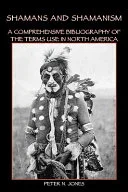
Shamans and Shamanism
 81
81

Shamans and Shamanism
Peter N. Jones’s "Shamans and Shamanism" offers a much-needed academic rigor to a topic frequently mired in New Age simplification. The 2008 publication date places it in a period where academic discourse on shamanism was solidifying, and Jones engages with this by dissecting the very term. His strength lies in meticulously questioning assumptions, particularly the tendency to homogenize diverse practices under one umbrella label. A notable passage might be his examination of how terms like "shamanic" were applied by early ethnographers without sufficient cultural nuance. However, the work can sometimes feel overly academic, occasionally sacrificing narrative flow for exhaustive analysis. While it excels at deconstruction, it offers less for those seeking practical application or a guide to contemporary shamanic practices. Jones’s work is an essential, albeit challenging, primer for anyone serious about understanding the historical and conceptual underpinnings of shamanism.
📝 Description
81
Peter N. Jones's 2008 book examines the complex definition of shamanism.
Published in 2008, Peter N. Jones's "Shamans and Shamanism" directly addresses the difficulty in defining shamanism. Jones questions whether shamanism represents a single, unchanging practice or a concept that has shifted over time and across cultures. The work begins by scrutinizing the word "shaman" itself, tracing its etymology and how it has been historically applied. This examination sets the stage for a deeper look into the various forms and interpretations of shamanic traditions.
The book is useful for students of comparative religion, anthropology, and esoteric studies. It moves beyond sensationalized accounts to offer a rigorous look at shamanic practices. Those interested in how spiritual ideas change and spread across different societies will find this study particularly relevant. Jones considers how Western academic and colonial viewpoints influenced the study and categorization of these practices, sometimes forcing them into pre-existing Western conceptual frameworks.
This book engages with the study of shamanism, a topic that has long held a place within esoteric traditions. While the term itself has academic origins, its subject matter—direct experience of altered states, communication with spirits, and the role of intermediaries—resonates with many occult and magical systems. Jones's critical examination of the term and its application provides a necessary grounding for anyone interested in the practical or theoretical aspects of these spiritual phenomena outside of purely academic discourse.
💡 Why Read This Book?
• Understand the problematic history of the term 'shamanism' as applied by Western scholars since the early 20th century, allowing for a more nuanced appreciation of indigenous spiritual practices. • Gain clarity on the evolution of shamanic concepts, distinguishing between historical practices and modern interpretations, as explored in the book's examination of the term's etymology. • Learn to critically analyze claims about shamanism by recognizing how academic and colonial biases shaped early definitions, a perspective Jones details throughout his 2008 analysis.
⭐ Reader Reviews
Honest opinions from readers who have explored this book.
❓ Frequently Asked Questions
When was Peter N. Jones's "Shamans and Shamanism" first published?
Peter N. Jones's "Shamans and Shamanism" was first published in 2008, providing a scholarly examination of the term and its associated practices.
Does the book define shamanism rigidly?
No, the book actively questions the possibility of a single, clear definition for shamanism, exploring its fluidity and historical variability.
What historical periods does the book cover regarding shamanism?
The book examines the historical application of the term "shamanism" over time, contrasting ancient tribal practices with more recent manifestations.
What is a key question the book addresses about modern shamanism?
A key question is whether contemporary versions of shamanism, potentially found in urban settings, are equivalent to those practiced by tribal peoples centuries ago.
What is the book's approach to the term 'shaman' itself?
The book analyzes the term "shaman" and how it has been employed historically, seeking to understand the phenomenon through linguistic and historical usage.
Does the book focus on a specific geographic region?
While the book may use specific geographic locations as examples, its primary aim is a broader conceptual and historical inquiry into shamanism.
🔮 Key Themes & Symbolism
Defining Shamanism
This theme centers on the inherent difficulty in defining shamanism. Jones critically examines whether shamanism possesses a fixed set of attributes or if it represents a diverse range of practices loosely categorized. The work questions the homogenizing effect of the term "shamanism," especially when applied across vastly different cultures and historical periods, from Siberian traditions to contemporary Western adaptations.
Historical Evolution of Practices
The book traces the trajectory of shamanic phenomena over time. It investigates how practices attributed to shamans have changed, contrasting ancient tribal rituals with modern interpretations that may appear in different cultural contexts. This theme probes the continuity and discontinuity of shamanic traditions and how their understanding has been shaped by historical shifts and external influences.
Etymology and Terminology
A significant focus is placed on the term "shaman" itself and its linguistic origins. Jones explores how the word has been used and misused throughout history, particularly by Western scholars and travelers. Understanding the etymology is presented as a crucial step in deconstructing preconceived notions and approaching the study of shamanism with greater analytical precision.
Cultural Specificity vs. Universality
This theme addresses the tension between viewing shamanism as a universal human experience and recognizing its deep roots in specific cultural and geographical contexts. The book questions whether attributes commonly ascribed to shamans are truly universal or if they are products of particular ethnographic or historical lenses, urging readers to consider localized interpretations.
💬 Memorable Quotes
Direct passages from the work, attributed to the author.
“Is shamanism a phenomenon with a clear definition or with a set of clearly definable attributes?”
— This question captures the book's central inquiry, challenging readers to consider the inherent ambiguity and diversity within what is commonly labeled 'shamanism'.
“Has the phenomenon changed over time?”
— This prompts an examination of the historical trajectory of shamanic practices, questioning their static nature and exploring their potential evolution across centuries.
“Are today's versions found in suburban basements the same as those that were practiced hundreds of years ago by various tribal people?”
— This highlights the book's critical stance on modern adaptations of shamanism, contrasting them with their historical, often tribal, origins and questioning claims of direct continuity.
“What can we figure out about shamanism if we simply look at the term itself and how it has been employed over time?”
— This suggests a philological and historical approach to understanding shamanism, emphasizing the importance of etymology and the study of how the term has been historically utilized.
“What if we restrict ourselves to one geographic location?”
— This points to a methodological approach within the book, suggesting that focusing on specific regions can help clarify the unique characteristics of shamanism in particular cultural contexts.
🌙 Esoteric Significance
Tradition
While not strictly aligning with a single Western esoteric tradition like Hermeticism or Theosophy, "Shamans and Shamanism" critically examines the historical and cross-cultural roots of practices often incorporated into modern esoteric frameworks. It serves as a foundational text for understanding the original contexts from which many esoteric concepts of spirit communication and altered states of consciousness are derived, offering a necessary corrective to purely Westernized interpretations.
Symbolism
The book likely explores symbols associated with the shamanic journey, such as the World Tree (Axis Mundi) connecting different realms, or animal spirit guides representing specific powers or messages. These symbols, often found in indigenous cosmologies, are re-examined not just for their direct meaning but for how they were interpreted and potentially appropriated within broader esoteric systems.
Modern Relevance
Contemporary neo-shamanic movements and individual practitioners often draw directly or indirectly from the body of literature on shamanism, including works like Jones's. Modern figures seeking to connect with nature spirits, explore altered states, or engage in soul retrieval often grapple with the historical accuracy and cultural appropriation issues that Jones's work addresses, making it vital for informed practice and study.
👥 Who Should Read This Book
• Students of comparative religion and anthropology seeking a critical examination of core concepts and terminology. • Esoteric practitioners interested in the historical and cultural origins of practices related to altered states and spirit work. • Academics and researchers studying indigenous spiritual traditions and the impact of Western scholarship on their representation.
📜 Historical Context
Published in 2008, Peter N. Jones's "Shamans and Shamanism" emerged within a robust academic discourse on indigenous spiritualities. The late 20th and early 21st centuries saw a critical re-evaluation of ethnographic practices, particularly concerning the categorization of non-Western religions. Scholars like Mircea Eliade, whose influential 1951 work "Shamanism: Archaic Techniques of Ecstasy" popularized the concept, faced increasing scrutiny for his generalized approach. Jones's work engages with this legacy, questioning Eliade's universalizing tendencies and the colonial underpinnings of the term "shamanism" itself. The book arrives at a time when anthropological studies were increasingly emphasizing cultural specificity and resisting monolithic interpretations of religious phenomena. While not directly engaging with specific contemporary authors in its initial blurb, its methodology aligns with post-colonial critiques prevalent in academic circles, aiming to deconstruct established, often Western-centric, paradigms of shamanic studies.
📔 Journal Prompts
The term "shamanism" and its historical employment.
Contrasting ancient tribal shamanism with modern interpretations.
The definition of shamanism: fixed attributes or fluid concept?
The role of geographic location in understanding shamanic practices.
Analysis of the term "shaman" itself and its evolving usage.
🗂️ Glossary
Shaman
A person believed to have the ability to commune with or influence the spirit world, often acting as a mediator between the human and supernatural realms.
Shamanism
A range of beliefs and practices concerning communication with the spirit world, often involving altered states of consciousness, healing, and divination.
Altered States of Consciousness (ASC)
Any mental state significantly different from a normal waking state, often induced through techniques like drumming, chanting, or fasting, associated with shamanic practices.
Spirit World
A metaphysical realm inhabited by spirits, deities, ancestors, and other non-physical entities, accessed by shamans during their spiritual journeys.
Etymology
The study of the origin of words and the way in which their meanings have changed throughout history.
Ethnography
The scientific description of the customs of individual peoples and cultures, often involving immersive fieldwork.
Indigenous Traditions
Spiritual beliefs and practices originating from and belonging to a particular place or country, often passed down through generations within native communities.