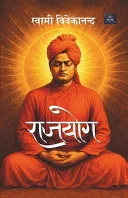
Raja Yoga
 73
73

Raja Yoga
Vivekananda's "Raja Yoga" presents a rigorous framework for understanding the mind's operations, derived directly from Patanjali's foundational text. Its strength lies in its clarity and methodical exposition, making complex philosophical ideas accessible to a Western audience at the turn of the 20th century. The author's ability to translate abstract concepts like *chitta vritti nirodha* into practical, actionable steps is remarkable. However, the sheer density of the philosophical arguments, particularly in the sections detailing the Yoga Sutras, might present a challenge for readers seeking solely practical meditation techniques without engaging deeply with the underlying metaphysics. The discussion on *Samadhi*, while illuminating, requires significant contemplative effort to fully grasp. Ultimately, this work stands as a crucial bridge between ancient yogic philosophy and modern inquiry into consciousness.
📝 Description
73
Swami Vivekananda published Raja Yoga in 1896, presenting a scientific approach to mind control.
Raja Yoga, first published in 1896, is Swami Vivekananda's systematic explanation of a science of the mind. It translates Patanjali's Yoga Sutras into clear English, detailing a path toward self-realization through disciplined concentration. The book explains the eight limbs of yoga, focusing on practices that help individuals gain mastery over mental fluctuations. This work is suited for serious students of yoga and meditation who want to grasp the philosophical and psychological foundations of these practices. It appeals to those interested in applying ancient Indian philosophy for mental and spiritual growth, moving beyond purely physical aspects. Readers seeking a structured method for self-mastery will find its approach valuable.
Vivekananda's Raja Yoga emerged in the late 19th century, a time when Western interest in Eastern philosophies was growing. Published in 1896, soon after his 1893 Parliament of Religions speech, it offered a structured exposition of yogic philosophy to a Western audience. The book aimed to demystify yogic practices, presenting them not as mere mysticism but as a systematic method for mental control, aligning with a broader spiritual and philosophical awakening of the era.
💡 Why Read This Book?
• Learn the eight limbs of Raja Yoga as outlined by Patanjali, which Vivekananda elucidates, to understand the systematic path to mental control and self-awareness. • Grasp the concept of *chitta vritti nirodha*, the core principle of quieting mental fluctuations, to develop practical techniques for focus and inner peace. • Explore the nature of *Samadhi* as described by Vivekananda, offering a framework for understanding states of deep meditative absorption beyond ordinary consciousness.
⭐ Reader Reviews
Honest opinions from readers who have explored this book.
❓ Frequently Asked Questions
When was Swami Vivekananda's Raja Yoga first published?
Swami Vivekananda's "Raja Yoga" was first published in 1896. This seminal work presented Patanjali's Yoga Sutras to a Western audience, making complex yogic philosophy accessible.
What is the primary goal of Raja Yoga as described by Vivekananda?
The primary goal of Raja Yoga, according to Vivekananda, is the control of the fluctuations of the mind (*chitta vritti nirodha*) to achieve self-realization and understand the true nature of the Self.
On which ancient text is Vivekananda's Raja Yoga based?
Vivekananda's "Raja Yoga" is primarily based on the Yoga Sutras of the ancient Indian sage Patanjali, offering a systematic interpretation of these profound teachings.
What are the eight limbs of Raja Yoga mentioned in the book?
The book details the eight limbs: Yama, Niyama, Asana, Pranayama, Pratyahara, Dharana, Dhyana, and Samadhi, which together form the comprehensive path of Raja Yoga.
Is Raja Yoga only about physical postures?
No, Vivekananda's "Raja Yoga" emphasizes that while Asana (posture) is one limb, the primary focus is on mental discipline, concentration, and meditation to achieve control over the mind.
Where did Swami Vivekananda present these teachings?
Swami Vivekananda presented these teachings extensively in the West, notably after his impactful address at the Parliament of Religions in Chicago in 1893, leading to the publication of "Raja Yoga".
🔮 Key Themes & Symbolism
Control of Mental Modifications
The central theme is *chitta vritti nirodha*, the cessation of the mind's constant fluctuations. Vivekananda explains how through disciplined practice, one can quiet the surface mind to access deeper states of awareness. This involves understanding the various states of consciousness and learning to direct mental energy, moving from distraction to profound concentration. The text provides a framework for observing and eventually mastering the inherent restlessness of the human psyche.
The Eight Limbs of Yoga
Vivekananda meticulously breaks down the eightfold path of Raja Yoga as codified by Patanjali. These limbs—Yama, Niyama, Asana, Pranayama, Pratyahara, Dharana, Dhyana, and Samadhi—are presented not as isolated steps but as integral components of a holistic system. The book guides the reader through the ethical observances (Yama, Niyama), physical control (Asana, Pranayama), sensory withdrawal (Pratyahara), and the progressive stages of concentration and meditation leading to ultimate union (Dharana, Dhyana, Samadhi).
Self-Realization Through Discipline
The ultimate objective presented is self-realization—the understanding of one's true nature beyond the ego and the physical body. Vivekananda posits that this realization is achieved not through external worship or blind faith, but through rigorous internal discipline and systematic mental training. The book offers a scientific approach to spirituality, where consistent practice leads to verifiable inner transformation and the transcendence of suffering.
The Science of Mind
Vivekananda frames Raja Yoga as a science, emphasizing its empirical and practical nature. He draws parallels between yogic practices and scientific inquiry, suggesting that the mind is as amenable to study and control as the physical world. This perspective clarifies yoga for a Western audience, presenting it as a logical and systematic method for exploring consciousness and achieving higher states of awareness.
💬 Memorable Quotes
Direct passages from the work, attributed to the author.
“The mind is but a mirror.”
— This metaphor illustrates the mind's nature as a reflective surface. When clouded by distractions and desires (vrittis), it distorts reality. Yoga aims to purify this mirror, allowing for clear perception of truth and the Self.
“Concentration is the essence of all knowledge.”
— This statement emphasizes the power of focused attention. Vivekananda suggests that the ability to concentrate the mind is the key to unlocking deeper understanding and acquiring true knowledge, both mundane and spiritual.
“The will is the only thing that can make us do or not do.”
— This emphasizes the critical role of volition in spiritual practice. Vivekananda highlights that the power to act or refrain from acting, to pursue or abandon a path, rests ultimately with one's own will, which yoga seeks to strengthen.
💡 Key Ideas
Editorial paraphrase of the work's core concepts — not direct quotes.
Each man is divine.
This quote captures Vivekananda's core philosophy that the divine spark resides within every individual. It suggests that the purpose of yogic practice is to uncover and realize this inherent divinity, rather than seeking it externally.
The goal is to see God in all.
This paraphrased concept highlights the expansion of consciousness achieved through Raja Yoga. It signifies a state where the practitioner perceives the divine essence not just within themselves but in all beings and phenomena, fostering universal compassion.
🌙 Esoteric Significance
Tradition
Vivekananda's "Raja Yoga" is firmly rooted in the classical Indian philosophical system of Yoga, specifically as codified by Patanjali. While it departs from purely devotional or ritualistic approaches, it fits within the broader esoteric tradition of Indian spirituality that seeks direct experience of ultimate reality. It can be seen as a bridge between Indic traditions and Western esoteric thought, particularly its emphasis on mind-control and consciousness exploration, which resonated with movements like Theosophy and later New Age philosophies.
Symbolism
The eight limbs of yoga serve as symbolic representations of a progressive journey. Yama and Niyama symbolize ethical foundations, Asana and Pranayama represent bodily and vital control, Pratyahara signifies the inward turn of the senses, and Dharana, Dhyana, and Samadhi symbolize the increasing depths of meditative absorption. The 'lotus' symbol, often associated with yogic practice, represents the unfolding consciousness, with the crown chakra opening as the ultimate goal of Samadhi.
Modern Relevance
Contemporary mindfulness practices, secularized meditation techniques, and cognitive behavioral therapy all echo principles found in "Raja Yoga," particularly its focus on observing and managing mental states. Thinkers and practitioners in fields ranging from neuroscience of consciousness to positive psychology draw upon the conceptual framework Vivekananda provided for understanding attention, perception, and well-being. The book continues to be a foundational text for many modern yoga lineages and spiritual seekers worldwide.
👥 Who Should Read This Book
• Students of comparative philosophy and religion seeking a direct engagement with classical Indian texts on consciousness and self-realization. • Aspiring meditators and yogis looking for a comprehensive theoretical and practical guide to the deeper aspects of yoga beyond physical postures. • Individuals interested in the history of ideas and the transmission of Eastern philosophies to the West, particularly the impact of Swami Vivekananda's work in the late 19th century.
📜 Historical Context
Swami Vivekananda's "Raja Yoga," published in 1896, emerged during a period of intense Western fascination with Eastern spirituality, particularly following his landmark address at the 1893 Parliament of Religions in Chicago. This era saw the rise of movements like Theosophy, which popularized concepts from Indian religions, often in syncretic forms. Vivekananda's work distinguished itself by presenting a direct, philosophical, and practical exposition of Patanjali's Yoga Sutras, stripped of later accretions and presented as a universal science of mind. Unlike some contemporary interpretations that might have focused more on esoteric phenomena or blended traditions uncritically, Vivekananda's approach was grounded in classical texts and rigorous mental discipline. His lectures, which formed the basis of the book, were delivered to receptive audiences in London and New York, marking a significant moment in the transmission of yogic philosophy to the West and challenging prevailing Western philosophical and scientific paradigms of the time.
📔 Journal Prompts
Patanjali's Yoga Sutras as presented by Vivekananda: What is the primary obstacle to direct perception?
The concept of *chitta vritti nirodha*: How can daily observation of mental fluctuations inform practice?
The eight limbs of yoga: Reflect on the relationship between Yama and the practice of Dharana.
The nature of *Samadhi*: What are the potential implications of altered states of consciousness for understanding reality?
Swami Vivekananda's interpretation of the mind as a mirror: How does this analogy influence your perception of self?
🗂️ Glossary
Chitta Vritti Nirodha
The cessation or control of the modifications (fluctuations) of the mind. This is considered the principal aim of Raja Yoga, leading to clarity and self-realization.
Yama
The first limb of Raja Yoga, encompassing ethical restraints or moral disciplines, such as non-violence (ahimsa), truthfulness (satya), and non-stealing (asteya).
Niyama
The second limb, consisting of observances or positive duties, including purity (saucha), contentment (santosha), and self-study (svadhyaya).
Asana
The third limb, referring to the physical posture or steady and comfortable seat adopted for meditation. It emphasizes stability and ease.
Pranayama
The fourth limb, involving the regulation and control of breath, which is seen as intrinsically linked to the flow of vital energy (prana) and mental states.
Dharana
The sixth limb, the act of concentration or fixing the mind upon a single point or object.
Samadhi
The eighth and final limb, representing a state of profound meditative absorption or super-consciousness, where the mind is unified with the object of meditation.