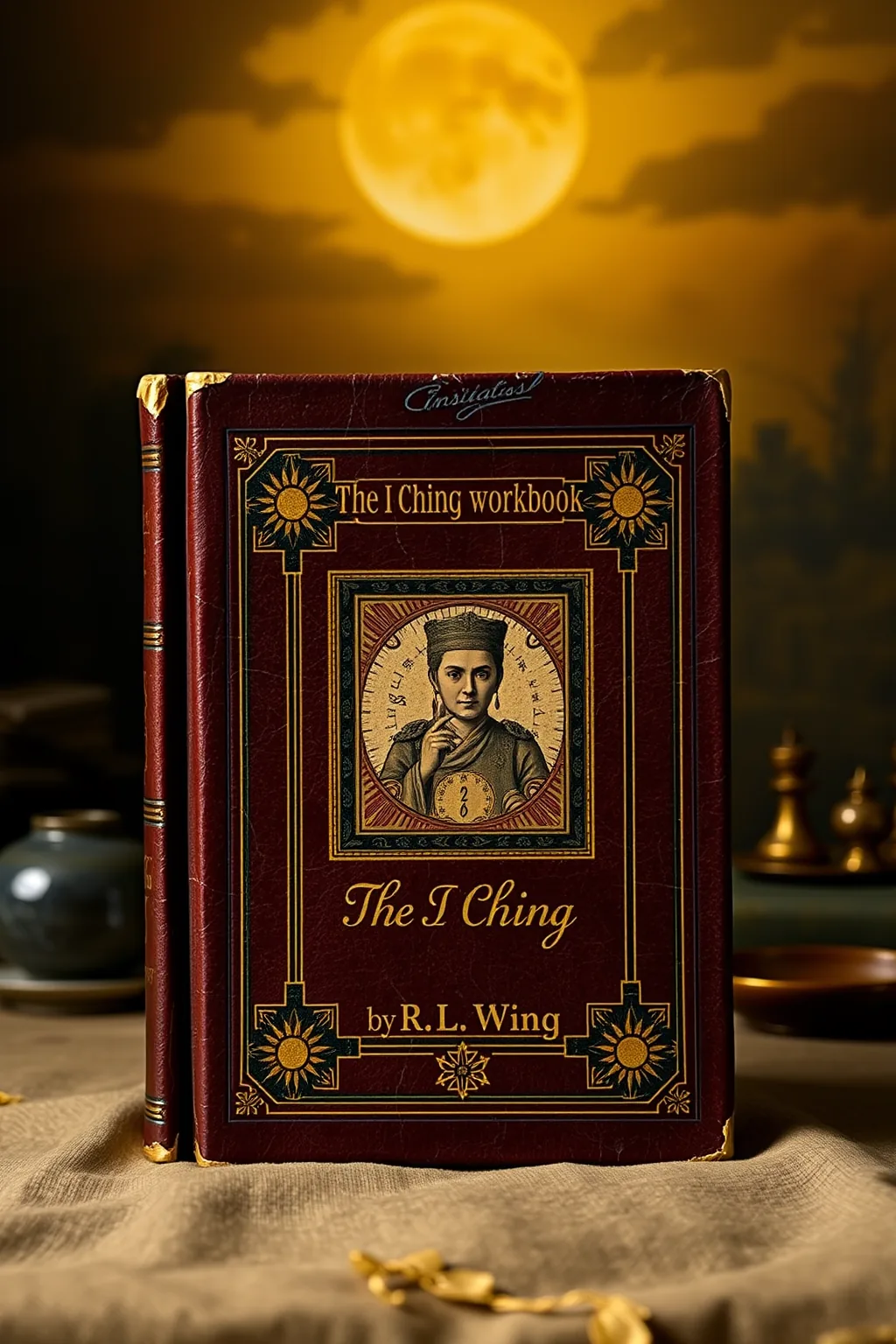
The I Ching workbook
 83
83

The I Ching workbook
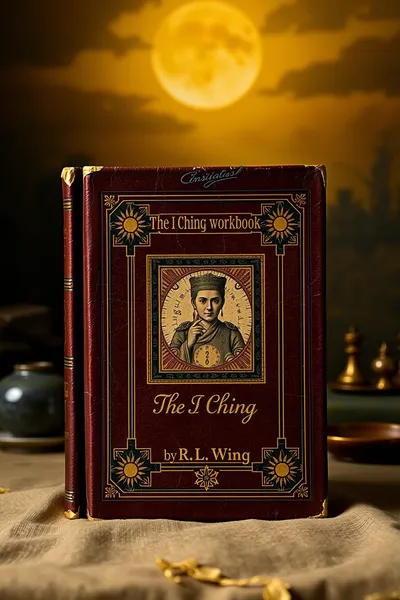
R. L. Wing's The I Ching Workbook, first released in 1979, offers a systematic approach to engaging with the venerable Book of Changes. Unlike purely scholarly or poetic renderings, Wing structures the text for active use, which is its primary strength. The workbook format encourages direct interaction with the hexagrams and their interpretations, moving the reader from passive recipient to active participant in the divinatory process. One particularly effective section details the changing lines, providing clear guidance on how to interpret their dynamic influence on the primary hexagram. However, the workbook occasionally feels constrained by its own structured approach; the emphasis on a specific method of consultation, while helpful for beginners, might limit the exploration for those familiar with other interpretive traditions. The 1979 publication date also means its stylistic presentation is rooted in that era. Nevertheless, The I Ching Workbook remains a functional tool for anyone seeking a hands-on introduction to this profound oracle.
📝 Description
83
R. L. Wing's 1979 I Ching Workbook makes the Book of Changes accessible for personal use.
The I Ching Workbook, published in 1979, serves as a practical manual for engaging with the ancient Chinese text known as the Book of Changes. R. L. Wing structured the hexagrams and their associated texts to facilitate personal study and consultation. It moves beyond simple translation, presenting methods for interpreting the symbolic language and understanding the divinatory results. The workbook's design aims to simplify the I Ching's complex system for a Western audience seeking insight and direction.
This resource is for individuals interested in using the I Ching for self-improvement, decision-making, or spiritual exploration. It suits those who prefer an active way to learn esoteric texts, rather than just reading them. Students of Chinese philosophy, comparative religion, and Western occult traditions will find its organized format useful. It is suitable for newcomers wanting a clear starting point and for experienced practitioners seeking a systematic approach.
Wing's 1979 publication arrived during a time of growing Western interest in Eastern philosophies. It offered a practical tool for applying the I Ching, a text often seen as academic or mystical. Unlike purely philosophical translations, this workbook provided a structured method for everyday use. It connected with the broader New Age movement's interest in cross-cultural spiritual practices and the application of ancient wisdom for personal guidance.
💡 Why Read This Book?
• Learn a structured method for consulting the I Ching, moving beyond passive reading to active interpretation of the 64 hexagrams and their changing lines, as presented in R. L. Wing's 1979 guide. • Gain practical insight into the symbolic language of the I Ching by focusing on the specific interpretations of the judgment (gua ci) and image (xiang ci) for each hexagram. • Develop personal divination skills through interactive exercises, utilizing the workbook's format to connect your own inquiries with the wisdom of the ancient Chinese text.
⭐ Reader Reviews
Honest opinions from readers who have explored this book.
❓ Frequently Asked Questions
What is the I Ching and when was it first published?
The I Ching, or Book of Changes, is an ancient Chinese divination text with roots stretching back thousands of years. Its earliest components date back to the Western Zhou dynasty (c. 1046–771 BCE), with later additions and commentaries evolving over centuries.
Who is R. L. Wing and what is his contribution?
R. L. Wing authored The I Ching Workbook, first published in 1979. His work aimed to make the complex system of the I Ching accessible through a structured, interactive format for Western readers interested in divination and self-reflection.
What are the basic components of the I Ching system presented in the workbook?
The workbook focuses on the 64 hexagrams, each formed by six lines (yin or yang). Each hexagram has associated 'judgments' and 'images,' along with specific interpretations for 'changing lines' that indicate shifts and future possibilities.
How does The I Ching Workbook differ from other translations?
Unlike many scholarly or philosophical translations, Wing's workbook is designed for practical application. It provides a step-by-step method for casting hexagrams and interpreting the results, encouraging active engagement rather than passive study.
When was R. L. Wing's I Ching Workbook first published?
R. L. Wing's The I Ching Workbook was first published in 1979, placing it within a period of heightened Western interest in Eastern esoteric traditions.
What is the purpose of the 'changing lines' in the I Ching?
Changing lines within a hexagram are crucial for divination. They represent dynamic elements within the situation being consulted, offering insights into potential developments and guiding the interpretation towards a more nuanced outcome.
🔮 Key Themes & Symbolism
Hexagrammatic Divination
The workbook's core function is to facilitate divination using the 64 hexagrams of the I Ching. Each hexagram is presented with its associated judgment and image, offering symbolic interpretations for various life situations. Wing guides the reader through the process of casting hexagrams, typically via coin or yarrow stalk methods, to receive guidance. This theme emphasizes the I Ching not merely as a text, but as an active oracle capable of reflecting the dynamics of a questioner's circumstances and offering counsel for navigating them.
The Dynamics of Change
Central to the I Ching's philosophy, and explicitly addressed in Wing's workbook, is the concept of constant transformation. The 64 hexagrams represent archetypal states, but the presence of 'changing lines' within a hexagram highlights the fluid nature of reality. These changing lines act as indicators of movement and potential future states, allowing for a more detailed and predictive interpretation of the oracle's message. This theme underscores the I Ching's view of life as a continuous process of evolution and adaptation.
Symbolic Interpretation
The workbook looks at the rich symbolic language embedded within the I Ching. Each hexagram and its component trigrams (three-line figures) are imbued with meaning derived from natural phenomena, societal roles, and cosmic principles. Wing's approach encourages readers to understand the 'image' text associated with each hexagram, which often draws parallels between the hexagram's structure and natural occurrences or human activities, fostering a deeper, intuitive grasp of its message.
Personal Guidance and Wisdom
The I Ching Workbook positions the ancient text as a tool for personal development and informed decision-making. By providing a structured method for consultation, it empowers individuals to seek clarity on personal challenges, relationships, and career paths. The wisdom imparted through the hexagrams is presented as guidance for ethical conduct and alignment with natural principles, encouraging self-reflection and mindful action rather than passive acceptance of fate.
💬 Memorable Quotes
Direct passages from the work, attributed to the author.
“The I Ching is a book of wisdom and guidance.”
— This statement highlights the primary purpose of the I Ching as presented by Wing: a source of profound knowledge and direction, intended to aid individuals in understanding and navigating life's complexities.
“Each hexagram represents a fundamental situation or transformation.”
— This concept emphasizes the archetypal nature of the 64 hexagrams, suggesting they are not random symbols but encapsulate core patterns of human experience and the dynamic processes of change.
“Changing lines indicate movement and future possibilities.”
— This points to a critical mechanism within I Ching divination, where specific lines within a hexagram's structure are in flux, signaling potential developments and offering a more detailed forecast beyond the immediate situation.
“Understanding the images provides deeper insight.”
— This encourages a more intuitive and symbolic reading of the I Ching, suggesting that the 'image' text associated with each hexagram offers a metaphorical lens through which to grasp its essential meaning.
“The workbook provides a practical method for consultation.”
— This signifies Wing's intention to bridge the gap between the ancient text and contemporary readers, offering a structured, actionable approach to using the I Ching as a divinatory tool.
🌙 Esoteric Significance
Tradition
The I Ching belongs to the ancient Chinese philosophical and divinatory tradition, predating many Western esoteric systems. While not directly Hermetic or Kabbalistic, its emphasis on cosmic principles, the interplay of yin and yang (analogous to active/passive or feminine/masculine principles), and the belief in a divinely ordered universe that can be consulted for guidance aligns with broader esoteric currents. Wing's workbook makes this tradition accessible, framing it as a system of wisdom applicable to individual lives, much like Western Hermeticism seeks to understand universal laws.
Symbolism
Key symbols include the yin (broken) and yang (solid) lines, which form the basis of all 64 hexagrams. These lines represent fundamental dualities: passive/active, earth/heaven, dark/light. The trigrams, composed of three lines, are also potent symbols (e.g., Heaven, Earth, Fire, Water). The hexagrams themselves are symbolic representations of archetypal situations and processes, from 'The Creative' (Qian) to 'The Receptive' (Kun), offering a symbolic language to understand the unfolding of events.
Modern Relevance
Contemporary thinkers and practitioners in fields like transpersonal psychology, mindfulness, and even systems theory draw parallels with the I Ching's holistic and process-oriented worldview. The book's structured approach to divination continues to influence modern oracle practices, and its philosophical underpinnings are explored in comparative philosophy and spirituality studies. Its emphasis on change and adaptability remains relevant in a rapidly evolving global landscape.
👥 Who Should Read This Book
• Individuals new to the I Ching seeking a structured, interactive method to learn its principles and practice divination. • Students of comparative religion and Chinese philosophy interested in a practical application of ancient wisdom texts. • Practitioners of esoteric arts looking to integrate a distinct Eastern divinatory system into their personal or professional practice.
📜 Historical Context
The I Ching Workbook, published in 1979 by R. L. Wing, arrived during a vibrant era of Western engagement with Eastern thought. The post-war decades, particularly the 1960s and 70s, saw a surge of interest in philosophies and practices from China and India, partly fueled by translations and scholarly work like Richard Wilhelm's I Ching, which famously included a foreword by Carl Jung in its 1950 Bollingen Series edition. Wing's workbook distinguished itself by offering a practical, user-friendly guide, moving beyond the purely academic or philosophical discourse that often surrounded the text. It resonated with the burgeoning New Age movement and individuals seeking accessible tools for personal growth and spiritual inquiry. While competing schools of Western esoteric thought, such as Hermeticism and Theosophy, also had dedicated followings, the I Ching offered a distinct cosmological framework rooted in Chinese tradition, attracting a unique audience interested in comparative spirituality and ancient wisdom systems.
📔 Journal Prompts
The hexagrammatic structure and its evolving lines.
The symbolic imagery associated with the Judgment text of Hexagram 1, The Creative.
The concept of changing lines and their predictive function.
Personal application of a specific hexagram's wisdom to a current life challenge.
The relationship between the I Ching's principles and Western esoteric concepts.
🗂️ Glossary
Hexagram
A symbol composed of six stacked lines, each either solid (yang) or broken (yin). There are 64 unique hexagrams in the I Ching, representing fundamental situations and transformations.
Yin Line
A broken line (--) representing passive, receptive, dark, or feminine qualities in the I Ching's symbolic system.
Yang Line
A solid line (—) representing active, creative, light, or masculine qualities in the I Ching's symbolic system.
Trigram
A symbol composed of three stacked lines (yin or yang). There are eight basic trigrams, which are combined to form the 64 hexagrams.
Gua Ci (Judgment)
The text associated with each hexagram, offering a general judgment or commentary on the situation it represents.
Xiang Ci (Image)
The text associated with each hexagram that describes the symbolic image or analogy it represents, often relating it to natural phenomena.
Changing Lines
Specific lines within a hexagram (usually one, two, or three) that are transitioning from yin to yang or vice versa. These lines are crucial for interpreting the evolving dynamics of a divination.
🔮 Readers Also Liked
Browse all →







More by R. L. Wing
All books →


More Free Divination & Tarot Books
View all →