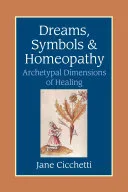
Dreams, Symbols, and Homeopathy
 71
71

Dreams, Symbols, and Homeopathy
Cicchetti's "Dreams, Symbols, and Homeopathy" offers a compelling, albeit dense, exploration of the psyche's influence on physical health. The work’s strength lies in its direct application of Jungian concepts, particularly the shadow, to therapeutic practice, moving beyond abstract theory. The inclusion of client interview techniques and practical remedies grounds the esoteric material effectively. However, the book's ambition sometimes outstrips its clarity; certain sections, especially those detailing the transpersonal self, could benefit from more explicit examples to aid readers less familiar with Jungian terminology. A particularly striking passage discusses how repressed shadow elements manifest as physical ailments, a concept Cicchetti uses to justify homeopathic interventions. Ultimately, it provides a valuable, if challenging, resource for practitioners seeking a more integrated approach to healing.
📝 Description
71
Jane Cicchetti's 2003 book connects dream interpretation and homeopathy with Jungian psychology.
Dreams, Symbols, and Homeopathy, published in 2003, examines how psychological symbolism and dream analysis can inform holistic healing. Cicchetti suggests that understanding unconscious processes, particularly through dreams and the concept of the shadow self, provides valuable insights for current health challenges. The book connects esoteric psychological principles with practical therapeutic methods, offering readers techniques they can apply.
This work is for medical practitioners, therapists, and anyone interested in integrative health and alternative healing. It will appeal to those who want to understand the psyche's influence on physical health, especially practitioners looking to blend Jungian psychology with natural remedies. Students of esoteric sciences and comparative psychology will also find it relevant.
Cicchetti's book appeared in the early 2000s, a time of growing interest in Jungian psychology outside of academia. It built upon earlier studies of the unconscious's symbolic language, following thinkers like Carl Jung. The book joined a larger trend that aimed to link psychological depth with physical health, moving away from solely biomedical views. Its reception added to conversations about the value of holistic and psychodynamically informed medical approaches.
Cicchetti's work is situated within a tradition that views the psyche as integral to physical well-being, drawing heavily from Carl Jung's analytical psychology. It follows a lineage that sees dreams not merely as random mental events but as meaningful messages from deeper levels of the mind, often expressed through symbolic language. This perspective aligns with esoteric schools that explore the connection between consciousness, symbolism, and healing, proposing that imbalances in the psyche manifest in the body. The book's integration of homeopathy further places it within a holistic healing framework that posits a vital force or energy underlies both mind and matter.
💡 Why Read This Book?
• Learn how to analyze dream symbolism as a diagnostic tool for physical ailments, drawing directly from Cicchetti's methods for interpreting unconscious messages, as detailed in the 'dream analysis' sections. • Understand the specific role of the 'shadow' in psychological and physical health, gaining insights into how unacknowledged aspects of the self can manifest as illness, a concept elaborated throughout the book. • Discover practical client interview techniques and natural remedies that integrate Jungian psychological principles with holistic healing, directly applicable for practitioners seeking to broaden their therapeutic toolkit, as presented in the later chapters.
⭐ Reader Reviews
Honest opinions from readers who have explored this book.
❓ Frequently Asked Questions
What is the primary focus of Jane Cicchetti's "Dreams, Symbols, and Homeopathy"?
The book focuses on integrating dream analysis and Jungian psychology, particularly the concept of the shadow, to address contemporary health challenges through natural remedies and specific interview techniques.
When was "Dreams, Symbols, and Homeopathy" first published?
The book was first published on September 8, 2003.
Who would benefit most from reading this book?
Medical practitioners, therapists, students of esoteric sciences, and individuals interested in holistic health and the psychological roots of illness would find this book particularly beneficial.
What are some key Jungian concepts discussed in the book?
Key concepts include the role of the shadow in healing, the relationship between the ego and the transpersonal self, and the application of dream analysis.
Does the book offer practical advice?
Yes, it includes client interview techniques, suggestions for natural remedies, and a glossary of Jungian terms to aid understanding and application.
What distinguishes this book from other works on dreams or homeopathy?
Its unique contribution lies in the direct synthesis of Jungian dream interpretation and the shadow concept with practical homeopathic and therapeutic applications for present-day health issues.
🔮 Key Themes & Symbolism
The Shadow in Healing
Cicchetti posits that the 'shadow,' representing the unacknowledged aspects of the personality, plays a critical role in the onset and progression of physical ailments. The work explores how integrating these repressed elements, often revealed through dream imagery, is essential for comprehensive healing. It suggests that by bringing the shadow into conscious awareness, individuals can begin to address underlying psychological conflicts that may manifest somatically, moving towards a more complete state of well-being.
Dream Analysis for Health
The book presents dream interpretation not merely as a psychological exercise but as a vital diagnostic and therapeutic tool for understanding present-day health challenges. Cicchetti details how symbols and narratives within dreams can offer direct insights into a person's physical and emotional state, guiding practitioners toward effective natural remedies. This approach emphasizes the unconscious mind's communication through symbolic language to facilitate the body's natural healing processes.
Ego and Transpersonal Self
A central theme is the dynamic relationship between the ego, our conscious identity, and the transpersonal self, connecting us to a broader existential reality. Cicchetti argues that an imbalance or misunderstanding between these aspects can contribute to illness. The work guides readers to recognize how experiences of the transpersonal self, often accessed through dreams and symbols, can provide profound healing perspectives that transcend the limitations of the everyday ego.
Holistic Therapeutic Practice
Dreams, Symbols, and Homeopathy advocates for a unified approach to therapy and medicine. It equips practitioners with techniques for client interviews that uncover symbolic meanings and suggests natural remedies informed by both psychological insight and homeopathic principles. This holistic framework aims to treat the whole person—mind, body, and spirit—rather than isolated symptoms, reflecting a growing movement in alternative and integrative health.
💬 Memorable Quotes
Direct passages from the work, attributed to the author.
“The role of the shadow in healing.”
— This concise phrasing highlights a core Jungian concept applied therapeutically. It suggests that confronting and integrating the darker, unacknowledged aspects of oneself is not just a psychological process but a necessary component for physical recovery and holistic well-being.
“The relationship between the ego and the transpersonal self.”
— This points to the book's exploration of consciousness beyond personal identity. It frames the connection to a larger, perhaps spiritual or collective, dimension as crucial for understanding the psyche and its influence on health.
“The application of dream analysis for health challenges.”
— This interpretation emphasizes the practical utility of dreams. It frames dream interpretation not as an abstract pursuit but as a direct method for diagnosing and treating contemporary physical and psychological ailments.
“Included are client interview techniques, natural remedies.”
— This practical summary indicates the book's actionable content. It suggests that Cicchetti provides concrete tools for practitioners, bridging theoretical concepts with tangible methods for patient care.
“A bibliography and glossary of Jungian terms.”
— This points to the book's academic and pedagogical rigor. It signifies that the work is intended to be a self-contained resource, aiding readers in navigating complex psychological theories and terminology.
🌙 Esoteric Significance
Tradition
Cicchetti's work draws heavily from the analytical psychology lineage established by Carl Jung. While Jung himself engaged with esoteric traditions like alchemy and Gnosticism, Cicchetti applies these Jungian frameworks, particularly archetypal symbolism and the concept of the collective unconscious, to practical therapeutic and healing contexts. It fits within a broader esoteric tradition that views the psyche as a gateway to understanding deeper realities and the energetic underpinnings of health.
Symbolism
Key symbols explored include the 'shadow,' representing repressed aspects of the self that can manifest as illness, and dream imagery itself, viewed as the unconscious mind's symbolic language. The 'transpersonal self' is another crucial motif, signifying a connection to something larger than the individual ego, offering a source of healing and meaning. These symbols function as archetypal signposts pointing towards psychological integration and wholeness.
Modern Relevance
Contemporary practitioners in fields like transpersonal psychology, depth psychotherapy, and integrative medicine echo Cicchetti's approach. Therapists exploring somatic experiencing and the mind-body connection, as well as those using dream work or archetypal psychology, find her synthesis valuable. Her work informs modern discussions on how psychological distress, particularly when unacknowledged (the shadow), can manifest in physical symptoms, advocating for holistic treatment strategies.
👥 Who Should Read This Book
• Therapists and counselors seeking to deepen their understanding of Jungian dream analysis and its application to physical health, gaining practical techniques for client work. • Homeopathic practitioners interested in integrating psychological insights, particularly from the concept of the shadow, into their case-taking and remedy selection processes. • Students and researchers of esoteric sciences and comparative psychology exploring the connections between the unconscious mind, symbolism, and holistic healing modalities.
📜 Historical Context
Jane Cicchetti's "Dreams, Symbols, and Homeopathy," published in 2003, emerged within a burgeoning field of integrative medicine and depth psychology applications. It arrived at a time when Western societies, particularly in the wake of figures like Carl Jung, were increasingly open to exploring the subconscious mind's role in physical health, moving beyond purely biomedical paradigms. This period saw a resurgence of interest in holistic approaches, influenced by both ancient wisdom traditions and contemporary psychological theories. Cicchetti's work engaged with the legacy of Jungian analysis, which had established itself as a significant counterpoint to Freudian psychoanalysis and behaviorism decades prior. While not a direct contemporary in terms of writing period, figures like James Hillman, who explored archetypal psychology, represented a similar intellectual current valuing symbolic and mythological dimensions of the psyche. The book's emphasis on homeopathy also positioned it within the broader alternative medicine movement, which often faced skepticism from the established medical community.
📔 Journal Prompts
The shadow's manifestation in physical symptoms.
Dream symbolism as a guide for healing.
Personal relationship between ego and transpersonal self.
Integrating unconscious insights into daily life.
The impact of repressed emotions on well-being.
🗂️ Glossary
Shadow
In Jungian psychology, the shadow represents the unconscious aspects of the personality that the conscious ego does not identify with, often containing repressed desires, weaknesses, and primitive instincts.
Ego
The center of consciousness in Jungian psychology; the part of the personality that is aware of itself and mediates between the inner world and the external environment.
Transpersonal Self
The aspect of the psyche that extends beyond the individual ego and personal consciousness, connecting to universal archetypes, collective unconscious, or spiritual dimensions.
Dream Analysis
The process of interpreting the symbolic content of dreams to gain insight into the unconscious mind, uncover hidden conflicts, and understand psychological and emotional states.
Homeopathy
A system of alternative medicine based on the principle of 'like cures like,' using highly diluted substances to stimulate the body's self-healing mechanisms.
Archetype
Universal, archaic patterns and images that derive from the collective unconscious and are the psychic counterpart of a biological or instinctive function.
Collective Unconscious
A concept introduced by Carl Jung, referring to a layer of the unconscious mind that is shared by all humans, containing archetypes and instincts inherited from ancestors.