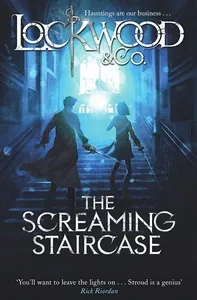
Nancy Drew ghost stories

 78
78

Nancy Drew ghost stories
The Nancy Drew Ghost Stories collection offers a curious deviation from the established formula of the beloved detective series. While the 1984 publication date suggests a potential for late-20th-century anxieties, the stories themselves largely maintain the series' signature optimism, framing spectral encounters as puzzles to be solved rather than sources of existential dread. Nancy's character remains consistent: sharp, resourceful, and unafraid. A notable strength lies in how the author, Carolyn Keene, manages to imbue even the most spectral scenarios with a grounding sense of mystery. For instance, in tales involving phantom noises or unexplained apparitions, the narrative consistently pushes towards a logical, albeit sometimes elaborate, resolution that satisfies the series' core tenets. However, a limitation emerges in the predictability; seasoned mystery readers, even young ones, may find the supernatural elements serve more as atmospheric dressing than genuine challenges to Nancy's intellect. The book is best approached not as a serious exploration of the paranormal, but as a playful extension of the classic Nancy Drew formula.
This collection successfully injects a spectral flavor into familiar mystery-solving, offering light thrills for devoted fans.
📝 Description
78
Nancy Drew ghost stories, published in 1984, collects spectral encounters tackled by the teenage detective.
This 1984 compilation gathers tales where Nancy Drew faces spectral phenomena. These stories blend mystery with the uncanny, requiring Nancy's characteristic logic and courage. They are not outright horror but feature supernatural elements that Nancy must unravel.
The intended audience includes young readers drawn to mysteries with a supernatural touch, as well as longtime Nancy Drew fans seeking a different kind of adventure. The book appeals to those who prefer light ghost stories emphasizing suspense and puzzle-solving over intense frights. Its accessible writing style suits pre-teen and early teen readers.
Published in 1984, these narratives emerge from a tradition of children's literature that often incorporated elements of the mysterious and unexplained. While not overtly occult, they tap into a fascination with ghosts and spectral activity common in popular culture. The Nancy Drew series, established decades earlier, provided a familiar framework for exploring these themes, allowing for variations on its classic mystery formula. The stories apply a rational, albeit determined, approach to phenomena that challenge conventional understanding.
💡 Why Read This Book?
• Learn how Nancy Drew applies her characteristic deductive reasoning to phenomena that defy immediate explanation, a technique valuable for problem-solving in any context, as seen in her investigation of the "Haunted Bridge" scenario. • Experience the specific atmosphere of 1980s juvenile mystery fiction, where supernatural elements are integrated into established detective frameworks, offering a unique narrative style not found in contemporary works. • Discover how the series navigates the concept of 'ghosts' by often presenting them as elaborate hoaxes or misunderstood natural occurrences, providing a model for critical thinking when faced with the unexplained, as exemplified in the "Whispering Ghosts" tales.
⭐ Reader Reviews
Honest opinions from readers who have explored this book.
❓ Frequently Asked Questions
Are the Nancy Drew Ghost Stories genuinely scary?
These stories are designed for a younger audience and focus more on mystery and suspense than outright horror. While they feature ghosts and unexplained events, the tone is generally light, aiming to intrigue rather than terrify readers.
What year were Nancy Drew Ghost Stories first published?
The collection Nancy Drew Ghost Stories was first published in 1984, marking a period when the series continued to explore varied thematic content.
Does Nancy Drew believe in ghosts in these stories?
Nancy typically approaches supernatural claims with skepticism, seeking rational explanations. While she encounters phenomena that appear ghostly, her investigations often uncover logical reasons behind the spectral occurrences.
Are these stories part of the original Nancy Drew series?
Yes, these stories are part of the long-running Nancy Drew series, written under the pseudonym Carolyn Keene. They represent a thematic variation within the broader canon.
What age group is Nancy Drew Ghost Stories best suited for?
The stories are generally well-suited for readers aged 8-12. The language is accessible, and the mysteries, while featuring supernatural elements, are not overly complex or frightening.
Where does Nancy Drew investigate in these ghost stories?
The settings vary across the stories, often featuring classic mystery locales like old mansions, deserted inns, or isolated estates that lend themselves to a haunted atmosphere.
🔮 Key Themes & Symbolism
Rationality vs. Supernatural
A central theme involves Nancy Drew's unwavering commitment to logic and evidence when confronted with seemingly supernatural events. The narratives often present spectral phenomena—unexplained noises, apparitions, moving objects—only for Nancy to meticulously investigate and uncover a rational explanation, such as a hidden passage, a clever prank, or a natural occurrence misinterpreted. This approach reinforces the idea that even the most baffling occurrences can be understood through careful observation and deduction, a core tenet of the Nancy Drew character since her debut in 1930.
The Haunted Setting
The ghost stories frequently utilize classic gothic or mysterious settings to enhance atmosphere and suspense. Old, isolated houses, abandoned inns, or eerie natural landmarks serve as backdrops for the supernatural occurrences. These locations are not merely descriptive but integral to the mystery, often holding historical secrets or physical properties that facilitate the 'haunting.' The 1984 publication date reflects a continued appeal of these archetypal settings in juvenile literature, drawing on a long tradition of mystery and suspense.
The Nature of Fear
While not overtly terrifying, the stories explore the human response to the unknown and the uncanny. They demonstrate how fear can arise from incomplete information or misinterpretation. Nancy's role is often to dispel this fear by revealing the truth, thereby showing readers that understanding can overcome apprehension. The narratives suggest that true mystery lies not in the supernatural itself, but in the human tendency to attribute unexplained events to spectral causes before exhausting rational possibilities.
Adolescent Agency
Consistent with the broader Nancy Drew canon, these stories highlight the competence and bravery of a young protagonist. Nancy, often acting independently or with minimal adult supervision, tackles challenging situations involving potentially dangerous phenomena. Her ability to navigate unsettling environments and confront the unknown underscores themes of adolescent capability and self-reliance, empowering young readers by showcasing a peer who can solve complex problems.
💬 Memorable Quotes
Direct passages from the work, attributed to the author.
“The old house seemed to whisper secrets from its dusty corners.”
— This descriptive phrase evokes the atmosphere of mystery and potential haunting common in these tales, suggesting the setting itself holds clues and a history waiting to be uncovered by Nancy.
“It wasn't a ghost, Nancy realized, but something far more earthly.”
— This represents a key moment in many of the stories, where Nancy's investigative skills lead her to clarify a spectral event, revealing a human-engineered or natural cause.
“Danger often lurked where least expected, even in supposedly peaceful towns.”
— This reflects the underlying suspense in the narratives, reminding the reader that Nancy's adventures frequently involve confronting threats that are not immediately apparent, regardless of the setting's outward appearance.
“She examined the faint marks on the floor, piecing together the puzzle.”
— This highlights Nancy's meticulous approach to investigation, emphasizing her reliance on tangible evidence and methodical analysis to solve even the most baffling of mysteries presented.
💡 Key Ideas
Editorial paraphrase of the work's core concepts — not direct quotes.
Nancy felt a shiver crawl up her spine, but she told herself there had to be a logical reason for the eerie sounds.
This line expresses Nancy's characteristic blend of acknowledging the unsettling nature of a situation while immediately resorting to her analytical mind, prioritizing a rational explanation over succumbing to fear.
🌙 Esoteric Significance
Tradition
While not explicitly rooted in a specific esoteric tradition like Hermeticism or Theosophy, these stories engage with folklore and popular perceptions of the supernatural. They reflect a late 20th-century Western cultural milieu where ghost stories were a common form of entertainment, often drawing on archetypal fears and narratives rather than codified magical systems. The work departs from traditional esoteric texts by prioritizing rational debunking over spiritual exploration or magical practice, aligning more with secularized mystery-solving.
Symbolism
Common symbols include the 'haunted house,' representing the subconscious, hidden past, or repressed memories, and 'shadowy figures,' symbolizing the unknown, fear, or deception. Unexplained noises often serve as auditory manifestations of lingering energies or unresolved issues from the past. These motifs function less as complex esoteric symbols and more as conventional tropes within the ghost story genre, employed to build suspense and atmosphere for a young audience.
Modern Relevance
Contemporary creators of mystery and supernatural fiction for young adults often build upon the foundational narrative structures established by series like Nancy Drew. The approach of integrating supernatural elements with rational investigation continues to influence modern storytelling, seen in works that blend detective elements with fantasy or paranormal themes. Thinkers in media studies or literary criticism examining the evolution of juvenile fiction might analyze these stories as examples of genre blending and the secularization of supernatural narratives.
👥 Who Should Read This Book
• Young readers aged 8-12 who enjoy mysteries with a gentle touch of the supernatural, offering suspense without frightening content. • Long-time fans of the Nancy Drew series seeking to explore the character's adventures in a different thematic vein, appreciating the consistency of her investigative approach. • Educators or parents looking for accessible chapter books that encourage critical thinking and problem-solving skills by presenting mysteries with potential supernatural explanations.
📜 Historical Context
Published in 1984, Nancy Drew Ghost Stories emerged during a period when children's literature continued to diversify genres. While the cultural landscape wasn't dominated by overt occultism in the way some earlier decades were, the enduring popularity of mystery series provided a fertile ground for thematic exploration. The Nancy Drew series, initiated in 1930 by Edward Stratemeyer's syndicate and penned by various authors under the pseudonym Carolyn Keene, had already established a robust brand identity by the mid-80s. This allowed for variations like ghost stories without fundamentally altering the core appeal of the detective protagonist. Competitors in the juvenile mystery market, such as the Hardy Boys (also from the Stratemeyer syndicate), similarly saw thematic expansions. The reception for such books was generally positive among their target audience, reinforcing the market for familiar characters tackling new kinds of adventures, albeit without significant critical academic attention or major controversies.
📔 Journal Prompts
Nancy Drew's initial reaction to eerie sounds in the old mansion.
The specific clues Nancy overlooked before realizing the 'ghost' was a hoax.
The atmosphere of the abandoned lighthouse and its connection to the mystery.
Developing a rational explanation for the spectral lights seen over Black Lake.
Carolyn Keene's portrayal of fear versus courage in the face of the unknown.
🗂️ Glossary
Spectral Phenomena
Events or occurrences attributed to ghosts or spirits, often involving unexplained noises, apparitions, or moving objects. In these stories, such phenomena are typically investigated for rational causes.
Deductive Reasoning
A logical process where a conclusion is based on the concordance of multiple premises that are generally assumed to be true. Nancy Drew relies heavily on this method to solve her cases.
Atmosphere
The overall mood or feeling of a place or situation, often created through descriptions of settings, weather, and sensory details. Ghost stories frequently use atmosphere to build suspense.
Red Herring
A clue or piece of information intended to be misleading or distracting, diverting attention from the real solution. Nancy must learn to distinguish these from genuine clues.
Hoax
A humorous or malicious deception. Many of the 'supernatural' events in these stories are revealed to be elaborate hoaxes.
Archetypal Settings
Familiar and classic locations used repeatedly in storytelling, such as old houses, dark forests, or isolated castles, which evoke predictable moods and expectations.
Juvenile Detective Fiction
A genre of literature featuring young protagonists who solve mysteries, typically aimed at readers aged 8-14. The Nancy Drew series is a prominent example.
🔮 Readers Also Liked
Browse all →









More by Carolyn Keene
All books →





More Free Spiritualism & Afterlife Books
View all →