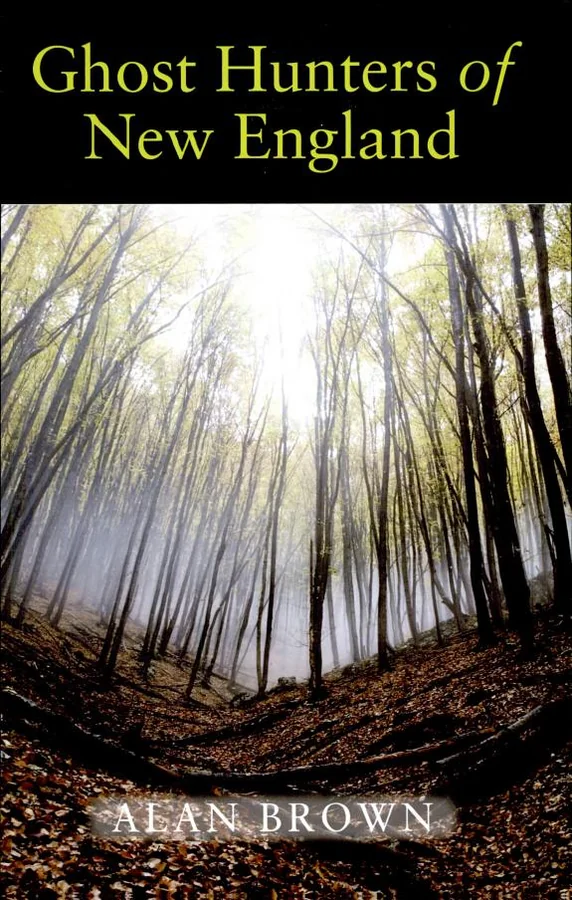
Ghost Hunters of New England
 74
74

Ghost Hunters of New England
Alan Brown's "Ghost Hunters of New England" sidesteps the usual sensationalism that plagues ghost hunting literature, opting instead for a more grounded, biographical approach. The strength lies in its cataloging of dedicated, if sometimes eccentric, individuals who pursued spectral evidence with a persistent curiosity. Brown avoids grand pronouncements, letting the accounts of investigators like those who explored the Lizzie Borden house speak for themselves. A limitation, however, is the occasional lack of critical distance; the book sometimes presents claims with too much unexamined deference. For instance, the detailed accounts of EMF readings during investigations, while specific, could benefit from more discussion on potential environmental interference. Still, the work serves as a valuable, if uneven, record of regional paranormal pursuit.
📝 Description
74
Alan Brown documented New England's ghost hunters and their methods in 'Ghost Hunters of New England'.
Alan Brown's 'Ghost Hunters of New England' examines individuals who investigate spectral phenomena in the northeastern United States. The book details the methods and experiences of these paranormal investigators through biographies and case studies, focusing on serious inquiry rather than sensationalism. It is aimed at readers interested in the questions of life after death, residual energy, and consciousness, as well as those drawn to local history, folklore, and the psychology of belief.
The work places the modern pursuit of ghosts within a historical context, noting New England's long association with reported hauntings and spiritualist movements. Brown connects contemporary investigations to the broader history of interest in the unseen, including 19th-century Spiritualism and early 20th-century parapsychological research. The book also unpacks the diverse methodologies employed by investigators. These range from early, rudimentary equipment and personal testimony to more refined techniques and historical research. It addresses the inherent challenges of empirical verification in a field often based on subjective experience, considering concepts like haunt mechanics and the role of anecdotal evidence.
This book engages with the long-standing Western esoteric tradition of exploring consciousness beyond physical death. It situates itself within the lineage of Spiritualism, which gained prominence in the 19th century, particularly in New England, and the subsequent development of parapsychology as a field of study. By detailing the methods and motivations of those who actively seek evidence of the afterlife or residual psychic energy, Brown connects these pursuits to a deeper cultural and historical interest in the unseen and the survival of consciousness.
💡 Why Read This Book?
• Gain insight into the investigative methods employed by early 21st-century paranormal researchers in New England, learning about their equipment and techniques. • Understand the historical underpinnings of ghost hunting in the region, connecting modern practices to the legacy of 19th-century spiritualism. • Explore the personal motivations and persistent dedication of individuals who actively sought evidence of the paranormal, as detailed in the investigator profiles.
⭐ Reader Reviews
Honest opinions from readers who have explored this book.
❓ Frequently Asked Questions
What specific regions of New England are covered in 'Ghost Hunters of New England'?
The book focuses on investigations across various New England states, including Massachusetts, Vermont, and Maine, highlighting specific haunted locations within these areas.
Who are some of the key figures profiled in Alan Brown's book?
Brown profiles several dedicated paranormal investigators, detailing their personal histories and their significant investigations within the New England area.
When was 'Ghost Hunters of New England' first published?
The original publication date for 'Ghost Hunters of New England' by Alan Brown was 2008.
Does the book offer scientific explanations for paranormal phenomena?
While it documents investigations, the book primarily focuses on the investigators' experiences and methods rather than providing definitive scientific explanations.
Is 'Ghost Hunters of New England' suitable for beginners in paranormal studies?
Yes, the book's biographical approach and detailed case studies make it accessible for those new to the subject of paranormal investigation.
What is the primary focus of the book's content?
The book's primary focus is on profiling individuals who actively investigated paranormal occurrences in New England, detailing their methods and reported findings.
🔮 Key Themes & Symbolism
Investigator Biographies
The core of Brown's work lies in its detailed profiles of individuals committed to exploring the spectral. These are not fleeting enthusiasts but persistent seekers who dedicated significant time and effort to documenting alleged hauntings. The book examines their backgrounds, their specific interests in the paranormal, and the personal journeys that led them to become ghost hunters in the distinct range of New England. This biographical focus humanizes the pursuit, presenting it as a driven, personal quest for answers.
Regional Haunted Locations
New England's long history provides a fertile ground for tales of the supernatural, and Brown's book taps directly into this. Specific locations, often steeped in local lore and historical events, serve as backdrops for the investigations. The work implicitly argues that the historical weight and unique atmosphere of places in states like Massachusetts or Vermont contribute to their reputation for paranormal activity, creating a sense of place essential to the narratives.
Methodology and Evidence
Beyond mere storytelling, the book scrutinizes the methods employed by paranormal investigators. It touches upon the evolution of techniques, from early reliance on anecdotal evidence and historical research to the use of more modern equipment like EMF meters and audio recorders. The work explores the challenges inherent in gathering verifiable evidence for phenomena that often defy conventional scientific understanding, highlighting the subjective nature of much paranormal data.
The Persistence of Belief
"Ghost Hunters of New England" implicitly explores the enduring human fascination with the afterlife and the unknown. By showcasing the dedication of these investigators, the book touches upon the psychological and cultural factors that fuel the search for spectral evidence. It presents a picture of individuals driven by a deep-seated need to understand phenomena that lie beyond ordinary experience, reflecting a long-standing human desire to connect with the unseen.
💬 Memorable Quotes
Direct passages from the work, attributed to the author.
“The pursuit of ghosts in New England is often tied to the region's deep historical roots.”
— This highlights how the long and often dramatic history of settlements, conflicts, and prominent figures in New England provides a fertile ground for hauntings and subsequent investigations.
“Investigators often rely on a combination of historical research and personal sensory experience.”
— This points to the dual approach common in paranormal investigation: understanding the documented history of a location and trusting direct, albeit subjective, experiences of the investigators.
“The methods employed have evolved significantly since the early days of spectral inquiry.”
— This suggests that the book tracks the progression of ghost hunting techniques, from simpler, more traditional methods to the incorporation of technology and more formalized investigative procedures.
“Many investigators are driven by a desire to validate personal experiences or uncover objective truth.”
— This interpretation emphasizes the underlying motivations of those involved in ghost hunting, suggesting a blend of personal conviction and a quest for empirical validation.
“The unique atmosphere of New England's historic sites often fuels paranormal claims.”
— This underscores the environmental and historical context of the region, suggesting that the very fabric of these old places contributes to their reputation for unusual phenomena.
🌙 Esoteric Significance
Tradition
This work does not strictly adhere to a single esoteric tradition but rather taps into the broader Western esoteric interest in spiritualism and post-mortem consciousness. It aligns with the practical, investigatory branches of occultism that seek empirical (or at least experiential) evidence of phenomena beyond the mundane. It reflects the spirit of early psychical research societies which, while often scientifically framed, operated with an underlying assumption that the supernatural was a legitimate field of study.
Symbolism
While not overtly symbolic in a traditional esoteric sense, the "ghosts" themselves can be seen as symbols of unresolved history, lingering trauma, or the persistent echo of human consciousness. The "old houses" and "historic sites" of New England function as symbolic repositories of the past, where these spectral remnants are believed to manifest. The act of "investigation" itself symbolizes humanity's persistent quest to understand the unknown and to bridge the perceived gap between the material and the immaterial.
Modern Relevance
In contemporary occult and metaphysical circles, "Ghost Hunters of New England" serves as a historical document illustrating the evolution of paranormal investigation. Thinkers and practitioners interested in residual energy, haunt mechanics, and the psychology of hauntings might reference its case studies. It provides a tangible link to the investigative methodologies that preceded or run parallel to more modern, technologically-driven or spiritually-focused approaches to engaging with the spectral realm.
👥 Who Should Read This Book
• Aspiring paranormal investigators seeking to understand the foundational methods and regional focus of early 21st-century ghost hunting. • Local history enthusiasts interested in the folklore and reported hauntings of New England's historic sites and towns. • Readers curious about the psychology of belief and the personal journeys of individuals dedicated to exploring the unexplained.
📜 Historical Context
Published in 2008, "Ghost Hunters of New England" emerges from a period of heightened public interest in paranormal investigation, fueled by popular television shows and a burgeoning online community. This era saw a significant mainstreaming of ghost hunting as a hobby and a subject of popular inquiry. The work implicitly situates itself within this context, documenting the efforts of contemporary investigators in a region with a long history of reported supernatural occurrences. New England, with its colonial past and numerous historic sites, has long been a focal point for ghost stories, dating back to the 19th-century spiritualist movement. While the book focuses on modern investigators, it stands in contrast to earlier, more academic or purely folkloric approaches to hauntings. It avoids direct engagement with skeptical scientific critiques prevalent in academic parapsychology of the time, such as those explored by researchers like James Randi, instead prioritizing the accounts of those actively investigating.
📔 Journal Prompts
The persistence of spectral reports in specific New England locales.
Investigator motivations for pursuing hauntings across the region.
The evolution of ghost hunting techniques documented in the book.
Personal reflections on historical sites as potential sites of paranormal activity.
The balance between anecdotal evidence and empirical data in paranormal claims.
🗂️ Glossary
Paranormal Investigator
An individual who actively seeks to document, study, or experience phenomena not explained by conventional scientific understanding, particularly ghosts and hauntings.
Residual Haunting
A theory suggesting that intense emotional events can imprint themselves on a location, replaying like a recording rather than being a conscious entity.
EMF Meter
A device used to measure electromagnetic fields. Paranormal investigators often use it, believing fluctuations may indicate the presence of spirits.
EVP (Electronic Voice Phenomenon)
The recording of unexplained voices or sounds on electronic devices during paranormal investigations, often interpreted as spirits communicating.
Local Folklore
The traditional beliefs, customs, and stories of a community, passed through generations, often including tales of local hauntings and supernatural events.
Psychical Research
The interdisciplinary study of alleged psychic phenomena and other paranormal claims, often with a focus on empirical investigation.
Haunt Mechanics
A speculative concept attempting to define the underlying principles or processes by which hauntings occur and manifest.
This book appears in 1 collection
🔮 Readers Also Liked
Browse all →









From the “Ghosts” Collection
View all →







More Free Spiritualism & Afterlife Books
View all →