Discovering Ghosts
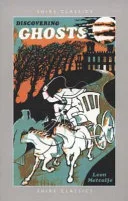
 84
84

Discovering Ghosts
Leon Metcalfe's 'Discovering Ghosts' offers a visually grounded approach to a subject often mired in hearsay. The strength of the work lies in its photographic documentation of alleged haunted locales across Britain, grounding spectral tales in tangible, albeit atmospheric, settings. The black and white images of ancient buildings lend a certain gravitas to the narratives they accompany. However, the book occasionally suffers from a lack of critical distance; while acknowledging the inconclusiveness of evidence, it leans heavily into presenting accounts without extensive debunking or deeper psychological analysis of the storytellers. A particular passage detailing the spectral encounters at Chillingham Castle, for instance, effectively captures the eerie ambiance but could benefit from a more thorough historical or psychological examination of the claims. Metcalfe provides a compendium of stories and places, serving more as an observer than a deep investigator. It is a competent collection for those already inclined to believe.
📝 Description
84
Leon Metcalfe's 2009 book, Discovering Ghosts, examines the enduring human fascination with spectral apparitions.
Published in 2009, Discovering Ghosts by Leon Metcalfe looks into the long-standing human interest in ghosts. The book studies the continued belief in paranormal beings throughout history, even without solid proof. It concentrates on British ghost stories, including accounts and photographic evidence of supposedly haunted places and their associated buildings. Metcalfe aims to record and share some of the most persistent and curious narratives of ghost encounters in the British Isles.
This work is for people interested in folklore, local history, and the psychology behind belief. Readers who enjoy ghost stories, especially those with historical or geographical roots, will find it appealing. It suits those curious about how paranormal stories persist culturally and the specific locations linked to them. The inclusion of photographs also attracts readers who like visual records of historical sites connected to supernatural claims.
Discovering Ghosts connects to a long tradition of spectral lore that predates modern paranormal investigation. This tradition draws from centuries of folklore, local legends, and anecdotal accounts. The book taps into a continuous thread of storytelling that has captivated and unsettled people for ages, long before scientific skepticism became widespread. It highlights how ghost narratives become tied to specific places, forming localized mythologies that persist despite a lack of conclusive evidence.
💡 Why Read This Book?
• Gain specific knowledge of 10+ documented haunted locations in Britain, often accompanied by historical photographs, providing concrete reference points for spectral folklore. • Understand the cultural persistence of ghost stories, examining how narratives endure across centuries despite a lack of conclusive evidence, as seen in the enduring tales of British apparitions. • Explore the connection between physical locations and paranormal belief, learning how specific buildings and sites become focal points for spectral legends, as presented through Metcalfe's photographic evidence.
⭐ Reader Reviews
Honest opinions from readers who have explored this book.
❓ Frequently Asked Questions
What kind of evidence does 'Discovering Ghosts' present for hauntings?
The book primarily presents anecdotal accounts and photographic evidence of alleged haunted locations and buildings. It acknowledges that the evidence for ghosts is largely inconclusive but focuses on documenting persistent stories and their associated sites.
Does 'Discovering Ghosts' focus on a specific region?
Yes, the book specifically aims to reveal some of the most interesting and persistent ghost stories and haunted locations within Britain.
What is the publication year of 'Discovering Ghosts'?
The book was first published on January 20, 2009.
What is the author's approach to ghost stories?
Leon Metcalfe's approach appears to be one of documentation and presentation, focusing on the historical prevalence and intriguing nature of ghost stories and the locations associated with them.
Are there any specific haunted castles mentioned in the book?
While not explicitly detailed in the provided blurb, the book's focus on British ghost stories and old buildings suggests it likely covers well-known haunted sites, which often include castles and historical manors.
Is 'Discovering Ghosts' a scholarly investigation or a collection of tales?
The book presents itself as an exploration and revelation of British ghost stories and haunted locations, leaning towards a collection of tales supported by visual documentation rather than a rigorous academic investigation.
🔮 Key Themes & Symbolism
Enduring Belief in the Paranormal
The work underscores the remarkable persistence of belief in paranormal beings, such as ghosts, throughout human history. Despite a general lack of conclusive empirical evidence, the fascination with spectral apparitions remains a constant. Metcalfe's book examines how these stories continue to intrigue and disturb audiences, highlighting a fundamental aspect of human psychology and cultural storytelling that transcends rational skepticism.
Geographical Anchoring of Ghost Lore
A significant theme is the connection between ghost stories and specific physical locations, particularly old buildings in Britain. The book uses photographs of these sites to ground the spectral narratives in tangible reality, suggesting that the architecture and history of a place can foster and sustain beliefs in hauntings. This localization of the supernatural makes the tales more immediate and relatable.
The Narrative Power of Ghost Stories
Discovering Ghosts explores the enduring appeal of ghost stories as a form of cultural expression. These narratives, passed down through generations, serve to entertain, to disturb, and to connect people to their history and local legends. The book implicitly argues for the cultural significance of these tales, even when treated as folklore rather than factual accounts.
Visual Documentation and Belief
The inclusion of black and white photographs of allegedly haunted buildings and locations is a key element. This visual aspect aims to lend an air of authenticity or at least atmospheric credibility to the ghost stories presented. It taps into the power of imagery to reinforce belief and to create a visual landscape for the spectral encounters described.
💬 Memorable Quotes
Direct passages from the work, attributed to the author.
“Widespread belief in paranormal beings has persisted throughout history.”
— This concept highlights the enduring nature of human fascination with the supernatural, suggesting that belief in ghosts is a deep-seated aspect of culture, regardless of scientific validation.
“Telling of ghost stories continues to intrigue and disturb us.”
— This points to the psychological impact and narrative power of ghost stories, indicating their role in exploring primal fears and the unknown through captivating and unsettling tales.
“Photographs of old buildings claiming to be haunted.”
— This refers to the book's use of visual evidence, linking spectral legends to specific, often atmospheric, physical locations and structures to enhance the narrative.
“Revealing persistent British ghost stories.”
— This indicates the book's focus on cataloging and presenting notable and long-standing spectral accounts specifically from the British Isles.
“Evidence for ghosts is largely inconclusive.”
— This acknowledges the scientific and empirical challenges in proving the existence of ghosts, setting a tone of critical observation alongside the presentation of folklore.
🌙 Esoteric Significance
Tradition
While not explicitly tied to a single esoteric lineage, 'Discovering Ghosts' taps into the broader tradition of occult and paranormal investigation that gained traction in the late 19th and early 20th centuries. This period saw increased interest in mediums, spiritualism, and spectral phenomena, often intertwined with Theosophical or psychical research movements. The book's focus on tangible locations and anecdotal evidence aligns with the empirical, albeit subjective, methods employed by early psychical researchers seeking to document the unseen.
Symbolism
The primary symbolism in 'Discovering Ghosts' revolves around the 'old buildings' and 'haunted locations' themselves. These structures act as physical vessels for lingering energies or memories, symbolizing the persistent imprint of past events and individuals on the present. The photographs, often stark and atmospheric, serve as visual talismans, inviting the viewer to contemplate the veil between the physical and spectral realms.
Modern Relevance
Contemporary paranormal investigation shows, popular ghost hunting tours, and even certain psychological approaches to trauma acknowledge the power of place and residual energy. Works like Metcalfe's, by documenting specific locations and their associated narratives, provide foundational material for modern explorations of hauntings, offering case studies for those interested in the psychological, historical, and potentially energetic dimensions of spectral phenomena.
👥 Who Should Read This Book
• Folklore enthusiasts and researchers interested in the documentation of British ghost stories and their connection to specific locales. • Amateur paranormal investigators seeking reference points and historical context for haunted sites across Britain. • Readers with a general curiosity about the persistence of supernatural beliefs and the cultural impact of ghost lore throughout history.
📜 Historical Context
Published in 2009, Leon Metcalfe's 'Discovering Ghosts' entered a cultural landscape already saturated with paranormal television programs and online communities dedicated to ghost hunting. While the book engages with contemporary interest, its core subject matter—British ghost stories—connects it to a rich vein of folklore and literature stretching back centuries. It stands in contrast to more academic approaches to folklore, such as those pioneered by folklorists like Katharine Briggs, whose comprehensive 'A Dictionary of British Folk-Tales in the English Language' (published 1970-1971) cataloged similar narratives. Metcalfe's work implicitly engages with the tradition of popular ghost story collections that have been a staple since the Victorian era, a period that saw a surge in spiritualism and ghost lore. The book's reception likely mirrored that of many contemporary paranormal accounts, appealing to a public fascinated by the uncanny, rather than engaging deeply with academic debates on the psychology or sociology of belief.
📔 Journal Prompts
The persistent belief in paranormal beings across history.
Photographs of old buildings and their association with spectral tales.
The enduring intrigue and disturbance caused by ghost stories.
Specific British ghost stories and their geographical locations.
The inconclusiveness of evidence for ghosts and its effect on belief.
🗂️ Glossary
Paranormal beings
Entities or phenomena not explained by conventional scientific understanding, commonly including ghosts, spirits, and other supernatural apparitions.
Spectral apparitions
Visual or sensory manifestations believed to be the spirits of deceased persons, often appearing in specific locations associated with their lives or deaths.
Haunted locations
Places, such as buildings, landscapes, or rooms, where paranormal activity or the presence of ghosts is reported to occur persistently.
Ghost stories
Narratives, often passed down through oral tradition or literature, that recount encounters with ghosts or spectral phenomena, serving purposes of entertainment, warning, or cultural preservation.
Inconclusive evidence
Information or data related to a phenomenon that does not provide definitive proof or disproof, leaving the matter open to interpretation or further investigation.
Folklore
The traditional beliefs, customs, and stories of a community, passed through the generations by word of mouth, encompassing legends, myths, and popular tales.
British ghost stories
Specific narratives of spectral encounters and haunted places originating from or commonly associated with the geographical and cultural context of Great Britain.